Loading Admission Guardian content
Loading Admission Guardian content

Find a program, read its fee details and explore the admission requirements.
Summary of the programs shown below. Fee amounts are not listed. Contact the college for its current fee schedule.
| Course | Stream | Fees |
|---|---|---|
| Bachelor of Arts [BA] | Arts | |
| Master of Arts [MA] | Arts | |
| Bachelor of Science [B.Sc] | Science | |
| Master of Science [M.Sc] | Science |
Specializations
Eligibility: 10+2
Specializations
Eligibility: Graduation
Specializations
Eligibility: 10+2
Specializations
Eligibility: Graduation
For students in and around Guwahati looking for an affordable, government-backed education in the arts and sciences, Dimoria College is a name that comes up often. Established in 1979 in the Khetri area, this public institution has built a solid reputation over four decades, recently earning a significant upgrade: autonomous status from the UGC starting in 2024. That's a big deal. It means the college now has more freedom to design its own curriculum and exams, a move that could make its degrees more responsive to local needs. But the story here isn't about corporate placements or sky-high packages. It's about accessible higher education in a natural, sprawling campus, with fees that are almost unbelievably low by today's standards. If you're looking for a cost-effective launchpad for a career in teaching, civil services, or further academic research, this place warrants a close look. Just don't expect a parade of multinational recruiters at the gate.
Dimoria College offers a classic, broad-based arts and science curriculum. With a total seat intake of around 1,275 across nearly 30 courses, it's a significant educational hub in the region. The undergraduate programs are the main draw, with three-year B.A. and B.Sc. degrees available in both Honours and General streams. Subjects range from standard fare like Assamese, English, History, and Political Science in the arts to Botany, Chemistry, Computer Science, and Physics in the sciences. The Geology and Anthropology departments are particularly noted, with the Geology lab even being recognized by Gauhati University for Ph.D. research.
At the postgraduate level, options are more focused. You can pursue an M.A. in Assamese or Economics, or an M.Sc. in specialized areas like Eco-Restoration, Environment Management, or Geology. There's also a one-year Post-Graduate Diploma in Computer Application (PGDCA). Academically, the college promotes a lot of beyond-the-classroom activity. They have an active NSS unit, an NCC girls' battalion, and clubs for everything from electoral literacy (ELC) to AIDS awareness (RRC). The SRIJANEE society for performing arts and a language lab point to an effort for holistic development. The recent autonomous status is the most important academic development, potentially allowing for faster updates to syllabi and more internal control.
Let's be direct: campus placement is not this college's primary strength. The data is clear and it's important to set expectations correctly. The overall median salary for graduates, as reported to NIRF, was INR 2.91 LPA as of March 2024. Drilling down, recent placement reports show median figures around INR 1.2 LPA for UG students and INR 1.06 LPA for PG students. The highest package mentioned in historical data is around INR 8 LPA, but that's an outlier.
The real story is in the placement percentages. They are modest. For the 2023-24 batch, only about 7% of UG students and 10% of PG students secured jobs through the campus process. In previous years, that number has fluctuated between 5% and 13%. What does this mean? It means the vast majority of Dimoria College graduates build their careers through other pathways—higher studies (like preparing for NET/SET or entering a Master's program), government exams, or finding employment off-campus through personal networks.
Top recruiters aren't listed in glossy brochures here because the recruitment landscape is different. It's comprised of local and regional companies, SMEs, and possibly some state-government affiliated projects. The college isn't a target campus for large national corporations. For a student, this means you must be proactive. The degree is a foundation, but your hustle, competitive exam preparation, and further academic pursuits will likely define your career trajectory more than a placement cell.
This is where Dimoria College stands out starkly from the private college ecosystem. The fees are exceptionally low, making higher education accessible. For a full three-year B.A. degree, the total tuition is approximately INR 8,100. For a B.Sc., it's about INR 9,000 for three years. That translates to annual tuition fees between INR 2,700 and INR 3,000. Postgraduate programs are more varied; an M.Sc. can range from INR 22,000 to INR 68,000 for the two-year duration, while the one-year PGDCA is around INR 15,000.
These published totals likely bundle various charges, but the core message is affordability. The college supports this further with a robust financial aid system. Government scholarships for SC, ST, OBC, and MOBC students are available and often processed through Assam's MyScheme portal. There are also merit-based scholarships and a dedicated Students' Aid Fund for the economically disadvantaged. The college explicitly states it offers fee relaxation for meritorious students from weaker economic backgrounds. If cost is a primary constraint, Dimoria College presents a very low-risk financial option for earning a legitimate university degree.
Admission to Dimoria College is primarily merit-based. There's no single, high-stakes national entrance exam. For undergraduate courses, your marks in the 10+2 board exams (AHSEC, CBSE, etc.) are the key. The college publishes merit lists based on these scores. For some postgraduate courses, there might be an entrance test or interview component, but the bachelor's degree marks are the fundamental criterion.
The process is straightforward and detailed on the college's official website. You fill out an online application (or collect one from the office), submit your scanned documents, and wait for the merit list. If selected, you then visit the campus for document verification and pay the fees to secure your seat. Application windows and any minor fees are announced on the website and notice boards each season. The college follows government reservation policies for SC/ST/OBC/MOBC categories. An NRI or management quota isn't mentioned in official channels, reinforcing its character as a public institution.
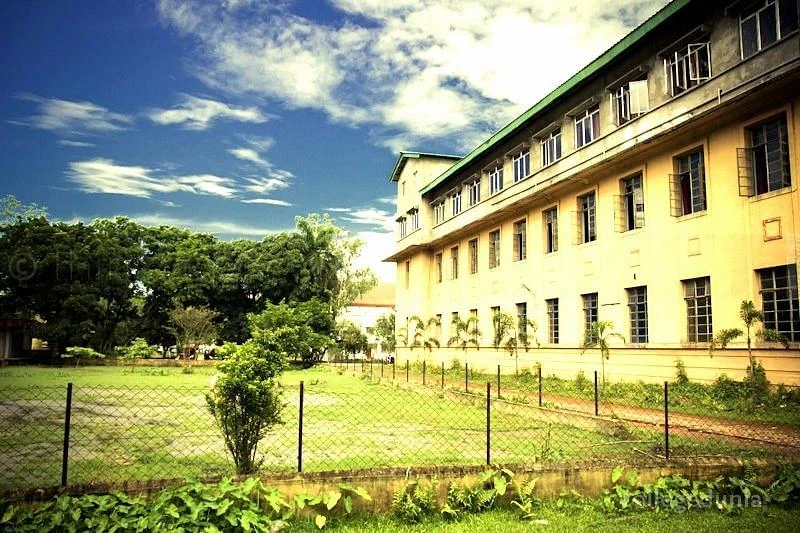
The campus is consistently praised in student reviews. Set on a large plot of land away from the city's core, it's described as green, peaceful, and conducive to study. Infrastructure is solid for a government college: well-equipped science labs, a modern library with over 18,000 books and internet access, and a new air-conditioned computer lab. There are also unique features like museums for Anthropology and Folklore, and a language laboratory.
For accommodation, there are hostel facilities for female students, with seats allotted on merit. Details on room quality or food aren't extensively documented, but the presence of the facility is a plus for out-of-area students. The college has a canteen, a large playground, and courts for basketball, cricket, and other sports. Cultural life is active through the SRIJANEE society, annual events like Freshers' Social and College Week, and the various clubs. The active NSS and NCC units add a dimension of community service and discipline. It's not a cosmopolitan, urban campus experience, but it offers a complete and engaging environment for a typical college life.
Synthesizing feedback from platforms like CollegeDunia and Shiksha, a clear consensus emerges. Students are generally satisfied with the core academic offering. The faculty gets good marks for being qualified, knowledgeable, and supportive. The teaching quality is described as "nice," and the infrastructure—labs, library, sports facilities—is regularly commended. The pollution-free, natural campus is a big positive.
But the reviews are unanimously cautious about careers. The phrase "placement percentage rates are relatively modest" is an official understatement. Students know that securing a job through the college is a long shot. The median packages, especially the INR 1.2 LPA figure for UGs, are openly discussed and acknowledged as low. The college's location, while serene, is also seen as limiting exposure to big industries. The graduate path here is understood: get a good, affordable education, and then use it as a stepping stone. For many, that next step is a competitive exam for a government job or a Master's degree from a larger university. The college is seen as good for what it is—a reliable, low-cost provider of foundational education—but not a shortcut to a corporate career.
Dimoria College is an excellent, value-for-money option for a specific type of student. If you are from the region, are seeking an affordable and recognized B.A. or B.Sc. degree, and your primary goals are to build a strong academic foundation for civil service exams, teaching careers (like B.Ed. preparation), or further postgraduate studies (M.Sc., M.A., etc.), this college makes a lot of sense. The autonomous status is a promising development, the faculty is well-regarded, and the fees are almost negligible. It's a serious academic environment without the financial pressure.
However, if your main objective is to secure a high-paying corporate job immediately after graduation through campus placements, you will likely be disappointed. The placement rates and packages are not competitive with urban private colleges or premier state universities. It's also not the place for those seeking a high-tech, metropolitan campus life with extensive industry interaction.
In short, Dimoria College is worth it for the academically inclined student on a tight budget, using the degree as a launchpad for future competitive or academic pursuits. It's not the destination for those whose endgame is a direct entry into the private sector via the placement cell. Know your goals, and choose accordingly.
In this preview: 1 photo · 0 videos
Dimoria College offers undergraduate Arts and Science programs. Prospective students should research the specific departments, faculty qualifications, and available resources to determine if the college aligns with their academic goals for these courses.
The fee structure for the B.A. and B.Sc. programs at Dimoria College for the 2026-2027 academic year is subject to change. For the most accurate and current fee details, including any tuition, examination, or other charges, candidates must consult the official college prospectus or contact the admissions office directly.
Placement support is available at Dimoria College. The average salary and overall placement record can vary annually by program, industry demand, and student performance. For specific and recent placement statistics, including average salary figures, refer to the official college placement cell reports or website.
The admission process for undergraduate (UG) and postgraduate (PG) courses at Dimoria College typically involves checking eligibility criteria, submitting an application form, and following the college's selection procedure. Exact steps, important dates, and required documents are published annually by the college administration.
Dimoria College provides hostel facilities for its students. The college also maintains infrastructure to support academic and campus life. For detailed information on hostel amenities, campus facilities, and infrastructure quality, it is best to visit the college campus or review the official college brochure.
Share what future students should know about Dimoria College.
Student voices are not rewritten by colleges. We remove spam and abuse.
Wider admission question? Community PulseWhat should future students know?
Tell us which course you're considering. We'll help you work out the next step.
Get instant Partner access after mobile verification. Your public edits are reviewed before they go live.
Claim this college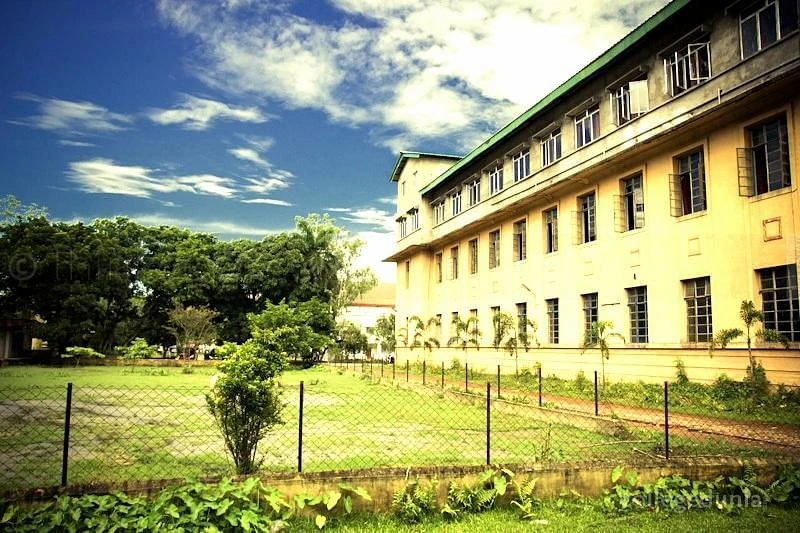
 Auditorium
 Cafeteria
 Computer Labs
 Hostel
 Medical
 Science Labs
 Sports Complex
 Study Library