Loading Admission Guardian content
Loading Admission Guardian content

Find a program, read its fee details and explore the admission requirements.
Summary of the programs shown below. Fee amounts are not listed. Contact the college for its current fee schedule.
| Course | Stream | Fees |
|---|---|---|
| Master of Arts [MA] (Business Economics) | Arts | |
| Bachelor of Commerce [B.Com] | Commerce | |
| Master of Commerce [M.Com] | Commerce | |
| Master of Computer Applications [M.C.A] | Computer Applications | |
| Bachelor of Science [B.Sc] (Mathematics) | Science |
Specializations
Eligibility: Graduation
Specializations
Eligibility: 10+2
Specializations
Eligibility: Graduation
Eligibility: Graduation
Specializations
Eligibility: 10+2
 First Source
Dhanraj Baid Jain College isn't trying to be a flashy, high-tech private university. And that's its biggest strength. For over 50 years, this autonomous college on Chennai's OMR corridor has carved out a specific niche: delivering a disciplined, affordable, and practical education to a largely middle-class student body. If you're looking at the numbers, the story is clear. An NAAC 'A' grade, autonomous status since 2006, and a sprawling 17-acre campus in the heart of the IT belt. But the real draw is the cost. With annual fees for aided programs hovering around ₹1,200 and even self-financing courses capped near ₹50,000 a year, DBJC offers one of the most budget-friendly routes to a University of Madras-affiliated degree in the city. It's a trade-off students understand—you exchange a vibrant, liberal campus life for a structured, school-like environment that prioritizes getting you a degree and a job without breaking the bank.
The college operates a unique two-shift system that dictates both cost and, to some extent, culture. Shift I is the government-aided section, running from 8:00 AM to 1:10 PM. Shift II is self-financing, from 1:30 PM to 6:30 PM. The aided shift, especially for B.Com, is where you'll find the most experienced faculty—a significant portion hold PhDs. The self-financing shift hosts the newer, industry-oriented programs like BCA, BBA, and B.Sc in Computer Science and Visual Communication.
Academically, autonomy is the key. The college designs its own curriculum under the Choice Based Credit System (CBCS), which allows it to be more responsive than typical affiliated colleges. A mandatory "Soft Skills" module is baked into every program, a direct nod to the employability focus. Postgraduate offerings are solid if not expansive, with M.Com, M.Sc in CS and IT, and an AICTE-approved MCA program. For research aspirants, the college offers full-time M.Phil and Ph.D. programs in Commerce and Corporate Secretaryship. The vibe is functional. You won't find cutting-edge research labs, but you will find a curriculum that's been tuned over decades to match the local job market's rhythm.
This is where you need to separate the brochure from the bench. The college's official placement claim, particularly for the management stream, can be as high as 98%. Student reviews from platforms like Shiksha and CollegeDunia paint a more nuanced picture, suggesting a functional placement rate of 40-60% for general arts and science streams. The numbers from the NIRF 2024 report provide a reliable anchor: a median package for 3-year UG graduates between ₹1.75 and ₹2.0 LPA.
The highest package reported for 2023-24 was 10 LPA, but that's an outlier. The average is firmly in the 2.5 LPA range. Recruiters are a who's who of mass recruiters in the Chennai region: TCS, Wipro, Infosys, HCL, Capgemini, and banks like HDFC and ICICI. The roles are predominantly in IT/ITES, BPO/KPO, and retail banking. A common student refrain is that placements lean heavily towards BPO roles. If you're aiming for core software development or high-finance roles, you'll need to build those skills independently. The placement cell facilitates opportunities, but it's not a gateway to premium packages. For the fee you pay, especially in the aided stream, that's a pragmatic and decent outcome.
The fee structure is the college's most compelling argument. It creates a stark divide between the two shifts. If you get a seat in the aided B.Com or B.A. programs, you're looking at an almost symbolic annual tuition of ₹1,200 to ₹2,500—a throwback to another era. The self-financing programs (BCA, B.Sc CS, BBA) cost between ₹15,000 to ₹25,000 per semester, totaling roughly ₹30,000 to ₹50,000 annually.
Postgraduate courses like MBA and MCA range from ₹30,000 to ₹50,000 per year. Accommodation is a major cost adder. The on-campus women's hostel costs approximately ₹60,000 to ₹75,000 per year, including mess charges. There is no on-campus hostel for boys, forcing them into private PGs in Thoraipakkam or Perungudi, which can cost a similar amount. Over three years, a self-financing UG student can expect a total cost of ₹1.2 to ₹1.8 lakhs, excluding hostel. Financial aid comes via government SC/ST scholarships, merit-based concessions for Jain students, and sports quota waivers.
The process is straightforward and merit-based for undergraduates. There is no entrance exam. Admission is strictly on the basis of your Class 12 marks. You apply online through the college's official website, pay an application fee of around ₹500, and wait for the merit list. Cutoffs vary by program and shift, with the aided Commerce seats being the most competitive.
For the postgraduate professional courses, the rules change. Admission to the MBA and MCA programs requires a valid score in the Tamil Nadu Common Entrance Test (TANCET). The cutoff scores for DBJC are not fiercely high; a TANCET score between 35 and 55 is typically sufficient to secure a seat under the government quota. The selection here is managed through the state's single-window counseling system.
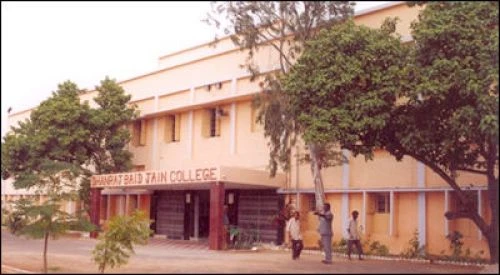
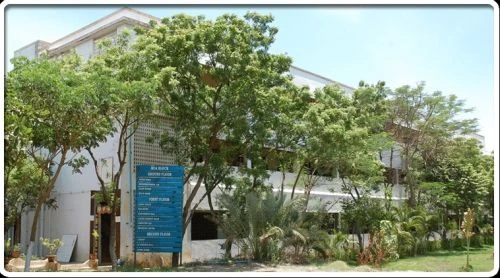
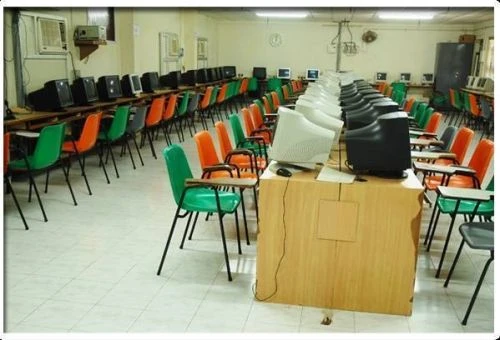
Think functional, not luxurious. The 17-acre campus provides space, but the infrastructure shows its age in places. Students consistently point to restroom hygiene and older classroom furniture as pain points. The library is well-stocked with over 40,000 texts and provides digital access to millions more via the INFLIBNET network. Computer labs are adequate, with around 350 systems across five labs.
Where the campus truly shines is sports. With four large grounds and active coaching in cricket, football, volleyball, and kabaddi, DBJC has a reputation as a sports powerhouse. If you're a serious athlete, this college actively supports and prioritizes tournament participation. The canteen is strictly vegetarian, offering subsidized but average-quality food. Social life is subdued. Cultural festivals are rare, and the overall atmosphere is conservative and disciplined—uniforms or a dress code are enforced, and the 75% attendance rule is strictly policed. It's not a college for those seeking a "movie-style" campus experience.
The consensus from reviews on CollegeDunia, Shiksha, and Quora is remarkably consistent. DBJC is described as a "safe zone" or a "value-for-money" institution. The overwhelming positive is its affordability paired with autonomous status. The faculty, especially in the core Commerce departments, is repeatedly praised as accessible and supportive.
But the critiques are just as uniform. The discipline is often called "school-like," with strict rules around attendance, ID cards, and movement. The lack of a boys' hostel is a significant logistical hurdle for many. While the placement cell is active, students are candid about the nature of jobs—expect a lot of BPO and entry-level ITES roles, with the onus on you to upskill for better opportunities. One recurring piece of advice from alumni: "If you are a sportsperson, this is the best college in OMR." For everyone else, it's a pragmatic choice where expectations need to be managed around campus life, not the degree or the cost.
DBJC is a college with a specific, honest identity. It's an outstanding choice for three types of students: the budget-conscious learner seeking a reputable, autonomous degree at the lowest possible cost; the serious athlete who needs institutional support to compete; and the pragmatic student who views college as a stepping stone to a job, not a holistic life experience. If you're from a middle-class family and want a no-frills education that won't saddle you with debt, it's very hard to beat.
You should probably look elsewhere if you prioritize a vibrant campus social life, cutting-edge infrastructure, or expect the placement cell to hand you a high-paying tech job. The discipline will feel stifling if you crave independence. It’s a trade-off, clearly defined. For what it sets out to do—provide affordable, disciplined, employability-focused education—Dhanraj Baid Jain College does it reliably well. Just know exactly what you're signing up for.
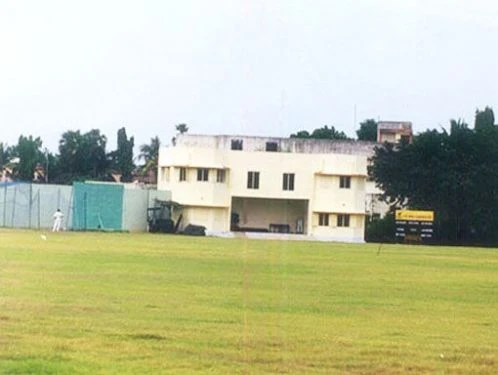
In this preview: 5 photos · 0 videos
Yes, Dhanraj Baid Jain College is a co-educational college for all its undergraduate (UG) and postgraduate (PG) programs.
No, DBJC does not have a hostel for boys. The college only provides a women's hostel on campus. Male students typically find accommodation in nearby paying guest (PG) facilities in areas like Thoraipakkam.
Yes, DBJC is widely regarded as one of the best "value for money" colleges for Commerce in Chennai. It is noted for having a very strong alumni network within the finance sector.
The attendance policy at DBJC is very strict. Students must maintain a minimum of 75% attendance to be eligible to sit for their semester exams without paying a condonation fee.
Yes, the college has a mandatory dress code or uniform, particularly for students in most departments. This is especially enforced for Shift II and for professional courses like MBA and BBA, typically on specific days of the week.
Share what future students should know about DBJC.
Student voices are not rewritten by colleges. We remove spam and abuse.
Wider admission question? Community PulseWhat should future students know?
Tell us which course you're considering. We'll help you work out the next step.
Get instant Partner access after mobile verification. Your public edits are reviewed before they go live.
Claim this college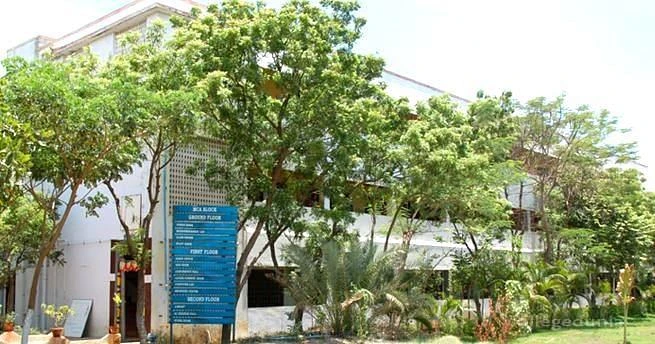
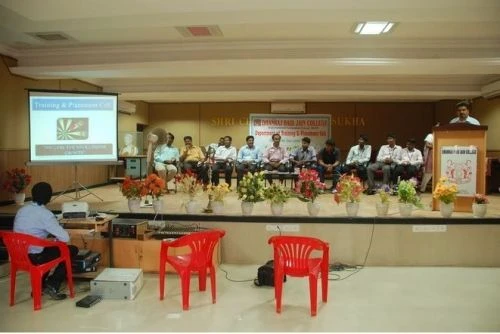
 Auditorium
 Cafeteria
 Computer Labs
 Gym
Gym Hostel
 Medical
 Science Labs
 Sports Complex
 Study Library