Loading Admission Guardian content
Loading Admission Guardian content

Provisional score based on available data. It may change as more information is verified.
Find a program, read its fee details and explore the admission requirements.
Summary of the programs shown below. First-year fee. Check the note beside each amount for inclusions and exclusions.
| Course | Stream | Fees |
|---|---|---|
| Bachelor of Commerce [B.Com] | Commerce | 770 |
| Bachelor of Science [B.Sc] | Science | 770 |
| Master of Social Work [MSW] | Arts | |
| Master of Commerce [M.Com] | Commerce | |
| Bachelor of Computer Applications [BCA] | Computer Applications |
Specializations
Eligibility: 10+2
Specializations
Eligibility: 10+2
Eligibility: Graduation
Specializations
Eligibility: Graduation
Specializations
Eligibility: 10+2
If you're looking for a no-frills, affordable degree from a respected University of Madras affiliate in West Chennai, Dharmamurthi Rao Bahadur Calavala Cunnan Chetty’s Hindu College (DRBCCC) is a name that comes up. Established in 1969, this Telugu linguistic minority institution has built a reputation on providing accessible higher education to thousands, with its own suburban railway station literally across the street. But that accessibility comes with a specific trade-off: a famously strict, school-like disciplinary environment. It's a college that knows its role—delivering a solid foundational education at a cost that's hard to beat, especially in its government-aided Shift I. You won't find cutting-edge tech or sprawling hostels here. What you will find is a massive library, a serious sports culture, and a straightforward path to a University of Madras degree without breaking the bank. Just don't expect your phone to work on campus.
The academic structure here is defined by its two shifts, a critical distinction for students. Shift I is the government-aided stream, offering dramatically lower fees but with potentially more limited seats in popular courses. Shift II is self-financing, with higher fees but greater intake capacity. Both follow the University of Madras semester pattern.
For undergraduates, the spread is traditional and arts/science/commerce-focused. The B.A. offerings include English, Economics, and the somewhat unique Criminology & Police Administration. B.Sc. programs cover the standard sciences—Mathematics, Physics, Chemistry—alongside Computer Science and Visual Communication. But it's the commerce and management wing that draws significant crowds. B.Com is available in several specializations like Corporate Secretaryship and Accounting & Finance, while BBA and BCA round out the professional courses. At the postgraduate level, options are more limited, with M.A., M.Sc., and M.Com programs available in a handful of disciplines, plus an MSW and a Ph.D. in Commerce.
Faculty quality is a mixed bag, which is typical for an institution of this size and age. Around 40-50% of the permanent faculty hold PhDs, including Principal Dr. G. Kalvikkarasi. The academic culture is what you'd expect from a college with strict discipline: attendance is heavily emphasized, and the teaching style leans towards the conventional. The college has tried to bridge the industry-academia gap through MoUs with organizations like Reliance Foundation for life skills and the National Small Industries Corporation (NSIC) for technical training. It's a decent effort, but the core academic experience remains firmly rooted in the University of Madras syllabus.
This is where student narratives and official claims diverge sharply, and it's crucial to understand both. The placement cell, named 'Abhyas', does bring companies to campus. The official numbers for 2024-25 cite a highest package of ₹6.9 LPA and an average of ₹3.7 LPA, with a median hovering between ₹2.4 and ₹3.2 LPA. Top recruiters by name include familiar IT and manufacturing firms: TCS, Wipro, Infosys, Zoho, Amazon, HCL, and TVS Group.
But the reality check from student reviews across platforms like CollegeDunia and Shiksha is sobering. The official placement percentage claim of 50-70% is viewed with skepticism. Alumni consistently report that the "real" placement rate for core roles in IT or finance is closer to 10-20%. A significant portion of the campus drives are for ITES or BPO voice process roles from companies like Sutherland. That's not inherently bad—it's a job—but it's a different career trajectory than what a "campus placement" at an Infosys might imply. For B.Com students, roles in accounting and back-office finance are more common. The verdict from students is blunt: "The placement cell brings companies, but 90% are BPOs. Don't expect high-end IT jobs here." If your primary goal is a high-paying, core-industry job right after graduation, you might need to look beyond the campus drive and prepare independently. This college provides a platform and some opportunities, but it's not a placement powerhouse.
The fee structure is arguably DRBCCC's biggest draw, particularly for students from middle-class and economically constrained backgrounds. The difference between Shift I and Shift II is night and day.
Shift I (Aided): This is where the college delivers incredible value. The total cost for a three-year UG degree can be under ₹10,000, sometimes even below ₹5,000. Tuition is virtually free; you're paying for lab fees, exam fees, and other nominal charges.
Shift II (Self-Financing): Fees here are still very reasonable by Chennai's private college standards. For programs like B.Com, BBA, and BCA, you're looking at ₹20,000 – ₹25,000 per semester, which translates to roughly ₹40,000–₹50,000 per year. B.Sc. Computer Science is around ₹21,000 annually. There's also a one-time application fee of ₹250.
Financial aid is primarily channeled through government schemes. Scholarships for SC/ST/SCC students, first-generation graduates, and the physically challenged are available as per Tamil Nadu state government norms. The college administration facilitates the application process for these. There's no mention of extensive private merit scholarships, which aligns with its role as a provider of accessible, low-cost education.
The admission process at DRBCCC is refreshingly straightforward, especially at the undergraduate level. There are no entrance exams for UG courses. Admission is strictly merit-based, determined by your marks in the 12th standard (or equivalent) board exams.
The process typically kicks off in May, right after the Class 12 results are declared. You fill out an online application on the college's official website, pay the ₹250 fee, and wait for the merit list. Based on your rank, you'll be called for counseling, which may include a brief interview. The application window is short, usually closing by mid-June, so timing is key.
As a Telugu Linguistic Minority Institution, the college reserves 50% of its seats for students from that community. The remaining 50% are filled according to the standard Tamil Nadu state reservation policy (OC, BC, MBC, SC, ST). This quota system significantly influences cutoff marks. For sought-after courses like B.Com or B.Sc. Computer Science in Shift II, students from the general pool often need marks in the high 80s or even 90+ percentage to secure a seat. For the minority quota, the cutoffs can be considerably lower. For PG admissions, it's mostly merit-based on the UG degree marks, though some professional courses might consider TANCET scores.
Let's address the biggest infrastructure point first: there is no on-campus hostel. This is a commuter college. Students from outside Pattabiram typically rent private PGs in areas like Pattabiram itself or Avadi, with rents ranging from ₹3,000 to ₹7,000 per month. The silver lining? The Hindu College Railway Station on the Chennai suburban line is directly opposite the main gate, making it one of the best-connected colleges in the city for train commuters. Buses are also plentiful.
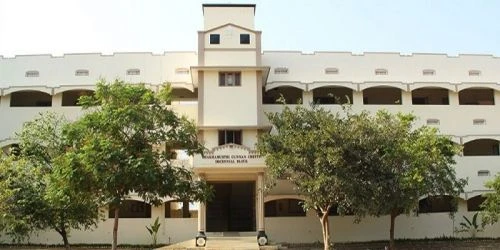
The 31-acre campus is spacious. The library is consistently praised as a standout facility—peaceful, well-maintained, and stocked with over 52,000 books and numerous journals. Digital access is provided via UGC's Inflibnet N-List. Labs for Computer Science, Electronics, and especially Visual Communication (which has videography equipment) are functional, though some student reviews note that computer labs can have outdated systems.
Student life is shaped heavily by the college's strict disciplinary code. Mobile phone usage is restricted on campus. Many departments, especially in Shift II, enforce a dress code or uniform. Attendance is monitored closely. It feels, as many students put it, "school-like." The canteen provides basic, subsidized meals (repetitive, according to some), and there's an Aavin parlor on site.
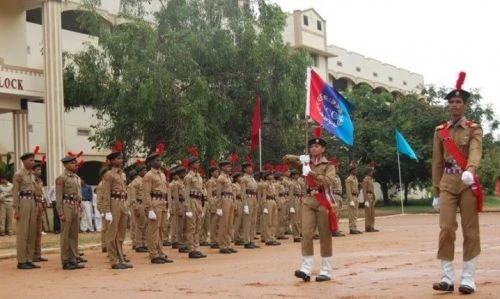
Where student life truly thrives is in sports and NCC. The college has a massive playground and a strong tradition in Kabaddi, Football, and Basketball. The NCC unit is large and active. If you're sports-inclined, this is a major positive. For others, social life is more about the commute and classroom interactions than a typical "campus life" experience.
Synthesizing the consensus from review portals and forums paints a clear, dual-sided picture.
The positives are consistently about value and convenience. Affordability is the number one praise. Students call it the best "value for money" college in West Chennai, particularly for the aided shift. The transport connectivity via the dedicated railway station is a huge, daily convenience. The library is loved as a quiet sanctuary for study. And students involved in sports and NCC speak with genuine pride about their teams and achievements.
The negatives are just as consistent. The strict discipline is the most frequent complaint—the no-phone policy, uniform requirements, and attendance pressure feel overly restrictive to many college-aged students. Placement quality is a major sore point, with frustration over the prevalence of BPO roles over core career jobs. Some mention bureaucratic delays in administrative work and aging infrastructure in parts of the campus.
The overarching student sentiment is pragmatic. This isn't a college you choose for a vibrant, liberal campus experience or a direct ticket to a corporate career. You choose it for a reputable, affordable degree with minimal debt. As one review perfectly summarized: "If you want a degree with very low fees and can handle school-level discipline, this is the best place."
DRBCCC Hindu College serves a specific student profile exceptionally well. It's an outstanding choice if you are a budget-conscious student in or around West Chennai seeking a solid, traditional University of Madras degree. Its unparalleled affordability, especially in Shift I, and superb commuter access via its own railway station are massive advantages. It's also a great fit for students passionate about sports or NCC, as those programs are genuinely strong.
However, you should probably look elsewhere if you prioritize a liberal campus life with modern amenities, expect high-paying campus placements in core industries, or chafe under strict disciplinary rules. The lack of hostels and the school-like atmosphere are real trade-offs.
In essence, DRBCCC is a workhorse, not a showhorse. It delivers on its core promise of accessible education without pretension. For thousands of students every year, that's exactly what they need. Just go in with your eyes open, manage your career expectations independently, and you can get a perfectly good degree here without a mountain of debt.
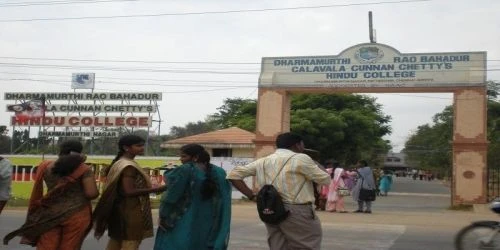
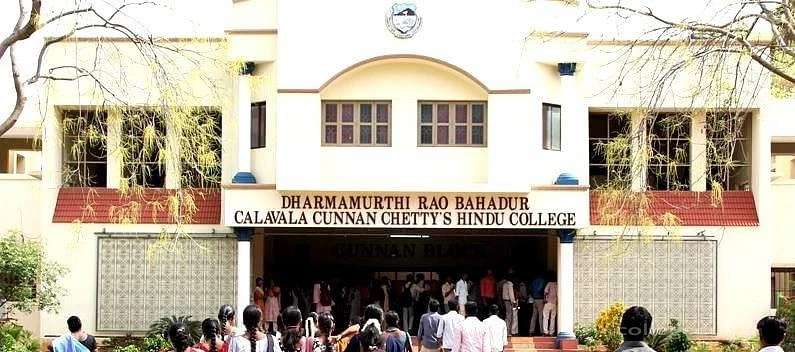
In this preview: 5 photos · 0 videos
DRBCCC Hindu College is a private, aided minority institution.
No, Dharmamurthi Rao Bahadur Calavala Cunnan Chettys Hindu College does not have any hostel facilities on its campus.
Yes, the college has a strict dress code, with most departments, especially those in Shift II, requiring a uniform.
The college is easily accessible by taking a suburban train to "Hindu College" station; the campus is located directly across the road from the station.
Yes, the college is highly regarded for its B.Com program in West Chennai, owing to its affiliation with the University of Madras and its low fee structure.
Share what future students should know about DRBCCC.
Student voices are not rewritten by colleges. We remove spam and abuse.
Wider admission question? Community PulseWhat should future students know?
Tell us which course you're considering. We'll help you work out the next step.
Get instant Partner access after mobile verification. Your public edits are reviewed before they go live.
Claim this college
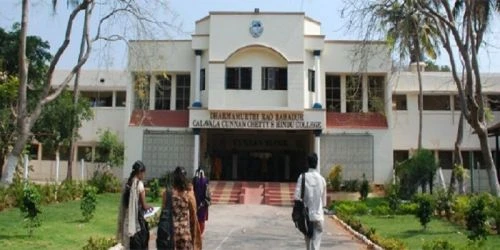
 Auditorium
 Cafeteria
 Computer Labs
 Science Labs
 Sports Complex
 Study Library