Loading Admission Guardian content
Loading Admission Guardian content
Provisional score based on available data. It may change as more information is verified.
Find a program, read its fee details and explore the admission requirements.
Summary of the programs shown below. Fee amounts are not listed. Contact the college for its current fee schedule.
| Course | Stream | Fees |
|---|---|---|
| Bachelor of Arts [BA] | Arts |
Specializations
Eligibility: 10+2
Founded in 1937, Dharmendrasinhji Arts College (DAC) isn't just another college in Rajkot. It's a piece of the city's academic history, one of the oldest higher education institutions in the Saurashtra region. Operating as a government college under Saurashtra University, its primary draw is starkly simple: profound affordability. For generations of students, particularly those aiming for government service or teaching, DAC has been the default, low-cost launchpad. The experience is defined by its heritage campus, deeply experienced faculty, and a complete absence of corporate placement activity. You come here to study, to use the library, and to prepare for what comes next—entirely on your own steam. Its current NAAC accreditation is a Grade 'C', a fact that sits somewhat uneasily with its historic reputation.
DAC's identity is singular: it's an arts college. There's no B.Com, no B.Sc. The focus is entirely on the humanities and social sciences, with a total intake of around 500-560 students across its B.A. programs. That's a significant number, reflecting its role as a major feeder institution in the region.
The specializations are classic. You have English, Gujarati, Hindi, and Sanskrit Literature. Then the social science staples: History, Political Science, Sociology, Economics, Psychology, Geography, and Philosophy. The academic calendar and grading—a Choice Based Credit System (CBCS)—are dictated by Saurashtra University. The faculty roster is small, around 26 permanent members, but heavy on experience. A significant majority of the senior professors hold PhDs, and many, like Prof. Y.V. Rathod in English with over 30 years, are paper-setters for the university. The teaching style is traditional, lecture-heavy. You won't find high-tech smart classrooms here. What you will find, according to students, are teachers who know their subject inside out and are generally accessible. It's a trade-off.
Let's be blunt. If you're looking for a college placement cell that will bring companies to campus for recruitment, DAC is not it. That model simply doesn't exist here. The college makes no official claims about highest or average packages because there are no formal corporate placements to speak of.
The career path for a DAC student is almost entirely self-directed. The overwhelming majority use their degree as a foundation to prepare for competitive government exams—GPSC, UPSC, SSC—or to pursue a B.Ed. to enter teaching. Some graduates find work in local private schools, coaching centers, or clerical roles, where an unverified estimate puts starting earnings in the 1.5 to 2.5 LPA range. Internships are rare, though Geography and Psychology students might do field projects.
So, the placement reality check is this: the college provides the degree at minimal cost and a decent library. The career support? That's on you. This isn't a criticism, just the operational model of a traditional government arts college.
This is where DAC shines and why it remains perpetually relevant. The fees are a throwback. For the entire three-year B.A. program, you're looking at a total tuition cost between ₹5,000 and ₹8,000. Yes, for the whole degree. Annual fees range from about ₹1,200 to ₹2,500. M.A. fees are slightly higher, but still nominal.
Hostel accommodation on-campus is very limited. Most students opt for the nearby Government Samras Hostel, which is free or highly subsidized for eligible students (SC/ST/OBC/EWS). Private PGs in the area cost between ₹6,000 to ₹10,000 per month with food.
Financial aid is robust through government schemes. Almost every student eligible for a scholarship gets one, primarily through the Digital Gujarat portal (Post-Matric scholarships) or the state's MYSY (Mukhyamantri Yuva Swavalamban Yojana). The administrative processing can be slow, students say, but the funds do come through.
The process is straightforward and entirely merit-based. There are no entrance exams. Your ticket in is your Class 12 mark sheet.
Admissions happen through the Gujarat government's centralized online portal or the college's own website, typically between June and August. The general category cutoff for the B.A. program usually floats between 50% to 70%. More sought-after specializations like English Literature or Psychology will trend toward the higher end of that band. As a government college, there is no management quota. Selection is purely on marks, followed by document verification at the college. It's a transparent, if bureaucratic, process.
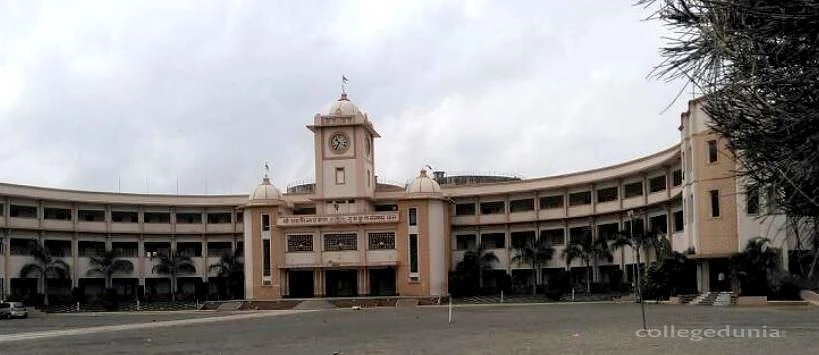
The campus, reportedly between 9 to 13 acres, is centrally located and has a distinct old-world charm. The main building is a heritage structure with high ceilings—beautiful, but showing its age. Maintenance is a common gripe in student reviews, with mentions of old furniture and monsoon leaks.
Infrastructure is basic but covers essentials. The library is a genuine asset, with over 43,000 books and digital access via SOUL software. There are dedicated labs for Geography and Psychology. Wi-Fi is available but limited to specific zones like the library. A large auditorium hosts events, and sports facilities include a shared playground for cricket and kabaddi, plus a basic gym.
Student life isn't about fest culture or high-tech labs. It's quieter. The active NSS (National Service Scheme) and NCC units are a big part of campus identity, often winning accolades. The social scene revolves around the canteen and the large, shady grounds. Attendance rules are described as "relaxed," which suits exam-preppers but can lead to a lack of structure for some.
The consensus from forums like CollegeDunia and Shiksha is clear and splits neatly along pragmatic lines.
The praise is resounding for affordability and faculty expertise. "If you want to prepare for GPSC or become a teacher, this is the best place because the fees are almost zero and the library is excellent," sums up the dominant positive sentiment. Students value the experienced professors and the central location.
The criticisms are equally consistent. Infrastructure maintenance is the biggest issue—"The building is beautiful but the toilets and classrooms are not well-maintained." The administrative machinery is slow, typical of government institutions. And the complete lack of placement support is repeatedly noted, though most students enter knowing this. Some feel the relaxed environment lacks academic rigor.
Dharmendrasinhji Arts College serves a very specific student profile brilliantly, and is a poor fit for everyone else.
It is absolutely worth it if you are a budget-conscious student from the Saurashtra region seeking a reputable B.A. degree as a stepping stone. It's ideal if your plan is to immediately prepare for government competitive exams (GPSC/UPSC) or a B.Ed. program. The ultra-low fees remove financial pressure, the faculty is knowledgeable, and the library is solid. For this path, DAC is an efficient, no-frills choice.
Look elsewhere if you expect modern campus amenities, active career placement services, or a vibrant, structured college life with lots of extracurriculars. If you're aiming for corporate jobs right after graduation, a college with more industry connections would be better. DAC is a utilitarian institution. Its value is in its access and its history, not in its amenities or job guarantees. For the right student, that's more than enough.
In this preview: 1 photo · 0 videos
Dharmendrasinhji Arts College is a 100% government-owned and funded institution, operating under the public education system.
The annual tuition fee for the BA program is very affordable, typically ranging between ₹1,200 and ₹2,500, with variations for male and female students.
No, the college is strictly an Arts and Humanities institution. For Science programs like B.Sc, students are directed to the adjacent Kotak Science College.
Yes, the college has a hostel facility. However, many students prefer to stay at the nearby Government Samras Hostel, which is known for its better amenities.
Admission is primarily based on 12th-grade (HSC) marks. Prospective students must apply online through the Saurashtra University admission portal when it opens, typically in the month of June.
Share what future students should know about Dharmendrasinhji Arts College.
Student voices are not rewritten by colleges. We remove spam and abuse.
Wider admission question? Community PulseWhat should future students know?
Tell us which course you're considering. We'll help you work out the next step.
Get instant Partner access after mobile verification. Your public edits are reviewed before they go live.
Claim this college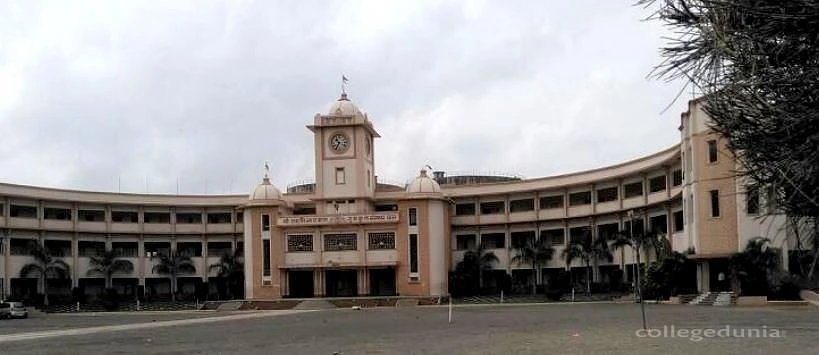
 Auditorium
 Cafeteria
 Computer Labs
 Gym
Gym Hostel
 Medical
 Science Labs
 Sports Complex
 Study Library