Loading Admission Guardian content
Loading Admission Guardian content
Find a program, read its fee details and explore the admission requirements.
Summary of the programs shown below. Fee periods can differ by program. Check the note beside each amount before comparing costs.
| Course | Stream | Fees |
|---|---|---|
| Bachelor of Arts [BA] | Arts | 2120 |
| Bachelor of Arts [BA] {Hons.} | Arts | 2430 |
| Bachelor of Commerce [B.Com] {Hons.} (Accounting and Finance) | Commerce | 2550 |
| Bachelor of Science [B.Sc] | Science | 2890 |
| Bachelor of Science [B.Sc] {Hons.} | Science | 3190 |
Specializations
Eligibility: 10+2
Specializations
Eligibility: 10+2
Specializations
Eligibility: 10+2
Specializations
Eligibility: 10+2
Specializations
Eligibility: 10+2
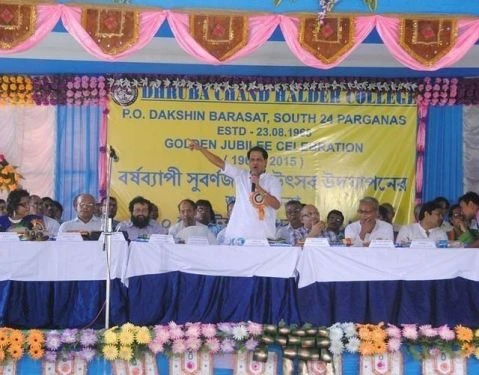
Dhruba Chand Halder College isn't trying to be a corporate launchpad. That's the first thing you need to understand. Established in 1965 in the quiet, green expanse of Dakshin Barasat, this government-aided institution under the University of Calcutta has a different mission. It's a place where a student from a modest background can get a solid, traditional undergraduate degree for less than the price of a mid-range smartphone each year. With a NAAC 'B++' grade and a sprawling nine-acre campus, DCH serves as a crucial academic hub for South 24 Parganas. Its reputation is built on affordability, a surprisingly strong faculty roster, and specialized science programs like Microbiology and Geography that are rare in the region. But you don't come here for flashy placements or a bustling city life. You come for a no-frills, credible education that sets a foundation for a master's degree, a government job, or a teaching career. That's the honest trade-off.
DCH offers the standard University of Calcutta undergraduate trifecta: Arts, Science, and Commerce. But the details are where you find the value. The college has a massive intake in the Arts stream, with B.A. General alone accounting for nearly 2,850 seats. That tells you about its core service to the community. For Science, the intakes are smaller and more focused. The B.Sc. in Geography (80 seats) and Microbiology (20 seats) are standout offerings, providing niche specializations you wouldn't typically expect at this fee level and location.
The faculty is a noted strength. Despite the high student-teacher ratio, a significant portion of the permanent staff holds PhDs. The Physics department, for instance, reportedly has four PhD holders among its five staff. Student reviews consistently praise teachers for being helpful and approachable, which is a big plus in a large college. Academically, it's a classic Calcutta University experience—the syllabus is rigorous, exams are paramount, and your final marks are what will open doors for further studies. The college also hosts distance education study centres for Netaji Subhas Open University and Rabindra Bharati University, extending its educational reach.
Let's be clear. If your primary goal is a high-paying corporate job straight after a three-year B.A. or B.Sc., this is not the optimal college. The placement cell exists and organizes sessions, but the ecosystem is modest. The official NIRF 2025 report lists a median package of ₹3.72 LPA for three-year UG programs, which is a credible, verifiable figure. Student reviews and internal estimates point to an average range of ₹2.4 to ₹2.57 LPA, with the highest reported offer around ₹3 LPA.
Recruiters are a mix of IT service giants like TCS and Sutherland, who sometimes participate in pooled drives, and niche employers like GIS companies that specifically hire Geography graduates. The official claim is that 70-80% of interested students get placed, but alumni sentiment suggests the vast majority of students—over 80%—opt for higher studies (M.A., M.Sc., B.Ed.) or preparation for government service exams. That's the real career path for most DCH graduates. The college's strength is creating academically sound candidates for the next stage, not being a final destination for corporate recruitment.
This is where DCH is almost unbeatable. As a government-aided college, fees are heavily subsidized. You're looking at annual tuition between ₹2,200 for Arts to about ₹3,500 for Science honours courses. Even with hostel fees (₹2,500 - ₹4,000 per year, excluding food), the total cost for a three-year degree can be under ₹25,000. That's transformative accessibility.
The college actively facilitates state and central government scholarships. Key schemes include Kanyashree (K2) for girls, Aikyashree for minority communities, and the Swami Vivekananda Merit-cum-Means Scholarship (SVMCM). SC/ST/OBC post-matric scholarships are also processed efficiently. For a student from an economically constrained background, this financial model removes the biggest barrier to a degree.
The process is straightforward and entirely merit-based. There are no entrance exams. Admission is determined 100% by your Class 12 marks, processed through the West Bengal government's centralized online portal. Eligibility for Honours programs typically requires a minimum of 50% aggregate and 45% in the relevant subject (or 55% in the subject alone).
Cutoffs vary by subject and category. For popular B.A. Honours streams like History or Political Science, you might need 70-75% in your best four subjects for the general category. For B.Sc. honours in sought-after subjects like Microbiology or Mathematics, the bar can be higher. With 60% in Class 12, admission to many B.A. or B.Com programs is very likely. The application fee is nominal, around ₹100, and there is no management or NRI quota.
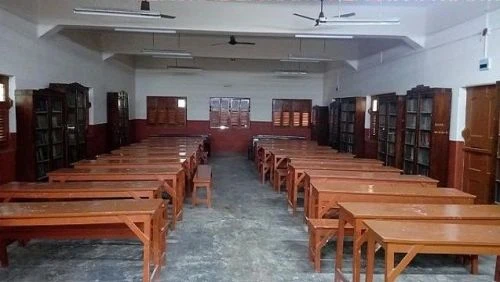
The campus is repeatedly described by students as "green" and "peaceful," a nine-acre space away from the city's chaos. Infrastructure is functional. There are 13 labs, smart classrooms, a library with over 30,000 books and N-LIST e-journal access, and a large playground for sports like football and cricket.
The hostel situation is a major caveat, especially for female students. There is only one hostel—Baruni Devi Chhatrabas for boys, with a capacity of about 150. The building is old and renovations are reportedly ongoing. Critically, there is no girls' hostel on campus, a point explicitly noted in the college's own SSR report and listed as a future project. This is a significant drawback for outstation female students, who must arrange for private lodging. The canteen provides basic, affordable food. Social life revolves around departmental events, festivals, and sports, not a cosmopolitan city scene. It's a self-contained, academic environment.
The consensus from platforms like CollegeDunia and Shiksha is remarkably consistent. The overwhelming positive is the faculty. Phrases like "helpful," "qualified," and "treat students like friends" appear again and again. The low fee is the other big applause point, making education accessible.
The criticisms are just as uniform. The administrative office is often called slow, making admission or certificate collection a test of patience. The lack of a girls' hostel is a frequent and serious complaint. On placements, students are pragmatic. One verbatim review sums it up: "It is a simple college for those who want to graduate with good marks and move to University. Not a place for corporate placements." That's not necessarily a damning indictment; it's just an accurate setting of expectations. The college delivers what it promises for its fee: a respected degree and a path to further study.
Dhruba Chand Halder College has a very specific, valuable role. It is an excellent, cost-effective choice for a student from South 24 Parganas or surrounding areas who wants a reputable University of Calcutta degree with minimal financial burden. It's particularly strong if you're aiming for B.Sc. in Geography or Microbiology, or if you plan to use your B.A. or B.Com as a stepping stone to a master's, B.Ed., or government service exams. The qualified faculty and serene campus are genuine benefits.
However, you should probably look elsewhere if you prioritize immediate, high-value job placements after UG, require on-campus hostel facilities (especially as a female student), or want the infrastructure and social opportunities of a city college. DCH isn't a destination for corporate recruitment; it's a foundation for traditional academic and government career paths. For the right student—one seeking affordability and a solid academic base—it's a very worthwhile option. Just go in with your eyes open to what it is, and what it isn't. You can find more official details on the DCH College website.
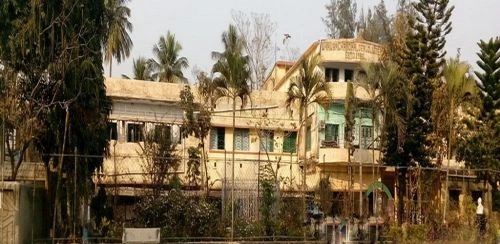
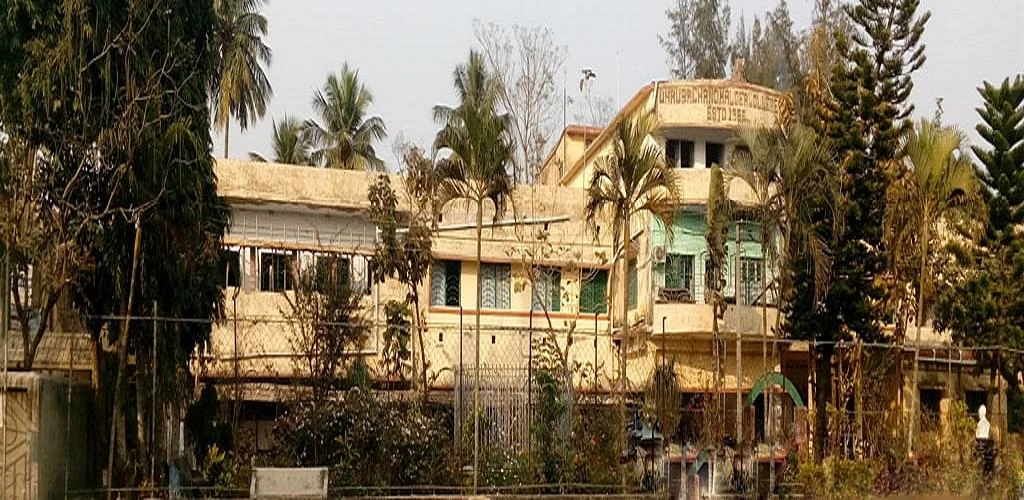
In this preview: 5 photos · 0 videos
Yes, Dhruba Chand Halder College (DCH) is considered one of the best colleges in its district for Geography Honours. This reputation is supported by its dedicated laboratory facilities and a strong culture of field-work for students.
No, Dhruba Chand Halder College currently does not have a girls' hostel. The on-campus residential facility available at this time is a boys' hostel.
The nearest railway station to Dhruba Chand Halder College is Dakshin Barasat, which is located approximately 1.5 kilometers from the campus.
Yes, for most of its undergraduate B.A. and B.Com courses, securing 60% in your 12th standard board exams is generally sufficient to be considered for the merit-based admission list at Dhruba Chand Halder College.
While some online aggregator sites may mention higher figures, the median placement package for Dhruba Chand Halder College is closer to 3.7 LPA. Reports of packages around 6 LPA are considered outliers or may reflect pooled data from the broader university.
Share what future students should know about DCH.
Student voices are not rewritten by colleges. We remove spam and abuse.
Wider admission question? Community PulseWhat should future students know?
Tell us which course you're considering. We'll help you work out the next step.
Get instant Partner access after mobile verification. Your public edits are reviewed before they go live.
Claim this college
 Auditorium
 Cafeteria
 Computer Labs
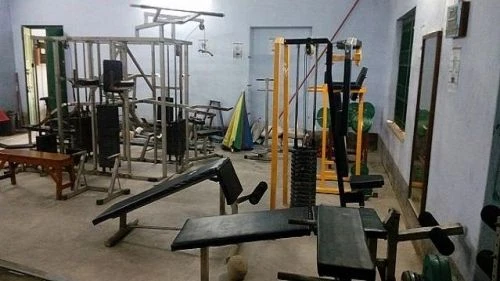
 Gym
Gym Hostel
 Medical
 Science Labs
 Sports Complex
 Study Library