Loading Admission Guardian content
Loading Admission Guardian content

Provisional score based on available data. It may change as more information is verified.
Selected ranking categories, with the recorded year beside each result. Open all records for the complete history.
4 published records · Lower numeric ranks are stronger
Find a program, read its fee details and explore the admission requirements.
Summary of the programs shown below. Total course fee. Check the note beside each amount for inclusions and exclusions.
| Course | Stream | Fees |
|---|---|---|
| Master of Business Administration [MBA] | Management | 41000 |
| Master of Engineering [ME] | Engineering | 60000 |
| Bachelor of Engineering [BE] | Engineering | 220000 |
| Bachelor of Technology [B.Tech] | Engineering | 220000 |
| Ph.D. (Engineering) | Engineering |
Specializations
Eligibility: Graduation with 50% + TANCET
Specializations
Eligibility: Graduation with 50% + TANCET
Specializations
All accepted exams
Eligibility: 10+2 with 50% + TNEA
Specializations
All accepted exams
Eligibility: 10+2 with 50% + TNEA
Specializations
Eligibility: Post Graduation
2 exams with cutoff data available
 Accenture
 Ace Industries
 Acies Global
 Allsec Technologies
 Alpha Associates
 Amazon
 Asminds Technology
 Aspire Systems
 AVASOFT
 Blue Ball Technologies
 CGI
CGI Cognizant
 Comfotec Engineering
 Congruent
 CSS Corp
 DXC Technology
 Eleation Academy
 EXCELACOM
 Exotic Doors & Floors
 Extra Marks
 Future Generali
 HCL Technologies
 Hexaware Technologies
 IBM
IBM ICICI Securities
 Infosys
 Infosys Technologies
 Jaro Education
 Jman Group
 Juspay
 Kaar Technologies
 Kotak Mahindra Bank
 Maximl Labs
 Mettl
Mettl Milekal Engineering
 MindTree
 Mitsuba Sical India Pvt Ltd
 Mu Sigma
 NTT DATA
 Object Frontier Software(OFS)
 PathFront
 Qspiders
 Qube Cinema
 Rivigo Logistics
 Sanmina
 Seventh Sense
 Shiash
 Shiash Info Solutions Private Limited
 Shriram Transport Finance Company Ltd.
 Sopra
Sopra Star Health Insurance
 Sutherland
 Systech Solutions
 Sysveda UK
 Tata Consultancy Services
 TCS
TCS Tech Mahindra
 Thasmai
 USAM Tech
 Valued Epistemics
 ValueLabs
 Vdart Software Services
 Vembu Technologies Pvt Ltd
 Virtusa
 Wipro
WiproDMI College of Engineering (DMICE) in Chennai presents a classic case of a private institution where the official brochure and the lived student experience tell two different stories. Established in 2001 and sprawling across 55 acres in Palanchur, it's an autonomous Christian minority college affiliated with Anna University. The college touts NBA accreditation valid until 2025 and a long list of industry MoUs. But talk to the students, and you'll hear more about the Wi-Fi that only works in the library, the hit-or-miss hostel food, and placement packages that often fall short of the glossy brochures. It's a place where your academic outcome likely depends more on your own hustle than on institutional shepherding.
DMICE offers a standard set of engineering programs under the Anna University umbrella, with a noticeable push towards contemporary fields. At the undergraduate level, you can pursue a B.E. in Civil, CSE, EEE, ECE, Mechanical, or the newer Artificial Intelligence & Machine Learning. The B.Tech offerings include Information Technology and Artificial Intelligence and Data Science. Intake sits around 180-240 seats across the B.Tech programs. For postgraduates, M.E. specializations like CSE, Applied Electronics, and Power Electronics are available, alongside an MBA with unique specializations in Shipping & Logistics and Operations Management. They also offer an MCA and Ph.D. programs.
Academically, the consistent praise from student reviews is for the faculty. Many describe professors as "knowledgeable, supportive, and genuinely caring," which is a significant asset. The college claims placement training starts from the first year. Their list of industry MoUs is extensive—names like IBM Career Education, HCL, L&T Edutech, and Capabl pop up—suggesting a framework for workshops and potential training modules. Whether that translates into superior academic depth is less clear. It's a curriculum-driven system, typical of Anna University affiliates.
This is where you need to read between the lines carefully. The college's official placement page and some promotional material might highlight a historic high of ₹16.5 LPA (from the 2019-20 batch). But that's not the current reality. More recent data points to a highest package around ₹8 LPA, with the figure for 2025 cited at ₹6 LPA. The average package is the real story. You'll see numbers like ₹4.5 LPA floated, but student-reported data and some sources indicate it can be as low as ₹2.2 LPA to ₹3-4 LPA. That's a substantial gap.
Placement percentages are similarly fuzzy. One source claims "about 90%" placement, while another states "almost 60%" of students get placed in "good companies." The latter feels more aligned with the sentiment in student reviews, where comments like "our college does not provide better placements" are common. The recruiter list is decent and features the usual IT service giants: TCS, Infosys, Wipro, Cognizant, HCL, and Tech Mahindra. Companies like Amazon, Accenture, and Capgemini also appear.
The verdict? Placement support exists, and you will see companies on campus. But don't expect mass, high-paying offers. The average outcomes are modest, and landing a job likely requires significant individual initiative. The training from first year is a plus, but it doesn't seem to dramatically elevate the package levels above the regional average for mid-tier private colleges.
On paper, DMICE is relatively affordable for a private engineering college. The annual tuition fee for B.Tech and B.E. programs ranges from ₹50,000 to ₹55,000. Over four years, the total program cost is estimated between ₹2 lakh and ₹3.48 lakh, with a reasonable total cost estimate around ₹2.2 lakh for tuition. MBA fees are around ₹35,000 annually, and M.E. total program fees range from ₹60,000 to ₹1 lakh.
The college does offer scholarships for meritorious and economically weaker students, including government schemes and institutional tuition fee waivers. This is a critical point for eligible candidates—the low fee structure combined with potential aid makes it a financially viable option. Hostel and mess fees aren't explicitly detailed in the available data, so that would be an additional cost to factor in during budgeting.
Admissions are channeled through the state's centralized systems. For B.E. and B.Tech, it's entirely based on TNEA (Tamil Nadu Engineering Admissions) counseling, which uses your Class 12 (HSC) marks to generate a merit rank. There's no separate management or NRI quota mentioned, which simplifies the process. The cutoffs are accessible. For the 2024 TNEA round, the closing ranks for the OC category ranged widely from around 20,583 to 197,219, corresponding to roughly 175–195 marks on the rank list. This indicates seats are available across a broad spectrum of ranks.
For the MBA program, you need a TANCET (Tamil Nadu Common Entrance Test) score. A 2021 cutoff suggests scores around 54.76 were considered, with scores near 70 providing a stronger chance. M.E. admissions consider GATE scores or the CEETA exam. Ph.D. admissions are primarily merit-based, often involving departmental interviews or tests.
Application windows typically open in April-May. For the 2026 cycle, TNEA registration is expected in May, while TANCET 2026 registration has been noted to extend to April 15, 2026.
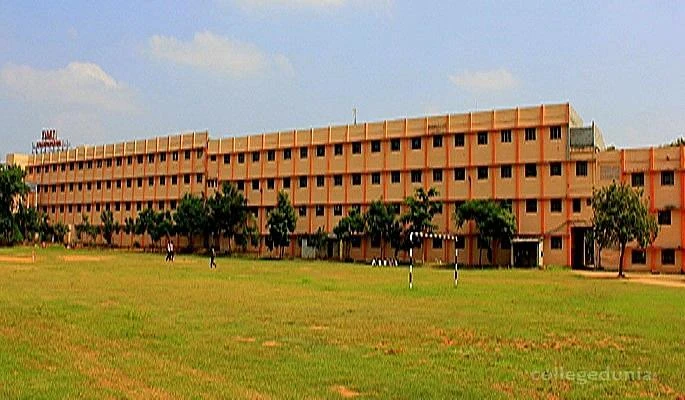
The 55-acre campus is a point of contention. Officially, it's described as spacious and eco-friendly, with a 960-foot-long main building and separate blocks for different departments. Facilities like the air-conditioned Hiroyki Itho Auditorium (600 capacity) and the massive Emmanuel Auditorium (2500 capacity) sound impressive. The library is a genuine strength—computerized, with over 37,600 volumes and e-journal access.
But student reviews paint a more uneven picture. The hostels, run by the Sisters of DMI, receive the most mixed feedback. Some call them clean and secure; others complain vehemently about small rooms, bad bathrooms, rude wardens, and poor bathing water quality. Food reviews are similarly split between "hygienic and delicious" and "the worst."
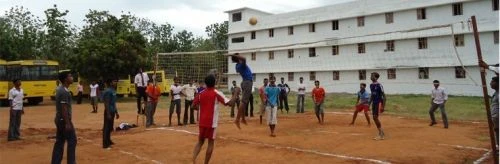
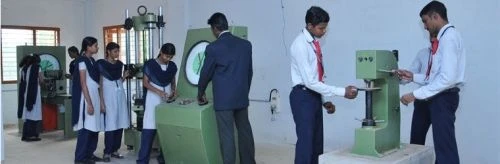
Infrastructure complaints are common. Several students state Wi-Fi is only available in the library, not campus-wide. Comments on labs range from "well-equipped" to "not in good condition," with specific notes about non-working computers. Some even claim sports facilities are lacking, contradicting the official listing of playgrounds and a gym. The college provides a fleet of buses for transport, which is essential given its location 26 km from the airport and 18 km from Avadi railway station.
Synthesizing the chatter from review sites gives you a balanced, real-world perspective. The positives are consistent and meaningful: Faculty quality is repeatedly praised. Students find teachers interactive, supportive, and knowledgeable. The library is a valued resource. Many also appreciate the green, spacious campus atmosphere and the early start to placement training.
The negatives are just as consistent and often concern quality of life and expectations. Hostel living is a gamble—you might get a decent experience or a problematic one, with food being a particular pain point. Infrastructure, especially Wi-Fi and some labs, is criticized for not meeting modern student needs. The most significant feedback revolves around placements. There's a clear sense that outcomes are average, with packages often below hopes, creating a gap between promise and reality.
DMI College of Engineering is a practical choice, not a dream one. Its biggest draws are the low tuition fees, the generally well-regarded faculty, and its status as an Anna University-affiliated, NBA-accredited institution. If you are a cost-conscious student with a TNEA rank in the broad cutoff range, and you're capable of self-directed learning, DMICE provides a legitimate degree path without financial strain.
However, temper your expectations on campus lifestyle and placement packages. Don't choose it for high-speed connectivity or guaranteed luxury hostel living. And view the placement cell as a facilitator for baseline IT service roles, not a gateway to top-tier tech salaries. It's best for students who see college as a launchpad and are prepared to supplement their studies with external certifications and personal projects. If your priority is a vibrant, fully-resourced campus life with strong corporate recruitment, you might find better options elsewhere, possibly at a higher cost.


In this preview: 5 photos · 0 videos
The average placement package at DMI College of Engineering, as per recent data, ranges between ₹2.2 Lakhs Per Annum (LPA) to ₹4.5 LPA. It's important to note a significant gap between the highest package ever recorded (₹16.5 LPA in 2019-20) and recent trends, where the highest package is around ₹6-8 LPA. Student reviews suggest the typical on-campus offer falls in the lower end of the average range.
The annual tuition fee for the B.Tech program at DMI College of Engineering is approximately ₹50,000 to ₹55,000. The total estimated program cost for four years is between ₹2 lakh and ₹3.48 lakh. This does not include additional costs for hostel accommodation and mess facilities, which are separate.
Student reviews on hostel facilities at DMI College of Engineering are mixed. Some describe them as clean, secure, and well-ventilated with spacious rooms. However, several negative reviews highlight issues like small room space (often triple-sharing), poorly maintained bathrooms, rude wardens, and problems with bathing water quality. The food in the hostel mess also receives contradictory feedback, ranging from "hygienic and delicious" to "the worst."
For the 2024 admission cycle, the TNEA cutoff ranks for DMI College of Engineering for the Open Category (OC) ranged from approximately 20,583 to 197,219. This corresponds to roughly 175 to 195 marks in the TNEA merit list. These ranks indicate seats are available for a wide spectrum of scores.
DMI College of Engineering can be a viable option for Computer Science Engineering (CSE) primarily due to its low fee structure and NBA accreditation. The faculty in the department is often praised by students as knowledgeable and supportive. However, placement outcomes for CSE are moderate, with average packages similar to the college-wide range (₹2.2-4.5 LPA) and major IT service companies like TCS, Infosys, and Wipro being the primary recruiters. It provides a solid foundation, but top-tier placement packages are not common.
Share what future students should know about DMICE.
Student voices are not rewritten by colleges. We remove spam and abuse.
Wider admission question? Community PulseWhat should future students know?
Tell us which course you're considering. We'll help you work out the next step.
Get instant Partner access after mobile verification. Your public edits are reviewed before they go live.
Claim this college
66 named recruiters in the recorded data. Company names are deduplicated.

 Auditorium
 Cafeteria
 Computer Labs
 Gym
Gym Hostel
 Medical
 Science Labs
 Sports Complex
 Study Library