Loading Admission Guardian content
Loading Admission Guardian content

Provisional score based on available data. It may change as more information is verified.
Find a program, read its fee details and explore the admission requirements.
Summary of the programs shown below. First-year fee. Check the note beside each amount for inclusions and exclusions.
| Course | Stream | Fees |
|---|---|---|
| Diploma in Engineering (Polytechnic) | Engineering | 40000 |
| Bachelor of Technology [B.Tech] | Engineering | 80000 |
| Master of Technology [M.Tech] (Computer Science and Engineering) | Engineering | 80000 |
Specializations
Specializations
All accepted exams
Eligibility: 10+2 with 75% + JEE Main
Specializations
All accepted exams
Eligibility: Pass in Graduation + GATE
 Delphi
 Sterlite
If you're scanning the Dehradun-Rishikesh belt for a private engineering college that won't break the bank, Doon Institute of Engineering and Technology (DIET) is a name that'll pop up. Established in 2004, it's a budget-conscious choice for students who didn't crack the top JEE Main ranks but still want a B.Tech degree from a recognized, AICTE-approved institution. The campus sits on the Haridwar-Rishikesh highway, offering a quiet, scenic backdrop of the Shivalik hills—a stark contrast to the often-grim placement reports you'll find in student reviews. It's a classic case of managing expectations: you get what you pay for, and at DIET, that's a basic, no-frills engineering education with outcomes heavily dependent on your own hustle.
DIET functions as the engineering wing of the Doon Group of Institutions. Its academic structure is straightforward and follows the calendar of its affiliating university, UTU. The program mix is standard for a regional private college, with a focus on traditional engineering disciplines.
At the undergraduate level, the B.Tech program offers seats primarily in Computer Science & Engineering (60), Mechanical Engineering (60), and Civil Engineering (60). Electronics & Communication and Electrical & Electronics likely have smaller intakes around 30 seats each. For postgraduate studies, there's an M.Tech in Computer Science with about 18 seats. The institute also runs three-year Diploma programs in Mechanical, Civil, Electrical, and Automobile Engineering, catering to the local industrial landscape.
Academically, it's a by-the-book operation. The faculty strength is around 52, with an estimated 15-20% holding PhDs. The teaching is described as accessible—students on review platforms often note that professors are approachable and helpful with projects, which is a plus. But the curriculum and grading are entirely dictated by UTU. That means you're in for the standard semester system and a 10-point CGPA. There are MoUs with local industrial units in the SIDCUL area near Haridwar for vocational training, a nod to the practical needs of the region's manufacturing sector.
This is where you need to read between the lines. The institute's official literature might tout high placement percentages, but the ground reality, as echoed across student reviews on CollegeDunia and Shiksha, is more tempered.
Let's separate the claims from the consensus. The highest package floated for 2023-24 is in the ₹10-12 LPA range, but treat that as an outlier, not the norm. The working average package for on-campus placements sits between ₹3.5 and ₹4.5 LPA, with a median closer to ₹3.2 LPA. The placement percentage isn't the near-universal figure sometimes advertised. For core branches like Civil and Mechanical, it's reportedly around 50-60%, with students often seeking opportunities off-campus. Computer Science does better, but even then, the roles are largely with IT services firms.
Recruiters are a mix of regional and national names. The IT/tech side sees visits from HCL Technologies, L&T Infotech, and sometimes off-campus recruitment drives from Infosys and TCS. The college's location near Haridwar's industrial belt brings in core manufacturing recruiters like Tata Motors, Honda, Hero MotoCorp, JBM Group, and Eicher Engines. Banks and BPOs like HDFC and Genpact also recruit. The takeaway? If you're in CSE, you have a shot at IT services roles. If you're in a core branch, you're looking at plant or workshop roles in nearby industries. Don't expect dream packages or mass recruiting from product-based companies. The gap between the official claim and the alumni narrative is the most critical factor to weigh.
Affordability is DIET's strongest selling point. In a region with several costly private universities, its fee structure is decidedly modest.
For the B.Tech program, annual tuition fees are estimated between ₹75,000 and ₹85,000. Over four years, you're looking at a total tuition cost of roughly ₹3.2 to ₹3.5 lakhs. Adding hostel and mess fees (₹65,000 - ₹75,000 per year for a basic triple-sharing room) and other annual charges like exam fees (₹5,000-₹7,000), the all-in annual cost for an out-of-town student lands around ₹1.5 - ₹1.7 lakhs. Diploma programs are cheaper, with annual fees around ₹35,000-₹45,000.
The institute offers a few scholarships to ease the burden. The Dr. A.P.J. Abdul Kalam Scholarship provides merit-based fee waivers. There's also a Girl Child Scholarship that can cover up to 50% of tuition. Students from SC/ST/OBC backgrounds can apply for state government post-matric scholarships. It's not a vast array of options, but for a low-fee college, any additional aid is a bonus.
Admission to the B.Tech programs is primarily through state counseling. DIET accepts JEE Main scores for 85% of its seats via the UTU counseling process. For the remaining 15%, there's a management quota for direct admission based on merit (12th-grade marks).
The JEE Main cutoffs are indicative of its position in the market. For the 2024 session, the opening and closing ranks for Computer Science were around 4.5 lakhs and 10 lakhs (All India), respectively. For Civil Engineering, ranks were tighter, between 3.2 and 4.2 lakhs. These are not highly competitive cutoffs, which aligns with the college's accessible profile. For the Diploma programs, admission is through the state's UBTER JEEP exam. M.Tech admissions consider GATE scores or a UTU entrance test.
The application window typically runs from May to August, with a nominal application fee of ₹500-₹1000. The process is centralized through the university, so keep an eye on the Uttarakhand Technical University and official counseling websites for notifications.
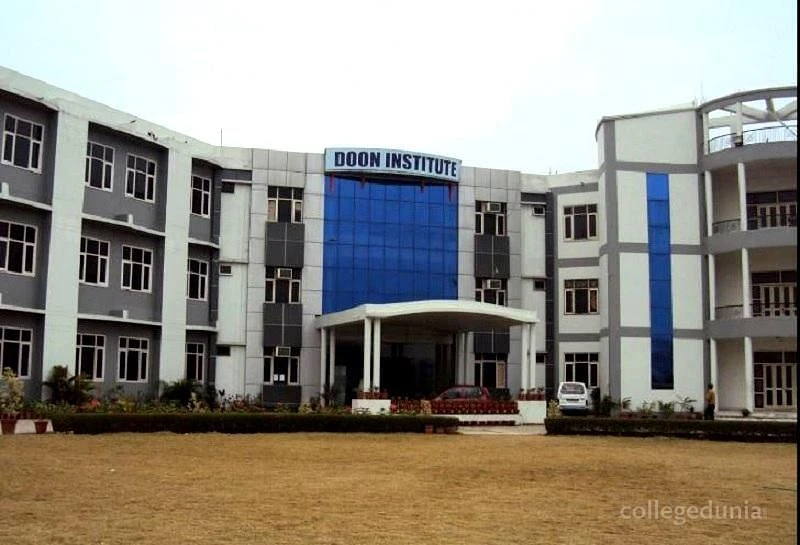
The 15-acre campus in Shyampur offers a mixed bag. Its greatest asset is the location—peaceful, surrounded by hills, and away from city chaos. But that serenity comes with a trade-off in connectivity and amenities.
Infrastructure is functional. Labs meet basic curriculum requirements, with the mechanical and civil workshops getting a passing "decent" remark from students. The library has a physical collection of about 20,000 titles and DELNET access. Wi-Fi exists but is notoriously inconsistent, often cited in reviews as a pain point. For sports, there's a large field for cricket/football, a volleyball court, and facilities for indoor games.
Hostel life is spartan. Separate blocks for boys and girls are secure (the girls' hostel has 24/7 warden supervision) but basic. Rooms are no-frills, and maintenance is average. The mess food is a common grievance, described as repetitive and lacking variety. For students from Rishikesh, Haridwar, or parts of Dehradun, the college bus fleet is a viable alternative to hostel living.
Social life is quiet. Don't expect a bustling calendar of fests and cultural events like you'd find at larger Dehradun universities. The atmosphere is disciplined, with a strict 75% attendance mandate. It's a campus for students who prefer a focused, low-distraction environment—or are simply willing to tolerate one for the degree.
Synthesizing feedback from 2023-2025 reviews on platforms like Shiksha and CollegeDunia paints a consistent picture. The positives are clear: affordability, helpful faculty, a peaceful location, and strict discipline that keeps students attending classes. One recurring sentiment is, "If you want a degree at a low cost and are willing to work hard on your own for placements, DIET is okay."
The negatives are equally persistent. The most significant is the disconnect between placement claims and reality. Many feel the "100% placement" tag is misleading, especially for core branches. Infrastructure maintenance is another sore point—old lab equipment and slow Wi-Fi are frequent complaints. The administrative process is often called slow and bureaucratic. Finally, the limited social and cultural scene makes campus life feel monotonous to some. As one paraphrased review put it: "The location is the best part... but the mess food will make you miss home instantly."
DIET is a specific solution for a specific problem. It's worth serious consideration if you are a cost-conscious student with moderate JEE Main ranks (or good 12th marks for management quota), who is targeting a basic B.Tech degree from an AICTE-approved college. It's a pragmatic choice for those from the region who can commute or for students who value a quiet study environment and are confident in their ability to supplement campus training with external skill-building for placements.
However, look elsewhere if your primary goal is robust campus placements, modern infrastructure, a vibrant campus life, or a degree from a highly ranked institution. The college lacks NAAC accreditation and an NIRF ranking, and its placement outcomes are modest and branch-dependent. You should be going in with your eyes open, understanding that the institute provides a platform and a degree, but the onus for a strong career launch will largely be on you. For its fee bracket in Uttarakhand, it serves a purpose, but it's a no-frills, manage-your-expectations kind of place.

In this preview: 2 photos · 0 videos
No, Doon Institute of Engineering And Technology (DIET) is not the same as DIT University. DIT University is a private university located within Dehradun city. DIET is a private engineering college affiliated with Uttarakhand Technical University (UTU) and is situated near Rishikesh.
Yes, the Computer Science and Engineering (CSE) department has the best placement record at DIET, with average placement packages reported around ₹4 LPA. Students are advised to proactively build their skills to enhance opportunities in off-campus recruitment drives.
The institute is located in Shyampur, on the highway connecting Haridwar and Rishikesh. It is approximately a one-hour drive from the main city of Dehradun.
Yes, direct admission is possible at DIET through the 15% Management Quota. Eligibility requires meeting the minimum academic criteria, which is typically 50% marks in Class 12 with Physics, Chemistry, and Mathematics (PCM).
The girls' hostel is described as secure with 24/7 warden supervision. However, the facilities are considered basic. Many local female students opt to commute daily using the college bus service instead.
Share what future students should know about DIET.
Student voices are not rewritten by colleges. We remove spam and abuse.
Wider admission question? Community PulseWhat should future students know?
Tell us which course you're considering. We'll help you work out the next step.
Get instant Partner access after mobile verification. Your public edits are reviewed before they go live.
Claim this college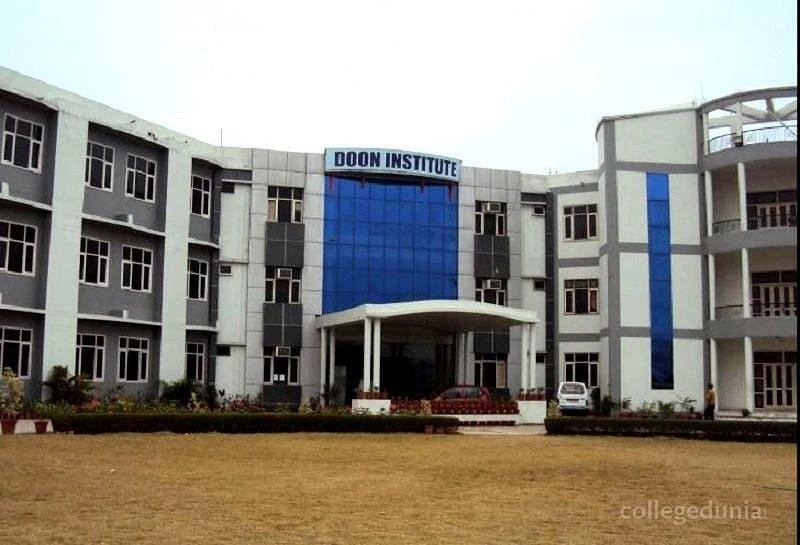
 Auditorium
 Cafeteria
 Computer Labs
 Gym
Gym Hostel
 Medical
 Science Labs
 Sports Complex
 Study Library