Loading Admission Guardian content
Loading Admission Guardian content

Provisional score based on available data. It may change as more information is verified.
Find a program, read its fee details and explore the admission requirements.
Summary of the programs shown below. Fee amounts are not listed. Contact the college for its current fee schedule.
| Course | Stream | Fees |
|---|---|---|
| Bachelor of Arts [BA] | Arts | |
| Bachelor of Social Work [BSW] | Arts |
Specializations
Eligibility: 10+2
Eligibility: 10+2
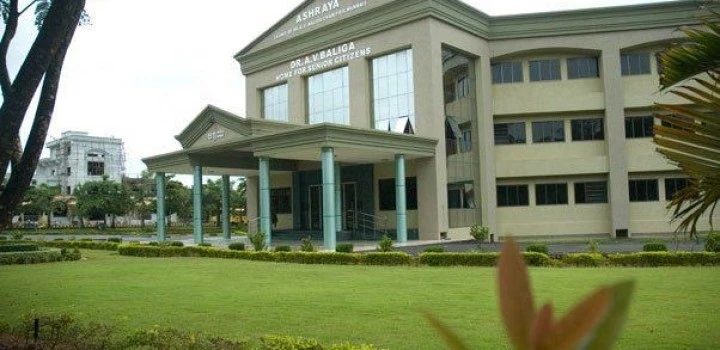
If you're looking for a social work college that feels more like a mission than a campus, the Dr. A. V. Baliga Institute of Social Sciences and Rural Management is worth a long look. Established in 2007-08 and affiliated with Mangalore University, this private institute in Udupi's Brahmavar area is built for one thing: turning theory into immediate, hands-on practice. Forget glossy brochures. Here, your classroom is a 24-acre campus shared with a functioning hospital and a senior citizen home. That's the core appeal. You won't find NIRF rankings or a buzzing corporate placement cell. What you get instead is direct mentorship from renowned practitioners and a curriculum that happens, in large part, outside the lecture hall. It's a specific, no-frills path for students who already know they want to work on the ground.
The academic portfolio is tight and focused. At the undergraduate level, the institute offers a three-year Bachelor of Social Work (BSW) and a three-year Bachelor of Arts (BA) with specializations in Psychology, Rural Development, and Journalism. A Master of Social Work (MSW) has been mentioned as planned in older records, but its current status for the 2025-26 academic year is unverified. Students should confirm directly with the institute or check the latest Mangalore University affiliation list.
The faculty is small, around 10-12 members, which leads to the college's biggest academic strength: personalized attention. Class sizes are intimate. You're not a face in a crowd. The director, Dr. P. V. Bhandary—a noted psychiatrist and social activist—isn't a distant figurehead. He's actively involved, and his practitioner's perspective shapes the teaching culture. The curriculum follows the Mangalore University semester system, but the real learning happens through mandatory field-work. Every BSW student completes block placements, and the integration with the on-campus hospital and senior home means case studies aren't abstract. They're walking distance away.
Let's be clear upfront: this is not a college you choose for a high corporate placement package. Official highest or average salary figures aren't published, and that's telling. The placement reality here is sector-specific. Most graduates find roles in the social sector, healthcare, and NGOs. Top recruiters are local and regional entities like the SKDRDP (Shri Kshetra Dharmasthala Rural Development Project), various hospitals and mental health centers (including the parent Baliga Hospital), and government social welfare departments. Some BSW graduates do land in corporate HR departments, but that's not the primary pipeline.
The placement percentage isn't touted with a flashy number because the path is different. The institute's strength is in creating employable, experienced social work practitioners, not in hosting mass recruitment drives. If your goal is a high-paying corporate job right after graduation, you'll likely be disappointed. But if you aim to build a career in grassroots NGOs, community health, or rural development, the practical exposure here gives you a tangible edge. The 100% internship stat is real—it's baked into the degree.
Affordability is a major draw. For the 2024-25 cycle, annual tuition fees are estimated between ₹9,000 to ₹12,000 for the BA program and ₹13,000 to ₹15,500 for the BSW program. Hostel and mess fees are estimated at ₹35,000 to ₹50,000 per annum, though these are kept flexible to accommodate students from rural backgrounds. All in, the total three-year cost, including living expenses, can be as low as ₹1.5 lakhs. That's a fraction of the cost at many private universities.
Financial aid is available. SC/ST/OBC students can apply for state scholarships through the Karnataka State Scholarship Portal (SSP). The Dr. A. V. Baliga Charities also offer merit-based scholarships. The management's philanthropic ethos means they often work with students facing genuine financial hardship. It's a system designed for accessibility, not profit.
The admissions process is straightforward and merit-based. There's no entrance exam. Selection is based purely on your 10+2 (PUC) marks. The application window typically runs from May to July. After submitting a direct application, shortlisted candidates go through document verification and a personal interview, often with the director or principal. This interview isn't just a formality; it's a chance for the institute to gauge your motivation for the social sciences field.
An NRI/Management quota exists, but the student body is predominantly local and rural. The vibe is less about competitive cutoffs and more about finding students who are a good fit for the institute's hands-on, service-oriented philosophy.
The campus is described as picturesque and serene, set away from city noise. It's a 24-acre shared space. The infrastructure is functional but basic. Reviews call it "dated" compared to flashier private colleges. The library has a specialized collection for social work and psychology, but digital resources are limited to what Mangalore University provides. There's a psychology lab and a basic computer lab.
Hostels are separate for boys and girls. The quality is consistently rated as "basic but disciplined." You get what you need, not luxury. The unmatched advantage is medical care. Being on the same campus as the Dr. A. V. Baliga Memorial Hospital means 24/7 access to medical services and psychiatric counseling—a unique perk.
Campus life is quiet. There are no large-scale fests or a glamorous social scene. The action is in NSS camps, community outreach programs, and fieldwork. If you're looking for the typical "college experience" of parties and events, you'll find it lacking. The social life is built around shared purpose, not entertainment.
Student sentiment paints a consistent picture. The overwhelming positive is the faculty's dedication and the "family-like" atmosphere fostered by small classes. Dr. Bhandary's leadership is a huge draw; students feel they're learning from a real-world expert. The practical exposure is repeatedly praised. "We don't just read about social issues; we see them in the hospital and the senior home next door," sums up the sentiment. The affordability and transformative nature of NSS work are also big pluses.
The negatives are just as clear. Placement variety is limited to the social sector. Campus life is too quiet for some, and the infrastructure feels outdated to students comparing it to places like Manipal. You don't come here for a sleek, modern campus. You come for the raw, practical education. Grievance redressal is handled directly by the trust, which students find approachable, reflecting the management's philanthropic roots.
This institute is a specialist tool, not a Swiss Army knife. It's absolutely worth it for a specific type of student: someone committed to a career in social work, rural development, or community psychology, who values immense practical exposure over brand name or campus glamour, and who needs an affordable private option. The mentorship from practicing professionals and the live fieldwork integration are advantages you won't find in many theoretical programs.
But you should probably look elsewhere if you're unsure about the social sciences, crave a vibrant campus social life with fests and events, or are primarily motivated by high-paying corporate placements post-graduation. It's a disciplined, mission-focused environment. For the right student, it's an incredible launchpad into grassroots work. For the wrong one, it might feel isolating and limited. Your decision hinges entirely on how closely your goals align with the institute's very specific, and very hands-on, purpose.
Yes, Dr. A. V. Baliga Institute is operational and currently accepting admissions for the 2025-26 academic cycle.
While the institute's flagship program is the BSW, an MSW (Master of Social Work) is often listed on educational portals. Prospective students should directly verify the program's current affiliation status with Mangalore University for the relevant academic year.
Dr. A. V. Baliga Institute is significantly more affordable and offers more direct, "raw" rural field exposure. In contrast, Manipal (MAHE) provides better global networking opportunities and campus infrastructure.
Hostel fees are not fixed but are kept low to accommodate students from rural backgrounds. They are typically around ₹3,000 to ₹4,000 per month, which usually includes food.
Placements for the BSW program are primarily in the development sector, such as NGOs, and in healthcare. The institute is not considered a "placement-heavy" college for corporate roles.
Share what future students should know about Dr. A. V. Baliga Institute of Social Sciences and Rural Management.
Student voices are not rewritten by colleges. We remove spam and abuse.
Wider admission question? Community PulseWhat should future students know?
Tell us which course you're considering. We'll help you work out the next step.
Get instant Partner access after mobile verification. Your public edits are reviewed before they go live.
Claim this college Auditorium
 Cafeteria
 Campus Security
 Computer Labs
 Gym
Gym Hostel
 Medical
 Science Labs
 Sports Complex
 Study Library