Loading Admission Guardian content
Loading Admission Guardian content

Provisional score based on available data. It may change as more information is verified.
Selected ranking categories, with the recorded year beside each result. Open all records for the complete history.
3 published records · Lower numeric ranks are stronger
Find a program, read its fee details and explore the admission requirements.
Summary of the programs shown below. First-year fee. Check the note beside each amount for inclusions and exclusions.
| Course | Stream | Fees |
|---|---|---|
| Master of Arts [MA] | Arts | 1225 |
| Master of Science [M.Sc] | Science | 1255 |
| Bachelor of Arts [BA] | Arts | 1625 |
| Bachelor of Commerce [B.Com] | Commerce | 1625 |
| Bachelor of Science [B.Sc] | Science | 1645 |
Specializations
Eligibility: Graduation
Specializations
Eligibility: Graduation
Specializations
Eligibility: 10+2
Specializations
Eligibility: 10+2
Specializations
Eligibility: 10+2
Dr. Ambedkar Govt. Arts College (DAGAC) in Vyasarpadi, Chennai, is a study in contrasts. It’s a place where you can get a three-year degree for less than ₹10,000, taught by PhD-qualified professors, but you won’t find a buzzing campus life or high-flying corporate recruiters. For over 50 years, it has served as a crucial academic gateway for students from modest backgrounds, particularly from North Chennai. The college’s identity is inextricably linked to its location—a historically marginalized neighborhood that shapes its external reputation but also fuels its core mission of accessible education. If your priority is a quality, debt-free degree from a University of Madras-affiliated institution, DAGAC delivers. If you’re looking for a glamorous college experience, it frankly doesn’t.
DAGAC runs a dual-shift system (Shift I & II) to maximize its intake, offering a wide but traditional arts and science slate. The undergraduate lineup includes B.A. (English, Tamil, Economics, Defence Studies, History), B.Sc. (Maths, Physics, Chemistry, Botany, Zoology, Computer Science, Statistics, Psychology, Home Science, Visual Communication), B.Com (General & Corporate Secretaryship), and B.B.A. (Finance). At the postgraduate level, you’ve got M.A., M.Sc., M.Com, and a notably well-placed M.S.W. program.
The faculty is the college's undisputed strength. Around 70-80% hold PhDs, and they’re government-appointed, meaning they’re NET/SET qualified. Students consistently praise them as knowledgeable and supportive, especially for competitive exam prep like TNPSC and UPSC. The academic culture is strict—75% attendance is non-negotiable for exam eligibility. They follow the University of Madras CBCS pattern. It’s a no-frills, lecture-and-lab model. For a tech-focused course like B.Sc. Computer Science, the consensus is that the faculty is solid on fundamentals, but you’ll need to self-learn modern programming languages and frameworks; the syllabus can feel a step behind the industry curve.
Let’s be direct: you don’t come to a government arts college in Vyasarpadi for campus placements at Google. The placement scene here is functional, not aspirational. The official data from the NIRF 2024 report tells a clear story: a median package of ₹1.45 LPA for UG and ₹1.75 LPA for PG. Student-reported numbers for the last cycle show a highest package between 3 to 4.5 LPA, with an average hovering around 1.8 to 2.5 LPA.
The placement cell is active, but the recruiter pool is narrow. Top companies are predominantly from the ITES/BPO sector: think Shriram Finance, Aura Health Insurance, TCS BPS, Teleperformance, and Sutherland. For B.Com and BBA students, these roles are a pragmatic start. The M.S.W. program stands out with better placement into NGOs and healthcare. For pure science graduates, on-campus opportunities are scarce. The college claims a 40-45% placement rate officially, but students say for professional courses it might touch 60%. The gap between the official NIRF median and the "highest package" chatter is something to note—it indicates very few students land the top-billed roles.
This is where DAGAC shines with near-unbeatable value. As a government institution, the fee structure is heavily subsidized. Undergraduate tuition is a mere ₹922 to ₹1,500 per year. Your total three-year degree cost will likely stay under ₹10,000. Postgraduate fees are similarly low, ranging from ₹952 to ₹2,104 annually. Exam fees are extra but nominal (around ₹65 per UG paper).
Financial aid is robust and targeted. The college facilitates a wide array of state welfare scholarships for BC, MBC, SC, and ST students. A key scheme is the "Pudhumai Penn" initiative, which provides ₹1,000 per month to girl students who graduated from government schools. It’s this ecosystem that makes the college a lifeline for first-generation graduates and students from low-income families. The affordability is its primary value proposition.
Admission is straightforward, transparent, and entirely merit-based. There are no entrance exams. All admissions for UG and PG courses are processed through the TNGASA (Tamil Nadu Government Arts and Science Colleges Admission) centralized portal. You apply online after your 12th standard results are out, typically in May-June.
The selection is purely based on your 12th-grade marks (specifically Part III subjects). Cutoffs are high, reflecting the demand for a quality, affordable education. For the 2024 cycle:
The college strictly follows the Tamil Nadu State Reservation Policy (69% reservation). There is no management or NRI quota. It’s a system that rewards academic performance in board exams, full stop.
Manage your expectations. The campus spans about 8 acres in a dense urban setting. Infrastructure is functional but dated. Students frequently mention that buildings are old and maintenance, especially of toilets, can be poor. The library is a point of pride with over 33,000 books, but digital access is limited. There’s a large playground, and the college has a strong tradition in athletics and football. The canteen serves basic, subsidized South Indian fare—it’s cheap and edible.
The hostel situation is unclear. Some sources mention a bare-bones government hostel at ~₹500/month, but most student advice points outstation students towards private PGs in Perambur or Vyasarpadi, costing ₹5,000–₹7,000 monthly. A major point of contention is Wi-Fi. While the college might list it as a facility, student reviews are unanimous: there’s no functional Wi-Fi for students. Social life is quiet. Don’t expect the festival calendar of a private city college. The vibe is academic and disciplined.
The student sentiment forms a clear, consistent picture. The overwhelming positive is affordability and faculty quality. Reviews are filled with phrases like “best for poor financial backgrounds” and “teachers are very knowledgeable.” The library gets specific praise. The strict 75% attendance rule is noted but generally accepted as fair.
The negatives are just as consistent. Infrastructure maintenance tops the list. The “Vyasarpadi factor” comes up—some students feel the college’s location in a less affluent area affects its external prestige, though they insist the campus itself is safe. Placement diversity is a major critique, seen as limited to BPOs. The lack of campus social events and modern amenities (like Wi-Fi) is a common comparison point with private colleges.
One paraphrased student quote sums it up perfectly: “If you want a degree with zero debt and good teachers, this is the place. If you want a 'campus life' with fests and Wi-Fi, look elsewhere.” Another highlights a hidden gem: “The Visual Communication department is surprisingly good for a government college.”
It depends entirely on what you’re optimizing for. Dr. Ambedkar Govt. Arts College is an excellent, arguably essential, choice for a specific student: one who is highly cost-conscious, prioritizes academic fundamentals over extracurricular glamour, and is self-driven. It’s perfect for students aiming for government service exams (TNPSC/UPSC) where a strong foundation in arts or sciences matters more than a flashy campus. The M.S.W. program and unique offerings like Visual Communication are standout options within the government college sphere.
You should probably look elsewhere if your primary goal is high-paying campus placements, a vibrant hostel life, or a modern, tech-infused campus experience. DAGAC provides a solid education and a respected degree from the University of Madras at a price almost no one else can match. That’s its deal. It doesn’t pretend to be anything it’s not, and for thousands of students every year, that’s exactly enough.
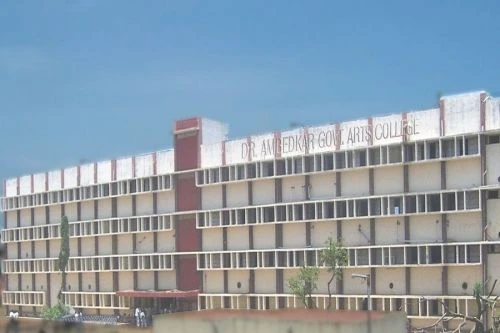
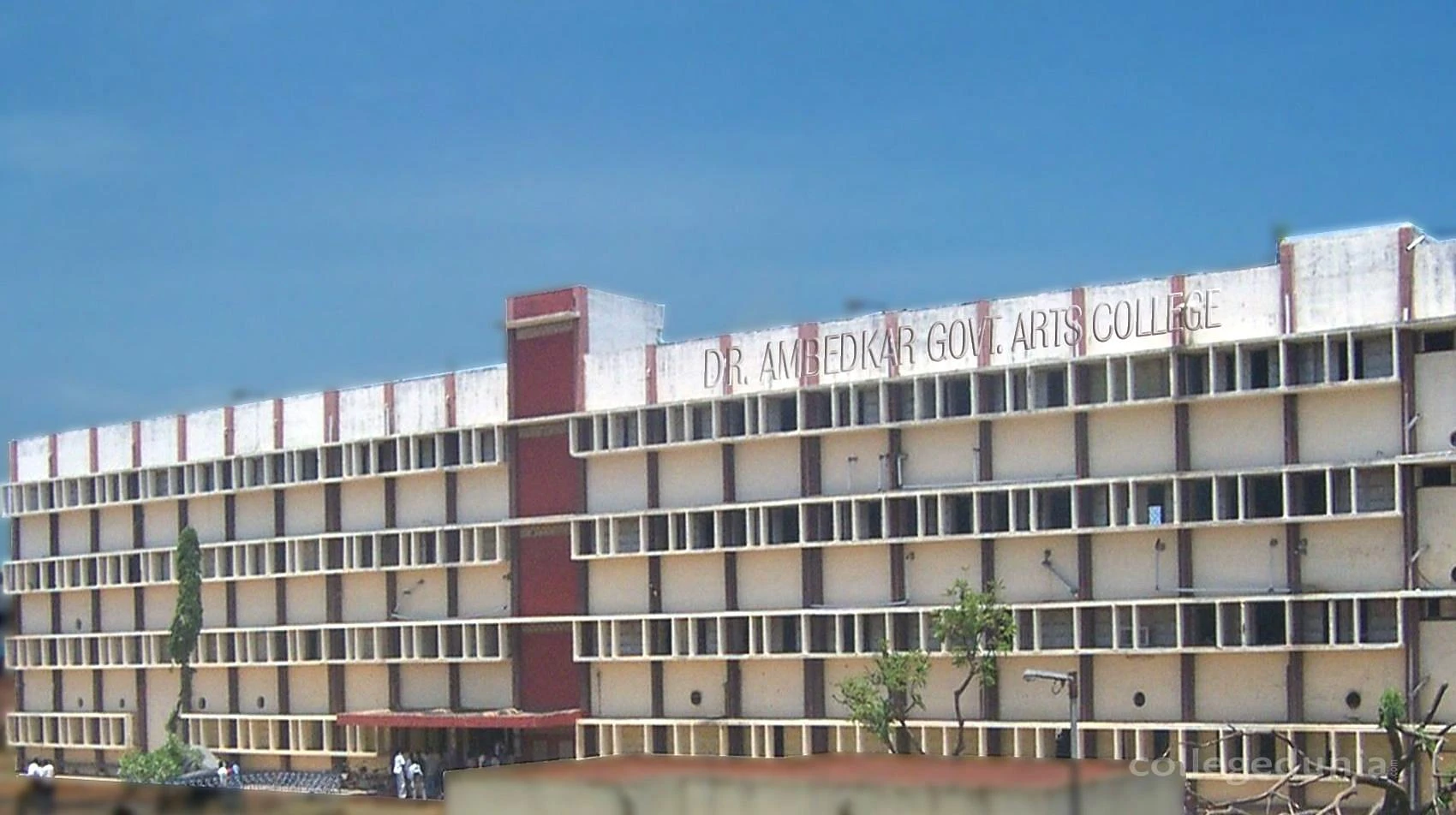
In this preview: 2 photos · 0 videos
The college is considered a good option for B.Sc. Computer Science, especially for its value. The faculty is qualified, but prospective students should note that the syllabus can be slightly dated, so self-learning modern coding languages is often necessary to stay competitive.
Yes, the college provides a basic government hostel. However, based on student feedback, most recommend opting for private paying guest (PG) accommodations nearby for access to better facilities and amenities.
The cutoff for the B.Com program is typically high. Admission to Shift I generally requires 90% or above in the 12th standard, while Shift II usually has a cutoff of around 85% or above.
Yes, Dr. Ambedkar Govt. Arts College is a co-educational college. All academic programs offered by the institution are open to both male and female students.
The Master of Social Work (MSW) program has the best placement record at the college. Graduates frequently secure positions in NGOs and healthcare institutions, making it a strong choice for students in this field.
Share what future students should know about DAGAC.
Student voices are not rewritten by colleges. We remove spam and abuse.
Wider admission question? Community PulseWhat should future students know?
Tell us which course you're considering. We'll help you work out the next step.
Get instant Partner access after mobile verification. Your public edits are reviewed before they go live.
Claim this college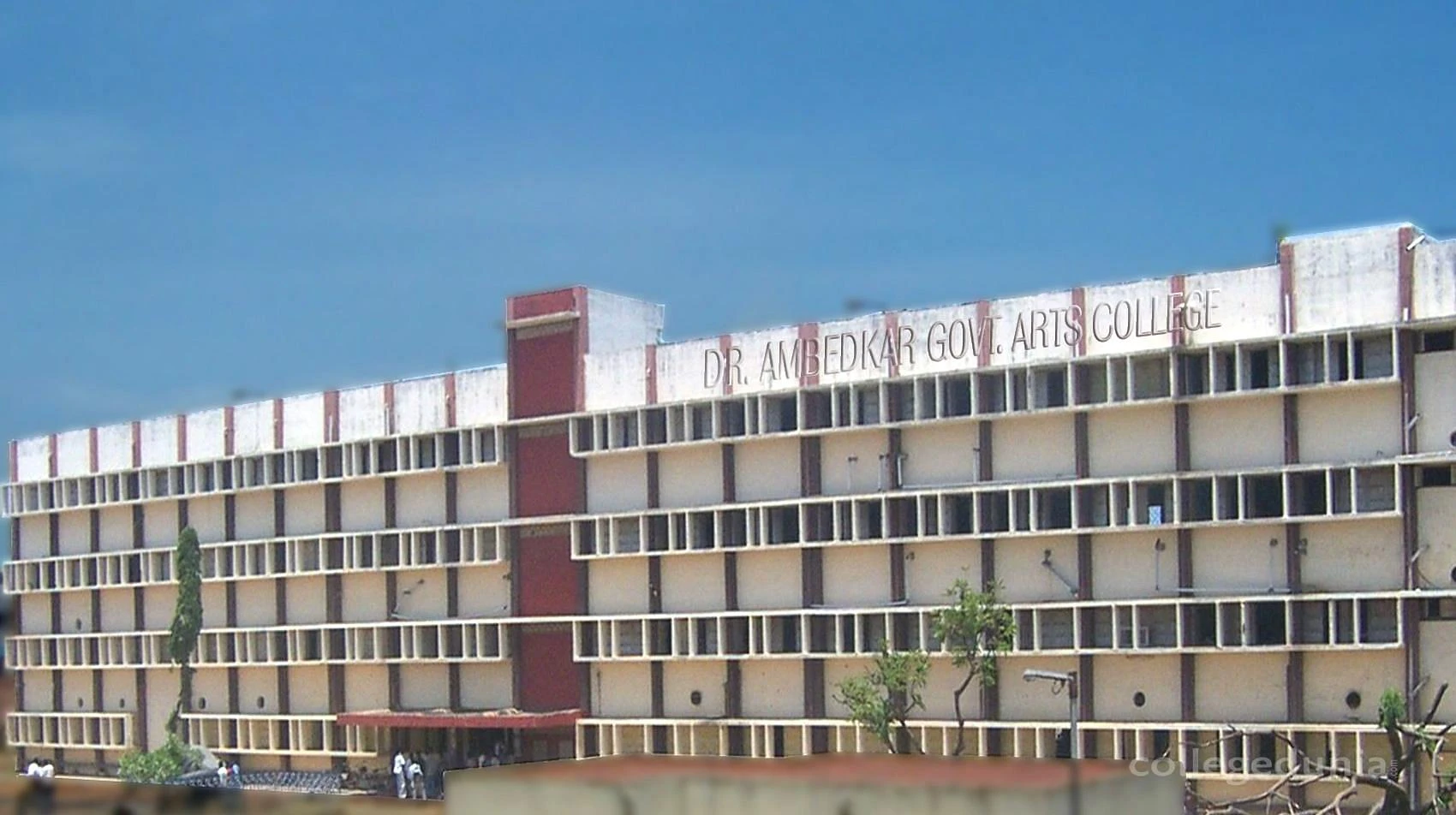
 Auditorium
 Cafeteria
 Computer Labs
 Science Labs
 Sports Complex
 Study Library