Loading Admission Guardian content
Loading Admission Guardian content

Provisional score based on available data. It may change as more information is verified.
Find a program, read its fee details and explore the admission requirements.
Summary of the programs shown below. First-year fee. Check the note beside each amount for inclusions and exclusions.
| Course | Stream | Fees |
|---|---|---|
| Bachelor of Arts [BA] {Hons.} | Arts | 2830 |
| Bachelor of Commerce [B.Com] {Hons.} (Accountancy) | Commerce | 2950 |
| Bachelor of Arts [BA] | Arts | 3125 |
| Bachelor of Science [B.Sc] | Science | 3990 |
| Bachelor of Science [B.Sc] {Hons.} | Science | 5060 |
Specializations
Eligibility: 10+2
Specializations
Eligibility: 10+2
Specializations
Eligibility: 10+2
Specializations
Eligibility: 10+2
Specializations
Eligibility: 10+2
Dr. Bhupendra Nath Dutta Smriti Mahavidyalaya is a name that carries weight in the rural and semi-urban pockets of Purba Bardhaman. Established in 1996 and affiliated with the University of Burdwan, this government-aided college has built a reputation as a reliable, no-frills institution for thousands of local students. Its primary draw isn't flashy placements or a bustling city life—it's accessibility. With annual fees that can dip below ₹3,000 for an Arts degree and a sprawling, green 8.3-acre campus, it represents a critical gateway to higher education for the region. The college holds a B+ grade from NAAC, last accredited in 2016, and operates with a disciplined, traditional academic culture that many families appreciate. If you're looking at colleges in West Bengal outside the Kolkata-centric circuit, this one is almost certainly on your list.
This is a pure undergraduate college, and its academic structure is straightforward. It offers the standard BA, BSc, and BCom programs, both in Honours and General streams, under the University of Burdwan's curriculum. The college has transitioned to the National Education Policy (NEP) 2020's 4-year UG framework as of the 2024-25 session. The intake is heavily skewed towards the Arts, with BA Honours alone accounting for over 1,600 of the roughly 2,000 seats. Science seats, particularly in lab-based subjects like Chemistry and Zoology, are more limited, typically around 30-40 per subject.
The faculty, numbering around 81, is a mix of permanent, SACT, and guest lecturers. A significant portion of the permanent staff holds PhDs, and student reviews consistently highlight their dedication and supportive nature. The Geography department receives specific praise for its fieldwork and a dedicated GIS-enabled lab, which is a notable facility for a college in this setting. Academically, it's a traditional setup. You follow the Burdwan University calendar, attend classes (attendance rules are reportedly strict for Honours students), and your performance is tied to the university's semester exams. It's not an environment of constant innovation, but rather one of consistent, foundational teaching.
This is where a crucial reality check is needed. As a general degree college in a rural location, formal, high-volume on-campus placement drives are not its core function. The official website and some brochures might cite a placement percentage around 70%, but that figure often includes students who have progressed to higher education like B.Ed, MA, or MSc.
Talking to students and scanning reviews on portals like Shiksha and CollegeDunia paints a different picture. The consensus is that direct job placement from campus is limited, likely in the 20-30% range. Most students use the degree as a stepping stone—either to prepare for government service exams (a very common path) or to pursue a postgraduate degree for better prospects. For those who do secure jobs, they often come through pooled drives with other colleges or off-campus efforts. Reported packages are modest: the highest mentioned for 2022-23 was 5–6 LPA, usually for Science graduates, with an average closer to 3–4 LPA. Recruiters like TCS, Wipro, Asian Paints, and various pharmaceutical and education companies (Allen, Patanjali) have recruited in the past. The message from alumni is clear: don't come here expecting a corporate placement cell to hand you a job. Come here to get an affordable, respectable degree that qualifies you for the next competitive stage of your career or education.
The fee structure is arguably the college's strongest selling point. Thanks to its government-aided status, costs are exceptionally low. For the 2024-25 session, a BA General student can expect to pay around ₹2,500 to ₹3,500 in the first year, with the total three-year cost potentially under ₹10,000. BA Honours fees are slightly higher, ranging from ₹3,500 to ₹4,500 annually. BSc Honours, with its lab requirements, is the most expensive, at roughly ₹5,000 to ₹7,500 per year. Hostel fees are an additional ₹3,000 to ₹5,000 annually, excluding mess charges.
Given the student demographic, scholarship utilization is high. The college actively facilitates applications for state and central schemes. The Kanyashree Prakalpa (K1 and K2) is prominently used, along with the Swami Vivekananda Merit-cum-Means Scholarship (SVMCM) and standard SC/ST/OBC Post-Matric scholarships. This financial ecosystem makes college education a tangible reality for many families in the surrounding areas.
The admission process is merit-based and refreshingly uncomplicated. There are no entrance exams. Selection is strictly based on marks obtained in the West Bengal Council of Higher Secondary Education (WBCHSE) or equivalent 10+2 board exams.
The process typically kicks off in June or July, after the WBCHSE results are declared. Applicants must meet the minimum eligibility criteria, which is generally a 45-50% aggregate, with higher requirements in the specific subject for Honours admission. The college publishes merit lists based on these marks, followed by a counseling process for seat allocation. It's a centralized, transparent system. The competition isn't about national-level ranks, but about securing a high enough percentage in your board exams to qualify for your chosen subject, especially for sought-after Honours courses like Geography or the sciences.
The campus is frequently described as green, peaceful, and nature-filled—a 8.3-acre space that feels removed from urban chaos. Infrastructure is functional. The library, housed in the Biplabi Rashbehari Basu Bhaban, is computerized, has access to the N-LIST e-resource program, and stocks over 25,000 books. Labs for Physics, Chemistry, and Life Sciences are reported to be well-equipped for undergraduate coursework. Wi-Fi exists but is primarily in administrative zones; student access is inconsistent, a common gripe.
Hostels are basic but provide separate accommodation for boys and girls. Reviews rate them a 3 out of 5—clean and secure, but no luxuries. The canteen serves affordable meals and gets a slightly better rating, around 3.5/5. For extracurriculars, there's a large playground for football and cricket, and common rooms with carrom and table tennis. The social life is what the students make of it; it's not a campus known for frequent festivals or events from city-based clubs. The location is a double-edged sword: it ensures a quiet, focused environment but makes commuting a challenge for anyone not from the immediate vicinity. Bardhaman Junction, the nearest major railhead, is 15-18 km away, a 40-50 minute journey by bus or local "trekker" vehicles.
Synthesizing feedback from CollegeDunia, Shiksha, and other forums reveals a consistent, almost unanimous consensus. The positives are heartfelt: "Teachers are very supportive and treat students like family" is a phrase that appears in various forms repeatedly. The value-for-money proposition is unquestioned. The Geography department is singled out for praise. The campus is considered safe, especially for female students.
The negatives are pragmatic. The placement cell's limitations are the most frequent critique, with one review stating plainly, "Don't expect a job directly from the campus." The rural location is a barrier for some. A few mention slow administrative processes for documents. You won't find reviews complaining about a lack of luxury or cutting-edge tech—students come in with those expectations. The complaints are about the real-world gaps between college life and career launch.
The answer depends entirely on your goals and context. If you are a student from Purba Bardhaman or the surrounding districts looking for an affordable, respectable, and disciplined college to complete your undergraduate degree, DBNDSM is an excellent choice. It's a solid platform for preparing for competitive exams (like government services) or for building a foundation to pursue a Master's at a larger university. The low fees and supportive faculty create a low-risk, high-value environment for academic progression.
However, if your primary goal is direct campus placement into corporate roles, or you crave the networking opportunities and vibrant, event-driven culture of a big city college, you will likely find this institution lacking. It serves its community exceptionally well, but it operates within the realistic constraints of its location and mission. For the right student, it's not just worth it—it's a crucial opportunity.
For the most current information, always refer to the college's official website or the University of Burdwan's notifications.
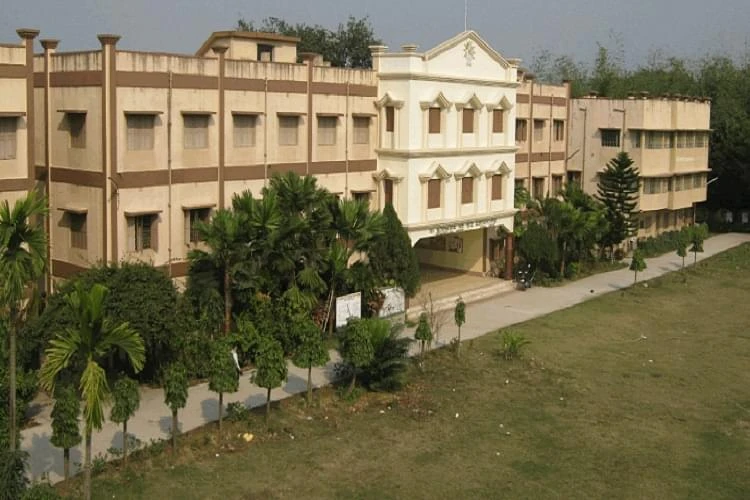
In this preview: 1 photo · 0 videos
Dr. Bhupendra Nath Dutta Smriti Mahavidyalaya is a government-aided college. It is affiliated with the University of Burdwan.
Yes, the college offers a Geography Honours program. It is reported to be one of the most popular and well-regarded departments at the institution.
The college is approximately 15 to 18 kilometers from Bardhaman Railway Station. The journey typically takes about 40 to 50 minutes by bus or local transport.
Yes, the college provides hostel facilities for girls. There is a dedicated girls' hostel located on the campus.
The average annual fee for a BSc course is roughly between ₹5,000 and ₹7,000. The exact amount can vary depending on the specific lab-based subjects chosen.
Share what future students should know about Dr. Bhupendra Nath Dutta Smriti Mahavidyalaya.
Student voices are not rewritten by colleges. We remove spam and abuse.
Wider admission question? Community PulseWhat should future students know?
Tell us which course you're considering. We'll help you work out the next step.
Get instant Partner access after mobile verification. Your public edits are reviewed before they go live.
Claim this college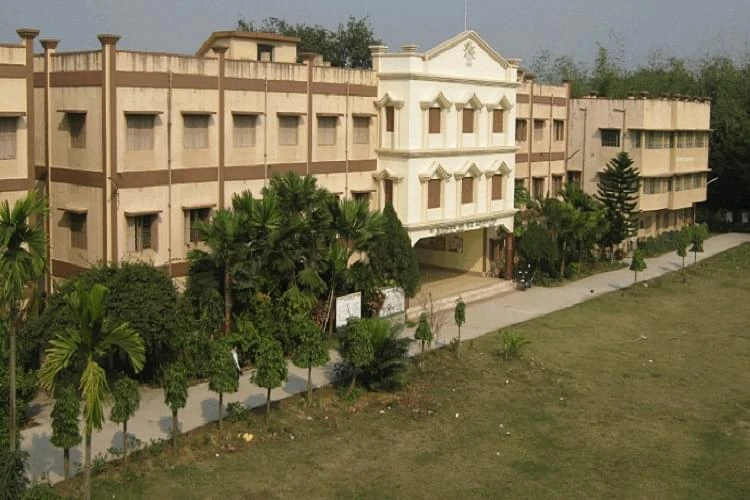
 Auditorium
 Cafeteria
 Computer Labs
 Hostel
 Medical
 Science Labs
 Sports Complex
 Study Library