Loading Admission Guardian content
Loading Admission Guardian content
Provisional score based on available data. It may change as more information is verified.
Find a program, read its fee details and explore the admission requirements.
Summary of the programs shown below. First-year fee. Check the note beside each amount for inclusions and exclusions.
| Course | Stream | Fees |
|---|---|---|
| General Nursing and Midwifery [GNM] | Paramedical | 45250 |
If you're looking for a nursing college in Punjab that prioritizes clinical rigor over campus glamour, Dr. BL Kapur Memorial Hospital and Institute of Nursing Education is a name that comes up. Established in 2003 but rooted in a hospital founded in 1947, this institute offers a no-frills, hospital-integrated education. It’s a place where your classroom is often a ward, and your training is hands-on from the start. That’s the core promise here—direct access to a 300-bed multi-specialty hospital for practical learning. But it’s also known for a strict, traditional environment that won’t suit everyone. For a student dead-set on becoming a skilled nurse and willing to forego a typical college social life, BL Kapur presents a compelling, if demanding, path.
The academic focus is singular: nursing. There are no management or engineering diversions here. The institute runs two core programs—a 4-year B.Sc Nursing and a 3.5-year General Nursing & Midwifery (GNM) course. Both are affiliated with Baba Farid University of Health Sciences (BFUHS), meaning exams and the academic calendar follow the university's schedule.
The teaching method is described by students as traditional, leaning heavily on lectures. But the real differentiator is the clinical training. Students get rotated through the attached Dr. BL Kapur Memorial Hospital, a functional 300+ bed facility. You're not just visiting; you're working in OPDs, ICUs, and operation theatres. That’s a significant advantage over colleges that bus students to distant hospitals for practice. The faculty, led by Principal Mrs. Nisha Mahajan, is a mix of about 15-20 full-time tutors and clinical instructors. Reviews often highlight supportive teaching staff, especially when it comes to managing the stress of clinical duties.
Nursing placements don't work like engineering. You won't see campus drives with 10 LPA packages for freshers. The model is different. The institute reports a high placement rate of 90-95%, which is credible given the chronic demand for nurses. Most graduates secure positions as Nursing Officers or staff nurses in major hospital chains.
Top recruiters consistently include the BLK-Max Super Specialty Hospital in New Delhi (its sister concern), Fortis, Apollo, and local giants like Dayanand Medical College & Hospital (DMCH) in Ludhiana. The average starting salary in the private sector is modest, typically between ₹2.4 to ₹3.6 Lakhs Per Annum. The real financial jump often comes from government jobs, which can start at ₹6 LPA or more, but require clearing competitive state nursing exams.
And there's a notable international pipeline. A significant number of alumni use this qualification as a springboard, taking OET/IELTS exams to work in the UK, Canada, or Australia. So while the starting salary in India might seem low, the degree's portability and global recognition are a key part of its value.
Fees here are regulated by the Punjab government and BFUHS, which keeps them relatively lower than unregulated private universities. For the 2024-2024 session, the annual tuition for B.Sc Nursing is estimated between ₹60,000 to ₹80,000. The GNM program's first-year fee is around ₹45,250.
Hostel and mess fees for the on-campus girls' hostel add another ₹30,000 to ₹50,000 per year. Crunching the numbers, the total cost for the 4-year B.Sc Nursing program, including all charges, is estimated to be in the ballpark of ₹4.5 to ₹5.5 lakhs. That's a decent investment for a professional degree. Financial aid is primarily available through government schemes, notably the Post-Matric Scholarship Scheme for SC/BC candidates from Punjab.
Admission is the first major hurdle, and the process differs by program. For the B.Sc Nursing course, it's mandatory to appear for and qualify in the PPMET (Punjab Para Medical Entrance Test), conducted by BFUHS. Seats are then allocated through centralized state counseling based on your PPMET rank. A rank within the top 2000 in the state generally gives you a shot at a government quota seat here.
For the GNM program, admission is more straightforward—it's primarily based on your 10+2 marks, followed by institute-level counseling. The institute operates on a 50% Government Quota and 50% Management Quota (which includes NRI seats) system. The application window typically opens in May and runs through July. It's a strict process, so having all your documents in order is non-negotiable.
Let's be clear: this is not a sprawling, resort-style campus. The institute is integrated into the hospital complex on the busy G.T. Road. The academic building is functional, with necessary labs for nursing foundation, anatomy, nutrition, and community health. The library houses over 1,000 textbooks and a few journals. It gets the job done, but students comparing it to newer private universities often call the infrastructure "old."
The girls' hostel is on-campus, with a capacity for about 240 students in 70+ rooms. It has basic amenities—a common room, visitor's area—and is noted for its 24/7 security and strict rules, which many parents appreciate. The canteen is a shared hospital facility offering subsidized North Indian meals; reviews on the food are average.
Social life? Virtually non-existent. There are no annual fests, cultural weeks, or typical college events. The rhythm of life is dictated by classes, clinical duties, and hostel routines. That's the trade-off. You're here for a disciplined professional education, not a holistic college experience.
Synthesizing feedback from CollegeDunia, Shiksha, and local forums paints a consistent picture. The overwhelming positive is the clinical exposure. Students repeatedly say the direct, daily access to the working hospital is invaluable and the institute's strongest suit. They feel prepared for real-world nursing from day one.
The discipline and safety of the girls' hostel are also frequently praised, especially by parents. On the flip side, the administrative management draws consistent criticism for being unorganized and slow to address grievances. The strict, almost rigid, environment can be a grind—attendance requirements are high (90%+ for clinicals), and there's little room for deviation.
The consensus? It's a great fit for a highly motivated, career-focused student who views college purely as professional training. If you're looking for a balanced campus life with extracurriculars and a more relaxed atmosphere, you'll likely find it stifling.
This institute is a specialist tool, not a Swiss Army knife. It's worth it for a specific type of student: one who is unequivocally committed to nursing, values rigorous hospital-based training over campus amenities, and thrives in a structured, disciplined environment. The direct clinical access is a legitimate, hard-to-replicate advantage that provides a solid foundation for a nursing career in India or abroad. The fees, while not insignificant, are reasonable for a professional course with this level of practical integration.
However, you should probably look elsewhere if you desire a vibrant campus life, modern infrastructure, or a more flexible, supportive administrative system. The experience here is demanding and spartan. Your decision hinges on priorities. If becoming a skilled, work-ready nurse is your sole focus, BL Kapur delivers efficiently. But if you want the traditional "college experience" alongside your degree, you'll find its strict, hospital-centric model too limiting.

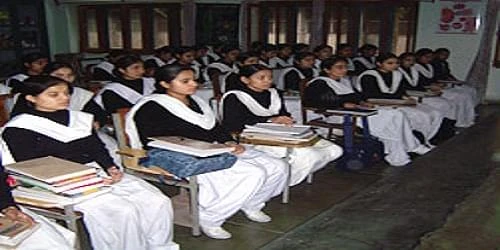
In this preview: 1 photo · 0 videos
Yes, Dr. BL Kapur Institute of Nursing Education in Ludhiana is officially affiliated with Baba Farid University of Health Sciences (BFUHS) in Faridkot.
While the GNM and B.Sc Nursing programs are technically open to male applicants, the college's hostel facility is exclusively for girls and the student intake is predominantly female.
Admission to the B.Sc Nursing program is based on the PPMET rank. Typically, securing a rank within the top 2000 in the state ensures a seat under the government quota.
Yes, Dr. BL Kapur Memorial Hospital remains a major functional healthcare provider in the Old City area of Ludhiana, though its Delhi branch (BLK-Max) is now more famous nationally.
Student reviews rate the hostel food as average (3/5). It consists of standard North Indian fare, and students often supplement their meals with food from nearby markets like Chaura Bazar.
Share what future students should know about Dr BL Kapur Memorial Hospital and Institute of Nursing Education.
Student voices are not rewritten by colleges. We remove spam and abuse.
Wider admission question? Community PulseWhat should future students know?
Tell us which course you're considering. We'll help you work out the next step.
Get instant Partner access after mobile verification. Your public edits are reviewed before they go live.
Claim this college