Loading Admission Guardian content
Loading Admission Guardian content

Provisional score based on available data. It may change as more information is verified.
Find a program, read its fee details and explore the admission requirements.
Summary of the programs shown below. Total course fee. Check the note beside each amount for inclusions and exclusions.
| Course | Stream | Fees |
|---|---|---|
| Master of Business Administration [MBA] | Management | 41000 |
| Master of Engineering [ME] | Engineering | 60000 |
| Bachelor of Engineering [BE] | Engineering | 220000 |
Specializations
All accepted exams
Eligibility: Graduation with 50% + TANCET
Specializations
Eligibility: Graduation with 50% + TANCET
Specializations
All accepted exams
Eligibility: 10+2 with 50% + TNEA
Dr. Nallini Institute of Engineering and Technology (DNIET) operates in a quiet corner of Dharapuram, Tamil Nadu, and it’s a college defined more by its practical constraints than by ambition. Established in 2009 and affiliated with Anna University, it’s a private, self-financing institution that serves a specific, local demographic. Its digital footprint is minimal—the official website is often inaccessible—which tells you something about its operational priorities. For students from surrounding rural areas who need an affordable engineering degree and can’t swing the fees of a Coimbatore college, DNIET is a functional, if unremarkable, option. But you should walk in with eyes wide open. This isn’t a campus buzzing with corporate recruiters or cutting-edge research; it’s a place to get a degree, often with the student doing the heavy lifting for their own career prospects.
The academic offering is standard for an Anna University affiliate. You’ve got the usual suite of six B.E. programs—Computer Science, Electronics, Mechanical, Civil, Electrical, and IT—each with an intake of about 60. At the postgraduate level, there’s an MBA and M.E. programs in Applied Electronics and Computer Science. The curriculum is the Anna University regulation, currently the 2021 syllabus, so you’re getting the same foundational material as students in hundreds of other colleges. That’s the point, really. The faculty size is estimated between 60 and 80, with PhD holders mostly at the HOD level. The academic culture is described as strict, with a strong emphasis on attendance and discipline. It’s a no-frills, follow-the-schedule approach. You’ll get your lectures, your lab sessions, and your exams. The onus for going beyond that, for learning the latest frameworks or diving into advanced projects, falls squarely on the student.
This is where the gap between hope and reality becomes most apparent. The college has historically claimed placement rates above 80%, but a synthesis of student reviews paints a different picture. The working number alumni and current students cite is closer to 40-50% for core branches like Mechanical or Civil, with Computer Science and IT faring somewhat better. The packages reflect this. The highest package reported in recent years hovered around ₹4.5 to ₹5 LPA, with the average settling between ₹2.2 and ₹2.8 LPA. Top recruiters are a mix of IT service giants and local firms. You’ll see names like TCS, Cognizant, Wipro, and Infosys, but these are often accessed through pooled drives or off-campus opportunities. For core engineering roles, placement leans heavily on small and medium enterprises from the industrial belt around Tirupur and Erode—companies like Zealous Services or Aqua Sub. The verdict from students is consistent: if you’re in CSE or IT and you’re proactive, you can land an IT services job. If you’re in a core branch, you should expect to hustle on your own or look at further studies. The placement cell exists, but its reach is limited.
Affordability is DNIET’s primary competitive advantage. For the 2024-25 academic year, the government quota tuition for B.E. programs is estimated at ₹50,000 to ₹55,000 annually. The management quota fee is higher, ranging from ₹85,000 to ₹1.1 lakhs. Add hostel and mess charges of about ₹45,000 to ₹55,000 per year, and the total four-year cost for a government quota student living on campus comes to roughly ₹4.2 lakhs. That’s a fraction of the cost of many private engineering colleges. Financial aid comes mainly through state government schemes. The first-graduate tuition fee waiver (around ₹25,000 per year) and standard SC/ST post-matric scholarships are available for eligible students through the TNEA process. There’s no mention of extensive merit-based scholarships from the college itself. You’re paying for a basic, accredited degree, and the fee structure reflects that bargain.
The path in is straightforward and based entirely on your 12th-grade marks. Admission to the B.E. programs is through the Tamil Nadu Engineering Admissions (TNEA) counseling process—there’s no separate entrance exam. Your cutoff score, calculated from your Physics, Chemistry, and Mathematics marks, is all that matters. The college’s code for TNEA counseling is 2743. The cutoffs are generally low, which aligns with its positioning. In 2024, most core engineering branches had seats filled by candidates with cutoffs in the 80 to 120 range. Computer Science and Information Technology, being more in demand, saw slightly higher cutoffs, around 130 to 150. A significant number of seats, especially in core branches, often remain vacant after counseling rounds. For the MBA and M.E. programs, you need a valid TANCET (Tamil Nadu Common Entrance Test) score. The selection process follows the standard 65:35 split: 65% of seats are filled through the government’s centralized TNEA counseling, and 35% are management quota seats.
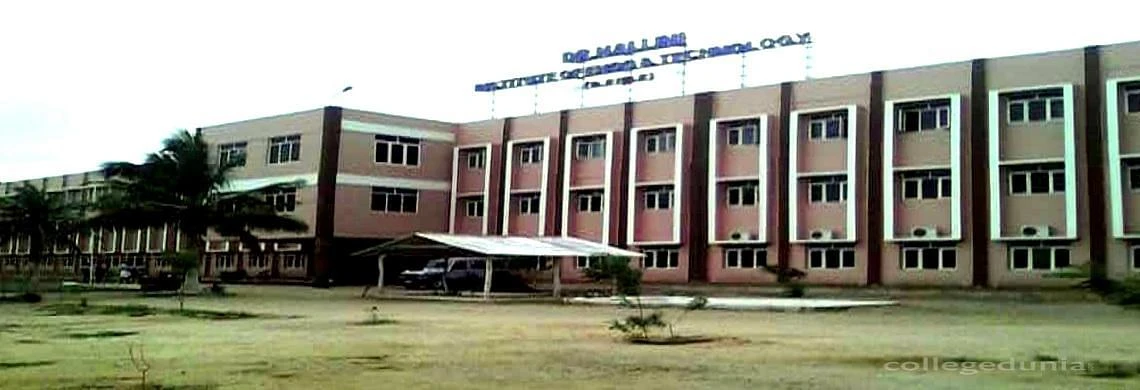
The campus is spread over an estimated 25-30 acres on the outskirts of Dharapuram. It’s a self-contained, remote environment. The infrastructure is functional. Labs for key departments exist and have the necessary equipment, but student reviews frequently note that the gear isn’t state-of-the-art and maintenance can be an issue. The library holds over 10,000 volumes. Wi-Fi is available in specific zones like labs and the library, but connectivity in hostels is reported to be poor. The hostels themselves are basic. Separate blocks for boys and girls offer the essentials, but comfort isn’t a high point. The food, served in the mess, is described as average South Indian vegetarian and non-vegetarian fare with limited variety. Social life is minimal. The college is known for its strict, almost school-like discipline (uniforms are mandatory), and there are very few major fests or cultural events. The remote location compounds this—you’re 3-4 km from Dharapuram town, about 35 km from Palani railway station, and far from the internship and networking hubs of Coimbatore. College buses cover routes within a 40 km radius, which is a necessary service given the isolation.
Scouring platforms like CollegeDunia and Shiksha reveals a clear, consistent consensus. This college is a pragmatic choice for a specific student. The positives always circle back to cost and control. It’s affordable. The discipline, while often called overly strict, is seen as a positive by parents who want a structured environment. And because batches aren’t huge, students find faculty to be accessible and generally helpful. But the negatives are just as consistent and are deal-breakers for anyone with different expectations. Placement quality is the biggest gripe, with many saying the on-campus offers are for low-level BPO or sales roles, not engineering. The infrastructure is seen as aging and poorly maintained. The location is isolating, killing any chance of a vibrant campus life or easy access to external opportunities. One paraphrased review sums it up: “If you want a degree with low fees and stay near Dharapuram, it’s okay. Don’t expect high-tech placements.” Another noted, “The college is very strict about attendance and uniforms. It feels like a school.” That’s the trade-off, perfectly captured.
It depends entirely on your context and expectations. DNIET is worth serious consideration only if you are a student from the local rural area, have a budget that rules out city colleges, and your primary goal is to secure an affordable, recognized B.E. degree from Anna University. If you’re in CSE/IT and are a self-starter who will build skills online and target off-campus drives, you can make it work. For anyone else—especially students seeking a vibrant campus life, strong core-engineering placements, modern infrastructure, or a path to higher-tier recruiters—this is not the right choice. The college fills a niche in the educational landscape, providing access where options are limited. But it’s a bare-bones proposition. You are buying the degree and the Anna University affiliation; everything else, from a strong resume to a good job, will be up to you. Always verify the latest status and cutoffs directly through the official TNEA portal as the college’s own web presence is unreliable.
In this preview: 1 photo · 0 videos
Yes, Dr. Nallini Institute of Engineering and Technology is still open and operational. It is confirmed to be active and participating in the official TNEA 2024 counseling process for admissions.
The official TNEA counseling code for Dr. Nallini Institute of Engineering and Technology is 2743. This code is required for selecting the college during the Tamil Nadu Engineering Admissions process.
The college is generally considered an average option for CSE. It follows a standard curriculum, but students seeking high-end placement opportunities are typically required to proactively develop their technical skills independently beyond the core syllabus.
Reviews of the hostel food are mixed to negative. The meals consist of basic South Indian vegetarian and non-vegetarian fare, with reports indicating limited variety in the menu.
Yes, the college provides transportation services. Its college buses cover the route between Dharapuram and Palani for the convenience of students and staff.
Share what future students should know about Dr. Nallini Institute of Engineering and Technology.
Student voices are not rewritten by colleges. We remove spam and abuse.
Wider admission question? Community PulseWhat should future students know?
Tell us which course you're considering. We'll help you work out the next step.
Get instant Partner access after mobile verification. Your public edits are reviewed before they go live.
Claim this college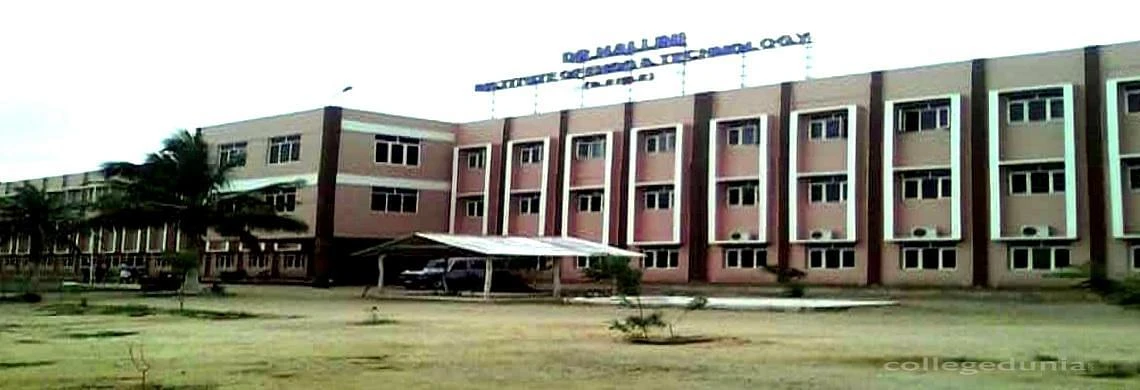
 Auditorium
 Cafeteria
 Computer Labs
 Gym
Gym Hostel
 Medical
 Science Labs
 Sports Complex
 Study Library