Loading Admission Guardian content
Loading Admission Guardian content
Provisional score based on available data. It may change as more information is verified.
Selected ranking categories, with the recorded year beside each result. Open all records for the complete history.
3 published records · Lower numeric ranks are stronger
Indiatoday
Medical
#472022
Find a program, read its fee details and explore the admission requirements.
Summary of the programs shown below. First-year fee. Check the note beside each amount for inclusions and exclusions.
| Course | Stream | Fees |
|---|---|---|
| Diploma | Medical | 201250 |
| Doctorate of Medicine [DM] (Cardiology) | Medical | 542800 |
| Doctorate of Medicine [MD] | Medical | 542800 |
| Master of Surgery [MS] | Medical | 542800 |
| M.B.B.S. | Medical | 1480000 |
Specializations
Eligibility: Pass in 10+2
Specializations
All accepted exams
Eligibility: Pass in MD/DNB + NEET
Specializations
All accepted exams
Eligibility: Pass in MBBS
Specializations
Eligibility: Pass in MBBS
All accepted exams
Eligibility: Pass in 10+2 with 50% +NEET
2 exams with cutoff data available
Getting a medical seat in Andhra Pradesh is tough. And if you're looking at private options, Dr. Pinnamaneni Siddhartha Institute of Medical Sciences & Research Foundation (Dr. PSIMS & RF) is one name that consistently pops up. It's not the flashiest college, but it's built a solid reputation over two decades for one thing above all else: clinical exposure. With a 790-bed teaching hospital that sees heavy patient inflow from surrounding rural areas, students here don't just read about cases—they see them, often in high volume. That's the core trade-off. You get a rigorous, hands-on medical education on a sprawling 40-acre campus, but you'll be following strict rules and paying a significant sum if you're in the management quota. It's a practical choice for aspiring clinicians who prioritize patient interaction over a relaxed campus life.
This is a full-spectrum health sciences institution. The MBBS program, with its 150 seats, is the main draw. It follows the NMC's Competency-Based Medical Education (CBME) curriculum. The postgraduate offerings are extensive, with 94 MD/MS seats spread across 18 specialties—from high-demand clinical fields like General Medicine, Surgery, and Orthopedics to para-clinical streams. They've also moved into super-specialty education with DM programs in Cardiology and Nephrology, and an M.Ch in Urology. The B.Sc Nursing program (100 seats) and various paramedical diplomas round out the academic portfolio.
The faculty strength is around 200+ teaching staff. Student reviews often highlight professors in departments like General Medicine and Pharmacology as being particularly supportive, especially for guiding research projects like the ICMR Short Term Studentship (STS). That research encouragement is a noted plus. A unique, long-standing feature is the college's collaboration with Operation Smile International, providing students exposure to large-scale humanitarian surgical camps for cleft lip and palate repairs.
Let's be clear—medical colleges don't have "placements" like engineering schools. Your career launchpad here is the compulsory rotatory internship and your performance in PG entrance exams.
The internship stipend is a point of discussion. The official college circular for 2024-25 states ₹5,000 per month. You'll find student chatter online suggesting some receive more, perhaps ₹7,000–₹10,000, but the documented, guaranteed figure is five thousand. It's modest. For those who stay on for post-graduation at the institute, MD/MS residents receive a stipend of ₹30,000 per month, which is fairly standard.
The real "outcome" metric students care about is PG seat acquisition. The consensus from reviews is that the college has a high success rate here. A significant number of graduates reportedly secure seats in reputable government and private medical colleges across India through NEET PG. After specialization, alumni commonly find careers in major hospital chains like Apollo, KIMS, and Manipal, or enter government service. The alumni network includes figures like Dr. D. Sreedhar, an award-winning urologist, which speaks to the potential career trajectories.
The fee structure is a classic three-tier system dictated by the Andhra Pradesh Higher Education Regulatory and Monitoring Commission (APHERMC). The disparity is vast, which is typical for private medical education in India.
For MBBS, the convener quota (Category A) is a steal at roughly ₹15,000-₹16,500 per year. But the management quota (Category B) will cost between ₹12 lakh and ₹13.2 lakh annually. The NRI quota (Category C) is priced around ₹36 lakh per year. These are just tuition. You need to add a one-time admission fee (₹22,000-₹50,000), skill development fees, and university charges.
Hostel and mess are separate. Hostel fees range from ₹1 lakh to ₹1.45 lakh per year, depending on whether you opt for AC and single occupancy. The mess fee is either included or about ₹4,000-₹5,000 monthly. There's no widely advertised scholarship program from the institute for management quota students, so financing often means bank loans or family resources. The convener quota is the prize, making a high NEET UG rank incredibly valuable here.
Admission is centrally controlled through NEET exams and state counseling. For MBBS, you need a qualifying score in NEET UG. Selection for the 150 seats is done via merit-based counseling conducted by Dr. YSR University of Health Sciences. The 2024 cutoff gives a clear picture: the closing rank for the general category under the state quota was around an All India Rank of 51,708. That's the rank you'd need for the subsidized convener seat. Management quota seats are filled from the same candidate pool but based on separate counseling and fee payment.
For MD/MS, it's NEET PG. The 2024 closing rank for a coveted seat like MD General Medicine was between 5,000 and 8,000. Super-specialty seats (DM/MCh) require a qualifying score in NEET SS. Application windows typically open after the respective NEET results are declared, usually from May to July.
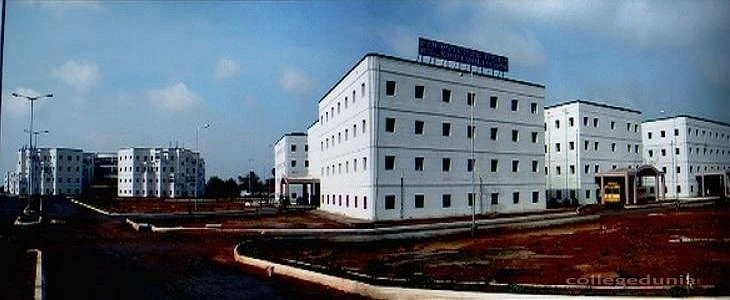
The campus is large—40 acres—and students describe it as green and peaceful. Its location on NH-16 near Vijayawada Airport (5 km away) is convenient, though the city center is about 23 km away. The infrastructure is a mix. The teaching hospital is the crown jewel, a busy 800-bed facility. The academic blocks have simulation labs, but some older classrooms are called "stuffy" in reviews. The central library with digital access gets positive marks.
Hostels are segregated and offer choices: single, double, or triple sharing, with AC options. Facilities include reading rooms, a gym, and indoor games. The food in the mess is consistently described as hygienic but monotonous. That's a common griate. On the social side, the annual fest and inter-college sports leagues (Inter-medics) are big events. The campus has a bank, food court, and pharmacy, making it fairly self-contained. Wi-Fi is available but reviews tag it as "average" to "good," not exceptional.
Synthesizing the chatter from review sites and forums, a clear consensus emerges. The overwhelming positive is clinical exposure. Students are thrust into a high-patient-volume environment, especially in departments like Obstetrics & Gynaecology and General Medicine. You learn by doing. Faculty are generally seen as approachable and supportive of academic and research goals.
The campus is considered safe and its environment conducive to studying. But there are significant trade-offs. The administration is known for strictness—75-80% attendance is mandatory, and internal marking can be rigid. Some hostel blocks and older infrastructure feel dated. While the food is clean, the lack of variety is a perennial complaint. Administrative processes can be slow.
The median student sentiment is best captured by this paraphrase from an online review: "It's a great college if you want to be a clinical doctor because the hospital keeps you busy. But don't expect a chill life; the attendance and exams will keep you on your toes." That sums it up pretty well.
It depends entirely on your seat category and career goals. If you secure a convener quota (Category A) seat, Dr. PSIMS & RF is an outstanding value. For a minuscule tuition fee, you get strong clinical training and a solid launchpad for NEET PG. It's a no-brainer for rank holders in that range.
For management quota (Category B) students paying over ₹12 lakh per year, the calculation is tougher. You're investing heavily. The college delivers on core medical training and clinical exposure, which is paramount. However, you might find the infrastructure and administrative rigidity less aligned with the premium fee. It's a good, serious medical college, but you should cross-compare with other private options in a similar fee bracket.
Who is it for? The student who wants to be a clinician first, who values hands-on patient care over a luxurious campus life, and who is disciplined enough to thrive under a structured, strict system. If you're looking for a more liberal, research-focused, or metropolitan campus experience, you might feel constrained here. Check the official Dr. PSIMS & RF website for the most current circulars and confirm all fees directly with the institution before committing.
In this preview: 1 photo · 0 videos
Dr. Pinnamaneni Siddhartha Institute of Medical Sciences & Research Foundation (Dr.PSIMS & RF) is a private medical college. It is sponsored by the Siddhartha Academy of General & Technical Education.
The annual tuition fee for the MBBS program under the Management Quota (Category B) at Dr. PSIMS & RF is approximately ₹12,00,000 to ₹13,20,000.
For the 2024 admission cycle, the state quota closing rank for the MBBS program at Dr. PSIMS & RF was approximately 51,708.
The hostel facilities at Dr. PSIMS are generally good, offering options for AC and single rooms. The food provided is hygienic, though students note it can lack variety.
Yes, the college provides a paid internship. For the 2024-25 academic year, the official stipend for interns is ₹5,000 per month.
Share what future students should know about Dr.PSIMS & RF.
Student voices are not rewritten by colleges. We remove spam and abuse.
Wider admission question? Community PulseWhat should future students know?
Tell us which course you're considering. We'll help you work out the next step.
Get instant Partner access after mobile verification. Your public edits are reviewed before they go live.
Claim this college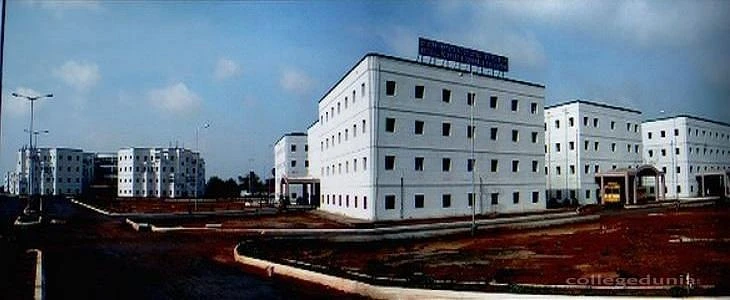
 Auditorium
 Cafeteria
 Computer Labs
 Medical
 Science Labs
 Study Library