Loading Admission Guardian content
Loading Admission Guardian content
Provisional score based on available data. It may change as more information is verified.
Find a program, read its fee details and explore the admission requirements.
Summary of the programs shown below. First-year fee. Check the note beside each amount for inclusions and exclusions.
| Course | Stream | Fees |
|---|---|---|
| Bachelor of Technology [B.Tech] | Engineering | 70000 |
Specializations
All accepted exams
Eligibility: 10+2 with 45% + REAP
 Apollo Tyres
 Aquatech Systems (Asia) Pvt Ltd
 Axis Bank
 Bajaj Auto
 ICRA
ICRA MetLife
 NIIT
NIIT Titan
TitanDr. Radhakrishnan Institute of Technology (DRIT) in Jaipur represents a specific, budget-conscious choice in Rajasthan's engineering landscape. Established in 2010, this private college offers a low-cost route to an RTU-affiliated B.Tech degree. But that affordability comes with clear trade-offs, particularly around placements and location. The campus sits about 25 kilometers from the city center, near the Mahindra SEZ on the Ajmer highway—a fact that defines much of the student experience. If you're looking at DRIT, you're likely weighing a recognized degree against the self-driven hustle you'll need for career outcomes. The college's official claims and student realities often tell two different stories, especially when it comes to jobs after graduation.
DRIT's academic portfolio is straightforward, centered on undergraduate engineering and diploma programs under the RTU curriculum. The B.Tech programs follow the RTU's Choice Based Credit System (CBCS). Intakes vary significantly by branch, which tells you something about the college's focus and capacity. Electrical Engineering has the largest sanctioned intake at 120 seats, followed by Mechanical and Civil at 60 each. Computer Science & Engineering has a surprisingly small intake of just 30, while Electronics & Communication is smallest at 15. That's a notable structure for a college founded in 2010, where you'd typically expect a heavier skew towards CSE.
The faculty comprises around 67 members. Student reviews consistently highlight that many individual professors are approachable and genuinely helpful with navigating the RTU syllabus and exams. Senior faculty like Mr. Rahul Guha (HOD, CSE) and Mr. Awadh Kishor Vatsa (HOD, Mechanical) are noted on the official site. However, it's understood that most faculty hold M.Tech degrees, with PhDs concentrated among senior staff. The academic culture is described as disciplined, with a strict attendance policy that some students appreciate for structure. Industry tie-ups for internships exist with names like BHEL, L&T Construction, and NHPC, though practical lab exposure is a recurring point of criticism in student feedback, often described as limited or reliant on aging equipment.
This is where the narrative splits. The college's official placement claims and the consensus from student reviews across platforms like Shiksha and CollegeDunia don't fully align. It's a classic case of managing expectations.
The official figures cite a highest package of 5 LPA for the 2023-2024 period and an average between 2.4 and 3 LPA. They claim a placement percentage around 70%. But dig into student testimonials, and a different picture emerges. Alumni, particularly from core branches like Mechanical and Civil, frequently report that on-campus placement rates are closer to 30-40%. The sentiment is captured in one blunt Quora review: "If you want just a degree at a low cost, it's fine. But for skills and jobs, you are on your own."
Recruiters are a mix of IT service firms and core engineering companies. Wipro, Infosys, IBM, and HCL are the marquee IT names. For core roles, companies like Bajaj Auto, Apollo Tyres, Bosch, and UltraTech Cement visit. It's not a flashy list, but it's realistic for a tier-3 private college. The gap between the official 70% claim and the student-reported 30-40% is the key thing to note. It suggests many placements may be facilitated or off-campus, not traditional on-campus drives. For internships, students often secure positions at North Eastern Railway, NBC Bearings, and RSRTC.
Affordability is DRIT's strongest card. The B.Tech tuition fee is between ₹70,000 and ₹77,000 per year. That's notably low for a private engineering college. Add hostel and mess charges of roughly ₹50,000 to ₹60,000 annually, and the total four-year cost lands in the ₹5.5 to ₹6 lakh range. That's a fraction of the cost at many other private institutes.
Financial aid is primarily through government schemes. The Tuition Fee Waiver Scheme (TFWS) is available for Rajasthan domicile students with high ranks in the REAP counseling. Standard state government scholarships for SC, ST, and OBC categories are also applicable. There's no mention of extensive institute-level merit scholarships, which fits the low-fee model.
Admission to B.Tech programs is primarily through two channels: JEE Main and the Rajasthan Engineering Admission Process (REAP). The official DRIT website should be monitored for exact application windows.
The selection prioritizes Rajasthan domicile holders. First priority goes to those with a JEE Main rank (Rajasthan domicile), followed by Class 12th merit (Rajasthan domicile), and finally out-of-state students with a JEE Main rank. For the 2024 cycle, a JEE Main percentile above 70 was considered generally safe for a seat in the CSE program, though specific closing ranks aren't meticulously published. Like many private colleges, DRIT also has a 15% management quota for direct admission at the institute level.
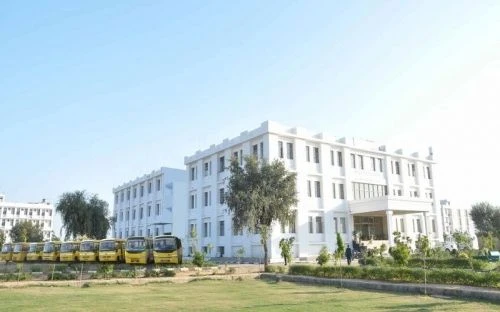
The 13-acre campus is functional. It's Wi-Fi enabled, though students note connectivity can be spotty in hostel rooms. The central library houses around 18,000 books and provides access to DELNET for e-journals. Department labs exist but, as noted, receive mixed reviews on equipment modernity and access.
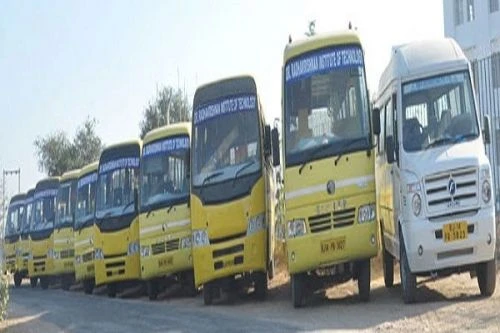
Hostels are separate for boys and girls, with rooms on a 2, 3, or 4-seater sharing basis. Reviews rate the hostel quality around 3.5 out of 5—basic but livable. The on-campus canteen is small, and food quality is typically described as average. The college provides a bus service covering major Jaipur routes, which is essential because the location is the biggest lifestyle factor. Being 25 km from Jaipur Junction and 18 km from the nearest metro station (Mansarovar) means limited spontaneous access to the city's social scene. Life is largely campus-centric.
Synthesizing feedback from Shiksha, CollegeDunia, and Quora gives a balanced, human perspective.
The positives are clear: affordability is the top pro. Many students also value the supportive faculty who help them clear RTU exams. The strict discipline and attendance policy are seen as a positive by some, providing a structure that might be lacking elsewhere.
The negatives are equally consistent. Placement reality is the foremost concern, with core branch students feeling particularly underserved. The remote location is a daily inconvenience. Administrative delays, especially around exam forms, are a frequent grievance. And there's a palpable feeling that practical, hands-on learning takes a backseat. One Shiksha review summed it up: "The faculty is good, but the placement cell is almost non-existent for core branches like Mechanical."
DRIT serves a specific student profile. It's worth serious consideration if your primary constraint is budget and your main goal is to secure an AICTE-approved, RTU-affiliated B.Tech degree at the lowest possible cost. If you're a self-motivated learner who plans to build skills independently through online courses, certifications, and off-campus job hunting, the low fee can be a strategic advantage. It's also a viable option for students targeting government job exams where only the degree is a prerequisite.
However, you should probably look elsewhere if you're prioritizing strong on-campus placements, a vibrant campus social life, or state-of-the-art labs and research facilities. The college's location and modest placement record mean you cannot be a passive participant in your career journey. For CSE aspirants, while the faculty is noted as decent, the extremely small intake and placement outcomes suggest better options exist in Jaipur, even at a slightly higher fee. Ultimately, DRIT is a pragmatic choice, not a aspirational one. Go in with eyes wide open about the trade-off: you're saving significant money on tuition, but you'll likely need to invest more of your own initiative to land a good job.


In this preview: 5 photos · 0 videos
While the faculty for CSE is considered decent, the placement opportunities for this program are significantly lower than at top-tier Jaipur colleges like SKIT or JECRC. Overall, it is generally viewed as an average option for CSE in the region.
The tuition fee for the B.Tech program at DRIT is approximately ₹70,000 per year. This totals around ₹2.8 Lakhs for the four-year course, excluding additional costs like hostel fees.
No, DRIT does not provide 100% placements. While the college may claim high placement rates, student reviews suggest the actual on-campus placement rate is much lower, with only about 30-40% of students securing jobs through campus drives.
Dr Radhakrishnan Institute of Technology is located about 25 kilometers from the main Jaipur city center, specifically from Jaipur Junction. The institute is situated near the Mahindra SEZ.
Yes, DRIT provides separate on-campus hostel facilities for both boys and girls. These hostels offer basic amenities and include Wi-Fi access for residents.
Share what future students should know about DRIT.
Student voices are not rewritten by colleges. We remove spam and abuse.
Wider admission question? Community PulseWhat should future students know?
Tell us which course you're considering. We'll help you work out the next step.
Get instant Partner access after mobile verification. Your public edits are reviewed before they go live.
Claim this college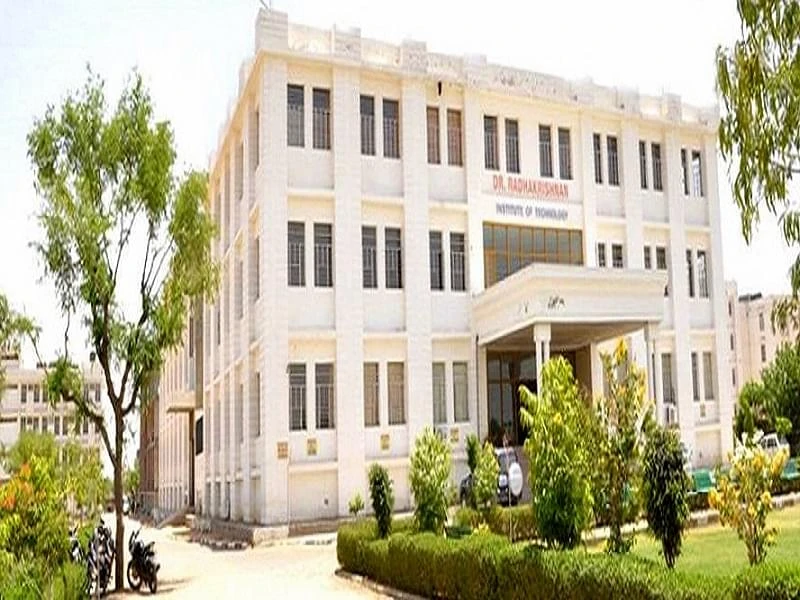

 Auditorium
 Cafeteria
 Computer Labs
 Gym
Gym Hostel
 Medical
 Science Labs
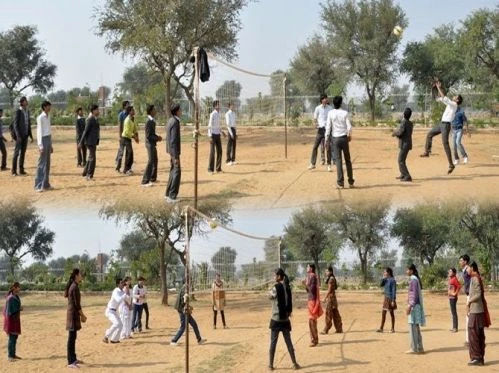
 Sports Complex
 Study Library