Loading Admission Guardian content
Loading Admission Guardian content

Provisional score based on available data. It may change as more information is verified.
Find a program, read its fee details and explore the admission requirements.
Summary of the programs shown below. Total course fee. Check the note beside each amount for inclusions and exclusions.
| Course | Stream | Fees |
|---|---|---|
| Diploma in Engineering (Polytechnic) {Lateral} | Engineering | 30000 |
| Master of Business Administration [MBA] | Management | 58000 |
| Diploma in Engineering (Polytechnic) | Engineering | 60000 |
| Bachelor of Technology [B.Tech] | Engineering | 110000 |
| Bachelor of Technology [B.Tech] {Lateral} | Engineering | 110000 |
Specializations
Eligibility: 10+2 with 35% + JEECUP
Specializations
All accepted exams
Eligibility: Pass in Graduation + CAT
Specializations
Eligibility: 10th with 35% + JEECUP
Specializations
All accepted exams
Eligibility: 10+2 with 75% + UPTAC
Specializations
All accepted exams
Eligibility: 10+3 with 75% + UPTAC
3 exams with cutoff data available
 Airtel
 HCL Technologies
 HP Global
 Huawei
 Infosys
 Tata Motors
 Wipro
WiproThere's a number floating around — ₹1.3 crore a year, as a campus placement offer. That’s the kind of figure that makes a parent pause. But before you book a seat at Dr. Rizvi College of Engineering in Kaushambi, Uttar Pradesh, it’s worth asking where that number actually comes from. (Spoiler: a single, unverified student review from a batchmate who graduated in 2020.) The truth, like most things, is somewhere between the prospectus and the Reddit thread. And that’s what we’ll unpack here.
The college runs a conventional AKTU-affiliated lineup. Undergraduate engineering students can pick from Civil, Computer Science, Electrical & Electronics, Electronics & Communication, Information Technology, and Mechanical. Intake across these specializations sits in the 180–240 seat range, depending on the year. A few branches — Electronics & Communication and IT — have historically had smaller batches, around 30 seats each, while the rest hover near 45–60.
Beyond B.Tech, DRCE offers a standard MBA program. It’s a two-year degree with specializations in Marketing, Finance, HR, and Operations. The intake for the MBA is roughly 60 students. Diploma courses are also on the table: Mechanical & Production, Electrical, and Civil, with lateral entry options after Class 10 or 12.
Faculty size sits at 62. That’s serviceable, but student reviews quietly point to the same thing: they wish there were more teachers. The ones there are described as well-qualified, knowledgeable, and approachable. That’s a decent baseline. But when a college has to stretch faculty across six engineering disciplines and an MBA program and diploma courses, “less number of teaching staff” — as one review put it — becomes noticeable. Practical lab sessions, in particular, sometimes don’t get the rigor students expect. This isn’t uncommon in tier-3 private colleges, but it’s worth knowing.
Academic schedules are published on the official website, and the grading pattern follows AKTU’s CGPA system.
Now, about that ₹1.3 crore. It’s the kind of outlier that changes conversations. But no official placement report backs it up, and it doesn’t align with the recruiters who regularly show up. Infosys, Tata Motors, Wipro, HCL, Airtel, HP Global, Huawei, Mahindra, Apollo — these are the names that appear. Solid, mid-tier companies, mostly in IT services and core manufacturing. They’re not handing out crore-plus packages to freshers.
What you’ll likely see instead: an average package that’s never quite been published in official form. A placement percentage around 75%, according to student feedback. That’s a working number. And the work mostly comes through companies like Wipro and Infosys. The placement cell does coordinate with recruiters, and some students land internships through the same channels. But across CollegeDunia and Shiksha, the sentiment is consistent — the college isn’t “that far ahead in terms of placement or internship.”
So if you’re picking DRCE purely for a job, set expectations somewhere around ₹3–5 LPA for an IT role, maybe less for core branches. The 1.3 crore figure? Best treated as noise.
Here’s how the numbers break down, based on the latest available data.
Hostel and mess fees aren’t broken out clearly, which is frustrating. You’ll need to budget extra. Scholarships exist, and they’re need-based for the most part. If family income is under ₹1 lakh (general category) or under ₹2.5 lakh (minority), there’s a shot at support. SC students often get complete fee coverage. The catch: you’ll still pay exam fees every semester, and there’s been a student complaint about a separate annual fee collected via a link — a practice they claim goes against government guidelines. That grievance hasn’t been verified, but it’s a data point.
Admission to B.Tech runs through JEE Main scores, channeled into the Uttar Pradesh Technical Admission Counselling (UPTAC) process. You’ll need to land somewhere in the 85th to 92nd percentile ballpark to be competitive, based on 2025 patterns. The actual cutoff varies by branch and category; it’s not published centrally, but the counseling process is merit-based and transparent.
For the MBA, you can use CAT, MAT, or CUET PG scores. Diploma hopefuls take the JEECUP exam. The application window generally opens April to June, with fees ranging from ₹1,000 to ₹1,200. UPTAC counseling fees are separate: ₹1,200 for male/transgender general and OBC candidates, half that for women and SC/ST applicants. There’s also a mention of a management quota, so direct institute-level admissions may have their own timeline.
A specific cutoff gives some grounding: Diploma in Electrical Engineering saw a cutoff of 1,57,186 (year unspecified, but likely from the JEECUP merit list). It’s a marker of how competitive the diploma stream can be.
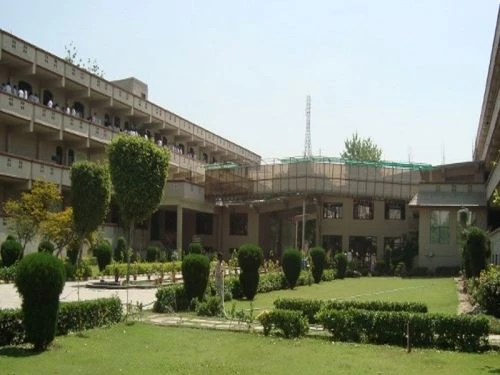
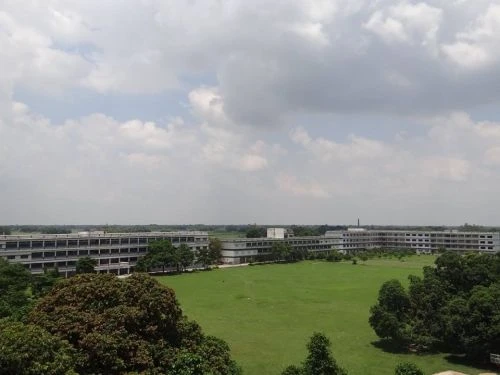
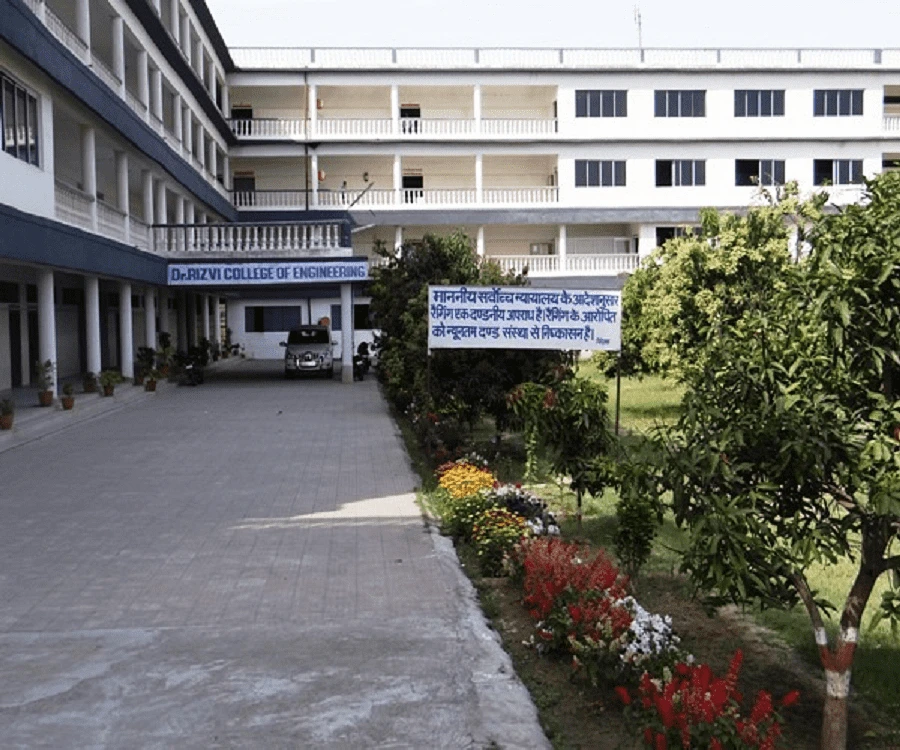
The campus sits on about 20 acres (the figure varies, with some older records pointing to 10.15 acres) within the Rizvi Educational Complex. The buildings are modern enough, and the infrastructure gets consistent praise from students. That’s a win for a private college in this tier.
Hostel life is a highlight. Boys get a block with up to 200 rooms — though actual capacity figures are a little murky, somewhere between 70 and 500, so maybe they’ve expanded. Girls have 20 rooms for around 70 students. Rooms are spacious, ventilated, and clean. The food quality? Excellent, by student consensus. The variety covers both vegetarian and non-vegetarian diets, with snacks and full meals. That’s rare.
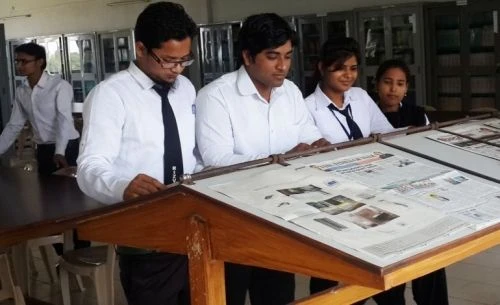
Library houses over 50,000 volumes and digital resources. Labs are “well-equipped” — a phrase that gets thrown around a lot, but the broadband and computer access are genuinely on par with current needs. Sports facilities include a large ground, hard courts, indoor games, and a gym. Two cafeterias, a bank on campus, and basic medical care fill out the daily essentials. For serious health issues, they’ll send you to hospitals in Prayagraj. Transport is provided, though details are sparse.
An annual calendar of events — Sports Day, Vishwakarma Day, freshers’ and farewell parties — keeps the social fabric intact. It’s not a buzzing metro campus, but it’s functional and active.
Positive themes keep bubbling up around the same areas. Infrastructure and hostels, first. “Well-maintained buildings,” “good facilities,” “neat and clean rooms.” Then the faculty: “well qualified, knowledgeable, and helpful.” Teaching is described as easy to understand. Campus life gets a thumbs up, with events and a friendly atmosphere.
But the other side of the coin: placement support isn’t as robust as the brochures suggest. Students note that practicals are sometimes not done properly, that there’s a shortage of teaching staff, and that internship opportunities are thin. The gap between official placement claims and what students experience is the biggest friction point. That ₹1.3 crore figure? It floats up and then evaporates when you ask for details.
There’s also a quiet grumble about fees — a separate charge every year through a link, which one student feels shouldn’t exist. No clarity on whether this is institutional or something else. Grievance redressal is mentioned on the website, so there’s at least a formal channel.
For a student from Uttar Pradesh who wants an affordable, AKTU-affiliated engineering degree with a decent campus life and isn’t betting everything on a dream placement, DRCE works. The hostel and food quality are genuine draws. The faculty, while stretched, does its job. And the fees won’t break the bank.
If your expectations hinge on high-end core placements, a robust internship pipeline, or faculty depth in niche research areas, you’ll likely be frustrated. This isn’t a placement powerhouse. The claimed 75% placement rate, even if achievable, often leans hard on mass recruiters with standard IT packages. The ₹1.3 crore exception doesn’t define the rule.
Ultimately, it’s a sensible, modestly equipped private college. Know what you’re signing up for, and the experience can be perfectly adequate. Come expecting a transformational launchpad, and you’ll probably be writing a review that starts with “not that far ahead.”


In this preview: 5 photos · 0 videos
For B.Tech admissions, you need a valid JEE Main score and must participate in UPTAC counseling. MBA aspirants can use CAT, MAT, or CUET PG scores. Diploma programs admit students through JEECUP rankings.
The B.Tech program totals around ₹2,44,800 for four years, with an annual fee of about ₹61,000. For the two-year MBA, the total fee falls between ₹1.20 lakh and ₹1.80 lakh, depending on the year and applicable charges. These figures are based on 2025–2026 data and exclude hostel charges.
Yes, the college provides separate hostels for boys and girls with furnished, ventilated rooms. Food quality is widely praised by students — the canteen serves a variety of hygienic Indian dishes, including separate vegetarian and non-vegetarian meal options.
Student reviews indicate that while the college claims about 75% campus placement, on-ground opportunities are moderate. Recruiters like Wipro, Infosys, and Mahindra visit, but the placement drive is not as extensive as some aspirants might expect. The reported highest package of ₹1.3 crore LPA remains an unverified outlier.
Yes, scholarships are granted on the basis of merit, category, and financial need. General category students with annual family income below ₹1,00,000 and minority students below ₹2,50,000 are typically eligible. SC students often receive full fee coverage through government scholarship schemes.
Share what future students should know about DRCE.
Student voices are not rewritten by colleges. We remove spam and abuse.
Wider admission question? Community PulseWhat should future students know?
Tell us which course you're considering. We'll help you work out the next step.
Get instant Partner access after mobile verification. Your public edits are reviewed before they go live.
Claim this college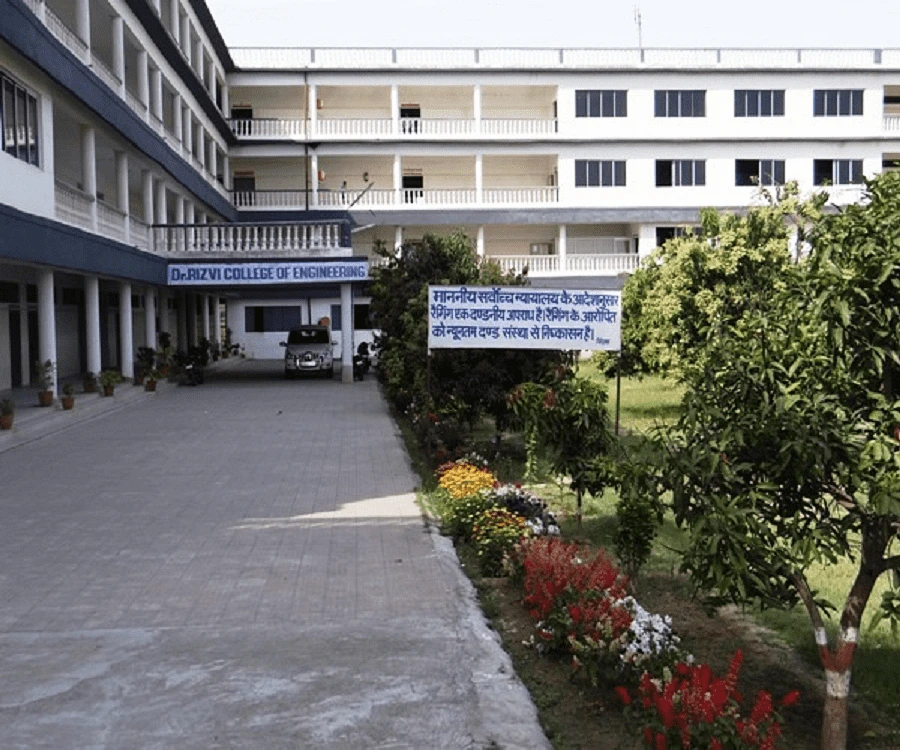

 Auditorium
 Cafeteria
 Computer Labs
 Hostel
 Medical
 Science Labs
 Sports Complex
 Study Library