Loading Admission Guardian content
Loading Admission Guardian content

Provisional score based on available data. It may change as more information is verified.
Find a program, read its fee details and explore the admission requirements.
Summary of the programs shown below. Fee amounts are not listed. Contact the college for its current fee schedule.
| Course | Stream | Fees |
|---|---|---|
| Diploma in Education - Special Education (Hearing Impairment) | Education | |
| Bachelor in Audiology and Speech - Language Pathology [BASLP] | Medical | |
| Master in Audiology and Speech- Language Pathology [MASLP] | Medical | |
| Master of Science [M.Sc] | Medical | |
| Ph.D. (Audiology) | Medical |
Specializations
Specializations
Eligibility: 10+2
Specializations
Eligibility: Graduation
Specializations
Eligibility: Graduation
Specializations
Eligibility: Post Graduation
If you're looking for a specialized, no-frills education in speech and hearing sciences in Bangalore, the Dr. S.R. Chandrasekhar Institute of Speech and Hearing (SRCISH) is a name that comes up. Established in 1977, it's one of the older private institutions in this niche field, operating as a permanent project of the Lions Club. It doesn't have the sprawling campus of a university, but it has built a reputation for clinical rigor. The institute's strength lies in its singular focus—turning out audiologists and speech-language pathologists who are ready for the clinic from day one. That's the trade-off. You get deep, hands-on training in a specific domain, but you won't find the broad college experience or the high-flying corporate placements of a mainstream engineering or management school.
SRCISH is a vertical institution. Everything revolves around communication sciences and rehabilitation. The undisputed flagship is the 4-year Bachelor in Audiology & Speech Language Pathology (BASLP), which sees an intake of 40-60 students annually. The postgraduate M.Sc. programs in Audiology and Speech-Language Pathology are the natural next step.
But the institute's scope is broader. It runs a B.Sc. in Psychology and Rehabilitation Science, and has a strong focus on special education through its 1-2 year Diploma in Education for Hearing Impairment (D.Ed.Spl.Ed.(HI)). There are also PG diplomas, like the one in Audio-Visual Therapy, and full doctoral programs (Ph.D.) affiliated with MAHE, Manipal.
The academic model is intensely practical. Your day is literally split down the middle: four hours of theory, four hours of clinical work. That 50-50 split isn't a suggestion; it's the curriculum. You'll train in their attached specialized units—the Speech Diagnostics Unit, a Tele-Services center, and dedicated research labs for Vertigo and Tinnitus. They even operate their own Sunaad School for the Hearing Impaired on campus, established in 1988, which serves as a live training ground. The faculty, around 40 strong with several PhDs, are typically clinicians first, which shapes the teaching. It's less about abstract theory and more about applied science. You'll also have to take the standard university-prescribed papers (Environmental Studies, Indian Constitution, etc.), but the core is unmistakably clinical.
This is where you need to calibrate expectations. SRCISH is not a campus where mass recruiters from IT or consulting show up. The placement process is different, and student reviews point this out clearly: there are typically no formal "campus interviews" in the traditional sense.
The institute reports a highest package in the range of INR 5-7 LPA for BASLP and M.Sc. graduates, usually for roles in specialized clinical research or elite private hospitals. The average starting salary for a fresher is between INR 3.5 to 5 Lakhs Per Annum (LPA). Alumni from a few years back mentioned monthly starting salaries in the INR 22,000-25,000 range, which aligns with that average.
So how do students get jobs? The model relies heavily on the institute's network and the student's own clinical rotations. Top recruiters are hospitals and clinics like Apollo, Fortis, and NIMHANS, hearing aid companies like Starkey and Amplifon, and NGOs in the rehabilitation space. The institute offers "comprehensive support" for internships and research projects, which often turn into job offers. The consensus from student sentiment is clear: job opportunities in the field are "high," but you have to be proactive. You're being trained for a specific profession with a known demand curve, not funneled through a corporate placement cell.
For a private institution in Bangalore, SRCISH's fees are relatively moderate, especially given the specialized nature of the programs. The total course fee for the four-year BASLP program is approximately INR 2.2 to 2.5 lakh. The two-year M.Sc. programs cost about INR 1.5 to 1.8 lakh in total. Diploma and certificate programs are lower, around INR 60,000-80,000.
A hostel facility is available with separate accommodations for boys and girls, though the exact fees aren't detailed in the brief. The total cost of a four-year degree, therefore, remains largely the course fee plus modest hostel and living expenses.
Where SRCISH stands out is in its scholarship ecosystem, a legacy of its Lions Club Trust foundation. Support is available based on both merit and need. Key schemes include:
Scholarship application is integrated with the admission process, so it's something to inquire about immediately.
Admission to the flagship BASLP and M.Sc. programs typically requires clearing an entrance exam. This could be the institute's own test or the RCI centralized entrance. The process is a merit-cum-entrance protocol, often followed by a personal interview and counseling session.
For programs like the D.Ed (Hearing Impaired) and some PG diplomas, admissions are merit-based on your qualifying exam marks (usually requiring 50-60% in 10+2). PhD admissions are through the Bangalore University entrance test and evaluation of research proposals.
The application window for most UG and PG programs opens around May-July each year. For the D.Ed program, it's typically April-June. Keep an eye on the official institute website for exact dates. The application fee is generally around INR 500-1000. While international students can apply, details on a specific NRI or management quota aren't prominently advertised.
The campus on Hennur Main Road is compact—0.6 acres with a built-up area of about 30,550 sq ft. Don't expect sprawling lawns. What you get are functional, modern classrooms, seminar halls, and an auditorium with the necessary teaching aids for this field. There's a library with over 2,400 books and two dozen national/international journals, specialized labs for audiology and speech pathology, and a gym/multi-purpose hall.
Hostels provide basic, separate accommodations for boys and girls with dining facilities. Reviews don't dive deep into room quality or warden behavior, suggesting it's adequate but not luxurious. The college provides transport facilities for students and staff, which is a plus given the location.
Social life is organized through the student association (SASH), which puts on annual cultural events, talent shows, and festivals. Sports activities are organized, though they use a rented playground. The overall rating for "Campus Life" from students on platforms like Shiksha is surprisingly high (5/5), indicating that the close-knit, focused community works for those invested in the field.
Synthesizing the available sentiment, a clear picture emerges. Students consistently praise the high job opportunities and the quality of teaching, rating faculty and course content highly (4/5 on Shiksha). The clinical exposure is considered the institute's biggest strength, making graduates practice-ready.
The most frequent critique is the lack of formal campus interviews. This isn't a college with a placement cell that lines up interviews for you. You leverage the clinical network, your internship performance, and the institute's reputation. It requires more independence. Reviews don't highlight major issues with management or infrastructure, suggesting the experience is generally smooth for those who understand the professional trade they're entering.
SRCISH is a specialist's choice. It's absolutely worth it if you are certain you want a career in audiology, speech-language pathology, or hearing-impaired education. The clinical training is immersive, the fees are reasonable for a private college, and the scholarship support is robust. You'll graduate with a skill set that has direct professional application, and the institute's long-standing reputation (backed by its NAAC Grade A and RCI approval) opens doors in hospitals, clinics, and NGOs.
But you should probably look elsewhere if you want a traditional "college experience" with a broad liberal arts curriculum, huge campus events, or a placement cell that guarantees corporate job offers. This is a vocational-professional institute in spirit. Your success will depend on embracing the hands-on, clinical grind. For the right student—one passionate about this specific field of rehabilitation—SRCISH offers a focused, reputable, and practical pathway into a meaningful profession.
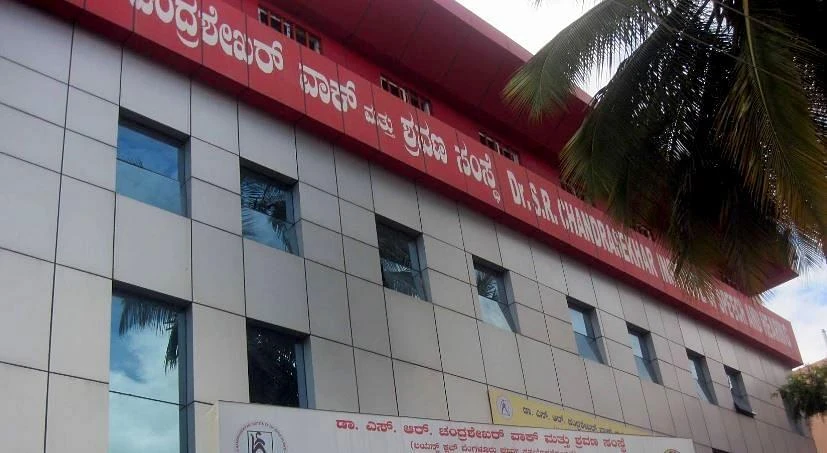
In this preview: 1 photo · 0 videos
SRCISH specializes in communication sciences and rehabilitation. The primary undergraduate course is the 4-year Bachelor in Audiology & Speech Language Pathology (BASLP). Key postgraduate programs include the 2-year M.Sc. in Audiology and the 2-year M.Sc. in Speech Language Pathology. The institute also offers a 1 or 2-year Diploma in Education - Special Education (Hearing Impairment) and 3-year Ph.D. programs in Audiology and Speech-Language Pathology.
The total course fee for the four-year BASLP program ranges from approximately INR 2.2 lakh to INR 2.5 lakh. For the two-year M.Sc. programs (Audiology or Speech-Language Pathology), the total course fee is between INR 1.5 lakh and INR 1.8 lakh. These figures are for the entire program duration, not per year.
Admissions for the 2026-2027 academic year for flagship programs like BASLP and M.Sc. generally follow a merit-cum-entrance protocol. Candidates typically need to appear for an Institute Entrance Test or the RCI centralized entrance exam, followed by counseling and a personal interview. The application window for most UG and PG programs usually opens between May and July. Prospective students should monitor the official institute website for exact notifications.
According to institute reports, the average placement package for freshers from BASLP and M.Sc. programs at SRCISH ranges from INR 3.5 Lakhs to 5.0 Lakhs Per Annum (LPA). The highest reported packages reach INR 5-7 LPA for roles in specialized clinical research or top private hospitals. It's important to note that student reviews indicate job opportunities are high but often secured through clinical networks rather than formal campus interviews.
Yes, SRCISH provides separate hostel accommodations for boys and girls with basic amenities and dining facilities. The institute also has a strong scholarship program. Financial aid is available based on merit (e.g., RCI merit scholarships) and need (e.g., government schemes for SC/ST/OBC). Specific scholarships like the Central Sector Scheme offer annual stipends, and hostellers can receive maintenance allowances up to INR 10,000 per month under certain schemes. Scholarship applications are integrated with the admission process.
Share what future students should know about SRCISH.
Student voices are not rewritten by colleges. We remove spam and abuse.
Wider admission question? Community PulseWhat should future students know?
Tell us which course you're considering. We'll help you work out the next step.
Get instant Partner access after mobile verification. Your public edits are reviewed before they go live.
Claim this college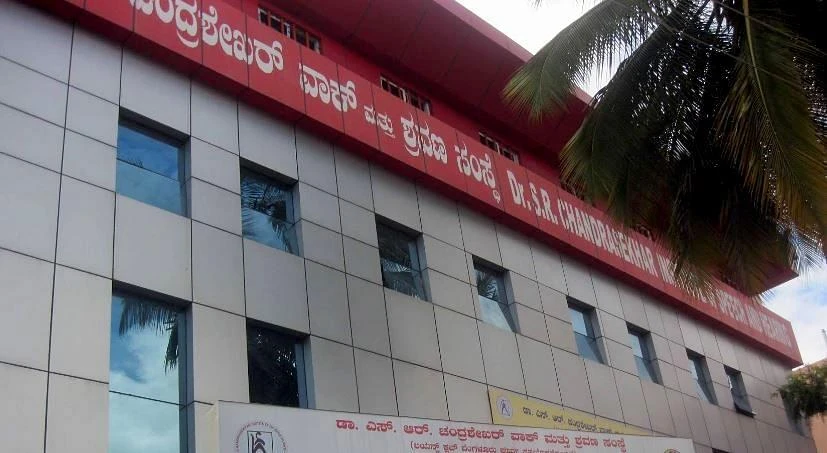
 Cafeteria
 Computer Labs
 Hostel
 Medical
 Science Labs
 Study Library