Loading Admission Guardian content
Loading Admission Guardian content
Provisional score based on available data. It may change as more information is verified.
Find a program, read its fee details and explore the admission requirements.
Summary of the programs shown below. First-year fee. Check the note beside each amount for inclusions and exclusions.
| Course | Stream | Fees |
|---|---|---|
| Diploma | Medical | 75000 |
| Bachelor of Science [B.Sc] (Nursing) | Paramedical | 80500 |
| Master in Hospital Administration [MHA] | Management | 107000 |
| M.B.B.S. | Medical | 694830 |
| Doctorate of Medicine [MD] | Medical | 1400000 |
Specializations
Specializations
Eligibility: 10+2
Specializations
Eligibility: Graduation
All accepted exams
Eligibility: 10+2 with 50% + NEET
Specializations
All accepted exams
Eligibility: Post Graduation
2 exams with cutoff data available
Dr. Somervell Memorial CSI Medical College and Hospital (Dr. SMCSI) in Karakonam, Kerala, is a study in contrasts. Established in 2002 on the foundation of a century-old mission hospital, it’s a private institution with a formidable reputation for academic rigor and clinical exposure. But talk to any student, and you’ll hear another story—one of strict rules, remote location, and a social life that’s nearly absent. With an annual MBBS fee pushing ₹8.5 lakhs and NEET cutoffs that make it a realistic option for many, the central question isn't about its legitimacy—it's NMC-approved and affiliated with the Kerala University of Health Sciences (KUHS)—but about fit. Is this disciplined, almost monastic, environment what you need to become a doctor, or will its constraints feel suffocating? The answer depends entirely on what you're looking for.
The academic portfolio here is comprehensive, anchored by the MBBS program. With an intake of 150 students, it’s one of the larger private medical colleges in the region. The curriculum follows the NMC's Competency-Based Medical Education (CBME) model, and the college has a track record of producing KUHS rank holders. That’s not an accident. The teaching methodology is old-school: frequent internal assessments, a heavy emphasis on textbook knowledge, and professors who’ve often retired from top government colleges like Trivandrum Medical College. Dr. S. Gopakumar, former HOD of General Medicine from there, is a case in point. You’re getting experienced faculty, but the style is traditional, not innovative.
Beyond MBBS, the college offers over 15 MD/MS specializations—from General Medicine and Pediatrics to Radio-Diagnosis and Emergency Medicine—with a total PG intake of around 45-50 seats. The allied health sciences wing is robust, offering B.Sc Nursing (50 seats), BPT, various paramedical diplomas, and even an MHA (Master of Hospital Administration). It’s a full-spectrum medical education setup. The academic calendar is tightly synced with KUHS, and passing requires clearing both internal (20% weight) and university (80% weight) exams with a minimum of 50% in each. There’s little room for error.
Let’s be clear: medical colleges don’t have "placements" like engineering schools. Your career path is mandated. Every MBBS graduate must complete a one-year Compulsory Rotatory Residential Internship (CRRI) at the attached Dr. Somervell Memorial Mission Hospital. The official stipend for 2024 is between ₹10,000 and ₹13,000 per month. Compared to the ₹25,000 or so offered at government medical colleges in Kerala, that’s a significant gap, and it’s a common point of student grievance.
After internship, most graduates either prepare intensely for NEET-PG or take up Junior Resident (JR) positions in the private hospital sector. The average starting salary for a JR in Kerala’s private hospitals ranges from ₹35,000 to ₹50,000 per month. Top recruiters are essentially the hospital network itself and other private setups in Trivandrum and the nearby Kanyakumari district. The college’s strongest placement asset is its own 700-bed hospital, which provides consistent, high-volume clinical exposure from day one—a genuine advantage for building practical skills.
The fees are regulated by the state's Admission and Fee Regulatory Committee (AFRC). For the 2024-25 academic year, the MBBS tuition fee for the General/Management quota is ₹8,16,038 annually. Add the first-year special fee (₹46,500), annual hostel rent (₹38,000 - ₹44,000), and monthly mess charges (₹4,000 - ₹5,000), and you’re looking at a yearly outlay of roughly ₹9.5 lakhs for a first-year student. Over 5.5 years, the total cost easily crosses ₹45-50 lakhs. The NRI quota fee is substantially higher at ₹21,65,720 for tuition alone, leading to a total cost exceeding ₹1.1 Crore.
Financial aid is available but limited. Eligible students from SC/ST/OEC categories can apply for the Kerala Government's e-Grantz scheme. As a minority institution, it also offers post-matric scholarships for Christian students. These can provide some relief, but the overall financial burden remains heavy for a self-financing college.
Admission is 100% based on NEET-UG rank, processed through the centralized online counseling conducted by the Commissioner for Entrance Examinations (CEE), Kerala. There is no separate management quota entrance test.
The cutoffs provide a clear picture of where the college stands. For the 2024/2024 cycles, the closing All India Rank (AIR) for the State Merit (SM) quota hovered between 40,000 and 55,000. For the Minority (Community) quota, the rank dips considerably, often between 1,50,000 and 2,50,000. The NRI quota seats are typically available for candidates with ranks up to 6,00,000 or higher, depending on annual demand. This spread makes Dr. SMCSI a viable, if expensive, option for students with moderate to lower NEET ranks who are seeking an NMC-recognized college in South India. The application window follows the NEET and KEAM calendars, usually opening in March-April and June-July respectively.
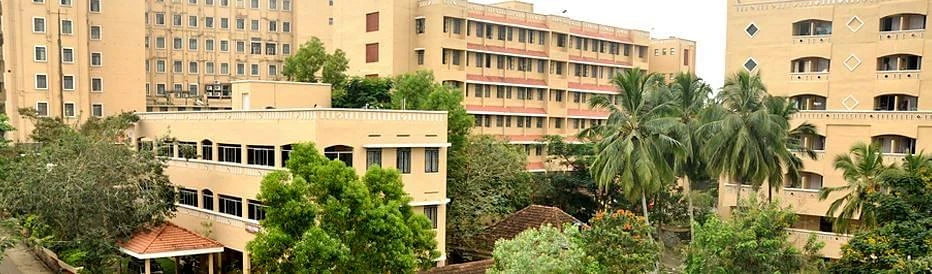
This is where the student reviews get stark. The 25-acre campus is built around a functioning 700-bed hospital, which guarantees serious clinical work. The library is well-stocked, labs are adequate, and there’s a large auditorium. But the infrastructure feels utilitarian, not luxurious.
The hostels are a major point of contention. They’re basic—2 or 3-bedded rooms with essential amenities. The rules, however, are famously strict. A rigid dress code, curfews (reportedly as early as 6:30 PM for girls), and limitations on movement are consistently cited. The food in the mess is routinely described as "monotonous" and "below average."
And then there’s the location. Karakonam is a village. The nearest railway station is 3 km away, but Trivandrum city is a 30-40 km drive. There are no cafes, movie theaters, or hangout spots in walking distance. The social life is almost entirely campus-bound, and the college organizes only a few low-key events like Christmas and Onam celebrations. If you’re imagining a vibrant campus with fests and freedom, you’ll be disappointed.
Synthesizing opinions from Reddit, Quora, and education forums reveals a clear, almost unanimous consensus. The college is seen as a “Strict Academic Hub.” Some Reddit users have even used the hyperbolic phrase "concentration camp" to describe the disciplinary environment. That’s the negative pole.
The positives are equally strong. Students universally praise the “excellent patient flow” and high-quality, experienced faculty. The academic pressure ensures most are well-prepared for university exams. You come out knowing your medicine.
The negatives are about lifestyle and administration: an "almost non-existent" social scene, "bureaucratic" grievance systems, and frustration with the hostel’s strict curfews and food quality. The management’s missionary ethos creates a disciplined, somewhat insular atmosphere. It’s not for everyone. You can gauge more official data on their university's portal.
This college presents a very specific proposition. It’s worth it if your primary, perhaps only, goal is to become a doctor through rigorous academic training with unmatched clinical exposure in a private setting. If you can tolerate—or even thrive under—strict discipline, don’t mind a remote location, and are comfortable with a high fee for the privilege, Dr. SMCSI will deliver a solid medical education. It’s a known quantity in Kerala’s medical landscape.
You should probably look elsewhere if you value campus life, personal freedom, or a more balanced college experience. The financial cost is significant for the amenities and lifestyle offered. Students seeking a more liberal environment or better internship stipends might find better value in other private colleges or, of course, a government institution. Ultimately, Dr. SMCSI is a tool—highly effective for its core purpose, but spartan and demanding in its operation.
In this preview: 5 photos · 0 videos
Dr. Somervell Memorial CSI Medical College and Hospital (Dr. SMCSI) is a private, self-financing institution. It is managed by the CSI South Kerala Diocese.
For the management quota in 2024, the annual tuition fee for the MBBS program is approximately ₹8.16 Lakhs. This amount does not include additional costs such as hostel fees or other special charges.
The college is noted for strong clinical exposure, considered one of the best among private colleges in Kerala in this regard. This is due to its 700+ bed hospital and its location in a rural area, which contributes to a good patient flow.
While hostel stay is not strictly mandatory by law, the college management strongly encourages it. Given the institution's remote location in Karakonam, most students from out of town opt to stay in the on-campus hostel facilities.
The college does hold events such as celebrations for Christmas, Onam, and College Day. However, these cultural events and fests are described as more low-key and occur less frequently compared to many other medical colleges.
Share what future students should know about Dr. SMCSI.
Student voices are not rewritten by colleges. We remove spam and abuse.
Wider admission question? Community PulseWhat should future students know?
Tell us which course you're considering. We'll help you work out the next step.
Get instant Partner access after mobile verification. Your public edits are reviewed before they go live.
Claim this college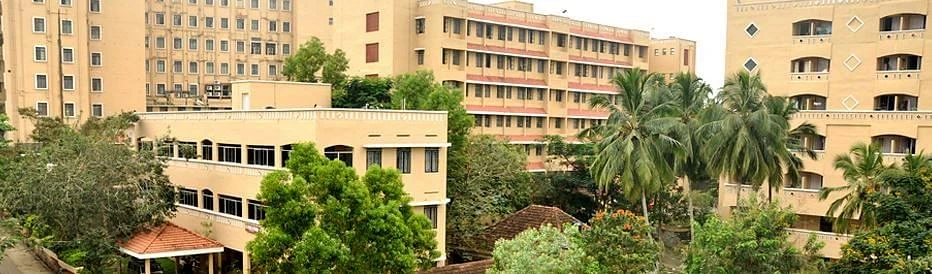
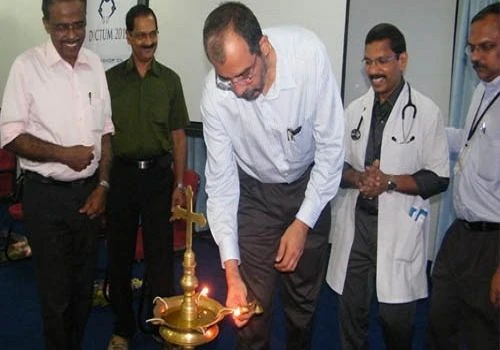
 Auditorium
 Cafeteria
 Computer Labs
 Hostel
 Medical
 Science Labs
 Sports Complex
 Study Library