Loading Admission Guardian content
Loading Admission Guardian content

Provisional score based on available data. It may change as more information is verified.
Find a program, read its fee details and explore the admission requirements.
Summary of the programs shown below. Fee amounts are not listed. Contact the college for its current fee schedule.
| Course | Stream | Fees |
|---|---|---|
| Bachelor of Arts [BA] | Arts | |
| Master of Arts [MA] | Arts | |
| Master of Commerce [M.Com] (Accountancy) | Commerce | |
| Bachelor of Science [B.Sc] (Home Science) | Science | |
| Master of Science [M.Sc] (Home Science) | Science |
Specializations
Eligibility: 10+2
Specializations
Eligibility: Graduation
Specializations
Eligibility: Graduation
Specializations
Eligibility: 10+2
Specializations
Eligibility: Graduation
If you're a young woman from Junagadh or the surrounding Saurashtra region looking for an affordable, safe, and reputable place to earn a degree in arts, commerce, or home science, Dr. Subhash Mahila Arts Commerce and Home Science College is likely already on your list. Established in 1976, it's a cornerstone of local education, operating as a private grant-in-aid institution. That means it gets government funding, which translates to tuition that's often free for girls. It's a practical choice, not a glamorous one. The college holds a 'B' grade accreditation from NAAC and is now affiliated with Bhakta Kavi Narsinh Mehta University (BKNMU). For generations, it has been a primary gateway to higher education for women here, focusing on foundational learning and preparation for government jobs or further studies. Its identity is deeply tied to its community—it's a place where tradition meets opportunity, albeit within a very specific and localized framework.
The academic portfolio is classic for a regional arts and commerce college, with one standout department. Undergraduate intakes are large, reflecting the college's role as a major educational provider. The B.A. program takes in around 1,200 students across specializations like English, Gujarati, Economics, Psychology, and Sociology. B.Com. focuses on Accountancy and Banking for about 600 students. The B.Sc. in Home Science, with an intake of 120, is the academic highlight. It's one of the oldest departments in the region and includes specializations in Food & Nutrition and Home Management. The program has dedicated labs for cooking and textile chemistry, which is a rarity at this level.
At the postgraduate level, the college offers M.A. in a few subjects, M.Com., and an M.Sc. in Home Science. The PGDCA (Post Graduate Diploma in Computer Applications) is a notable self-financed course that draws students looking for practical IT skills. Academically, the college follows the BKNMU calendar and the Choice Based Credit System (CBCS). With a permanent faculty of about 23-25 members, the teaching approach is often described as traditional. The principal is Dr. Balram P. Chavda, and the faculty includes noted figures like Dr. H. G. Rajwani in English and Dr. A. S. Kantariya in Psychology. The environment is supportive, especially for students who are more comfortable with instruction in Gujarati.
You need to set realistic expectations here. This isn't a campus where multinational corporations hold mass recruitment drives. Placement, in the typical engineering college sense, is not the primary focus. The official website and some portals might claim a 70% placement rate, but that figure requires context. For most students in Arts and Commerce, "placement" means securing a job through their own efforts or the college's network of local recruiters. The actual number of students getting corporate offers directly from campus is significantly lower. Many, many students use the degree as a foundation for competitive exams (GPSC, UPSC, SSC) or for pursuing a B.Ed. to become teachers.
For those who do get placed through college channels, the average package is estimated to be in the range of ₹2.0 to ₹3.5 lakhs per annum. Top recruiters are local and regional: banks like ICICI and Axis hire for clerical positions, local schools hire B.Ed. graduates (often from the sister education college), and small-scale textile or food units may recruit from the Home Science department. The highest package touted by the broader Dr. Subhash University (up to 20 LPA) is for its engineering and management wings and does not apply to this arts and commerce college. The gap between the official claim and the student-reported reality is the key takeaway. Success here is measured in government job selections and further education admissions, not in corporate salary slabs.
This is where the college's grant-in-aid status shines, especially for female students. The tuition fees for core UG programs (B.A., B.Com., B.Sc. Home Science) are heavily subsidized by the Gujarat government. The annual cost is typically between ₹1,500 and ₹3,500, and under various state schemes, it's often completely waived. You're essentially paying development and library fees. The self-financed PGDCA course is the exception, costing between ₹15,000 and ₹20,000 per year.
Hostel accommodation is a major advantage. The on-campus Dr. Subhash Arya Kanya Chhatralaya is highly subsidized, costing approximately ₹10,000 to ₹15,000 per year, which includes mess charges. It's known for its strict security and safety—a top priority for parents. There is a more premium, university-managed hostel option that costs over ₹1 lakh annually, but most students opt for the affordable chhatralaya. Financial aid is robust through the Digital Gujarat portal, offering scholarships for SC, ST, OBC, and EWS categories, as well as the state's MYSY (Mukhyamantri Yuva Swavalamban Yojana) scheme.
The process is straightforward and entirely merit-based. There are no entrance exams for the regular BA, B.Com, or B.Sc. programs. Admission is determined solely by your marks in the Gujarat HSC (12th standard) or equivalent board exam. The selection is managed through the centralized Gujarat Common Admission Services (GCAS) portal. You apply online there during the window, which usually opens in May and runs through July. After the allotment, you complete document verification at the college.
Cutoffs vary by program and category but are generally accessible for local students. The B.Sc. Home Science program, due to its specialized nature and smaller intake, might have a slightly higher cutoff than the general B.A. streams. There is no management quota for the grant-in-aid seats, ensuring a transparent process. For the self-financed PGDCA course, the college may have its own direct application process.
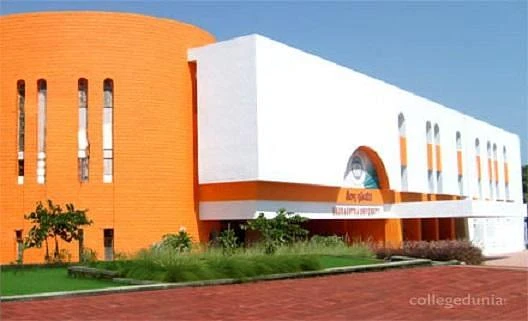
The college is part of the sprawling 80+ acre Dr. Subhash Academy campus, though its specific built-up area is about an acre. The infrastructure is functional. You'll find a large central library with over 20,000 books and a dedicated competitive exam section—a clear nod to student aspirations. The Home Science labs are a point of pride, with dedicated spaces for practical work. The computer lab supports the PGDCA students. Some student reviews, however, point out that certain classrooms are old and can get crowded, with insufficient benches during peak hours.
Student life revolves around safety, tradition, and extracurriculars. The hostel is the social hub for resident students. The college has a strong focus on the National Service Scheme (NSS) and organizes cultural festivals and events. Students have access to the massive shared sports grounds for athletics and traditional games like kabaddi and kho-kho. The overall atmosphere is often described as "traditional." The student body is predominantly from Junagadh and nearby villages. An urban student from a metro might find the social scene limited or "lame," as one Reddit comment from r/junagadh put it. But for its intended demographic, it provides a familiar and supportive transition to college life.
Synthesizing feedback from CollegeDunia, Shiksha, and local forums paints a consistent picture. The positives are clear and repeated: an overwhelming sense of safety and discipline, which is the number one reason parents choose this college. Faculty are generally praised for being supportive and accessible, particularly for students who need guidance in their native language. The college's long legacy and local reputation are also significant assets. Alumni active in local politics, education, and social work underscore its community roots.
But the criticisms are just as consistent. Some students feel the teaching methodology is too rote, with professors "just reading from textbooks" without enough contemporary context or practical application. The placement support for arts and commerce graduates is seen as lacking—there's a feeling the college could do more to connect students with opportunities beyond the very local sphere. While the campus is large, the condition of some older infrastructure is noted. And again, the cultural environment is very specific. It's a college deeply embedded in the social fabric of Saurashtra, which can feel either comforting or confining depending on your background and expectations.
It depends entirely on what you're looking for. If you are a young woman from the Junagadh region seeking a highly affordable, safe, and respected institution to get a foundational degree in arts, commerce, or home science, this college is an excellent and logical choice. Its value proposition is unbeatable: near-zero tuition, a cheap and secure hostel, and a supportive environment geared toward preparing you for government exams or further studies like B.Ed. or an M.A. The B.Sc. Home Science program, in particular, offers unique practical training.
However, if you have ambitions for high-flying corporate careers, a cosmopolitan campus experience, or cutting-edge pedagogical methods, you will likely be disappointed. This is not that kind of college. Its strengths are local, traditional, and foundational. It's best for students who plan to build their careers within Gujarat's public sector or local industries. For them, Dr. Subhash Mahila College isn't just worth it—it's often the default and most sensible option. You can find more official details on the college website.
In this preview: 1 photo · 0 videos
Dr. Subhash Mahila Arts Commerce and Home Science College is a private, grant-in-aid institution. This means it receives government funding for staff salaries and student tuition fees.
Yes, the college provides on-campus hostel accommodation for girls at the Dr. Subhash Arya Kanya Chhatralaya. The hostel is noted for being very affordable for students.
For female students, the annual fees for the B.Com program are minimal, typically under ₹3,000 per year. This low cost is due to government subsidies provided to the grant-in-aid college.
The college was previously affiliated with Saurashtra University. It is now officially affiliated with Bhakta Kavi Narsinh Mehta University (BKNMU).
No, Dr. Subhash Mahila Arts Commerce and Home Science College does not offer a B.Ed program. However, the same trust operates a separate institution, the Dr. Subhash Mahila College of Education, which is located on the same campus.
Share what future students should know about Dr Subhash Mahila Arts Commerce and Home Science College.
Student voices are not rewritten by colleges. We remove spam and abuse.
Wider admission question? Community PulseWhat should future students know?
Tell us which course you're considering. We'll help you work out the next step.
Get instant Partner access after mobile verification. Your public edits are reviewed before they go live.
Claim this college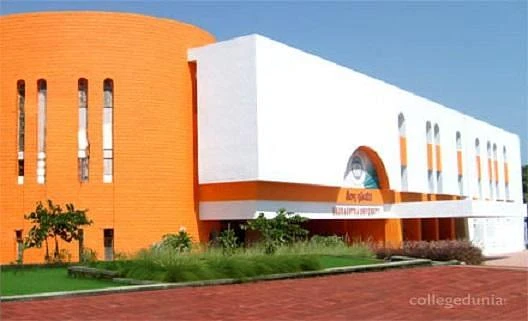
 Auditorium
 Cafeteria
 Computer Labs
 Hostel
 Science Labs
 Sports Complex
 Study Library