Loading Admission Guardian content
Loading Admission Guardian content
Provisional score based on available data. It may change as more information is verified.
Find a program, read its fee details and explore the admission requirements.
Summary of the programs shown below. First-year fee. Check the note beside each amount for inclusions and exclusions.
| Course | Stream | Fees |
|---|---|---|
| M.B.B.S. | Medical | 60000 |
All accepted exams
Eligibility: 10+2 with 50% + NEET
For a female medical aspirant in Telangana with a NEET rank in the 1.8 to 4.5 lakh range, Dr. VRK Women's Medical College (DVWMC) presents a clear, if specific, proposition. It’s a private, minority institution offering a focused, secure, and academically rigorous environment. But that environment comes with trade-offs—a suburban campus, strict rules, and a social life that’s deliberately quiet. The college isn’t trying to be Osmania. It’s carving out its own niche, and whether it’s the right fit depends entirely on what you’re looking for in your five-and-a-half-year MBBS journey.
The academic offering is straightforward and centered on the MBBS program. With an annual intake of 100 students, the college follows the curriculum and schedule set by KNRUHS. The teaching faculty, around 127 strong, gets generally positive marks from students. You’ll hear them described as approachable but strict, especially about the 75% attendance mandate. The teaching style is traditional—think PowerPoint and chalkboard lectures rather than experimental pedagogies. That’s fine. It gets the job done for the university exams.
Where DVWMC distinguishes itself is in its postgraduate offerings. It runs MD and MS programs in core specializations, though seats are limited—just 1 to 3 per department. The MD in Paediatrics (3 seats) and MS in Obstetrics & Gynaecology (2 seats) are particularly relevant, given the college's focus. This means as an MBBS student, you’re learning in an environment where postgraduate teaching and research are happening, which can add depth to your training.
Let’s be precise: medical colleges don’t have "placements." Your career after MBBS is built on the quality of your internship and your performance in NEET PG. At DVWMC, every student completes a one-year compulsory rotating internship at the attached 600-bed hospital, earning a stipend of ₹25,906 per month—standard for private colleges in Telangana.
The real metric is where graduates go next. The vast majority here, like at most Indian medical colleges, aim for specialization. They prepare for and take NEET PG. Alumni who don’t pursue PG often work as Medical Officers in private or government hospitals, where starting salaries typically range from ₹3.5 to ₹8 LPA. You might see unverified claims of "80 LPA packages" floating around. Ignore those. Those figures refer to experienced specialist consultants, not fresh MBBS graduates. The college’s own alumni network shows graduates serving as residents in government medical colleges across India or in prominent Hyderabad hospitals like Apollo and Yashoda.
The fee structure is regulated by the Telangana Admission and Fee Regulatory Committee (TAFRC), so the numbers are transparent. But the spread is vast, depending on your quota. For the 2024-25 academic year, Category A (Convenor/Government Quota) students pay a remarkably low ₹60,000 or so in tuition. Category B (Management Quota) fees are a different world, sitting between ₹11.55 and ₹13 lakhs per year. The NRI quota is higher still.
You have to factor in living costs. The on-campus girls' hostel, which is generally mandatory for out-of-town students, adds another ₹1.5 to ₹1.75 lakhs annually for a non-AC room. Toss in university fees, a refundable caution deposit, and other incidentals, and the total 5.5-year cost for a Management Quota student can easily land between ₹65 and ₹75 lakhs. There’s no significant scholarship program highlighted, so the financial planning needs to be front and center for families.
It all boils down to one exam: NEET UG. Admission is 100% merit-based through the centralized counseling conducted by KNRUHS. The college does not accept direct applications.
The cutoffs tell the story of its positioning. For the 2024 counseling rounds, the closing All India Ranks (AIR) for the Muslim Minority category seats—a significant chunk—were between 1,80,000 and 2,15,000. For the Management Quota (B-Category), the bar is lower, with seats often closing around the 3,50,000 to 4,50,000 AIR mark. These numbers make it a realistic target for a large segment of NEET qualifiers. If your rank falls within these bands and you’re comfortable with the college’s profile, it’s a viable option to secure an MBBS seat in Hyderabad.
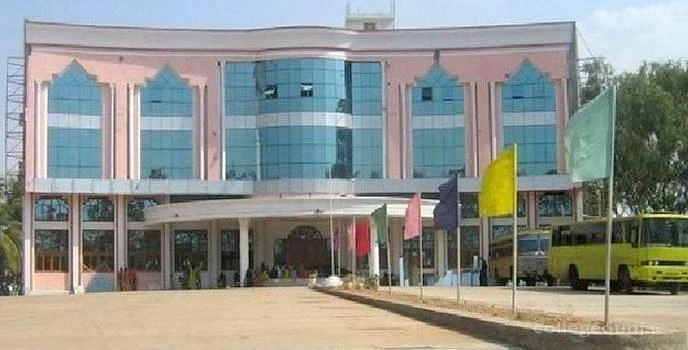
Spread over 26 acres opposite the Mruguvani National Park, the campus is green and quiet. Seriously quiet. The location, about 22 km from Hyderabad's main stations, means you’re removed from the city's hustle. The infrastructure meets NMC requirements: a central library with digital access, well-equipped labs, and a 600-bed hospital on-site.
The hostel experience defines daily life for most. The positives are major for many parents: 24/7 security, high walls, and strict entry/exit rules create a fortress-like sense of safety. The flip side, students say, is a feeling of restriction. Wardens are described as "very strict," and the food in the mess is a frequent point of complaint—called repetitive and average at best. Sports facilities exist for volleyball and badminton, but the famed "college fest culture" is minimal. Social life is largely internal, revolving around Eid and the Annual Day. As one student put it online, "If you want a safe environment and want to focus only on studies without distractions, this is the place. But don't expect a 'movie-like' college life."
Scouring forums like Reddit's r/indianmedschool and Quora reveals a consistent, nuanced picture. The teaching quality gets a solid 8/10. Faculty are knowledgeable and care about academics, but the administration can be slow and bureaucratic.
Clinical exposure gets mixed reviews. This is key. The 600-bed hospital sees a moderate patient flow. Where it shines is in its core mission areas: Obstetrics & Gynaecology and Paediatrics. Students report excellent hands-on experience in these departments, as women from the surrounding areas preferentially come here. Exposure in core surgical specialties, however, is often rated as just average.
The strictness is a recurring theme. It’s not just about attendance. It’s about hostel timings, guest policies, and overall discipline. For some, this is a welcome structure that eliminates distractions. For others, it feels overly controlling. There’s no universal verdict—it’s a personal fit.
DVWMC is a specialist institution, and the verdict depends entirely on the student's profile and priorities. It is unequivocally worth serious consideration for a female student with a NEET rank between 1.8 and 4.5 lakh who prioritizes a safe, disciplined, and academically focused environment above a vibrant campus social life. The strong OBG and Paediatrics departments are a real bonus for those inclined towards those fields. The low government quota fee is an incredible value.
However, students seeking a typical, bustling college experience with active fests, a co-ed environment, and more autonomy might find it stifling. The high management quota fee is harder to justify if the strict, secluded atmosphere isn’t what you want. In essence, it’s a trade-off. You gain security and focus but sacrifice some freedom and social vibrancy. For the right student, that’s a perfectly acceptable, even preferable, deal. For others, it might feel like a constraint. Look past the brochure and honestly ask which camp you fall into.
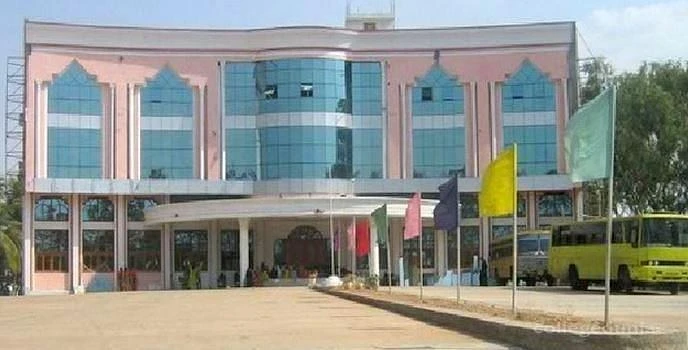
In this preview: 1 photo · 0 videos
Yes, Dr VRK Women's Medical College is exclusively for female students. The student body is 100% female, though the teaching faculty and hospital staff include both men and women.
Yes, students from all communities can apply. While it is a Muslim Minority institution with a percentage of seats reserved for Muslim candidates, there are Open/General category seats available for other applicants.
The patient flow at VRK Hospital is moderate, with approximately 350 to 500 outpatients daily. It is noted to be particularly high in the departments of Obstetrics, Gynaecology, and General Medicine.
For the 2024 admission cycle, the approximate All India Rank (AIR) cutoff for Category B (Management) seats at Dr VRK Women's Medical College was between 3.5 Lakh and 4 Lakh.
Hostel accommodation is generally mandatory for students coming from outside the immediate vicinity of the college. However, day scholars from Hyderabad are permitted to live off-campus.
Share what future students should know about Dr VRK Women's Medical College.
Student voices are not rewritten by colleges. We remove spam and abuse.
Wider admission question? Community PulseWhat should future students know?
Tell us which course you're considering. We'll help you work out the next step.
Get instant Partner access after mobile verification. Your public edits are reviewed before they go live.
Claim this college