Loading Admission Guardian content
Loading Admission Guardian content
Provisional score based on available data. It may change as more information is verified.
Find a program, read its fee details and explore the admission requirements.
Summary of the programs shown below. Programs record different fee periods. Compare the individual amounts and their notes below.
| Course | Stream | Fees |
|---|---|---|
| Bachelor of Technology [B.Tech] | Engineering | 96000 |
| Bachelor of Technology [B.Tech] {Lateral} | Engineering | 96000 |
| Master of Computer Applications [M.C.A] | Computer Applications | 120000 |
Specializations
All accepted exams
Eligibility: 10+2 with 45% + WBJEE
Specializations
All accepted exams
Eligibility: 10+3 with 45%
All accepted exams
Eligibility: Graduation
4 exams with cutoff data available - showing recent entries
 Aksara InfoTech Private Limited
 Andrew Yule & Co.
 Artech Infosystems
 Asa Bhanu Technical Services (ABTS)
 ASG Biochem Pvt Ltd.
 AuthBridge
 Berger
 Bhilwara Infotechnologies
 BOC India Ltd
 Bosch Ltd
 BRG
BRG Castrol India Ltd
 CMC Limited
 Cognizant
 CTS SMC
 Cummins India Ltd
 Essar Oil
 Genpact
 Global IT Experts
 Hindustan Copper Limited (HCL)
 Huawei
 IBM
IBM Igate Patni
 Indian Army
 Indian Navy
 Infosys
 ITC
ITC L&T Infotech
 Luminoguru
 Manlift India Pvt. Ltd.
 Mphasis
 NETpro System
 PCS Global Pvt. Ltd.
 Pinnacle Infotech Solutions
 Rahul Telematic and Software Technology
 Reliance communication Pvt Ltd
 SEW Infrastructure
 SRMB Steel
 Syntel
 Tata Steel
 TCS
TCS Tech Mahindra
 Value Prospect Consulting
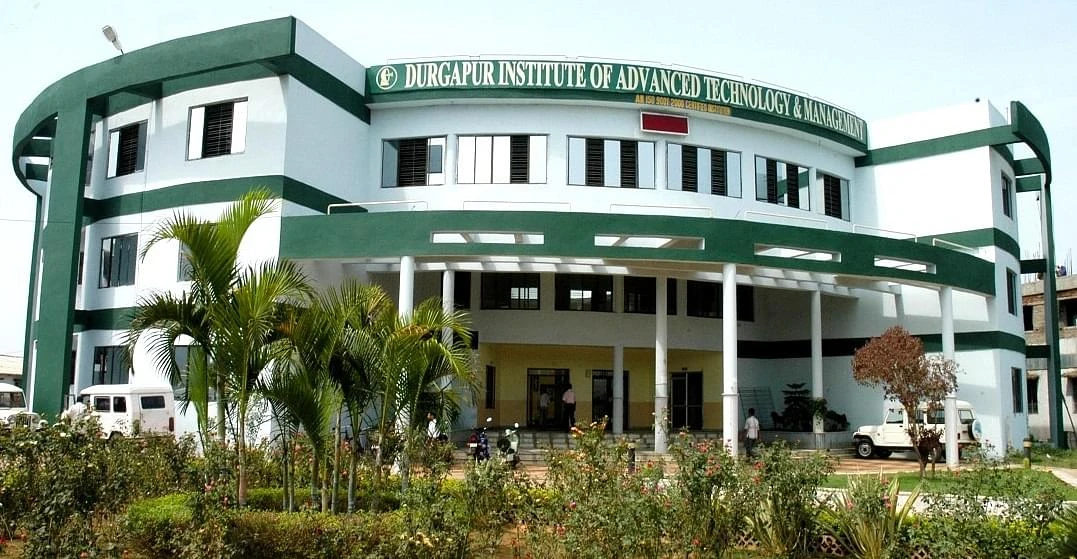
Durgapur Institute of Advanced Technology & Management (DIATM) has carved out a specific, pragmatic niche in West Bengal’s engineering landscape. It’s not trying to compete with the NITs or the top-tier private colleges. Instead, it offers a straightforward proposition: a functional, AICTE-approved B.Tech or MCA degree at a price point that’s hard to beat in the region. For students with mid-tier WBJEE ranks and a tight budget, that’s a compelling offer. The campus is green and active, the faculty gets decent reviews for being accessible, and the principal has a legitimate link to CERN. But you have to read the fine print. The placement story, especially for core branches like Mechanical and Electrical, is one of modest on-campus opportunities and a heavy reliance on student hustle off-campus. That’s the real DIATM experience—a decent academic foundation where your final job offer often depends more on your own coding practice or networking than the college’s corporate connections.
DIATM’s academic portfolio has seen some streamlining. For the 2024-25 cycle, the focus is clearly on a few core B.Tech programs. Computer Science & Engineering leads with 90 seats, followed by Mechanical and Electrical Engineering with 30 seats each. Older branches like Electronics & Communication and Information Technology appear to have paused intake, a common consolidation move in private colleges to manage resources. At the postgraduate level, the MCA and MBA programs hold steady with 60 seats apiece.
The academic rhythm is dictated by MAKAUT’s semester calendar. That means you’re in for the standard West Bengal state university experience: strict, centrally-set exams where your internal marks from the college need to be earned. Faculty-wise, the numbers are lean but competent. With around 26 core full-time faculty for the active B.Tech programs, the student-teacher ratio isn’t luxurious, but reviews consistently highlight that the professors are approachable and willing to help outside class. The academic standout is Principal Dr. Sabyasachi Sarkar, an experimental particle physicist involved with the COMPASS++/Amber experiment at CERN. It’s a genuine, if high-level, connection that adds a spark of prestige, though its direct impact on the undergraduate curriculum is limited.
This is where you need to separate the brochure from the ground report. Officially, the college claims an 85-88% placement rate with a highest package of 10 LPA and an average hovering around 4.5 to 5.5 LPA. The median is about 5 LPA. Those are the numbers you’ll see on the DIATM website.
Talk to students and alumni, and the picture gets more nuanced. The consensus on platforms like Shiksha and CollegeDunia is that the effective on-campus placement rate is closer to 50-60%. Many students, particularly in Mechanical and Electrical, secure roles through off-campus drives or by targeting mass recruiters independently. The recruiter list is familiar: TCS, Wipro, Cognizant, Infosys, Capgemini, Tech Mahindra. They’re the backbone of IT placement here, accounting for maybe 70% of offers. For core engineering, names like Essar Oil, HR Steel, and L&T Infotech show up, but the volume is lower.
So, what’s the takeaway? If you’re in CSE and you’re proactive, landing a 4-6 LPA IT job from campus is a realistic goal. The 10 LPA+ figures do happen, but they’re outliers, often tied to off-campus success stories. For EE or ME, you should plan on supplementing the college’s placement cell with your own job search.
Affordability is DIATM’s strongest card. The fee structure has a clear hierarchy. B.Tech in CSE is the premium product, costing roughly ₹1.04 lakhs for the first semester and ₹48,500 for each subsequent one, leading to a total 4-year cost of around ₹4.4 to ₹5 lakhs. In contrast, the core branches—Electrical and Mechanical—are significantly cheaper, at about ₹70,000 for admission and ₹25,000 per semester thereafter, totaling roughly ₹2.2 to ₹2.45 lakhs for the degree. That’s a major differentiator.
Postgraduate fees are in the ₹2-3.4 lakh range for the full two-year program. Hostel and mess fees add another ₹32,600 to ₹42,600 per six months, depending on room type. Financial aid is primarily through state and central government schemes. Students are eligible for the West Bengal Student Credit Card, the Swami Vivekananda Merit-cum-Means (SVMCM) scholarship, and schemes listed on the National Scholarship Portal. The college itself doesn’t highlight major institutional scholarships.
For B.Tech, admission is overwhelmingly through the West Bengal Joint Entrance Examination (WBJEE), which fills 80-90% of seats. JEE Main scores can be used for the remaining 10%. The 2024 WBJEE Round 1 cutoffs for the General category tell the story of demand: CSE closed at a rank of 74,396, Mechanical at 75,939, and Electrical at 102,413. These are mid-to-lower tier ranks, making DIATM an accessible target for a large segment of WBJEE test-takers.
For MCA, the WB-JECA exam is key, and for MBA, scores from MAT or JEMAT are accepted. The process is centralized through the WBJEEB counseling. After the counseling rounds conclude, the college does sometimes offer direct admission for vacant seats under a management quota, but this is contingent on eligibility and seat availability.
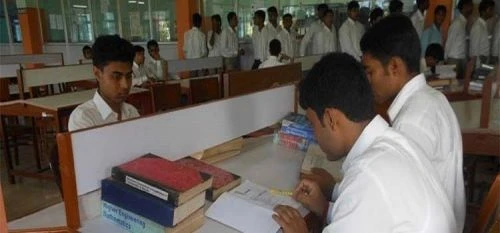
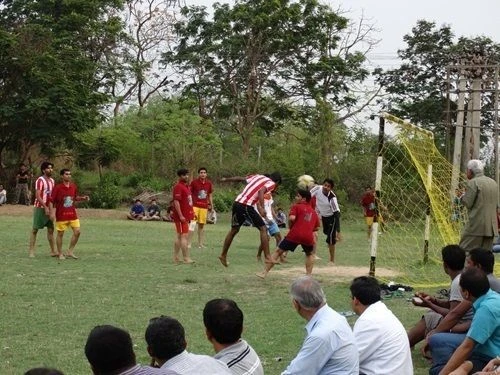
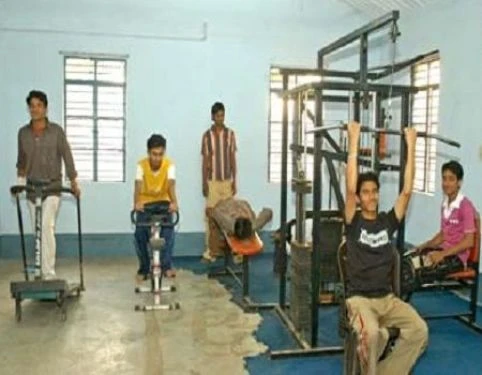
The 12-acre campus in Rajbandh gets good marks for being spacious and green. It’s a self-contained environment. Infrastructure is adequate: 27 labs (the mechanical workshops are noted as well-equipped), a library with over 24,000 books, and 24/7 Wi-Fi that students describe as functional, if not blazing fast. There’s an on-campus bank, ATMs nearby, and a medical facility adjacent to the campus.
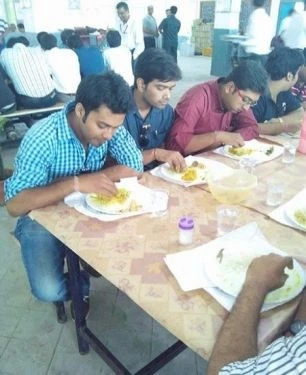
Hostel life is a classic mixed bag. The hostels themselves (separate for boys and girls, total capacity ~445) are rated around 3.5/5 for quality. The life inside—the friendships, the socializing—is often cited as the best part of the DIATM experience. The food in the mess, however, is a frequent complaint in student reviews, described as monotonous or poor. The location is another point to consider. Rajbandh is an industrial suburb on the highway. You have the essentials, but for proper city life, entertainment, or better restaurants, you need to travel into central Durgapur.
The online sentiment forms a clear consensus. DIATM is a “value for money” tier-3 college. It’s the choice for students who find colleges like BC Roy Engineering College (BCREC) out of reach financially or by cutoff, but who still want a proper campus—not just a building in a city.
Positives are heartfelt. “Teachers are very helpful” is a refrain you see everywhere. The campus environment is praised for being conducive to both study and social life. The ROI, especially for the low-fee core branches, is considered excellent.
But the criticisms are consistent and practical. Placement promises are viewed with skepticism; the on-campus process is seen as limited. The location feels isolated to some. And the rigidity of the MAKAUT system means you can’t coast—exams are tough and fair. One typical review sums it up: “If you want a degree at an affordable fee and are willing to hustle off-campus for a job, DIATM is a good choice.” Another adds, “The hostel food is bad, but the hostel life with friends is the best part.” That’s the authentic, unfiltered take.
DIATM is a very specific solution for a specific set of students. It’s worth it if you have a WBJEE rank between 70,000 and 1,00,000, have a constrained budget, and are primarily seeking a legitimate, affordable engineering degree with a decent campus life. It’s a particularly smart pick for Mechanical or Electrical Engineering, where the fees are remarkably low and the academic foundation is solid—just go in with a plan to drive your own job search. For CSE, it’s a viable option if your goal is to land a mass-recruiter IT job; you’ll need to supplement the curriculum with your own coding practice. It is not worth it if you are solely dependent on the college for top-tier placements, crave an urban campus location, or are looking for the brand value of a ranked institution. DIATM doesn’t feature in the NIRF rankings, and that’s okay. It knows its role: a pragmatic, affordable launchpad for students who are ready to put in the work themselves.
In this preview: 5 photos · 0 videos
Yes, DIATM's CSE branch is considered good. It is the most popular branch at the college and has the best placement record among its programs. It is noted that many students in this field also pursue off-campus placement opportunities.
The primary difference is their institutional status. NIT Durgapur is a premier government institute of national importance, while DIATM is a private college affiliated with Maulana Abul Kalam Azad University of Technology (MAKAUT).
Direct admission is possible for certain programs. It is available for the MCA course and, at times, for vacant B.Tech or MBA seats after the official counseling rounds are completed, provided candidates meet the eligibility criteria.
Reviews from students regarding the hostel food are mixed to negative. While the institute's official site claims high standards, student feedback frequently cites the hostel food as an area that requires significant improvement.
BC Roy Engineering College generally has higher admission cutoffs and a slightly better placement infrastructure. DIATM is often considered a more affordable option compared to BCREC.
Share what future students should know about DIATM.
Student voices are not rewritten by colleges. We remove spam and abuse.
Wider admission question? Community PulseWhat should future students know?
Tell us which course you're considering. We'll help you work out the next step.
Get instant Partner access after mobile verification. Your public edits are reviewed before they go live.
Claim this college
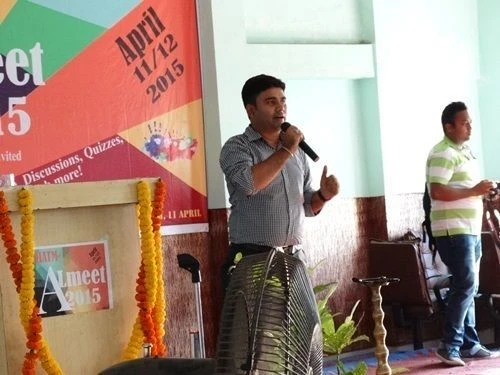
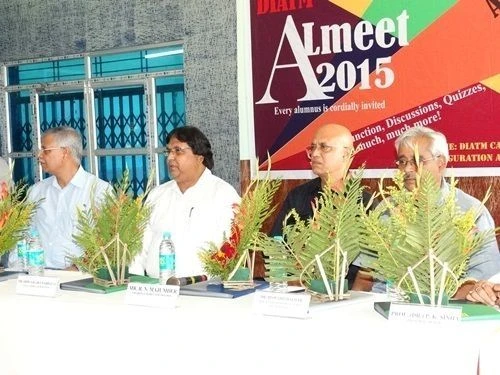
 Auditorium
 Cafeteria
 Computer Labs
 Gym
Gym Hostel
 Medical
 Science Labs
 Sports Complex
 Study Library