Loading Admission Guardian content
Loading Admission Guardian content

Provisional score based on available data. It may change as more information is verified.
Find a program, read its fee details and explore the admission requirements.
Summary of the programs shown below. Fee amounts are not listed. Contact the college for its current fee schedule.
| Course | Stream | Fees |
|---|---|---|
| Master in Hospital Administration [MHA] | Management | |
| Bachelor of Physiotherapy [BPT] | Medical | |
| Master of Physiotherapy [MPT] | Medical | |
| Bachelor of Science [B.Sc] | Paramedical | |
| Master of Science [M.Sc] (Medical Lab Technology) | Paramedical |
Specializations
Eligibility: Graduation
Eligibility: 10+2
Specializations
Eligibility: B.P.T.
Specializations
Eligibility: 10+2
Specializations
Eligibility: Graduation
If you're looking for a college that will hand you a degree and a social life on a platter, Father Muller College of Allied Health Sciences (FMCAHS) in Mangalore isn't it. But if your priority is becoming a clinically sharp, employable healthcare professional, this is one of the most serious training grounds in South India. Established in 1999 and reoriented as a distinct unit in 2020, this private Catholic institution leverages its 1250-bed parent hospital to deliver an education that's less about theory and more about handling real patients from day one. The trade-off is a famously disciplined, almost monastic campus life. You come here to work, and the results show: a near-100% employment rate for graduates, a reputation that travels well to the Gulf and Europe, and a consistent spot among the top allied health colleges in Karnataka. It's a trade many aspiring technicians and therapists are willing to make.
FMCAHS runs a tightly focused suite of programs designed to feed directly into hospital and diagnostic lab pipelines. The undergraduate B.Sc. degrees—spanning from mainstream MLT and MIT to niche fields like Perfusion and Neuro Science Technology—are all four-year programs that include a compulsory one-year internship. The Bachelor of Physiotherapy (BPT) is a 4.5-year course. Postgraduate offerings include M.Sc. in MLT (with specializations), MIT, Radiation Physics, and Masters programs in Hospital Administration (MHA) and Physiotherapy (MPT).
The academic culture is rigorous, mirroring a medical school. You'll follow the RGUHS calendar and grading system, where passing requires 50% in both internal and university exams. The faculty, led by Dean Dr. Urban John Arnold D'Souza, includes over 50 dedicated members, many holding MD or PhDs. But the real professor is the hospital. The curriculum is clinical-heavy, and that's the college's biggest selling point. They've also forged research MoUs with institutions like NITK Surathkal and international partners in Switzerland and Malaysia, though the primary focus remains on hands-on, bedside training.
Let's be clear: don't expect typical engineering-style campus drives with flashy PPTs. Placements here are hospital-based and often organic. The college claims a near 100% employment rate, which is plausible but needs context. That figure includes students who secure jobs on their own or are absorbed by the massive Father Muller Medical College Hospital (FMMCH) after their internship. It's not a guaranteed 100% on-campus placement rate.
The money is decent for a fresher in this sector. The average package for a B.Sc. graduate in India ranges from ₹2.5 to ₹4.5 LPA. For specialized, high-demand roles like Cardiac Care or Perfusion Technology in private corporate chains, the highest packages can touch ₹6-8 LPA. The top recruiters are exactly who you'd hope for: the parent FMMCH, Manipal Hospitals, AJ Hospital, and diagnostic giants like Metropolis and Dr. Lal PathLabs. The 100% assured internship at the 1250-bed FMMCH is the golden ticket—it's where most students build the competence and connections that lead to a job offer. You can check the official NIRF rankings for broader institutional placement data.
Costs depend heavily on the quota. For the 2024-25 academic year, tuition for B.Sc. Allied Health programs under the Management Quota is estimated between ₹80,000 and ₹1,20,000 annually. The BPT program is more expensive, hovering around ₹1.5 to ₹2 lakhs per year. On top of that, you need to budget for hostel accommodation (₹54,000/year) and mess fees (₹3,200-₹3,500 per month, or about ₹40,000 annually). Add in university fees (≈₹27,000), exam fees, and a one-time caution deposit, and the total 4-year cost for a B.Sc. student, including hostel, can land between ₹6.5 and ₹9 lakhs. It's a significant investment, but it's in line with—or even slightly below—other private institutions offering similar clinical exposure. The college website, fathermuller.edu.in, should be consulted for the most current, official fee structure.
For Karnataka residents, the primary gateway is the Karnataka Common Entrance Test (KCET). Your rank here determines eligibility for government quota seats. For the more numerous Management and NRI quota seats, the college conducts its own institutional entrance process or interview. The application window typically opens in March or April.
KCET cutoffs for 2024 give a sense of the competition. For the popular B.Sc. Medical Imaging Technology (MIT), ranks ranged from around 25,000 to 45,000. For B.Sc. MLT, the range was wider, from about 60,000 to 1,20,000. These numbers shift each year based on applicant pool and seat matrix, but they signal that MIT is the most sought-after program. The selection is straightforward: it's merit-based on your entrance rank or your performance in the college's own screening for private seats.
The infrastructure for learning is top-notch. The multi-story, air-conditioned "Knowledge Centre" library is a standout, open 24/7. The Simulation and Skills Centre is considered one of the best in the region. Sports facilities include an indoor stadium, gym, basketball court, and fields. Wi-Fi is available, though it's primarily in the library and specific zones.
Now, for the lifestyle part. There are 10 hostels (6 for girls, 4 for boys) with basic, twin-sharing, non-AC rooms. The rules are the defining feature of student life. It's strict. There's a 10 PM curfew enforced with biometric attendance at the hostel gate. Attendance mandates of 75-80% are non-negotiable—fall short by even 1%, and you're debarred from exams. A formal dress code (shirt tucked in, formal shoes) is enforced campus-wide. The mess food, according to countless reviews on CollegeDunia and Shiksha, is mediocre at best; most students supplement with the hospital canteen or outside eateries. It's a secure, focused environment, but it's not a typical "college" experience.
The consensus from platforms like Quora, Reddit's r/Indian_Academia, and education portals is remarkably consistent. The praise is laser-focused on professional outcomes. Alumni rave about the "insane" clinical exposure and patient volume, the weight the "Mullers" name carries globally, and the quality of the library and labs. Safety, especially for women, is repeatedly highlighted as a major plus.
The criticisms are just as focused on the daily grind. The strictness is the most common gripe—the school-like rules, the rigid curfew, and the punitive attendance policy. The food gets poor marks. One verbatim quote sums up the trade-off perfectly: "If you want a 'fun' college life with fests every month, don't come here. But if you want to be a top-tier professional who knows their clinical work, Mullers is the best in Mangalore." That's the authentic student sentiment in a nutshell.
FMCAHS is a specialist institution with a very clear value proposition. It's best for the student who views college as a professional training academy, not a social launchpad. If your goal is to emerge as a highly competent, immediately employable allied health professional with a resume full of real clinical hours, this college is arguably one of the best choices in Karnataka. The direct access to a major hospital, the strong placement network, and the institutional reputation are powerful assets.
But you should probably look elsewhere if you chafe under strict discipline, value a vibrant campus social scene, or expect a laid-back academic schedule. The rules here are real and enforced. The investment is substantial, and the return is measured in job readiness, not campus memories. For the right candidate—driven, focused, and serious about a healthcare career—Father Muller delivers exactly what it promises: a rigorous path to a solid profession.
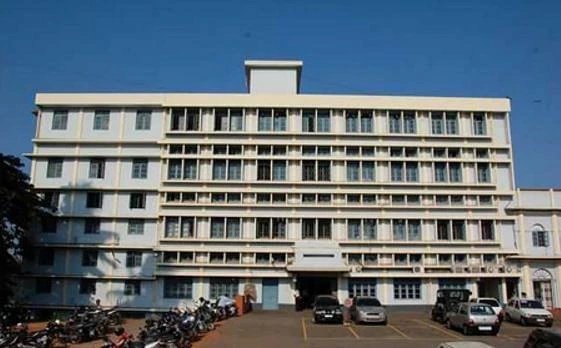
In this preview: 1 photo · 0 videos
Yes, Father Muller College of Allied Health Sciences is known for maintaining a strict academic and disciplinary environment. This includes a high attendance requirement of 80% and a strict hostel curfew of 10 PM for resident students.
Yes, many graduates from Father Muller College of Allied Health Sciences are hired by the affiliated Father Muller Hospital. However, placement is not guaranteed and depends on the availability of vacancies and the student's academic merit.
Admission to the B.Sc. Allied Health Sciences programs requires an entrance exam. For government quota seats, candidates must appear for the KCET exam. For management quota seats, the college conducts its own interview and merit-based screening process.
The quality of food in the college hostel is generally rated average by students, often receiving ratings of 2 or 3 out of 5. As a result, many students prefer to eat at the private canteens available on the campus.
Yes, the degree awarded by Father Muller College, which is affiliated with Rajiv Gandhi University of Health Sciences (RGUHS), is recognized internationally. This recognition facilitates graduates in clearing foreign licensing exams such as the DHA (Dubai), HAAD, and UK's PLAB/HCPC.
Share what future students should know about Father Muller College Allied Health Sciences.
Student voices are not rewritten by colleges. We remove spam and abuse.
Wider admission question? Community PulseWhat should future students know?
Tell us which course you're considering. We'll help you work out the next step.
Get instant Partner access after mobile verification. Your public edits are reviewed before they go live.
Claim this college
 Auditorium
 Hostel
 Medical
 Science Labs
 Sports Complex
 Study Library