Loading Admission Guardian content
Loading Admission Guardian content

Provisional score based on available data. It may change as more information is verified.
Find a program, read its fee details and explore the admission requirements.
Summary of the programs shown below. Fee amounts are not listed. Contact the college for its current fee schedule.
| Course | Stream | Fees |
|---|---|---|
| Bachelor of Arts [BA] | Arts | |
| Master of Arts [MA] | Arts | |
| Bachelor of Commerce [B.Com] | Commerce |
Specializations
Eligibility: 10+2
Specializations
Eligibility: Graduation
Specializations
Eligibility: 10+2
For young women in the old city of Ahmedabad, particularly from conservative families, FD Arts and Commerce College for Women isn't just an educational institution—it's a trusted gateway. Established in 1990 and affiliated with Gujarat University, it holds the distinction of being Gujarat's first Muslim women's college. That's a significant social marker. What you get here is a safe, affordable, and supportive environment for a BA or B.Com degree, with classes ending by early afternoon. It's a practical choice rooted deeply in its community. The recent addition of B.Sc programs in sciences signals an attempt to modernize, but the core identity remains unchanged: a place where getting a degree is the primary goal, with career placement taking a definite backseat.
The academic portfolio is straightforward and serves its local demographic well. Under the NEP 2020 framework, the college offers 4-year Honors degrees. The B.A. program is the largest, with an intake of 500-600 students across specializations like Psychology, Economics, Sociology, and languages including English, Gujarati, Hindi, and Urdu. Instruction is primarily in Gujarati, which is a practical consideration for many students. The B.Com program, with specializations in Advanced Accounting and Auditing, has around 150-200 seats split between grant-in-aid and self-financed divisions.
The newer B.Sc programs in Microbiology, Chemistry, and Zoology are self-financed and represent the college's move into science education, though they sit somewhat separately from its traditional arts and commerce identity.
Faculty strength is modest, with about 20-25 permanent members. A solid 60-80% hold PhDs, and teachers like Dr. Pinky Pandya (Gujarati) and Dr. Deepika Panchal (Psychology) are noted for their research and mentorship. The academic culture is supportive, not competitive. Unique add-on courses in beautification, fabric printing, and jewelry making aim to provide tangible skills for self-reliance, while mandatory karate classes underscore the institution's focus on student safety.
This is where expectations need serious calibration. The college officially offers "placement assistance," but the on-campus drive scene is minimal. Student reviews consistently indicate that less than 20% of graduates secure jobs directly through the college. That's a critical data point. The highest package quoted for 2024-25 is around ₹3.5-4 LPA, but this is typically an off-campus achievement. The average sits between ₹1.8 and ₹2.2 LPA.
Recruiters are almost exclusively local: small accounting firms, private schools for teaching roles, and back-office banking operations. Lists that mention names like Kotak Mahindra or ICICI usually refer to off-campus applications made by students themselves. The dominant path after an FD degree is further study—a B.Ed for teaching or an M.A./M.Com. Viewing this college as a career-launching pad would be a mistake. It's a degree-completing institution, and the placement data reflects that reality.
Affordability is arguably the college's strongest suit. For the 2024-25 academic year, fees for grant-in-aid B.A. and B.Com seats are remarkably low, ranging from ₹1,500 to ₹3,500 per annum. Self-financed programs, including the new B.Sc courses and some B.Com divisions, cost between ₹8,000 and ₹12,000 per year. The total three-year cost is estimated between ₹10,500 and ₹35,000. That's a fraction of the cost of most private colleges.
Financial aid is a well-utilized system here. The college administration actively helps students apply for government scholarships via the Digital Gujarat portal for SC/ST/OBC and Minority categories. There's also an internal Student Welfare Fund to support economically disadvantaged students. The low financial barrier is a major reason for its high enrollment.
The process is simple and entirely merit-based. There are no entrance exams. Admission is 100% based on Class 12 (GSEB/CBSE or equivalent) marks. Selection happens through the centralized Gujarat University admission system (GCAS portal). The application window typically opens in May and runs through July.
Since it's a minority institution, there's a common question about eligibility. The college is open to women of all religions and communities. There's no NRI or management quota for the grant-in-aid seats, though there may be limited discretion for the self-finance slots. Cutoffs aren't published in a national sense, but for popular B.A. specializations like Psychology or Economics, securing a seat generally requires a solid first-class percentage in the 12th standard.
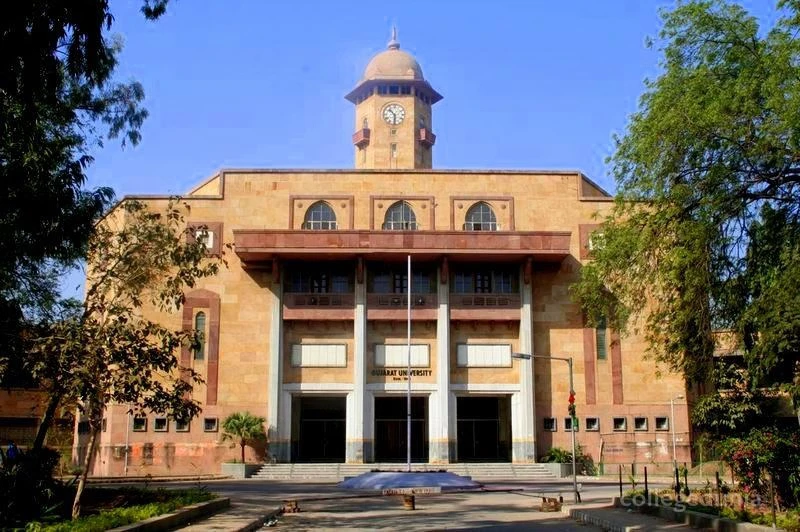
The campus is compact and urban, located in the dense Jamalpur area. At about 0.63 acres, don't expect sprawling lawns or large sports fields. Infrastructure is functional but dated. The library is a highlight, with over 15,000 books and active reading clubs. There's a computer lab with 20+ systems and basic science labs for the B.Sc wing. Sports facilities include table tennis, volleyball, and surprisingly, rifle shooting.
A critical point: there is no on-campus hostel. This is confirmed by multiple student reviews. Out-of-town students typically find accommodation in private paying guest facilities or community hostels in areas like Juhapura. The college canteen is small, offering basic snacks at subsidized rates.
Life here is disciplined. The 75% attendance rule is strictly enforced, and the overall environment is traditional. The morning shift (typically 7:30 AM to 12:30 PM) defines the daily rhythm, making it convenient for students who have family or work responsibilities in the afternoon.
The consensus from alumni platforms like CollegeDunia and Shiksha is clear and leans positive for its specific purpose. The overwhelming positive is the safe and supportive environment. Teachers are repeatedly described as mentors who go beyond academics to help with scholarship forms and personal guidance. "It is the best place for girls from the old city who want to study without the pressure of a co-ed environment," one 2022 alumna said. The affordability is the other major plus.
The negatives are just as consistent. The strict discipline and older infrastructure are noted. But the most frequent critique is about career support. Students feel the college is a degree-granting institution, not a career-launching one. The gap between the need for jobs and the actual on-campus recruitment is the primary source of dissatisfaction. If you come in expecting corporate placement drives, you'll be disappointed.
It depends entirely on what you're looking for. If you are a young woman from Ahmedabad's old city or a conservative background seeking an affordable, safe, and supportive environment to earn a respectable Gujarat University degree, FD College is an excellent, purpose-built choice. Its strengths—safety, mentorship, and ultra-low cost—are perfectly aligned with that need. The faculty support is genuine.
However, if your primary goal is robust campus placements, exposure to a vibrant co-ed campus life, or state-of-the-art infrastructure, you should look elsewhere. This college is about access and foundation. It's a springboard for further government job preparation or teaching degrees, not for direct corporate recruitment. For its intended audience, it fulfills a vital role. For others, its limitations would be too pronounced. It's a classic case of matching the institution to the student's specific context.
No, FD Arts and Commerce College for Women is open to students of all religions and communities. While it is a minority-managed institution, admission is not restricted by religion.
No, the college does not provide on-campus hostel facilities. Students typically arrange for their own accommodation in nearby residential areas.
The college operates a convenient morning shift, with typical timings from 7:30 AM to 12:30 PM. This schedule is designed to accommodate students who may have other commitments.
Yes, the college offers B.Sc. programs in Microbiology, Chemistry, and Zoology. These courses are offered under a self-finance model.
Students apply for scholarships through the Digital Gujarat portal. The college office provides significant administrative support to assist students with these applications.
Share what future students should know about FD Arts and Commerce College for Women.
Student voices are not rewritten by colleges. We remove spam and abuse.
Wider admission question? Community PulseWhat should future students know?
Tell us which course you're considering. We'll help you work out the next step.
Get instant Partner access after mobile verification. Your public edits are reviewed before they go live.
Claim this college Auditorium
 Cafeteria
 Computer Labs
 Gym
Gym Hostel
 Medical
 Science Labs
 Sports Complex
 Study Library