Loading Admission Guardian content
Loading Admission Guardian content

Provisional score based on available data. It may change as more information is verified.
Selected ranking categories, with the recorded year beside each result. Open all records for the complete history.
7 published records · Lower numeric ranks are stronger
The Week
B.Tech
#962019
Find a program, read its fee details and explore the admission requirements.
Summary of the programs shown below. First-year fee. Check the note beside each amount for inclusions and exclusions.
| Course | Stream | Fees |
|---|---|---|
| Master of Computer Applications [M.C.A] | Computer Applications | 71100 |
| Bachelor of Technology [B.Tech] | Engineering | 75100 |
| Master of Technology [M.Tech] | Engineering | 87050 |
| Master of Business Administration [MBA] | Management | 220325 |
Eligibility: Graduation
Specializations
All accepted exams
Eligibility: 10+2
Specializations
All accepted exams
Eligibility: Graduation
Specializations
All accepted exams
Eligibility: Graduation
2 exams with cutoff data available
 Accenture
 Barclays Bank
 Ernst & Young
 Federal bank
 IBM
IBM Infosys
 ITC INFOTECH
 Kalki Technologies Limited
 L &T Technology Services
 Libsys
 Microsoft
 Mphasis
 MRF
MRF Robert Bosch Engineering & Business Solutions Ltd
 SAP
SAP Standard Chartered Bank
 Suntech
 Syntel
 Tally
Tally Tata Elxsi
 TCS
TCS US Technologies
 Verizon
 Wipro
WiproIf you're looking at private engineering colleges in Kerala, the Federal Institute of Science and Technology (FISAT) is a name that keeps coming up. It's not just the NAAC 'A+' grade or the shiny new autonomous status granted in 2025. The real draw is a reputation for getting students placed, especially in IT, backed by a management style that feels more corporate than chaotic. Run by the Federal Bank Officers' Association, it operates with a level of efficiency you don't always see. But students are quick to point out the trade-off: a structured, sometimes strict environment on a campus that's more peaceful village than bustling city. It's a specific kind of college experience, and whether it's right for you depends entirely on what you're looking for.
With its new autonomous status, FISAT has more control over its curriculum now, which is a significant upgrade. The B.Tech programs are the main event, with a total intake hovering around 600-720. Computer Science and Engineering (CSE) is the biggest draw with 180 seats, followed closely by ECE at 120. They've also added newer, in-demand specializations like Computer Science and Design (CSD) and Artificial Intelligence & Machine Learning (AI & ML). The other core branches—Mechanical, Civil, EEE, and EIE—have smaller, more focused batches of 60 seats each, all holding valuable NBA accreditation.
The postgraduate side is robust too. The MBA program at FISAT Business School takes in 120 students across six specializations. The MCA program is sizable at 180 seats, and they're launching an integrated 5-year MCA from 2025-26. M.Tech offerings are niche, with intakes of 12-18 in areas like VLSI, Structural Engineering, and a new AI & Data Science track.
Faculty strength sits around 178, with a student-faculty ratio of about 1:17. The college reports 47 PhD holders, with over 70 more pursuing doctorates. That's a decent number for a private institution. The academic culture, as you'll hear from students, is structured. They follow the KTU 10-point CGPA system, and the tie-ups with firms like L&T EduTech and UST Global aim to bridge the classroom with industry certifications.
This is where FISAT builds its brand. The placement cell gets consistent praise for being proactive. For the 2024 batch, the college reported a highest package of ₹15 LPA and an average of ₹5.70 LPA. The median package was ₹4 LPA. They logged 502 offers from 113 companies, claiming a placement rate around 78%. For context, the 2023 batch saw a higher peak (₹17.04 LPA) and a slightly lower average (₹5.18 LPA).
The recruiter list tells the story. IT and software services dominate: TCS is a mass recruiter, followed by Infosys, Wipro, Cognizant, IBM, and product firms like SAP and Oracle. For core engineering roles, names like TATA Elxsi, Bosch, L&T, and Saint-Gobain show up. The Federal Bank connection is real—the bank recruits actively from here, as do other finance names like EY, KPMG, and ICICI Bank.
Now, the student consensus. The phrase you'll often see is: "If you are in CSE/ECE and have no backlogs, you are almost guaranteed a job." That's a powerful sentiment. The placement percentage they cite for eligible students in top branches is often higher than the official all-branch figure, sometimes hitting 90-95%. The gap between the official all-student average and what a diligent CSE student might expect is worth noting. The message is clear: performance matters, but the opportunities are there.
The cost structure at FISAT is a classic case of the quota system. If you get in through the government merit quota (50% of seats), it's relatively affordable. Annual tuition for B.Tech ranges from ₹55,000 to ₹95,000. Over four years, you're looking at a total tuition cost of roughly ₹2.2 to ₹3.8 lakhs.
The management quota (the other 50%) is a different story. Here, annual fees jump to between ₹1.2 and ₹1.5 lakhs, pushing the four-year tuition to around ₹4.8-6 lakhs.
Hostel and mess costs are separate and add significantly. For the 2024-25 period, the basic hostel rent and establishment charges were about ₹24,750 for 11 months. The mess fee runs around ₹4,500 per month (₹145/day). Toss in a one-time admission fee and refundable deposit, and the total annual living cost lands between ₹75,000 and ₹85,000. AC rooms are pricier, from ₹54,000 to ₹72,000 per year just for the room.
So, a rough total 4-year cost for a merit student including hostel? Around ₹5.5 to ₹6.5 lakhs. For a management quota student, it's more like ₹8.5 to ₹10.5 lakhs all-in. Scholarship information isn't prominently detailed, so direct inquiry with the college is advised for financial aid options.
For B.Tech, the primary gate is the Kerala Engineering Architecture Medical (KEAM) entrance exam. JEE Main scores might be considered for management or NRI seats, but KEAM is king. The selection is a split process: 50% of seats (government quota) are filled through the Centralised Allotment Process (CAP) run by the Commissioner for Entrance Examinations (CEE), Kerala. The other 50% (management quota) requires a separate application on the FISAT website, based on your KEAM rank and 10+2 marks.
Cutoffs give you a sense of the competition. For the 2024 KEAM Round 1 (General category), the closing ranks were: CSE at 7,112, ECE at 10,349, CS & Design at 12,645, and EEE at 22,426. Civil and Mechanical branches had much higher closing ranks, often in the 30,000-50,000+ range. If your rank is above 20,000, CSE or ECE through merit is unlikely, but EEE or core branches are possible. Always check the latest official cutoff lists.
For MBA, they accept CAT, CMAT, or KMAT Kerala scores, followed by Group Discussion and Personal Interview. MCA admissions go through the Kerala MCA Entrance Exam, and M.Tech prefers GATE scores.
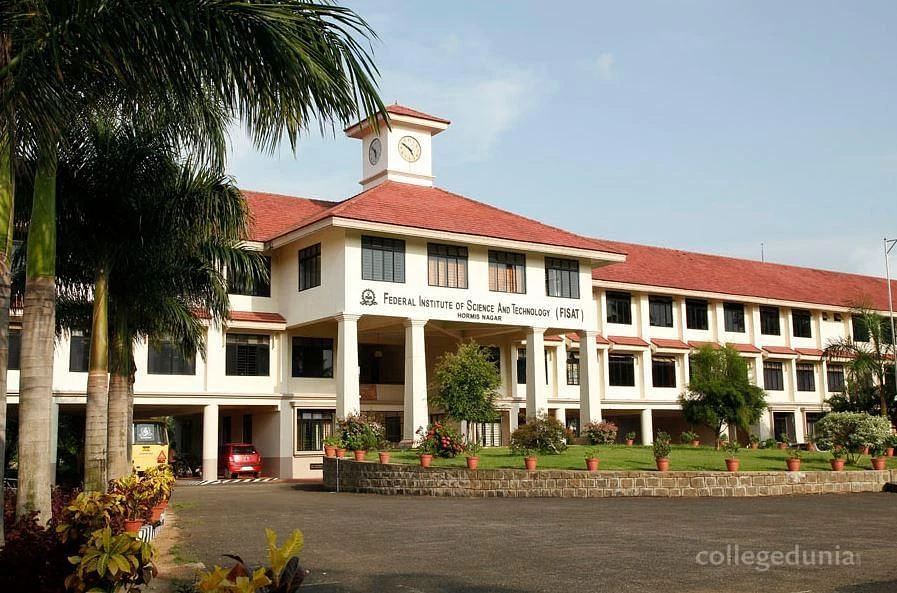
Spread over 40 acres, the FISAT campus is consistently described as green and well-maintained. The infrastructure is solid: a fully automated library with over 75,000 volumes, high-tech labs including a Fab Lab, and Wi-Fi coverage. It's functional.
Hostel life is a major part of the experience, with capacity for about 1,300 students across four blocks. The quality is rated as good—clean, secure, but not luxurious. Rooms are typically triple-sharing. The mess food gets an "average to good" rating, with the menu changing every three months.
But here’s the catch that defines student life. The administration is known for being strict. The 75% attendance rule is enforced diligently. There are dress codes. And the location in Mookkannoor is isolated. It's 8 km from Angamaly town; there's not much right outside the gate. The girls' hostel has an early curfew (around 6:00-6:30 PM), which is a frequent point of contention. As one student put it, "The village location is peaceful for studies but boring for social life. You need a bike to go anywhere fun."
On the positive side, the atmosphere is noted as more secular and inclusive compared to some other private colleges in Kerala run by religious trusts. Sports facilities are adequate—a large playground, courts for basketball and volleyball, and a gym.
Synthesizing opinions from Reddit, Quora, and education portals, a clear consensus emerges.
The praise is strong for placements and professional management. "The placement cell works harder than the students sometimes," is a telling Quora quote. The fact that it's run by bank officers translates to a perception of fairness and efficiency, less mired in internal politics. The infrastructure and clean, academic environment are pluses.
The criticisms are just as consistent. The "school-like" strictness tops the list. The isolation of the campus is a close second. The enforcement of internal marks and the restrictive hostel rules, especially for women, are regularly mentioned as downsides. It’s not a college known for a vibrant, autonomous student social scene.
One Reddit user summarized the trade-off perfectly: "FISAT is the best you can get in terms of freedom in any private college in Kerala, but it's still a private college—don't expect a govt college vibe." That's probably the most accurate single sentence you'll find about the student experience here.
FISAT is a very specific proposition. It's arguably one of the best bets in Kerala for a student who prioritizes job readiness and a disciplined academic environment above an expansive, free-wheeling college life. If your goal is to secure a solid IT or core engineering placement from a reputable, well-managed institution, and you're okay with a structured, somewhat remote campus life, FISAT delivers excellent value, especially through the merit quota.
However, if you're looking for a campus buzzing with autonomous student activity, a highly flexible schedule, or an urban location with easy access to city life, you might find FISAT restrictive. The strict rules and isolated setting are real trade-offs. It's ideal for the focused student. It might frustrate the one seeking a more traditional, exploratory university experience. Check the latest NIRF Rankings for its current standing, but its real ranking is in the consistent word-of-mouth from students: a top-tier private college for placements in the region, with a culture that demands you take academics seriously.
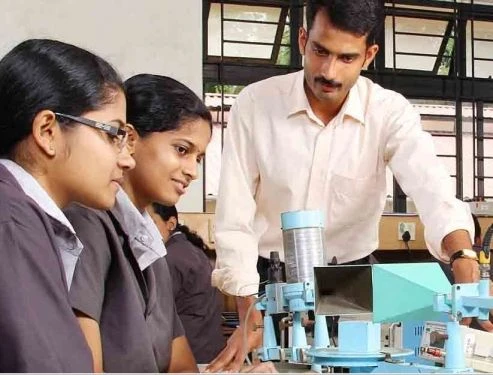
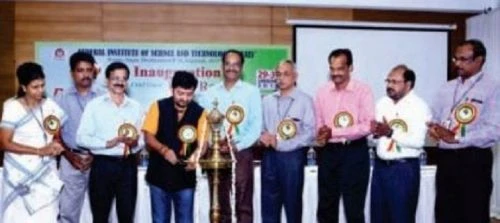
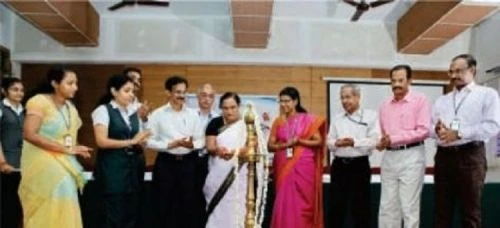
In this preview: 5 photos · 0 videos
Both FISAT and Rajagiri (RSET) are considered top-tier private engineering colleges in Kerala. Rajagiri is noted for its proximity to Kochi city and a slightly stronger brand reputation for placements. FISAT is often described as having a more secular campus atmosphere with slightly less strict moral policing.
Yes, for most students. The CSE department at FISAT maintains a strong placement record, with approximately 90-95% of eligible students securing jobs, which offers a good return on investment for the management fee.
Attendance at FISAT is very strict. The college enforces the 75% minimum requirement set by APJ Abdul Kalam Technological University (KTU) diligently. Falling below this limit can result in a student being barred from appearing for semester examinations.
Admission chances depend on the branch. With a rank around 20,000, admission to the Computer Science and Engineering (CSE) program is unlikely, as its cutoff is typically around 8,000. However, you have a high chance for branches like Electrical and Electronics Engineering (EEE), Electronics and Instrumentation Engineering (EIE), or Civil/Mechanical Engineering in later admission rounds.
The hostels at FISAT are known for being safe, clean, and disciplined. They are designed for students who prioritize their academics, and the environment is not considered a "party" hostel lifestyle.
Share what future students should know about FISAT.
Student voices are not rewritten by colleges. We remove spam and abuse.
Wider admission question? Community PulseWhat should future students know?
Tell us which course you're considering. We'll help you work out the next step.
Get instant Partner access after mobile verification. Your public edits are reviewed before they go live.
Claim this college
 Auditorium
 Bank & ATM
 Cafeteria
 Communication Centre
 Computer Labs
 Hostel
 Medical
 Science Labs
 Sports Complex
 Study Library