Loading Admission Guardian content
Loading Admission Guardian content
Find a program, read its fee details and explore the admission requirements.
Summary of the programs shown below. Fee periods can differ by program. Check the note beside each amount before comparing costs.
| Course | Stream | Fees |
|---|---|---|
| Bachelor of Education [B.Ed] | Education | 45000 |
Specializations
Eligibility: Graduation
If you're looking for a serious, no-frills B.Ed. college in West Bengal where the focus is squarely on becoming a teacher—and you don't want to pay a private college fortune to do it—Gandhi Centenary B.T. College (GCBT College) in Habra is a name that comes up. Established in 1968, this government-aided institution has built a reputation for academic discipline and affordability over decades. Its recent NAAC 'A' grade accreditation (second cycle) is a solid, official stamp of quality that contradicts some outdated listings online. But this isn't a campus buzzing with corporate recruiters or a vibrant social scene. It's a place for students who see the B.Ed. as a stepping stone to government teaching exams or a career in local schools, where the return on a Rs. 44,000 investment is measured in pedagogical skill, not a high starting salary.
Let's be clear: GCBT College is a single-program institution. Its entire academic engine is built around the two-year, four-semester Bachelor of Education (B.Ed.) degree. The intake is small—just 50 seats for the 2025-2027 session, with 47 for freshers and 3 for deputed teachers. That intimacy can be a plus; you're not a face in a crowd of hundreds.
The curriculum follows the BSAEU semester system, and the college offers pedagogy training in ten method subjects: Bengali, English, Sanskrit, History, Geography, Mathematics, Physical Science, Life Science, Education, and Music. The academic rhythm is predictable: continuous internal assessment through practicums (lesson plans, teaching aids, projects) and culminating end-semester university exams. The non-negotiable core is the school internship—one month in the second semester and a more intensive three-month block in the third. You'll be placed in government-aided schools across North 24 Parganas, which is where the theoretical training meets the classroom reality.
Faculty quality is consistently highlighted as a strength. With a principal holding a Ph.D. and several associate professors with doctorates in Education and Science, the teaching staff brings academic heft. Reviews suggest the lecture style is traditional but is now supplemented with sessions in the ICT lab. Don't expect a radically innovative pedagogy program here; expect a thorough, grounded one that prepares you for the West Bengal school system.
This is the section where you need to reset expectations. For most private engineering or management colleges, "placements" mean campus recruitment drives. At a government-aided B.Ed. college like GCBT, the concept is fundamentally different. The college does have a Training and Placement Cell, but its direct placement rate is low—officially around 10-15%. That's not a failure; it's a reflection of the career path.
Most students here are aiming for government teaching jobs through the West Bengal School Service Commission (WBSSC) exams or the Teacher Eligibility Test (TET). The college's role is to give you the qualification and training to pass those exams, not to hand you a job. For those who do seek immediate employment, the placement cell facilitates connections with local private schools, missionary schools, and coaching institutes. You'll see a figure like "Median Salary: Rs. 50,000" floating around on some portals. In context, that almost certainly refers to a monthly starting salary at a decent private school, not an annual package. An annual CTC of Rs. 50,000 would be untenable.
The real "placement" statistic they can boast is a 100% internship completion rate. Every student gets that crucial hands-on experience. So, judge the outcomes here by where the alumni end up: in teaching positions across the state, not by the number of companies on campus day.
This is where GCBT College delivers undeniable value. As a government-aided institution, its fee structure is a fraction of what private B.Ed. colleges charge. The total course fee for the 2025-2027 session is Rs. 44,000, payable per semester (Rs. 10,000 for Sem I & II, Rs. 12,000 for Sem III & IV). There wasn't even an application fee for the last session.
Hostel fees are extra and are estimated to be in the range of Rs. 3,000 to Rs. 5,000 per semester, though the 2025 notice doesn't specify. Even with hostel costs, the total two-year expenditure is likely under Rs. 70,000. That's a compelling financial argument. Specific scholarship details aren't prominently listed on the college's official website, but as a state-aided college, students are typically eligible for state and central government scholarships for SC/ST/OBC and economically weaker sections. You'd need to inquire directly for the latest schemes.
The gateway to GCBT College is purely academic merit. There is no entrance exam. Your ticket is your past academic performance. The selection process is straightforward: submit an online application during the window (typically in September), wait for the provisional merit list, participate in online counseling, and then complete document verification and fee payment.
Eligibility requires a minimum of 50% marks in either your Bachelor's or Master's degree (with a 5% relaxation for reserved categories). The cutoff is the merit list rank, which fluctuates yearly based on applicant pool quality. With only 50 seats, competition for those top slots can be stiff, especially for popular method subjects. The college's low fees and solid reputation make it a sought-after option for budget-conscious, serious B.Ed. aspirants in the region. Keep an eye on their site in late August for the official admission notification.
The campus spans about 5 acres in Prafullanagar, Habra. It's functional. The infrastructure is often described as "aging but adequate." You'll find the essentials: a library with a surprisingly good collection of over 9,250 books and digital access, dedicated labs for ICT, Psychology, and the Sciences, an auditorium, a basic canteen, and sports facilities. It's not glamorous, but it has the tools needed for the course.
Hostels are available separately for boys and girls on campus, with a total capacity around 36. Reviews peg them as a 3/5—safe, clean, and providing basic amenities, but don't expect luxury. The location is convenient, about 1.5 km from Habra Railway Station and 1.4 km from the Ashoknagar Bus Stop.
And the social life? Almost non-existent, according to student reviews. One verified review on CollegeDunia bluntly rated it "0.5/5." This isn't a residential campus with a vibrant fest culture. The atmosphere is disciplined and academically focused. Attendance is strictly maintained. If you're looking for a typical "college experience" with parties and events, you'll be disappointed. If you want a low-distraction environment to focus on your teaching degree, this is it.
Synthesizing feedback from CollegeDunia, Shiksha, and other forums, a clear, consistent picture emerges. The overwhelming positive is affordability and faculty support. Students repeatedly call out the highly qualified teachers who are genuinely helpful, especially during the stressful internship phase. The strict discipline and mandatory attendance, while a negative for some, are seen by many as a positive that ensures a serious learning environment.
The negatives are just as consistent. The placement cell's limited role is a common griate—students feel largely on their own for job hunting post-degree. The dated infrastructure and complete lack of a social scene are regularly mentioned. There's a consensus that this is a transactional, value-for-money education: you pay very little, you work hard in a no-nonsense setting, and you get a reputable B.Ed. degree. It's not an immersive "campus life" product.
GCBT College is an excellent, purpose-built choice for a specific type of student. If your primary goal is to obtain a reputable B.Ed. qualification from an NAAC 'A' grade college with the lowest possible financial outlay, and you are self-motivated to prepare for government teaching exams (WBSSC/TET), this college makes tremendous sense. The faculty quality and disciplined environment are real assets. However, if you expect active campus recruitment, modern infrastructure, or any semblance of a traditional college social life, you will be frustrated. It's a pragmatic, almost austere, institution. For the budget-conscious, exam-focused future teacher in West Bengal, it's a very smart bet. For anyone else, it might feel too narrow and spartan. The value proposition is crystal clear, and for its target audience, it's a strong one.
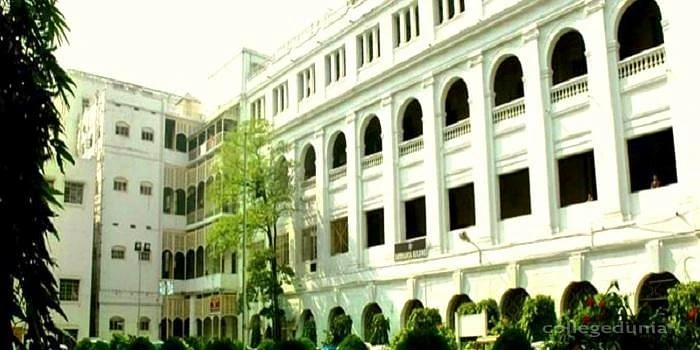
In this preview: 1 photo · 0 videos
It is a Government-aided (State-aided) college, meaning it receives government grants but is managed by a Governing Body.
For the 2025-2027 session, the total course fee for the B.Ed. program is Rs. 44,000.
Yes, the college provides separate hostel facilities for both male and female students on its campus.
Admission is based entirely on academic merit, calculated from your marks in the 10th, 12th, and Degree examinations. The college does not conduct an entrance test.
Yes, the college is fully recognized by the National Council for Teacher Education (NCTE) and is affiliated with BSAEU.
Share what future students should know about Gandhi Centenary B.T. College.
Student voices are not rewritten by colleges. We remove spam and abuse.
Wider admission question? Community PulseWhat should future students know?
Tell us which course you're considering. We'll help you work out the next step.
Get instant Partner access after mobile verification. Your public edits are reviewed before they go live.
Claim this college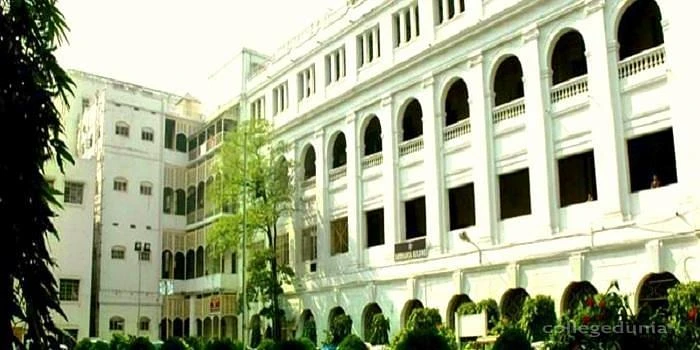

 Cafeteria
 Computer Labs
 Hostel
 Medical
 Science Labs
 Sports Complex
 Study Library