Loading Admission Guardian content
Loading Admission Guardian content

Provisional score based on available data. It may change as more information is verified.
Find a program, read its fee details and explore the admission requirements.
Summary of the programs shown below. First-year fee. Check the note beside each amount for inclusions and exclusions.
| Course | Stream | Fees |
|---|---|---|
| Bachelor of Arts [BA] | Arts | 2496 |
| Master of Arts [MA] | Arts | 5126 |
| Bachelor of Education [B.Ed] | Education |
Specializations
Eligibility: 10+2
Specializations
Eligibility: Graduation
Specializations
Eligibility: Graduation
Gandhi Smarak PG College is a bit of a local institution, one of those places you know more by reputation than by national ranking. Founded back in 1973, it sits on a sprawling 17-acre campus in Moradabad, Uttar Pradesh, and has built its identity around a specific mission: providing education to students from poorer and less literate backgrounds. That's its core story. It's a private college, but it's not one of those glossy, corporate-run chains. It's affiliated with M.J.P. Rohilkhand University in Bareilly and holds all the necessary stamps of approval—NAAC accreditation, plus nods from AICTE, UGC, and NCTE for its B.Ed program. You won't find it on the NIRF rankings, and that's okay. Its value is more regional, more about access than prestige. For a student from the surrounding districts looking for an affordable, recognized degree in arts or education, it's a solid, grounded option. The campus is decently equipped, the faculty is experienced, and the fees are, frankly, very low. But you have to go in with the right expectations. This isn't a placement powerhouse with multinational recruiters lining up. It's a college that serves a specific community, and it does that job with a clear sense of purpose.
The academic portfolio here is focused and traditional, centered on the arts and teacher education. There's no engineering or management. The undergraduate anchor is the Bachelor of Arts (BA), a three-year program where you can specialize in subjects like Drawing and Painting, Hindi Literature, English Literature, Economics, Geography, Sociology, and more. It's a standard university curriculum, but the low student-to-faculty ratio—there are about 23 teaching members—means you're not just a number in a 200-seat lecture hall. That's a tangible benefit.
The other key offering is the Bachelor of Education (B.Ed), which has an intake of 100 seats. This is a professionally critical program, and the college's NCTE approval is essential for its validity. The Master of Arts (MA) is available as a two-year postgrad option in Hindi, English, History, Geography, and Sanskrit.
They also run a few one-year certificate programs in Fashion Design, Tourism, and T.V. & Video Production. These feel like add-ons, likely aimed at providing some vocational skill alongside the core degrees. The faculty list includes several PhD-holders like Dr. Saileja Rani in Geography and Dr. Neelkamal Sharma in English. The teaching is described as committed, which aligns with the college's social mission. Don't expect cutting-edge industry collaborations or a ton of electives. The academic experience is straightforward, syllabus-driven, and delivered by a stable, senior faculty.
This is where you need to read between the lines. The college, for the 2026 cycle, states an 85% placement rate with an average package of ₹4.8 LPA and a highest package of ₹12.5 LPA. On paper, that's a decent outcome for a liberal arts college in this region.
But there's a crucial caveat buried in the research: one source explicitly notes that "placement statistics are not officially published" by the college itself. That's a red flag for transparency. The reported numbers might be based on a subset of students who secured jobs, not the entire graduating class. The reality, as gleaned from student pathways, is that many graduates—especially from B.Ed and the sciences—naturally flow into teaching, government sector exams, or further studies like NET/JRF for research. The "placement" activity likely supports those seeking immediate private sector jobs, but it's not the primary career engine for everyone.
Top recruiter names aren't listed, which is another sign. The sectors mentioned are education, public sector, and private jobs—broad categories that fit the profile. The ₹4.8 LPA average is plausible for regional private school teaching jobs or entry-level clerical work. The ₹12.5 LPA outlier could be for a niche role or a student with exceptional additional skills. The college says it offers "comprehensive support" for internships and research projects, which is good to hear, but specifics are scarce.
So, what's the verdict? If you're coming here for a B.A. or M.A., view placements as a helpful assist, not a guaranteed ticket. Your career strategy will likely involve competitive exams or pursuing a B.Ed. after your degree. For B.Ed. students, the degree itself is the placement credential, qualifying you for teaching positions.
Affordability is arguably this college's strongest suit. The fees are remarkably low, a direct reflection of its mission to serve economically weaker students. For the 2026 academic year, the annual tuition for a B.A. program ranges from ₹7,448 to ₹8,348. A Master of Arts (M.A.) costs ₹10,252 per year. The B.Ed. fee data is unverified and appears as a placeholder in the source, but it's expected to be in a similar, low range. Hostel and mess fees aren't specified, but given the overall context, they should be modest.
Financial aid is a key part of the ecosystem. The college facilitates state government scholarships, which are vital for its student body. The UP Government Post-Matric Scholarship for SC/ST/OBC/Minority students with family income below a threshold can mean a full tuition fee waiver and a maintenance allowance. There's also a Merit-cum-Means Scholarship for high achievers from low-income families. These aren't just listed on a page; for many students here, they are the difference between attending college or not. You apply through the official UP scholarship portal.
The process is fairly standard for a university-affiliated college. Admission is merit-based, primarily on your marks in the qualifying examination (like the 12th standard for BA). For university-level programs, scores from common exams like CUET are likely considered as per the affiliating university's (M.J.P. Rohilkhand) requirements. For the B.Ed. program, admission typically involves a state-level or university-level entrance exam score.
There's no publicly available cutoff rank or percentile data, which is common for colleges at this tier. Selection usually follows a sequence: application screening based on merit, potential entrance exam score consideration, a counselling round for shortlisted candidates, and finally, document verification. You can get the application form directly from the college office, and there's a nominal application fee payable online or at the counter. The admission cycle kicks off around the start of the fall semester. It's not a high-stakes, national-level competition. If you have a decent academic record from a recognized board, you have a realistic shot.
The 17-acre campus provides the physical space. Infrastructure is consistently noted as a positive. You've got a library with over 17,735 books, modern science and computer labs geared for the syllabi, and a sports complex with grounds for cricket, football, and athletics. Wi-Fi is available, and there's an auditorium and seminar halls for events. Basic amenities like a canteen and a health centre for first aid are present. It's not luxurious, but it covers the fundamentals adequately.
Hostel accommodation is available, primarily for girls. Details on room quality, food, or warden-student dynamics are absent from public reviews, which isn't unusual but means you'd want to ask current students for the real picture. The mention of "basic amenities" suggests a no-frills environment.
Student life revolves around the annual festivals, tech fests, and cultural events the college organizes. These are important for breaking the monotony and fostering some community. Don't expect a bustling metro-style campus social scene with dozens of clubs. It's more subdued, reflective of its location and student demographic. The college's own literature emphasizes encouraging participation, which is a good sign of an engaged administration.
Synthesizing the sentiment, a clear picture emerges. Students appreciate the good infrastructure and facilities for the price they pay. The highly educated and committed faculty gets repeated praise—this isn't a college reliant on temporary adjuncts. The core mission of serving poorer students isn't just marketing copy; it's felt in the atmosphere and the fee structure.
But the criticisms are telling. The lack of officially published placement data creates a trust gap. Students are wary of advertised percentages. Reviews are also silent on the nitty-gritty of hostel life, food quality, or the effectiveness of grievance redressal. This suggests either a generally acceptable standard that doesn't provoke comment, or an area where the college isn't being proactively reviewed online by its students.
The social life is acknowledged but not detailed heavily. It exists, but it's not a major draw. The management is seen as fair in admissions, which is crucial. Overall, the reviews paint a college that does what it says on the tin: provides affordable, quality education in arts and education through a decent campus and good teachers. It doesn't pretend to be something it's not, and students who choose it with that understanding seem to be satisfied.
It depends entirely on what you're looking for. Gandhi Smarak PG College is an excellent, value-for-money choice for a specific student. If you are from the Moradabad region or western UP, come from a modest economic background, and want a recognized, affordable BA or B.Ed degree to become a teacher or enter government service, this college makes a lot of sense. The low fees, scholarship support, committed faculty, and adequate campus are perfect for that goal. You'll get a solid education without debt.
However, if your primary ambition is a high-flying corporate career with on-campus recruitment from brand-name companies, you should look elsewhere. The placement support, while existing, is not the institution's strength or focus. Similarly, if you crave a vibrant, metropolitan campus life with endless clubs and events, this quiet 17-acre campus might feel too quiet.
In short, it's a worthwhile institution that serves its community well. It's not a national player, but it's an important local one. Go for the low-cost, quality education in traditional fields. Go for the teacher training. Don't go for the placement brochures. For the right student, it's a smart, pragmatic step towards a stable career.
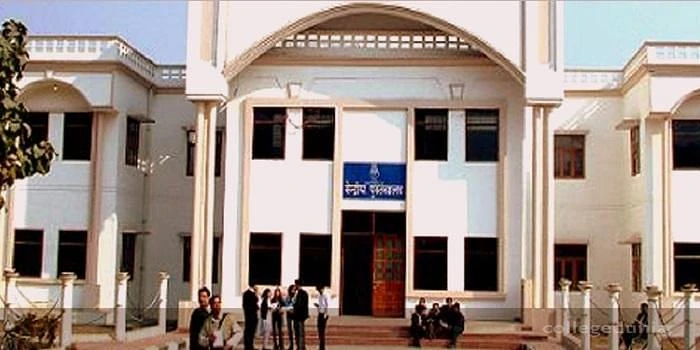
In this preview: 1 photo · 0 videos
Gandhi Smarak PG College was established in 1973. It is a private institution affiliated with M.J.P. Rohilkhand University in Bareilly. The college is accredited by NAAC and holds necessary approvals from AICTE, UGC, and the NCTE for its Bachelor of Education (B.Ed) program.
The main undergraduate programs are the Bachelor of Arts (BA) and the Bachelor of Education (B.Ed). At the postgraduate level, it offers a Master of Arts (MA). For the 2026 academic session, the annual tuition fee for BA ranges between ₹7,448 and ₹8,348. The MA program fee is approximately ₹10,252 per year. The fee for the B.Ed program is not clearly verified in available data.
The college reports a placement rate of 85% for 2026, with an average package of ₹4.8 LPA and a highest package of ₹12.5 LPA. However, it's important to note that some sources indicate these statistics are not officially published by the college. Graduates typically find opportunities in the education sector, government jobs, and the private sector. Many students, especially from B.Ed and science streams, pursue teaching careers, further studies, or research.
The campus spans 17 acres and includes a well-stocked library with over 17,735 books, modern science and computer laboratories, a sports complex with grounds for cricket and football, and a canteen. Hostel accommodation is available for female students. The college also provides Wi-Fi, an auditorium, seminar halls, and a health centre for basic medical first aid.
Yes, the college facilitates scholarships primarily through state government schemes. Key scholarships include the UP Government Post-Matric Scholarship for SC/ST/OBC/Minority students and the Merit-cum-Means Scholarship for academically strong students with financial need. Admissions are merit-based, considering marks from the qualifying examination (like 12th standard) and/or relevant entrance exam scores (e.g., for B.Ed). The process typically involves application submission, potential counselling, and document verification.
Share what future students should know about Gandhi Smarak PG College.
Student voices are not rewritten by colleges. We remove spam and abuse.
Wider admission question? Community PulseWhat should future students know?
Tell us which course you're considering. We'll help you work out the next step.
Get instant Partner access after mobile verification. Your public edits are reviewed before they go live.
Claim this college
 Auditorium
 Cafeteria
 Computer Labs
 Hostel
 Medical
 Science Labs
 Sports Complex
 Study Library