Loading Admission Guardian content
Loading Admission Guardian content
Provisional score based on available data. It may change as more information is verified.
Selected ranking categories, with the recorded year beside each result. Open all records for the complete history.
3 published records · Lower numeric ranks are stronger
Find a program, read its fee details and explore the admission requirements.
Summary of the programs shown below. First-year fee. Check the note beside each amount for inclusions and exclusions.
| Course | Stream | Fees |
|---|---|---|
| Bachelor of Technology [B.Tech] | Engineering | 119100 |
| Bachelor of Technology [B.Tech] {Lateral} | Engineering | 119100 |
| Master of Technology [M.Tech] | Engineering | 138800 |
| Master of Business Administration [MBA] | Management | 150100 |
Specializations
All accepted exams
Eligibility: 10+2+UPTAC
Specializations
All accepted exams
Eligibility: Diploma + UPTAC
Specializations
All accepted exams
Eligibility: Graduation
Specializations
All accepted exams
Eligibility: Graduation
3 exams with cutoff data available - showing recent entries
 Accenture
 Adani Power Limited
 Aditya Birla Group
 Alstom Group
 Ansal Housing and Construction Limited
 Aricent Group
 Aspiring Minds
 AuthBridge
 Bhushan Steel Ltd.
 Birlasoft
 Ceasefire Industries
 Compro Technology
 Cummins India Ltd
 Ericsson India Pvt Ltd
 Glaxo Smithkline Consumer Ltd (GSK)
 GODREJ Pvt. Ltd
 Grail Research
 HCC
HCC HCL Comnet
 HCL Technologies
 Head Strong
 IBM
IBM Indian Air Force
 Indian Army
 Indian Navy
 Infosys
 Infosys Technologies
 Interra Infotech (India) Pvt. Ltd.
 ITC
ITC Jindal Saw Limited
 KEANE India Ltd( NTT DATA)
 KEC International
 KPIT Cummins
 L&T Infotech
 LOHIA Starlinger Limited
 Mercedes Benz (India) Ltd.
 Microsoft
 Midas
Midas NIIT
NIIT Oracle
 ORACLE Financial Services Ltd
 R Systems
 Ranbaxy pvt ltd
 Reliance
 Religare
 Saint-Gobain
 Sap labs
 Shobha Developers
 Siemens
 Simplex Infrastructure ltd
 Soma
Soma Soma Enterprises
 Syntel
 TCS
TCS Torrent
 Trident
 Wipro
WiproHindustan College of Science and Technology (HCST) in Mathura is a private engineering college that’s been around since 1996. It’s part of the Sharda Group and affiliated with Dr. A.P.J. Abdul Kalam Technical University (AKTU). The college holds an NAAC A+ grade and NBA accreditation for five of its engineering programs, which is a solid mark of institutional quality. But the real story here is the gap between its official claims and the on-ground student experience, especially when it comes to placements. It’s a decent option if you’re looking for an AKTU-affiliated college with a structured environment, but you need to go in with your eyes wide open about the job market for non-IT branches.
HCST offers a standard suite of programs under the AKTU umbrella. The total student intake across all courses is 516, which keeps the batches moderately sized. The B.Tech portfolio is extensive, covering everything from mainstream Computer Science and Mechanical Engineering to more niche fields like Biotechnology and Chemical Engineering. Specializations in CSE—like AI & ML, Data Science, and IoT—are clearly aimed at current market trends. For management, there’s BBA and a two-year MBA with several specializations. The M.Tech programs are limited to a few streams like VLSI Design and Production Engineering.
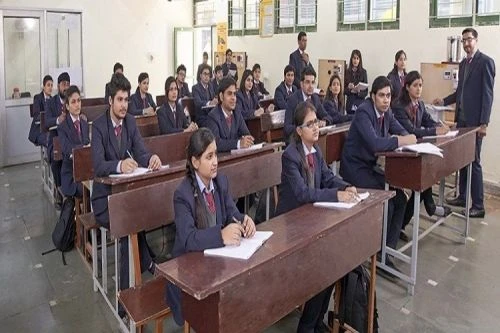
Academically, it’s a typical AKTU-affiliated college. The calendar, syllabus, and exams are dictated by the university. A minimum of 75% attendance is mandatory, and the passing criteria for semester exams is 40%. The college promotes its IT-enabled infrastructure, including 60 labs, a Learning Management System for course materials, and video conferencing facilities to connect with other Sharda Group institutions. Faculty quality is often cited as a positive in student reviews, with most holding doctorate degrees and being described as supportive and helpful. It’s a structured, no-surprises academic environment.
This is where you need to pay close attention. The college’s official placement report for 2024 cites a highest package of 24 LPA and an average of ₹4.91 LPA. The median salary for UG programs was around ₹3.5 LPA. The placement percentage is officially over 75% for eligible students.
And that’s the brochure version. The reality, pieced together from student reviews on platforms like CollegeDunia and Shiksha, is more nuanced. The working average package alumni talk about is closer to 3-4 LPA, which aligns more with the official median figure than the average. The placement rate is probably in the 70-75% range, but it’s heavily skewed. Top recruiters are the usual IT service giants: TCS, Infosys, Wipro, and occasionally Amazon. If you’re in CSE, IT, or maybe ECE, your chances are decent.
The picture changes dramatically for core branches like Mechanical, Civil, or Chemical Engineering. Here, student feedback is consistent: placement opportunities are limited, with less than 50% securing jobs in their core domain. Very few core companies visit the campus. The placement cell’s help with internships is also reported to be minimal. So, the verdict? The placement stats are real for IT-centric roles. But if you’re joining for a core engineering branch hoping for on-campus recruitment, you’re likely going to be relying on your own hustle post-graduation. That gap between the official claim and the branch-specific reality is the most critical thing to understand.
The fee structure is detailed, with some oddities in the totals. For a four-year B.Tech, the total tuition fee is listed as ₹2,45,000. However, the first-year tuition alone for branches like CSE is ₹1,12,750. This suggests the published "total course fee" might be an aggregate of specific fee components, not just tuition. You need to budget for the annual figure.
On top of tuition, add one-time charges: a ₹5,000 refundable caution deposit and a ₹6,000 uniform cost. You also pay AKTU university exam fees separately—₹8,550 per annum for most programs. A realistic total 4-year cost for B.Tech, excluding hostel, is closer to ₹2.9 lakhs when you factor in all these fees.
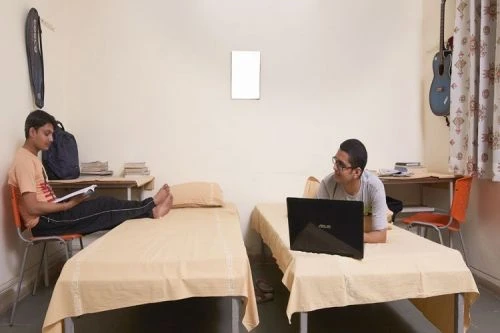
Hostel fees are a major addition. They range from ₹83,500 for a basic non-AC triple-seater to ₹1,50,000 for an AC single room with an attached toilet. A general hostel+mess fee quoted in some reviews is around ₹68,000-73,000. Scholarships are available, both merit-based and through government schemes like AICTE’s. The college also has a Fee Waiver (FW) category where eligible students pay only the non-tuition components, which can significantly reduce the first-year outlay.
Admissions are primarily entrance-based and routed through state counseling. For B.Tech, the key exams are JEE Main and the state’s UPTAC (formerly UPSEE). CUET UG is also accepted. There’s no explicit cutoff rank available in the public domain—it fluctuates yearly based on applicants and exam difficulty. Selection is based on your entrance exam rank/score, followed by the centralized UPTAC counseling process.
For MBA, valid scores in CAT or MAT are considered, again followed by counseling. For M.Tech, a GATE score is required, with one unverified mention of an 85 percentile for 2024 admissions. Application windows follow the national exam calendars: JEE Main registration typically opens in December, CUET UG exams are in May, and MAT has multiple sessions throughout the year. You don’t apply directly to HCST for the main programs; you apply for the entrance exam and then choose the college during the counseling round.
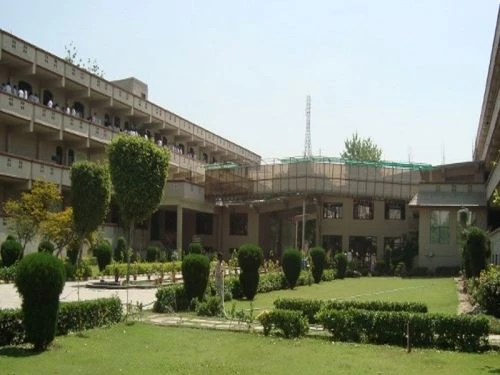
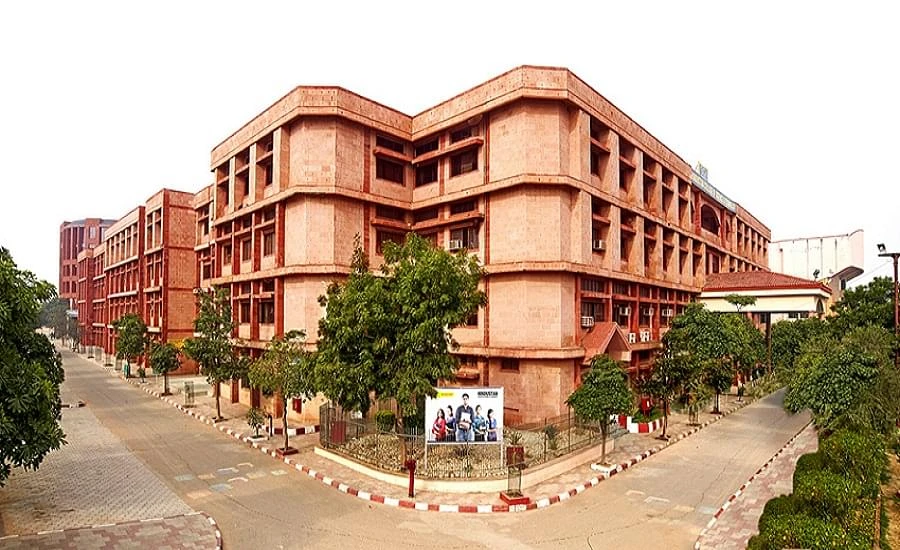
The campus is spread over 29.4 acres on the Agra-Delhi Highway, about 26 km from Mathura Junction railway station. It’s a self-contained, suburban campus. The infrastructure includes the standard facilities: labs, libraries, and IT-enabled classrooms. The hostels are a mixed bag. They offer a range of options from premium AC rooms with attached toilets to more basic non-AC shared accommodations. The quality and food in the mess are frequent topics in student reviews, with opinions varying. It’s not an urban campus, so the social life is largely contained within the college grounds. Sports and other extracurricular facilities exist, but the remote location means you won’t have easy access to city life. It’s an environment that suits students who prefer a focused, campus-centric college experience away from distractions.
Synthesizing feedback from review sites gives you a clear, if sometimes contradictory, picture. The positives consistently highlight the faculty—most find them qualified, approachable, and supportive. The NAAC A+ and NBA accreditations are seen as a mark of decent institutional quality. The campus infrastructure, while not exceptional, is generally considered adequate for academic purposes.
Now, the negatives. Placement concerns dominate, especially for non-IT branches. The disparity between IT and core placement is the biggest gripe. The location is a double-edged sword—it’s peaceful but isolated, making it inconvenient for travel or internships in nearby cities. Some reviews point to administrative rigidity and issues with hostel food quality and maintenance. The fee, particularly when combined with high hostel costs, is often questioned against the placement returns for many branches. The consensus isn’t that it’s a bad college, but that it’s a very specific one. It works well if you’re in a top branch and understand the constraints.
It depends entirely on your branch and expectations. For students with mid-tier JEE Main or UPTAC ranks looking for an AKTU-affiliated college with a decent academic structure and good faculty, HCST is a reasonable choice. If you’re admitted to Computer Science, IT, or Electronics, and you’re comfortable with a campus-centric life on the highway, it can provide a pathway to IT service sector jobs. The NAAC A+ grade adds credibility.
However, think twice if you’re joining Mechanical, Civil, Chemical, or similar core engineering programs. The placement support for these fields is weak, and the return on your investment is questionable. The isolated location can also be a significant drawback if you value city access or off-campus opportunities. In short, HCST is a mid-tier private engineering college with clear strengths and limitations. It’s worth it for the right student in the right branch, but it’s not a universal recommendation. Do your homework, talk to current students, and weigh the cost against the likely outcomes for your specific course.

In this preview: 5 photos · 0 videos
The official average placement package for HCST is ₹4.91 LPA, with a highest package of 24 LPA (2024). However, student reviews often cite the typical in-hand offer ranging between 3-4 LPA, which aligns more closely with the official median salary of ₹3.5 LPA. Placement is strong for IT branches like CSE and IT but significantly lower for core engineering streams like Mechanical and Civil.
The first-year tuition fee for B.Tech at HCST varies by branch: approximately ₹1,12,750 for Computer Science, ₹1,05,000 for Information Technology, and ₹1,02,000 for streams like Electronics, Mechanical, Electrical, and Biotechnology. Subsequent years are slightly lower. The total course cost for four years, including university and other mandatory fees, is roughly ₹2.9 lakhs. Hostel fees are extra, ranging from about ₹83,500 to ₹1,50,000 per annum.
Admissions to the B.Tech program at HCST are primarily based on entrance exam ranks. The college accepts scores from JEE Main and CUET UG, with selection processed through the state-level UPTAC (Uttar Pradesh Technical Admission Counselling) centralized counseling. Applicants must appear for one of these exams, qualify, and then choose HCST during the counseling rounds based on their rank.
HCST's strength lies more in its IT and computer science programs. For Mechanical Engineering, student reviews consistently indicate limited on-campus placement opportunities, with less than 50% of students securing core jobs. While the faculty and academic structure are decent, those specifically seeking strong campus recruitment in the core mechanical sector might need to look at colleges with a stronger industry connect for that branch.
To be eligible for the MBA program at Hindustan College of Science and Technology, candidates must have a valid score in a national management entrance exam like CAT or MAT. Admission is granted based on this score, followed by the state counseling process. The college offers specializations in areas such as Marketing, Finance, IT, Operations, International Business, and General Management.
Share what future students should know about HCST.
Student voices are not rewritten by colleges. We remove spam and abuse.
Wider admission question? Community PulseWhat should future students know?
Tell us which course you're considering. We'll help you work out the next step.
Get instant Partner access after mobile verification. Your public edits are reviewed before they go live.
Claim this college

 Auditorium
 Bank & ATM
 Cafeteria
 Campus Shuttle
 Campus Wi-Fi
 Computer Labs
 Gym
Gym Hostel
 Medical
 Science Labs
 Sports Complex
 Study Library