Loading Admission Guardian content
Loading Admission Guardian content
Provisional score based on available data. It may change as more information is verified.
Find a program, read its fee details and explore the admission requirements.
Summary of the programs shown below. Total course fee. Check the note beside each amount for inclusions and exclusions.
| Course | Stream | Fees |
|---|---|---|
| Bachelor of Technology [B.Tech] | Engineering | 10530 |
Specializations
All accepted exams
Eligibility: 10+2
2 exams with cutoff data available
 Accenture
 BARC
BARC Chegg
Chegg CSC
CSC Dalmia Construction
 HCL Technologies
 Indian Oil Corporation Ltd (IOCL)
 Indian Railways
 Infosys
 Jindal Steel and Power (JSPL)
 KPIT
KPIT Mercedes Benz (India) Ltd.
 NDTV
NDTV NPCL
NPCL NTPC Limited
 Power Grid Corporation of India
 Prism Cement Ltd.
 PWD New Delhi
 Qspiders
 Tata Steel
 Tresvista Financial Services
 Vodafone
 Wipro
WiproGaya College of Engineering is a study in contrasts. It’s a sprawling 87-acre public institution with fees so low they’re almost an afterthought, yet its placement reports and student reviews tell a story of modest outcomes and unmet expectations. Established in 1981 and re-established as a government college in 2008, it’s a place where you can get a legitimate B.Tech degree for less than INR 1 lakh in total tuition. But as alumni notes on forums like CollegeDunia and Shiksha suggest, you’ll likely be navigating your own career path. The college is approved by AICTE and affiliated with Bihar Engineering University (BEU), and it’s currently aspiring for NBA accreditation. If your priority is an affordable engineering degree from a state-run college with decent infrastructure, GCE might fit. If you’re banking on high-flying campus placements to launch your career, the data suggests you should temper those expectations significantly.
The academic portfolio here is standard for a regional engineering college, covering the core disciplines. At the undergraduate level, B.Tech is offered in Civil Engineering (90 seats), Computer Science and Engineering (120 seats), Electrical and Electronics Engineering (90 seats), Mechanical Engineering (60 seats), and Electronics & Communication Engineering (54 seats). They also run a B.Arch program with 40 seats. For postgraduates, M.Tech specializations include Structural Engineering (Civil), VLSI Design (Electrical), Cyber Security (CSE), and Manufacturing Engineering (Mechanical).
The faculty count stands at 46, with about a quarter holding PhDs as of a 2018 report. Student reviews on teaching quality are polarized. The college aggregates a 4.1 rating for faculty, but you’ll find blunt comments like "bad faculty" and complaints about a lack of exposure. The academic calendar is available on the official website, and programs follow AICTE standards with the usual lab work and projects. It’s a traditional setup. Don’t expect cutting-edge pedagogy, but the basics are ostensibly covered.
This is where the narrative splits. The official data, like the NIRF 2025 report, states a median package of INR 5 LPA for B.Tech graduates in 2024, with 83 students placed. The highest package cited for 2023 was INR 5 LPA, with an average of INR 4.16 LPA. Top recruiters listed include familiar IT names: TCS, Wipro, Infosys, HCL, Tech Mahindra, Accenture, and Cognizant, along with some core companies like L&T, Tata Power, and Adani.
And then there’s the student sentiment. The gap between the brochure and the Reddit thread is notable. Reviews consistently flag placements as the college’s weakest link. One stark review claims, "0 percent of students get placed in this branch. It's just a waste of time here." Others estimate placement rates for eligible students at around 40-50%, which aligns more with the NIRF figure of 83 placed students. The sectoral split is telling: about 70% of roles are in IT services with packages in the INR 4.5–6.5 LPA range, while core engineering roles are limited. The takeaway? The placement cell brings companies, but the process is selective and the packages are modest. You cannot be a passive participant. As one more balanced alumni note suggests, if you focus on your studies, the placement cell will support you. But it’s not a golden ticket.
The affordability is GCE’s undeniable strength. The annual cost breakdown for B.Tech is almost shockingly low:
That totals about INR 23,520 per year for tuition and mandatory fees. Over four years, you’re looking at roughly INR 94,080 before hostel costs.
Hostel fees have a wide range, from as low as INR 3,600 to INR 60,000 per year, likely depending on room type and amenities. Mess charges add another INR 2,100 to INR 3,000 per month. A common estimate for combined hostel and mess is around INR 30,000 per semester (INR 5,000/month). Even at the higher end, the total cost of a B.Tech degree here is a fraction of what a private college charges for one year. Specific scholarship details aren’t prominently listed, but at this fee level, the college is inherently accessible.
Admission to the B.Tech programs is strictly entrance-based. The college accepts JEE Main scores and the state-level Bihar Combined Entrance Competitive Examination (BCECE). For B.Arch, you need a NATA score. M.Tech admissions are based on GATE or the state PGEAC.
The selection happens through the centralized Undergraduate Engineering Admission Counselling (UGEAC) conducted by the BCECE Board. You apply when the UGEAC window opens (typically around June) with a registration fee of about INR 1200, and seats are allotted based on your rank, course preference, and reservation category.
Cutoff ranks fluctuate. For the 2025 cycle, the closing rank for CSE was 271, while for Mechanical it was 982. The general trend is that you need a JEE Main rank under 2000 for a shot at admission, with CSE requiring a percentile in the 90s. It’s not intensely competitive compared to national institutes, but the better branches still require a decent score.
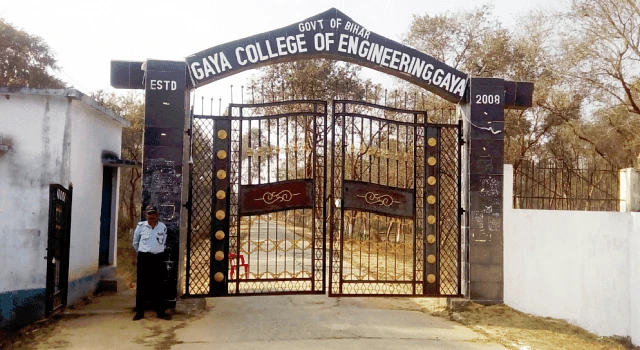
The campus itself is a major plus—it’s huge, green, and not in the city hustle. Infrastructure includes two academic buildings, a workshop, well-maintained labs, a fully air-conditioned library, and good sports facilities for cricket, football, basketball, and more. The whole campus is Wi-Fi enabled.
Hostels get mixed reviews. There are five (3 for boys, 2 for girls). The boys' hostel is on-campus for seniors, while the girls' hostel is off-campus with bus service. Rooms are described as well-ventilated with modern facilities like Wi-Fi, common rooms, and indoor games. Quality is generally called good, but the food in the mess is a common complaint, rated from "average" to "not good." One review specifically mentions a "rude warden." So, the facilities are there and are affordable, but the living experience has its rough edges.
Student life includes technical symposiums, hackathons, cultural fests, and inter-department sports. It’s not a dead campus, but reviews also mention a "lack of exposure and extracurricular activities." You have to seek out opportunities.
Synthesizing the feedback from CollegeDunia, Shiksha, and similar platforms paints a clear, dual picture.
The Good: Everyone agrees the fees are incredibly low. The campus is large and fresh. Hostel facilities are generally praised for being comfortable, well-equipped with Wi-Fi, and affordable. The infrastructure—classrooms, labs, library, sports—is considered more than adequate.
The Bad: The most consistent and severe criticism is aimed at placements. Words like "weak," "false promises," and "waste of time" are used. Teaching quality is another pain point, with direct mentions of "bad faculty." The hostel food and occasional poor warden behavior are flagged. Some also note a lack of resources for development and a feeling of isolation due to the location.
One representative quote sums up the pragmatic view: "This college is only for obtaining a degree, not for gaining knowledge or securing placements." Another offers balance: "Good aspect are large campus, fresh environment, great hostel life. Bad aspects are bad faculty, no resources for development very low exposure, no placement."
It depends entirely on your priorities and circumstances. Gaya College of Engineering is a classic case of getting what you pay for. The value proposition is stark: an AICTE-approved B.Tech degree from a government institute for a total tuition cost under one lakh rupees. If your primary constraint is budget and you need a legitimate degree to sit for government exams (like GATE, PSU recruitments) or to pursue higher studies, GCE makes rational sense. The large campus and decent hostels are a bonus.
However, if you are relying on campus placements to kickstart a high-earning career, you will likely be disappointed. The median package is INR 5 LPA, placement rates are modest, and student sentiment is cautious at best. The academic experience is reported to be traditional, with variable teaching quality.
Go for GCE if: You are a cost-conscious student from Bihar or the region, have a moderate JEE Main/BCECE rank, and see the degree as a foundational step for further exams or studies where you’ll drive your own preparation. Look elsewhere if: Your family can support higher fees at a private college with a stronger placement record, or if your JEE rank can get you into an NIT, IIIT, or a more reputed state college. At GCE, the onus for career success rests almost entirely on you.
In this preview: 1 photo · 0 videos
Admission to B.Tech programs requires a valid score in either JEE Main or the Bihar Combined Entrance Competitive Examination (BCECE). Seat allocation is then done through the centralized Undergraduate Engineering Admission Counselling (UGEAC) conducted by the BCECE Board.
The annual tuition and mandatory fees for B.Tech are approximately INR 23,520. Hostel room fees range from INR 3,600 to INR 60,000 per year, with additional mess charges of INR 2,100 to INR 3,000 per month. A combined hostel and mess cost is often estimated at around INR 30,000 per semester.
As per the NIRF 2025 report, the median package for B.Tech graduates in 2024 was INR 5 LPA, with 83 students placed. Top recruiters include TCS, Wipro, Infosys, HCL, Tech Mahindra, Accenture, L&T, and Tata Power. Student reviews often indicate placement rates and packages can be more modest than official figures.
Sentiments are mixed. The campus life (rated 3.9) and large, green campus infrastructure are generally praised, as are the affordable hostel facilities. However, reviews frequently criticize teaching quality, with some calling it "bad faculty," and note a lack of exposure and development resources.
For B.Tech, specializations are Civil, Computer Science, Electrical & Electronics, Mechanical, and Electronics & Communication Engineering. For M.Tech, specializations include Structural Engineering (Civil), VLSI Design (Electrical), Cyber Security (CSE), and Manufacturing Engineering (Mechanical).
Share what future students should know about Gaya College of Engineering.
Student voices are not rewritten by colleges. We remove spam and abuse.
Wider admission question? Community PulseWhat should future students know?
Tell us which course you're considering. We'll help you work out the next step.
Get instant Partner access after mobile verification. Your public edits are reviewed before they go live.
Claim this college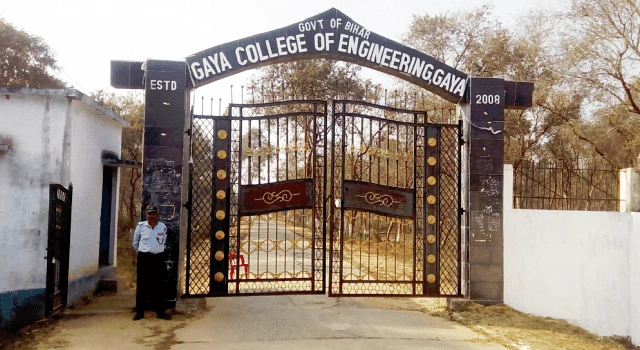
 Bank & ATM
 Campus Wi-Fi
 Computer Labs
 Gym
Gym Hostel
 Medical
 Sports Complex
 Study Library