Loading Admission Guardian content
Loading Admission Guardian content

Provisional score based on available data. It may change as more information is verified.
Find a program, read its fee details and explore the admission requirements.
Summary of the programs shown below. Fee amounts are not listed. Contact the college for its current fee schedule.
| Course | Stream | Fees |
|---|---|---|
| Bachelor of Physiotherapy [BPT] | Medical | |
| Master of Physiotherapy [MPT] | Medical |
Eligibility: 10+2
Eligibility: B.P.T.
Gian Sagar College of Physiotherapy is a study in institutional resilience. After a high-profile closure in 2017, it reopened in 2019 and has clawed its way back to being a serious contender for physiotherapy education in Punjab. Its ace card? Direct, daily access to a 500-bed multi-specialty hospital on the same campus. For a student of physiotherapy, that clinical exposure isn't just a perk—it's the entire point. If you're looking for a private college in the region that prioritizes hands-on practice over a flashy brand name, this place demands a look. Just know its history, and understand what you're signing up for.
The academic structure here is straightforward and follows the BFUHS curriculum. That means an annual exam system, not semesters, with a firm 50% pass mark needed in both theory and practicals. It's a no-frills approach focused on core competencies.
The Bachelor of Physiotherapy (BPT) is the main draw, running for 4.5 years including a mandatory 6-month internship. The intake is typically 50-60 seats, filled through the BFUHS counseling process. The curriculum covers the essentials—Anatomy, Physiology, Biomechanics, Exercise Therapy, Electrotherapy. The real learning, students say, starts in the second year when clinical postings at the Gian Sagar Hospital begin.
For postgraduates, the Master of Physiotherapy (MPT) is a 2-year program with specializations in Orthopaedics, Neurology, Sports, Cardiopulmonary, and Paediatrics. Intake is small, around 10-15 seats total. Admission is based on your BPT aggregate and sometimes an interview.
Faculty strength sits around 15-20 dedicated members, led by Principal Dr. Navkiran Virk. Post-2019, the college managed to recruit back several senior professors, particularly in Ortho and Neuro specializations. It's a decent recovery for a department that had to rebuild.
Let's be clear: you don't get "campus placements" here in the way an engineering student might. The model is different. The college facilitates your mandatory 6-month internship, and from there, networks and performance lead to job offers. Almost all students complete their internship, with many doing it at the parent Gian Sagar Hospital for a reported stipend of ₹5,000 - ₹10,000.
Salary figures floating online can be misleading. You might see claims of 8 LPA for UG or even 24 LPA for PG on some review sites. Those numbers almost certainly refer to the medical (MBBS/MD) wing. For physiotherapy, the realistic starting range for a fresh BPT graduate is between ₹2.4 LPA and ₹4 LPA. That's the market reality for the profession in this region.
Top recruiters are primarily the hospital chains in the Chandigarh Tricity area. Gian Sagar Hospital itself is a major in-house absorber. Others include Max Super Speciality Hospital, Fortis Hospital, Ivy Hospital, and Grecian Super Speciality Hospital. The placement story here is about building a clinical reputation, not chasing headline-grabbing packages.
The fee structure is relatively transparent, pegged to the BFUHS standards for private colleges. For the BPT program, the annual tuition fee is estimated between ₹40,000 and ₹50,000. The significant costs, however, come from accommodation.
All in, the total 4-year cost for a BPT student living on campus lands somewhere between ₹6.5 lakhs and ₹8 lakhs. That mess fee is a consistent point of discussion among students, often cited as high for the "average" quality of food provided.
Financial aid is available mainly in the form of the Punjab State Post-Matric Scholarship Scheme for SC/ST students. The management also occasionally offers merit-based discounts, but these aren't guaranteed or widely advertised.
The process is centralized and run by the affiliating university, which simplifies things. For the BPT program, admission is primarily based on your 10+2 merit. You need a minimum of 50% aggregate in Physics, Chemistry, and Biology (45% for SC/ST). No NEET is required.
Selection happens through the centralized counseling conducted by Baba Farid University of Health Sciences (BFUHS). The application window typically opens in June and runs through August. Seats are split 50-50 between a Government Quota (filled via counseling merit) and a Management Quota (which includes NRI seats).
For the MPT program, it's your BPT aggregate that counts, possibly supplemented by a college-level interview. Cutoffs aren't published in a classic sense; seats are filled in the order of merit during the counseling rounds. Given the college's revived reputation and hospital link, it's competitive within the pool of private BFUHS-affiliated colleges.
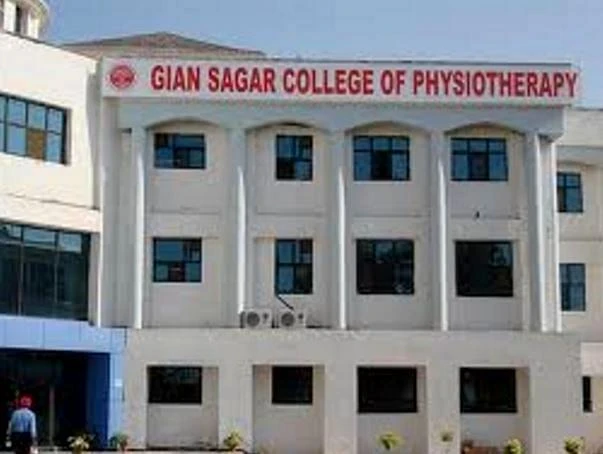
The campus itself is part of a larger 100+ acre medical complex, with the physiotherapy college occupying about 5 acres. Since reopening, there's been noticeable renovation—roads relaid, buildings spruced up. The labs are functional: dedicated Electrotherapy and Exercise Therapy labs, while Anatomy and Physiology labs are shared with the medical college. The library is centralized with a physiotherapy section and digital journal access via BFUHS.
The hostel is the standout feature. In a country where triple-sharing is the norm, Gian Sagar offers single occupancy rooms even to first-year students. That's a massive quality-of-life advantage for many. Facilities include shared washrooms and balconies, with AC available at an extra cost. The trade-off is the strictness: high attendance mandates (75-80%) and firm hostel timings are consistently reported.
Being on a medical campus, the 24/7 access to Gian Sagar Hospital is a given. Transport is covered by college buses from Chandigarh, Patiala, Rajpura, and Zirakpur. The location on the highway, just 10 km from Chandigarh Airport, makes it accessible. And that proximity to Chandigarh means weekend social life is a viable option, which students appreciate.
The student sentiment is nuanced, shaped heavily by the institution's recent history. There's a clear acknowledgment of the "rebirth." Most agree things are stable and improved since the 2019 reopening. The management's past is a footnote now, not a daily crisis.
The positives are compelling. The clinical exposure is the undisputed champion. "The OPD is busy, which is great for learning. We see 50-70 patients daily in the PT department," is a type of comment you'll find repeatedly. That patient inflow is a genuine academic asset. The single rooms in the hostel are a huge, almost universal, plus. The location near Chandigarh scores high marks too.
But it's not all perfect. The strict academic and hostel regime isn't for everyone. The mess food, costing nearly a lakh a year, is routinely described as "average" or "monotonous"—a classic Indian hostel grievance. Some feel the campus social life is quiet, pushing you towards Chandigarh for entertainment.
One Reddit user summed up the pragmatic view in 2024: "If you are from the Tricity or Patiala area, it's the best private option. The clinical practice here is better than most private universities because of the attached hospital." That's the core trade-off.
This college isn't a generic "good" choice. It's a very specific one. It's best for the student who prioritizes clinical hands-on experience above everything else—campus glamour, brand name, or a lax environment. The attached hospital is a legitimate, working lab that provides a clear edge in practical skill development. The single hostel rooms are a rare luxury that significantly improves daily student life.
You should probably look elsewhere if the institution's 2017 closure makes you deeply uneasy, or if you require a highly vibrant, unstructured campus life. The rules are strict, the food is mediocre, and the legacy, while managed, is complex.
For a student in Punjab or the Tricity area aiming for a career in physiotherapy, Gian Sagar presents a strong, practice-oriented value proposition. Its IAP recognition ensures the degree holds weight for licensure in India and abroad. Just go in with your eyes open: you're choosing a workshop over a showroom. And for the right student, that's exactly the right call.
In this preview: 1 photo · 0 videos
Yes, Gian Sagar College of Physiotherapy is open and operational. It reopened in 2019 and is now fully functional with multiple batches of students currently enrolled.
No, the NEET exam is not required for admission to the Bachelor of Physiotherapy (BPT) program. Admission is based on 10+2 marks in Physics, Chemistry, and Biology (PCB) through the Baba Farid University of Health Sciences (BFUHS) counseling process.
The hostel at Gian Sagar is highly rated, particularly for offering single-occupancy rooms. However, students note that the mess fees are on the higher side, approximately ₹99,000 per year.
Yes, the degree is valid for pursuing opportunities abroad. The college is affiliated with BFUHS and recognized by the Indian Association of Physiotherapists (IAP), making the degree eligible for clearing international licensing exams like the NPTE in the USA or the PCE in Canada.
The key difference lies in their practical training environment and campus life. Gian Sagar College of Physiotherapy has a more established attached hospital, which provides a higher patient inflow for clinical experience. In comparison, RIMT is often cited for having a more modern campus life.
Share what future students should know about Gian Sagar College of Physiotherapy.
Student voices are not rewritten by colleges. We remove spam and abuse.
Wider admission question? Community PulseWhat should future students know?
Tell us which course you're considering. We'll help you work out the next step.
Get instant Partner access after mobile verification. Your public edits are reviewed before they go live.
Claim this college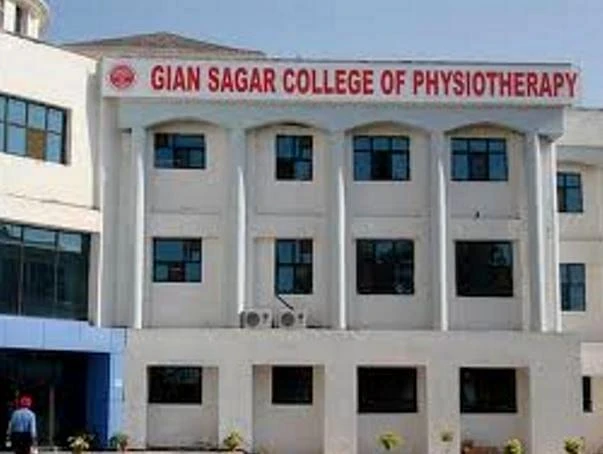
 Auditorium
 Cafeteria
 Computer Labs
 Hostel
 Medical
 Science Labs
 Sports Complex
 Study Library