Loading Admission Guardian content
Loading Admission Guardian content

Provisional score based on available data. It may change as more information is verified.
Find a program, read its fee details and explore the admission requirements.
Summary of the programs shown below. First-year fee. Check the note beside each amount for inclusions and exclusions.
| Course | Stream | Fees |
|---|---|---|
| Bachelor of Commerce [B.Com] | Commerce | 28500 |
| Bachelor of Computer Applications [BCA] | Computer Applications | 33500 |
| Bachelor of Computer Applications [BCA] + Master of Computer Applications [MCA] | Computer Applications | 33500 |
| Master of Computer Applications [M.C.A] | Computer Applications | 53500 |
| Bachelor of Engineering [BE] | Engineering | 58500 |
Specializations
Eligibility: 10+2
Specializations
Eligibility: 10+2
Eligibility: 10+2
Eligibility: Graduation
Specializations
Eligibility: 10+2 with 75% + JEE Main
 Accenture
 Aditya Birla Group
 Airtel
 Aricent Group
 Cipla Limited
 Coca-Cola India
 Cognizant
 Dabur India Ltd.
 Dell
Dell Genpact
 GODREJ Pvt. Ltd
 HCL Technologies
 HDFC Bank
 Hexaware Technologies
 Hindustan Copper Limited (HCL)
 ICICI Bank
 iFlex
iFlex Infosys
 Oracle
 Patni Computers
 Sony India
 Syntel
 TCS
TCS Tech Mahindra
 Wipro Technologies
 Zensar
GICTS Group of Institutions in Gwalior is a study in practical compromises. Established in 1989 and sprawling across a functional 5-7 acre campus, it’s built a reputation as one of the most affordable private options in the region. That affordability comes with a clear trade-off. You won't find the polished infrastructure or high-pressure corporate recruitment of a top-tier private university here. What you will find, according to a consistent thread in student reviews, is a surprising amount of flexibility—especially for those juggling a degree with competitive exam prep or a part-time job. Its strength lies in its deep local roots and recognition for computer applications and management programs, operating under the dual umbrellas of RGPV, Bhopal for engineering and Jiwaji University, Gwalior for most other courses. If your priority is a budget-conscious degree with manageable academic pressure, GICTS warrants a close look. If your sights are set on a transformative campus experience or guaranteed high-paying campus placements, you might leave disappointed.
The academic structure is split into engineering (often referred to as GITS) and professional studies (GICTS). This means a B.Tech student follows the RGPV curriculum and exam pattern, while a BBA student answers to Jiwaji University. The intake numbers are substantial, especially for computer applications—BCA alone takes in 480 students annually, which speaks to its local popularity.
Faculty is a mixed bag, and that's being honest. You have dedicated, senior PhD holders like Dr. Shipra Kulshestra and Dr. Amit Kankoriya who are well-regarded. But you also have a significant number of junior faculty listed as "PhD Pursuing." The academic culture isn't intensely rigorous. The grading systems depend on the affiliating university. Industry tie-ups exist on paper, like MoUs with units in the Malanpur industrial area for visits, but these are more about exposure than deep, integrated projects. It's an academic environment that gets the job done without excessive pressure, which is precisely what a segment of students actively seeks.
This is where the gap between brochure claims and ground reality is most apparent. The college website and some portals might highlight a "Highest Package of 12.5 LPA." Dig into student forums, and you'll find that number is treated with skepticism—often an off-campus achievement of an exceptional student. The more consistent highest package for on-campus drives is around 6.5 LPA.
The realistic average package for a B.Tech or MCA graduate falls between ₹3.2 LPA and ₹4.5 LPA. Placement percentages are another area of divergence. The official claim is 70-80%, but the consensus from alumni on platforms like Shiksha and Quora suggests a working figure closer to 40-50% for core technical or role-specific placements. The rest often find roles in BPOs, sales, or support functions.
Recruiters like TCS, Wipro, Infosys, and Tech Mahindra do visit. However, students frequently note that these companies often hire for mass recruitment roles—graduate trainee, support engineer, or process executive—rather than specialized software developer positions. The banking sector (ICICI, HDFC, Axis) is active for MBA and B.Com graduates, typically in retail banking roles. The placement cell is active, but the quality of opportunities is a recurring student grievance. The message is clear: for a package above 5 LPA, significant self-driven effort in building skills and applying off-campus is expected.
Affordability is GICTS's undeniable strong suit. The fees are regulated by the state's Admission and Fee Regulatory Committee (AFRC), keeping them remarkably low for a private institution. A four-year B.Tech degree costs about ₹1.82 lakhs in total tuition—that's under ₹46,000 per year. A three-year BBA is approximately ₹58,500 total. Compare that to almost any other private college, and the value proposition is stark.
Hostel fees are an additional ₹48,000 per year, including mess charges. Other costs include a nominal application fee, semester exam fees, and optional bus transport. The primary financial aid comes in the form of state government scholarships for SC/ST/OBC students, accessible through the MP State Scholarship portal. There's no extensive system of merit-based scholarships from the institution itself. The low fee structure is, in many ways, its own form of financial aid.
Admissions are centralized through the state machinery for most major programs. For B.Tech, the primary gateway is the JEE Main score, with counseling conducted by the Directorate of Technical Education (DTE), Madhya Pradesh. Cutoffs aren't aggressively high; GICTS often has seats available in later counseling rounds. Remaining seats may be filled via 10+2 merit.
For MBA and MCA, the accepted exams are CMAT or the state's MP Pre-MCA test, again followed by DTE counseling. Programs like BCA, BBA, and B.Sc typically admit students through direct application based on 10+2 marks. A management quota of around 10% of seats exists for direct admission, but the transparency and process for this are less defined. The application window generally runs from May to July. It's a straightforward, bureaucracy-heavy process typical of state-affiliated private colleges.
Don't expect a lush, resort-style campus. The infrastructure is described by students as functional but dated—some even say "school-like." That said, the essentials are there. The computer lab is a highlight, spanning 6,000 sq. ft. with over 1,000 networked systems. The library is well-stocked with physical books. Campus Wi-Fi exists, but reviews from hostel residents often label it "inconsistent."
Hostels are separate for genders and get a middling rating of around 3.5/5. The food is consistently described as "average but edible." Many students opt for private PGs in nearby Lashkar or City Centre areas for more independence. Sports facilities for cricket, basketball, and volleyball are available. The canteen is a basic social hub. The overall vibe is no-frills. Campus life isn't buzzing with festivals or events on the scale of a large university, but it's not dead either. It's subdued, which suits students who are there primarily for the degree and their own external pursuits.
Synthesizing hundreds of comments from CollegeDunia, Shiksha, and Quora reveals a clear, almost unanimous consensus.
The positives are always the same: Affordability is the biggest draw. Attendance flexibility is the second—this is repeatedly contrasted with stricter colleges like MITS Gwalior. This leniency makes it a top choice for students simultaneously preparing for GATE, CAT, or government exams. Many also praise individual faculty members for being supportive and accessible, naming professors like Praveen Wakde and Nitin Kulkarni.
The negatives are equally consistent. Placement quality and inflated claims top the list. Students feel misled by high package banners and wish for more core-role recruiters. Infrastructure maintenance is a common gripe. Some administrative delays, often blamed on the affiliating universities, can be frustrating.
One representative review sums it up: "It is an average college for those who want to complete their degree while working or preparing for other exams. Don't expect a high-profile campus life." Another adds, "The placement cell works hard, but the companies that come are mostly for sales or support. If you want a 6 LPA+ job, you have to work on your own."
GICTS is a college with a specific, pragmatic niche. It's worth serious consideration if: your budget is tight and you need the most affordable private degree option in the region; you value academic leniency because you're concurrently preparing for competitive exams or working a job; or you're seeking a decent BCA/MBA from a locally recognized institute without massive financial risk.
You should probably look elsewhere if: your primary goal is a vibrant, immersive campus life with top-tier infrastructure; you are relying solely on campus placements to land a high-paying, core-role job; or you have a JEE Main rank high enough to secure a seat in a government college or a more reputed private institute like MITS.
In essence, GICTS provides a low-cost, low-pressure pathway to a recognized degree. It's a practical choice, not an aspirational one. Your success here will depend less on the institution's brand and more on your own independent drive and skill-building outside the classroom. For the right student—one who understands and accepts this trade-off—it can be a perfectly valid, even smart, decision.

In this preview: 1 photo · 0 videos
GICTS Gwalior is considered a decent "value for money" choice for B.Tech CSE. For students with a high JEE rank, institutions like MITS or IIITM may be better options. However, GICTS is often preferred by those seeking lower fees and more flexibility with attendance.
The realistic average placement package for B.Tech and MCA students at GICTS is between ₹3.0 LPA and ₹4.0 LPA. This figure provides a practical expectation for prospective students evaluating the institution's career outcomes.
No, GICTS does not have a strict attendance policy. Compared to other colleges in Gwalior, it is known for being relatively lenient in this regard, which is a significant factor for many students when choosing the college.
No, staying in the college hostel is not mandatory at GICTS. Many students opt to live in private paying guest (PG) accommodations, which are commonly found in areas like Lashkar and City Centre in Gwalior.
Placements for MBA students at GICTS are primarily in the BFSI (Banking, Financial Services, Insurance) and Retail sectors. The offered packages for these roles typically range from ₹3 LPA to ₹5 LPA.
Share what future students should know about GICTS Group of Institutions.
Student voices are not rewritten by colleges. We remove spam and abuse.
Wider admission question? Community PulseWhat should future students know?
Tell us which course you're considering. We'll help you work out the next step.
Get instant Partner access after mobile verification. Your public edits are reviewed before they go live.
Claim this college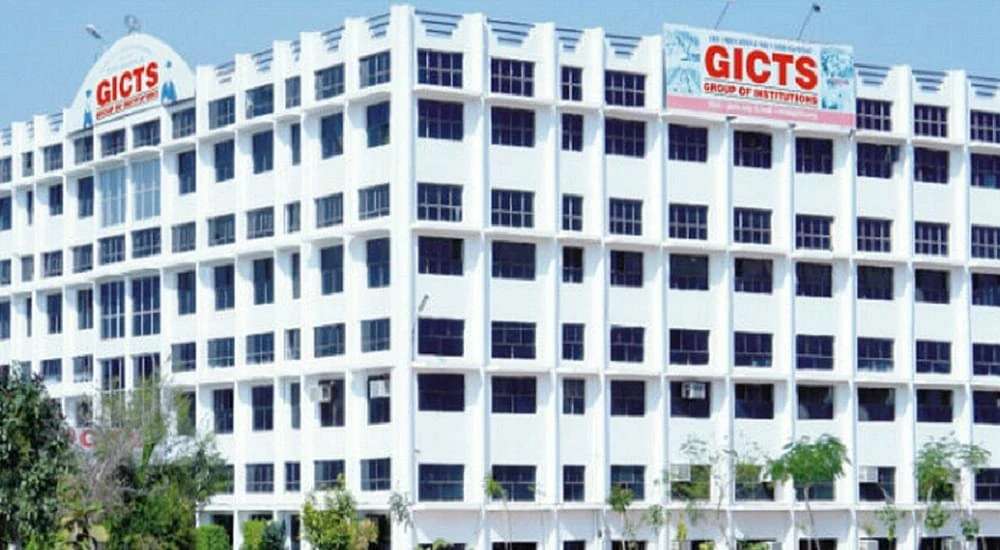
 Auditorium
 Cafeteria
 Computer Labs
 Hostel
 Medical
 Science Labs
 Sports Complex
 Study Library