Loading Admission Guardian content
Loading Admission Guardian content

Provisional score based on available data. It may change as more information is verified.
Find a program, read its fee details and explore the admission requirements.
Summary of the programs shown below. First-year fee. Check the note beside each amount for inclusions and exclusions.
| Course | Stream | Fees |
|---|---|---|
| Bachelor of Arts [BA] | Arts | 858 |
| Master of Arts [MA] | Arts | 11484 |
| Bachelor of Science [B.Sc] | Science | 22500 |
| Master of Science [M.Sc] (Home Science) | Science | 31000 |
Specializations
Eligibility: 10+2
Specializations
Eligibility: Graduation
Specializations
Eligibility: 10+2
Specializations
Eligibility: Graduation
If you're looking for a solid, government-aided arts and home science college for women in western Uttar Pradesh, Ginni Devi Modi Girls P.G. College is a name that comes up. Established in 1983, it's built a reputation on its sprawling campus, its long-standing affiliation with Chaudhary Charan Singh University (CCSU), and a surprisingly affordable fee structure that makes higher education accessible. It's not a flashy, placement-driven institute. Instead, it's the kind of place where the focus is on traditional academic rigor, faculty mentorship, and creating a secure, holistic environment for its students. The college has held onto its NAAC accreditation for years—first an 'A' grade, now a 'B'—and that UGC "College with Potential for Excellence" tag from the XI plan still carries some weight. For students in Modinagar and surrounding districts aiming for a BA, B.Sc. in Home Science, or a postgraduate degree without the financial strain of a private university, this is a pragmatic and well-regarded choice.
This is an institution built around the arts and home sciences. You won't find engineering or MBA programs here. The academic portfolio is focused, with a clear hierarchy from undergraduate to doctoral studies.
The B.A. program is the workhorse, with an intake of 420 students across specializations like English, Hindi, History, Political Science, Home Science, and even Music and Drawing & Painting. It's a classic, broad-based arts education. The B.Sc. offerings are niche: Home Science, and Clinical Nutrition and Dietetics, each taking in 60 students per batch. These are hands-on programs where the college's lab infrastructure gets put to use.
At the postgraduate level, the M.A. in Economics and Political Science have decent intakes of 60 each, while the M.A. and M.Sc. in Home Science specializations (Foods & Nutrition, Textiles & Clothing) are smaller, self-financed programs with 30 seats. The college also supports Ph.D. research in five subjects—Political Science, Economics, Home Science, History, and Hindi—which is a sign of some academic depth for a grant-in-aid college.
What rounds out the picture are the add-ons. There's a certificate course in Computer Applications, vocational courses, and it operates as a center for both IGNOU and NIELIT (offering diploma and certificate courses like the 'O' level). This creates a layered academic environment where a regular degree student might share space with working professionals taking evening classes.
Faculty is a mix of 19 permanent staff commissioned through the UP Higher Education Commission and about 34 more appointed for self-financed and evening courses. The official line is they're "competent and proficient" with high qualifications, including Ph.Ds and even a D.Litt. In a college like this, where placements aren't the primary draw, the quality and dedication of the teaching staff become the cornerstone of the value proposition.
Here's the honest truth: placement data is virtually non-existent in the public domain. The research brief shows no highest, average, or median package figures. No list of top recruiters. No sector breakdown.
A Shiksha.com review rating of 4 for placements is noted, but without detailed alumni testimonials or official reports, it's hard to gauge what that number translates to in real jobs. This is extremely common for traditional arts and science colleges in the state university system, especially those not in major metro hubs. Career outcomes here are likely a mix of self-directed paths—government exam preparation, teaching, further studies—supplemented by whatever campus recruitment might occur.
You don't choose Ginni Devi Modi for a guaranteed corporate placement track. You choose it for an affordable, reputable degree that serves as a foundation. The career guidance and corporate interface appear to be minimal, which is a significant consideration for students whose primary goal is immediate job placement after graduation.
This is where the college shines, especially for its core aided programs. The fee structure is a tale of two systems: the incredibly subsidized government-aided courses and the self-financed ones.
Let's talk old data first, because it's so stark. For the 2018-2019 academic year, the total tuition fee for the entire three-year B.A. program was ₹2,174. Yes, for three years. That's less than many people spend on coffee in a month. The B.Sc. was higher at ₹65,500 for three years, but still very low. M.A. fees ranged from ₹15,968 to ₹22,668 for two years.
Now, the expected figures for 2025 are more contemporary but reflect the shift and increased costs. UG programs are expected to be around ₹1,08,330 for the full three-year program, and PG programs between ₹60,000 and ₹80,000. That's a massive jump from the 2018 figures but remains highly affordable compared to purely private institutions.
The hostel fee is a clear and separate cost: ₹18,000 per year. Mess charges are run on a cooperative basis, so students manage that cost collectively, which can keep food expenses reasonable. The college does offer scholarships for eligible students based on merit and category reservations, which further reduces the financial barrier.
The process here is straightforward and merit-based, typical of CCSU-affiliated colleges. There's no mention of CUET or other national/state entrance exams for its regular BA and B.Sc. programs.
For undergraduate admissions, your 10+2 marks (from CBSE, UP Board, ISC, etc.) are the primary ticket. You need to meet the basic eligibility for your chosen stream (e.g., Arts subjects for BA, Science for B.Sc. Home Science). The selection is a pure merit list based on those marks. Candidates must register through the CCS University portal as part of the process.
For postgraduate courses like M.A. and M.Sc., the selection is based on your relevant undergraduate degree marks. Some departments might incorporate an entrance test or interview, but the cornerstone is your graduation performance.
The application window for the 2025 academic cycle is expected to open in April and run through June. It's a relatively short window, so keeping an eye on the college website for the official notification is crucial.
The 7-acre campus is a definite plus. It's not just a building; it's a contained space with room to breathe. Location is convenient—right on National Highway 58 and a stone's throw from the Modinagar Railway Station (~480 meters). The upcoming RRTS stations will improve regional connectivity further.
Infrastructure is described as "good" across reviews. Academically, there are well-equipped computer labs, subject-specific labs for psychology, science, and home science, and smart classrooms with LCD projectors. The library is a strong asset, with over 24,000 physical documents and, more importantly, digital membership in the NLIST project of INFLIBNET. This gives students access to a huge digital library of 97,000 e-books and 6,000 e-journals, which is critical for quality research.
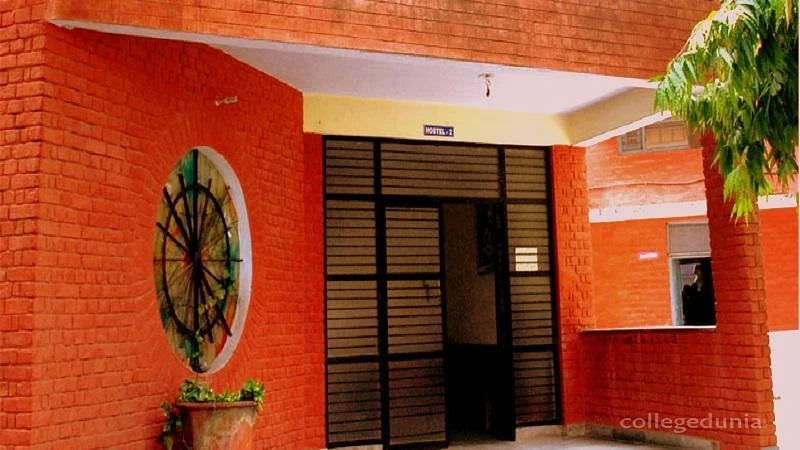
The girls' hostel is a key feature, accommodating over 85 students. Reviews suggest a "congenial" environment with good recreational facilities. The mess and canteen get specific praise for focusing on nutrition—unsurprising for a college with strong Home Science and Dietetics programs. In fact, the cafeteria is partially managed by M.Sc. (Foods & Nutrition) students as a practical project. Hostel amenities include Wi-Fi, reading rooms, and facilities for indoor and outdoor games.
Student life seems active within the campus bubble. There's an annual festival, tech fest, cultural events, freshers' parties, and farewells. Students engage in fashion shows, street plays, and one-act plays. Facilities for sports are adequate—a playground for basketball, volleyball, and athletics, plus indoor games like chess, carom, and table tennis. There's also a gym and yoga centre. A medical center with a doctor on campus adds to the sense of a self-contained community.
Synthesizing the sentiment from available sources, a clear picture emerges. The overwhelming positives revolve around three pillars: faculty, infrastructure, and environment.
Students consistently highlight highly qualified and dedicated teachers. In a non-placement-centric college, this is the core academic value, and it seems to deliver. The campus infrastructure—labs, library, hostel, sports facilities—is rated highly, offering a comfortable and well-equipped study environment. The "holistic development" angle isn't just brochure talk; students mention opportunities in extracurriculars and a supportive, all-girls environment that fosters social interaction and a sense of community. The hostel life, in particular, is noted as being positive with good food and facilities.
Notably, there's a lack of loud, public negatives in the brief. You don't see the typical complaints about terrible management or unfair assessments that plague some institutions. This silence could indicate a generally functional administration, or it could simply mean the college isn't heavily discussed on complaint-driven forums like Reddit, which is common for regional, non-engineering colleges.
The elephant in the room, as mentioned, is placements. The absence of detailed talk about careers suggests students are largely on their own after graduation, which aligns with the college's traditional academic model.
It depends entirely on what you're looking for. If you are a young woman from the region seeking a reputable, affordable BA or B.Sc. degree from a NAAC-accredited, government-aided college with a solid campus and good teachers, Ginni Devi Modi is an excellent choice. It offers a safe, focused environment and tremendous value for money, especially in its aided programs. It's also a viable option for postgraduate studies in its niche areas like Home Science and Political Science.
However, if your primary goal is a degree that acts as a direct pipeline to corporate jobs with high placement packages, you will be disappointed. This is not that kind of institution. The career services and industry interface are minimal. Students need to be proactive and self-directed about their career paths post-graduation.
Think of it as a traditional liberal arts and sciences college. Its worth is in the education and the environment it provides, not in a placement brochure. For the right student—one who values academic foundation, campus life, and affordability over guaranteed campus recruitment—it can be a very worthwhile investment.
In this preview: 1 photo · 0 videos
The college is permanently affiliated with Chaudhary Charan Singh University (CCSU), Meerut. It holds a NAAC 'B' Grade accreditation (awarded in June 2019) and was previously accredited with an 'A' Grade in 2008. It is recognized by the University Grants Commission (UGC) under sections 2(f) and 12(B) and was designated a "College with Potential for Excellence" by the UGC during its XI Plan period.
The main UG programs are the Bachelor of Arts (B.A.) with a large intake of 420 students across various specializations, and the Bachelor of Science (B.Sc.) in Home Science and Clinical Nutrition & Dietetics, each with an intake of 60 students. Key PG programs include the Master of Arts (M.A.) in Economics and Political Science (60 seats each) and the M.A./M.Sc. in Home Science specializations like Foods & Nutrition and Textiles & Clothing, which are self-financed programs with an intake of 30 students.
Fees vary significantly between older government-aided courses and current self-financed ones. For the 2025 academic cycle, total tuition for a full 3-year UG program is expected to be around ₹1,08,330, and for a 2-year PG program between ₹60,000 and ₹80,000. The separate hostel fee is approximately ₹18,000 per academic year, with mess charges operated on a cooperative basis by the students.
Admissions are primarily merit-based. For UG courses (BA/B.Sc.), selection is based on marks in the 10+2 qualifying examination from a recognized board. For PG courses, selection is based on marks in the relevant undergraduate degree. The college does not typically require entrance exams like CUET for its regular programs. The application window for the 2025-2026 session is generally from April to June.
The campus features a well-stocked library with over 24,000 physical documents and digital access to 97,000 e-books and 6,000 e-journals via INFLIBNET. Labs include well-equipped computer labs and subject-specific facilities for Psychology, Science, and Home Science. The girls' hostel accommodates over 85 residents, providing Wi-Fi, recreational facilities, a nutritious mess, and a conducive living environment.
Share what future students should know about Ginni Devi Modi Girls P.G. College.
Student voices are not rewritten by colleges. We remove spam and abuse.
Wider admission question? Community PulseWhat should future students know?
Tell us which course you're considering. We'll help you work out the next step.
Get instant Partner access after mobile verification. Your public edits are reviewed before they go live.
Claim this college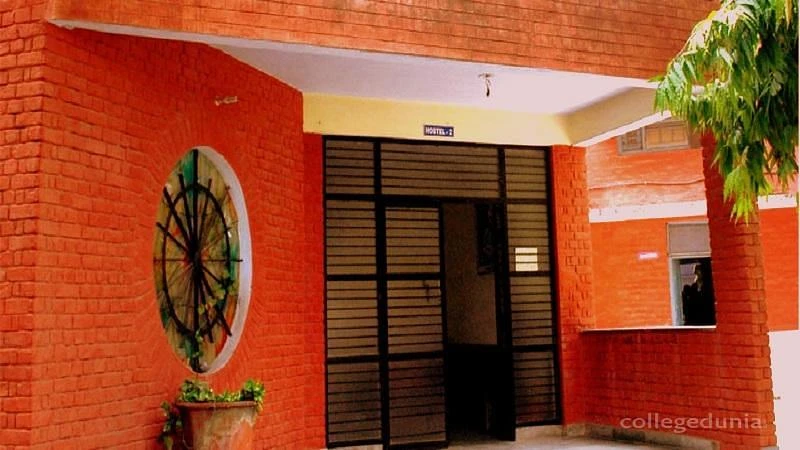
 Auditorium
 Cafeteria
 Computer Labs
 Gym
Gym Hostel
 Medical
 Science Labs
 Sports Complex
 Study Library