Loading Admission Guardian content
Loading Admission Guardian content

Provisional score based on available data. It may change as more information is verified.
Find a program, read its fee details and explore the admission requirements.
Summary of the programs shown below. Fee amounts are not listed. Contact the college for its current fee schedule.
| Course | Stream | Fees |
|---|---|---|
| Bachelor of Technology [B.Tech] | Engineering |
Specializations
All accepted exams
Eligibility: 10+2 with 75% + UPTAC
GLNA Institute of Technology in Mathura is a study in pragmatic compromise. It’s a private engineering college that offers an AKTU degree at a price point many families in Western Uttar Pradesh can actually afford. But that affordability comes with clear trade-offs—limited campus placements, aging infrastructure, and a social scene that’s more highway dhaba than vibrant campus. If you’re looking at GLNAIT, you’re likely weighing a recognized degree against the need to hustle for your own opportunities. That’s the central reality here.
The academic offering is straightforward and mirrors the standard AKTU portfolio. For B.Tech, the institute runs five programs—Computer Science & Engineering, Information Technology, Electronics & Communication Engineering, Mechanical Engineering, and Civil Engineering—each with an intake of 60 students. There’s also an MBA program with specializations in HR, Finance, Marketing, and IT. The curriculum isn’t bespoke; it’s the standard AKTU syllabus delivered on their calendar. That’s not necessarily a bad thing—it means the degree is identical to one from hundreds of other AKTU colleges, which has its own value in the region. Faculty strength is modest, with an estimated total of 45-50 members and a limited number of PhD holders. The upside of a smaller student body, as per reviews, is that professors are often more accessible for help with coursework and internal assessments. You won’t find cutting-edge research or innovative pedagogy here, but you will find a path to an AKTU degree.
This is where you need to separate official claims from ground-level consensus. The college might cite placement percentages around 70-80%, but a synthesis of student reviews on platforms like CollegeDunia and Shiksha paints a different picture. The working number alumni and current students talk about is closer to 40-50% for genuine on-campus offers. The highest packages quoted (₹6-8 LPA) typically come from off-campus or pool campus drives held at larger hubs like GLA University. The on-campus average is firmly in the ₹2.5 to ₹3.5 LPA range. Top recruiters are the usual suspects for Tier-3 colleges: TCS, Infosys, and Wipro often recruit through their National Qualifier Test (NQT) process, not dedicated campus drives. Other names include Genpact, HCL, and local manufacturing firms for core branches. The takeaway? Don’t bank on the college to deliver your job. The placement cell facilitates some opportunities, but success largely depends on your own off-campus hustle, coding skills, or government exam preparation. It’s a self-starter’s game.
The affordability is GLNAIT’s most compelling feature. For the 2024-25 session, B.Tech tuition is estimated between ₹60,000 and ₹75,000 per annum. Add hostel and mess charges of ₹55,000–₹65,000, and you’re looking at an annual outlay of roughly ₹1.2 to ₹1.4 lakhs. Over four years, the total cost, including one-time deposits and AKTU exam fees, lands in the ₹5.5 to ₹6.5 lakhs range. That’s significantly lower than most private universities in the National Capital Region. Financial aid primarily comes from state schemes. Students are eligible for the UP State Scholarship (Saksham) if their family income is below ₹2 lakhs (General/OBC) or ₹2.5 lakhs (SC/ST). There’s no mention of extensive institutional scholarships, so the state scheme is the primary avenue for support.
Getting in isn’t the hardest part. Admissions for the B.Tech programs are primarily through the Uttar Pradesh Technical Admission Counselling (UPTAC) based on JEE Main scores. The cutoffs are generally low; a JEE Main percentile between 60 and 80 has historically been enough to secure a seat in CSE. Core branches like Civil or Mechanical often have seats left vacant after counseling rounds. If you miss the counseling window or don’t have a JEE score, there’s a management quota. About 15% of seats are filled directly by the institute based on your 10+2 marks (with a minimum of 50% in PCM). The application window typically runs from June to August. You can find the official admission portal and details on the GLNAIT website, though be prepared for occasional downtime.
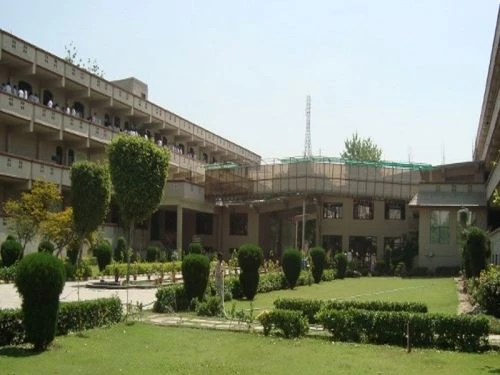
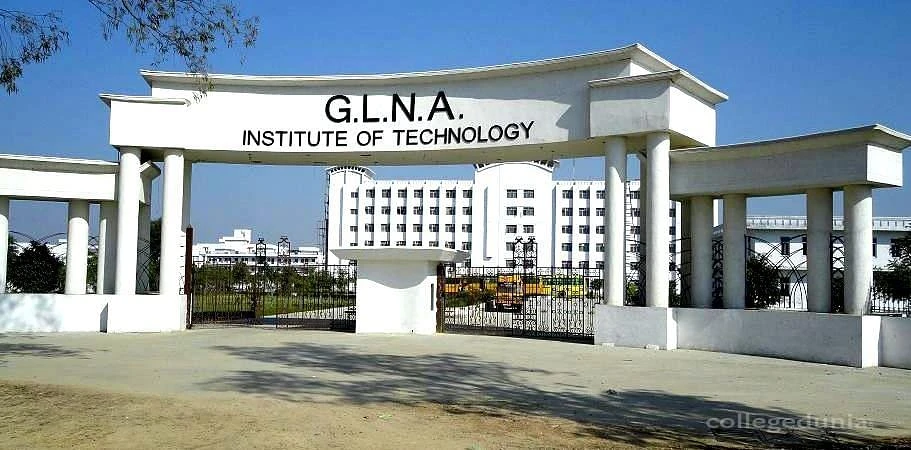
Manage your expectations. The campus is about 15-20 acres right on the busy Mathura-Delhi Highway, which is convenient for travel but doesn’t lend itself to a secluded, green campus atmosphere. Infrastructure is functional but shows its age. Student reviews consistently mention that labs, particularly for CSE, have aging hardware and that buildings could use renovation. Hostels are basic—separate blocks for boys and girls, with rooms typically equipped with fans (AC rooms are rare and cost extra). The quality is often rated around 2.5 out of 5. Wi-Fi is available in labs and the library, but coverage in hostels is reported as spotty. The library has a collection of around 20,000 books, but digital resources are limited. Social life is quiet. Fests are small-scale and infrequent. Many students, especially hostellers, end up at the local dhabas along the highway for a change from repetitive mess food. The college enforces a strict 75% attendance rule, often with fines, which contributes to a atmosphere that feels more like a disciplined school than a bustling university.
The online sentiment, carefully filtered to separate GLNAIT from the larger GLA University, forms a clear consensus. This college is seen as a budget-friendly, no-frills option for students from Mathura, Agra, and nearby towns who need an AKTU degree without a hefty price tag. The positives always circle back to cost and convenience. It’s cheap, and for day scholars living along NH-2, the commute is easy. Students also note that with smaller class sizes, faculty are approachable and can be helpful with internal marks. But the negatives are stark and repeated. Placement reality is the biggest gripe—the message is clear: don’t expect the college to be your career launchpad. Infrastructure maintenance is another common complaint. And perhaps most damning for those seeking a classic college experience, the social life is described as almost non-existent. One recurring piece of advice from alumni sums it up: “If you are a self-starter and just need a degree to apply for government jobs or off-campus IT roles, it's okay. If you want 'campus life,' look elsewhere.”
GLNAIT serves a specific student profile. It’s worth serious consideration if you are a cost-conscious student from the region, your JEE Main score is modest, and your primary goal is to secure an AKTU B.Tech degree as a stepping stone. That stepping stone could be for government job eligibility (like UPSC engineering services or SSC), for pursuing an M.Tech later, or as a base from which to aggressively prepare for off-campus IT placements. The low fee is its strongest asset. However, you should absolutely look elsewhere if you prioritize a vibrant campus life, expect robust on-campus placement support from top recruiters, or want modern infrastructure and research opportunities. GLNAIT provides the bare bones of an engineering education. Fleshing out a career from that skeleton will be almost entirely your own responsibility. For the right, self-motivated student with limited funds, it’s a pragmatic choice. For anyone else, it’s likely a compromise too far.
In this preview: 1 photo · 0 videos
No, GLNA Institute of Technology (GLNAIT) is not the same as GLA University. GLNAIT is a private college affiliated with Dr. A.P.J. Abdul Kalam Technical University (AKTU), whereas GLA is a much larger Deemed-to-be University.
GLNAIT is considered average for CSE. The B.Tech degree is awarded by AKTU, which holds value, but it is noted that on-campus placement opportunities for students are limited.
The tuition fee for the B.Tech program at GLNA Institute of Technology is approximately ₹65,000 to ₹75,000 per year.
Yes, GLNA Institute of Technology provides separate hostel accommodations for boys and girls on its campus.
Yes, direct admission is possible through the management quota. Eligibility requires a minimum of 50% marks in Physics, Chemistry, and Mathematics (PCM) in your 12th standard.
Share what future students should know about GLNA Institute of Technology.
Student voices are not rewritten by colleges. We remove spam and abuse.
Wider admission question? Community PulseWhat should future students know?
Tell us which course you're considering. We'll help you work out the next step.
Get instant Partner access after mobile verification. Your public edits are reviewed before they go live.
Claim this college
 Auditorium
 Cafeteria
 Computer Labs
 Science Labs
 Study Library