Loading Admission Guardian content
Loading Admission Guardian content

Provisional score based on available data. It may change as more information is verified.
Find a program, read its fee details and explore the admission requirements.
Summary of the programs shown below. First-year fee. Check the note beside each amount for inclusions and exclusions.
| Course | Stream | Fees |
|---|---|---|
| Bachelor of Arts [BA] | Arts | 1150 |
| Bachelor of Commerce [B.Com] (Accountancy) | Commerce | 1280 |
| Bachelor of Arts [BA] {Hons.} | Arts | 1475 |
| Bachelor of Science [B.Sc] | Science | 1855 |
| Bachelor of Science [B.Sc] {Hons.} | Science | 2275 |
Specializations
Eligibility: 10+2
Specializations
Eligibility: 10+2
Specializations
Eligibility: 10+2
Specializations
Eligibility: 10+2
Specializations
Eligibility: 10+2
Gour Mohan Sachin Mandal Mahavidyalaya (GMSMM) is a study in contrasts. It’s a sprawling, 13.1-acre campus in the rural stretches of South 24 Parganas, yet it’s affiliated with the prestigious University of Calcutta. It offers a massive array of undergraduate programs for a few thousand rupees a year, but you won’t find a formal placement cell here. For over five decades, it has served as a crucial access point to higher education for students in the Mandirbazar region, providing a solid, affordable foundation in Arts, Science, and Commerce. The NAAC ‘B++’ grade is a decent stamp of approval for a government-aided institution of its type. If you’re looking for a no-frills, academically sound college where the focus is on the classroom and not corporate recruitment, GMSMM has carved out a distinct niche.
GMSMM is fundamentally an undergraduate college, and its scale is impressive. With 19 full-time UG programs, it caters to a huge student body. The academic structure is in transition, reflecting the national shift in education policy. You’ll find two parallel intake lists: one for the older Choice-Based Credit System (CBCS) and a newer one for the Four-Year Undergraduate Programme (FYUGP) under the National Education Policy (NEP), which the college adopted in 2023.
The numbers tell the story of demand. Under the NEP framework, intake for the 3-Year B.A. Multidisciplinary program is a staggering 1,658 seats. Honours courses in popular Arts subjects like Bengali (219 seats), History (140), and Education (103) also have large batches. Science Honours intakes are much smaller, typically 13 seats each for Physics, Chemistry, Botany, and Zoology, which suggests a more focused, resource-intensive approach in those departments.
Academically, it’s a traditional setup under the University of Calcutta’s umbrella. The faculty of 75-77 teachers is repeatedly praised in student reviews for being helpful and competent. Beyond the standard curriculum, the college offers a few distinctive features: courses taught in Bengali, free vocational training in Garment Manufacturing, and various add-on courses in blended mode. It’s a straightforward, teaching-focused environment. Don’t expect industry MoUs or global collaborations here; the tie-up is firmly with the university’s syllabus and examination system.
This is the section where the data gets thin and student sentiment fills the gap. The college does not publish official placement statistics—no highest package, no average package, no placement percentage. An unverified figure floating around suggests a median package of INR 3 LPA, but it’s impossible to confirm.
The only recruiter named in the brief is Infosys, reportedly for internships. There’s a wildly improbable claim about 14,000 students securing internships, which is almost certainly a reporting error or misunderstanding; the college’s entire student population is likely a fraction of that. More plausible student reviews point to graduates finding roles in teaching and financial sectors, but often through their own efforts.
The consensus from student feedback is clear: you don’t come to GMSMM for on-campus placement drives. The recurring complaint is “no job after graduation,” with some alumni hinting at nepotism in the few opportunities that do arise. The placement support is informal at best. For a student here, the strategy must be to leverage the low-cost degree, focus on competitive exams (government jobs, teaching), or use it as a stepping stone for a postgraduate degree elsewhere. The college provides the education, but the career launch is largely your own responsibility.
Affordability is GMSMM’s undisputed strength. The fee data from different sources (like Collegedunia and Zollege) shows some variation, but the central truth is undeniable: annual tuition is incredibly low.
For the 2024-25 cycle, figures suggest fees ranging from approximately ₹1,150 for a B.A. General program to around ₹2,275 for a B.Sc. (Honours). Data pointing to 2026 shows slightly higher numbers, like ₹5,175 for B.Sc. and ₹4,425 for B.Com. (Hons. Accountancy). Even at the higher end, we’re talking about a full year’s tuition for less than the monthly fee of many private colleges. There are no hostel facilities, which keeps the total cost of attendance remarkably low—you’re only covering tuition, transport, and personal expenses.
The college actively facilitates financial aid. Several government scholarships are available for eligible students, including the SC/ST stipend, Kanyashree Prakalpa for girls, and the Swami Vivekananda Merit-cum-Means Scholarship. There’s also mention of a Jindal scholarship. While some students note the scholarship amounts can feel modest, their availability is crucial for the college’s demographic.
The process is merit-based and transparent, with no entrance exams. Admission hinges entirely on your Class 12 marks. The selection criteria differ for Honours and General programs, which is important to note.
For Honours courses, the calculation is: (Sum of marks in Best Four Subjects) + (Marks in the Honours subject you’re applying for). The general category typically needs a minimum of 50% in aggregate and 45% in the relevant subject. For General (or Multidisciplinary) courses, selection is based on the grand total of all subjects, including environmental science, with a minimum requirement of 40%.
The application window usually opens in May, with a nominal fee of INR 200-300. The entire process is online—application, document upload, and fee payment. The college publishes merit lists on its portal by late June or early July. Shortlisted candidates then go through document verification and final fee payment. Classes typically commence in July-August. There’s no management or NRI quota mentioned; seats are filled purely based on the publicly declared merit lists.
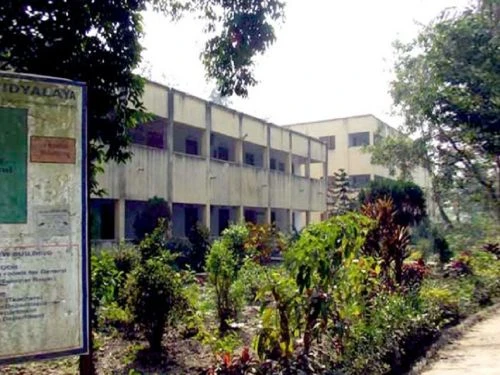
The 13.1-acre campus is repeatedly described as green and clean, with a natural beauty that students appreciate. The infrastructure is a mixed bag, leaning towards functional rather than luxurious.
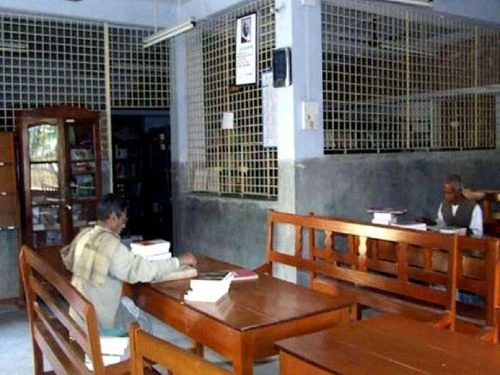
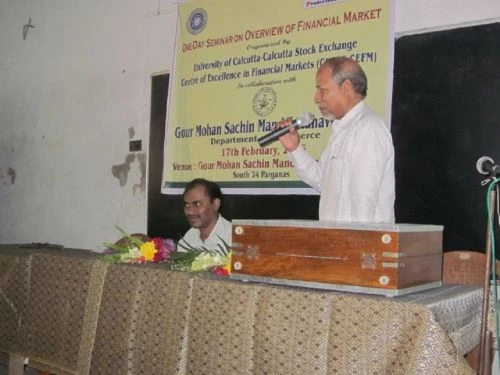
On the plus side, the academic facilities are adequate. There are nine well-equipped laboratories for science, geography, and computer science. The computer lab has 20 terminals with relevant software. The library system is a highlight, featuring both a traditional stocked library and a digital library with internet access, using automated cataloging (OPAC). Classrooms, seminar halls, and an auditorium cover the basics.
For daily life, there’s an on-campus cafeteria serving affordable food, college transport, and a medical facility. The sports infrastructure is surprisingly good for a college of this type: a large playground for football and cricket, table tennis, and a 6-station multi-gym. NCC and NSS are active.
The biggest drawback is the lack of hostel facilities. Students must arrange their own local accommodation or commute. Some student reviews also point to maintenance issues, specifically mentioning dirty bathrooms in parts of the college. The campus is Wi-Fi enabled, with connectivity in key areas like the library and computer center.
Synthesizing student sentiment paints a very human picture of GMSMM.
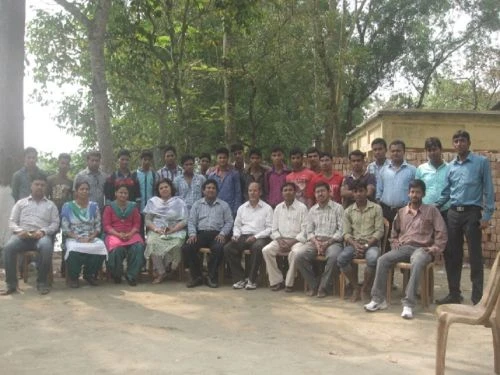
The Good: The teaching faculty is the college’s greatest asset. Reviews consistently call teachers “very good,” “helpful,” and friendly, noting they “teach like friends.” The campus environment is praised for its cleanliness and vibrant atmosphere, with cultural events like drama, dance, and Rabindra Sangeet held throughout the year. The value for money is unquestioned—quality education at an ultra-low cost. The library and sports facilities also get positive mentions.
The Not-So-Good: Placement support is the most common and serious grievance. The feeling of being on your own after graduation is strong. Academically, some students feel the curriculum needs updating for modern relevance (specifically mentioning AI) and find the semester exams challenging due to the volume of syllabus. Socially, there are concerning reports of “bad manners for girls,” including instances of stalking and unwanted attention on campus, which is a significant red flag. The absence of a hostel is a practical difficulty for many.
Gour Mohan Sachin Mandal Mahavidyalaya serves a specific purpose exceptionally well. It’s an ideal choice for a local student from South 24 Parganas or surrounding areas who needs a reputable, University of Calcutta-affiliated degree at the absolute minimum cost. If your goal is to build a strong academic foundation in Arts, Science, or Commerce with the intent of pursuing government exams, a B.Ed., a law degree, or a postgraduate course elsewhere, GMSMM is a financially prudent launchpad. The supportive faculty and decent infrastructure add real value.
However, you should look elsewhere if your primary expectation is campus placements, a bustling hostel life, or a curriculum packed with industry interfaces. The college does not function as a corporate feeder institute. Additionally, the reported social environment issues for women are a serious consideration that requires direct inquiry. In short, GMSMM is worth it for the academically driven, cost-conscious student with a clear plan beyond the undergraduate degree. It’s less suited for those seeking a packaged college-to-corporate pathway.

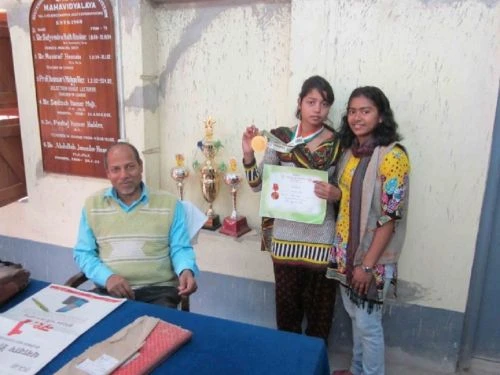
In this preview: 5 photos · 0 videos
Admission is 100% merit-based on your Class 12 marks. No entrance tests. For Honours courses, they calculate your best four subjects score plus the marks in the Honours subject. For General courses, it's based on your grand total. You apply online around May, pay a ₹200-300 fee, and check the merit lists published on the college portal in June/July.
Fees are very low, typically between ₹1,150 and ₹5,175 per year depending on the program (B.A., B.Sc., B.Com). Hostel facilities are not available on campus. Students need to manage local accommodation or commute, which keeps the overall cost of study minimal.
The 13.1-acre campus has Wi-Fi, well-equipped science and computer labs, a good library (both physical and digital), and a large playground for sports. There's a cafeteria, medical facility, and college transport. It lacks a hostel, but provides standard academic infrastructure for a government-aided college.
Students consistently praise the teaching quality, describing faculty as helpful and competent. Placement opportunities, however, are a major weak point. The college does not have a formal placement cell or publish placement stats. Alumni often report finding jobs through their own efforts, with teaching and finance being common sectors.
Academically, it offers courses in Bengali, free vocational training in Garment Manufacturing, and has adopted the NEP framework. For extracurriculars, there's an active NCC/NSS, regular cultural events (drama, music), and sports teams that compete at district and state levels. The campus has a vibrant cultural atmosphere throughout the year.
Share what future students should know about GMSMM.
Student voices are not rewritten by colleges. We remove spam and abuse.
Wider admission question? Community PulseWhat should future students know?
Tell us which course you're considering. We'll help you work out the next step.
Get instant Partner access after mobile verification. Your public edits are reviewed before they go live.
Claim this college
 Auditorium
 Cafeteria
 Computer Labs
 Medical
 Science Labs
 Sports Complex
 Study Library