Loading Admission Guardian content
Loading Admission Guardian content
Provisional score based on available data. It may change as more information is verified.
Selected ranking categories, with the recorded year beside each result. Open all records for the complete history.
13 published records · Lower numeric ranks are stronger
Indiatoday
Arts
#1632023
Indiatoday
BCA
#1332022
Indiatoday
Commerce
#2122022
Indiatoday
Science
#1802022
Find a program, read its fee details and explore the admission requirements.
Summary of the programs shown below. First-year fee. Check the note beside each amount for inclusions and exclusions.
| Course | Stream | Fees |
|---|---|---|
| Master of Arts [MA] | Arts | 535 |
| Master of Science [M.Sc] | Science | 595 |
| Master of Computer Applications [M.C.A] | Computer Applications | 795 |
| Bachelor of Science [B.Sc] | Science | 1435 |
| Master of Business Administration [MBA] | Management |
Specializations
Eligibility: Graduation
Specializations
Eligibility: Graduation
All accepted exams
Eligibility: Graduation with 50% + TANCET
Specializations
Eligibility: 10+2
Specializations
Eligibility: Graduation
1 exam with cutoff data available
Government Arts College in Salem is a study in contrasts. It's one of the oldest institutions in Tamil Nadu, with roots stretching back to 1857, yet its modern-day identity is that of a large, affordable, autonomous government college serving thousands. With annual tuition fees that rarely cross INR 4,000 and a sprawling 11-acre campus on Cherry Road, it represents a critical access point to higher education in the region. But the story isn't just about history or low cost. Its recent NIRF ranking (#101-150 in 2025) and autonomous status since 1999 signal an institution trying to modernize within the constraints of a public system. The reality for a student here is defined by that tension: deep tradition, undeniable value for money, and academic outcomes that are, frankly, a mixed bag.
This is a comprehensive arts and science college in the classic Tamil Nadu mold. With 56 full-time courses and a total intake capacity of over 2,100 students, it's a massive operation. The academic structure is broad, covering everything from Botany and Geology to Computer Science and Business Administration.
Programs are divided cleanly. At the UG level, you have the standard three-year degrees: B.A., B.Sc., B.Com., B.B.A., and B.C.A. Specializations within B.Sc. are particularly strong in the pure sciences—Physics, Chemistry, Mathematics, Zoology. The B.A. in Economics has a sizable intake of 100 seats. For postgraduates, two-year M.A., M.Sc., M.Com., M.C.A., and M.B.A. programs are offered, with admissions often based on graduation marks or entrance exams like TANCET for M.B.A. and M.C.A.
The college has been autonomous since 1999-2000, which means it designs its own curriculum and conducts its own exams under the broad umbrella of Periyar University. That's supposed to allow for more flexibility. The semester system is in place. What you get academically is a very traditional, lecture-heavy format. The faculty count is large at 234, and student reviews consistently highlight them as a strength—friendly, qualified, and experienced. But don't expect a wave of industry tie-ups or innovative pedagogy. This is a place where you attend class, use the library, and pass your exams. For the fee, that's a straightforward deal.
Let's be direct. The placement data from the college's own reports requires a sober look. For the 2021-22 academic year, out of 374 UG (3-year) students, 44 were placed. That's an 11.8% placement rate. For PG (2-year) students, it was 12 out of 41, or about 29.3%. The median salary for those who did get placed was INR 50,000.
That's the official number. The college's website mentions recruiters like "Various MNCs, Top Corporates, Leading Startups," but no specific names are provided. Student reviews online typically use the word "average" to describe placements, which feels like a generous synonym for "limited."
So, what's the real picture? If you're coming here for a B.Sc. in Physics or a B.A. in History, you are likely not coming for campus placements. You're here to get a reputable, affordable degree and then prepare for competitive exams (like government services) or pursue a higher degree (M.Sc., M.Phil.). The placement cell exists, but it's not a driving force of the college experience. The median salary of INR 50,000 reflects entry-level roles, often in local businesses or through walk-in interviews. If a high-paying corporate job straight out of college is your primary goal, a government arts college probably isn't your target. This is about the degree as a foundation, not as a direct ticket to the corporate world.
This is where the college's value proposition becomes crystal clear. The affordability is staggering, even by government college standards.
For the 2025-2026 session, annual tuition fees are: B.A. at INR 2,225, B.Sc. between INR 2,305 and INR 3,005, B.C.A. at INR 2,305, B.Com. at INR 1,885, and M.B.A. at INR 1,805. Even a Ph.D. program costs roughly INR 3,000-4,003 per year. These numbers are almost historical.
There are, of course, other one-time charges at admission: an admission fee, matriculation, registration, a refundable caution deposit, and fees for identity cards, placement, and alumni. But even with these, the total cost for a three-year degree is lower than a single semester's fee at many private institutions. Hostel charges are included in the fee structure, though the exact cost isn't broken out separately in the available data.
Information on specific scholarships isn't detailed in the brief, but as a government institution, it would facilitate state and central government scholarship schemes for SC, ST, OBC, and EWS students. The low base cost itself is the most significant financial aid.
Admissions are a merit-based game, heavily influenced by the Tamil Nadu state reservation policy.
For UG programs, it's all about your +2 marks. There's no common entrance exam. Eligibility requires passing the higher secondary exam (CBSE or Tamil Nadu State Board) with the relevant subjects. Selection is based on the marks in that qualifying exam, followed by a college-level counseling process. With an intake of 180-250 per major, cutoffs vary by caste category and program popularity. A program like B.Sc. Computer Science will have a much higher cutoff than B.A. Sociology.
For PG programs like M.A. or M.Sc., it's typically based on your graduation marks in the relevant subject. However, for professional courses like M.B.A. and M.C.A., the TANCET (Tamil Nadu Common Entrance Test) is required. For the 2026 cycle, registration was extended till April 15, with the exam on May 9.
M.Phil. and Ph.D. admissions involve an entrance exam and/or interview as per university norms.
The application window is usually in the April-June period. The reservation policy follows the Government of Tamil Nadu norms: Open Competition (31%), Backward Classes (26.5%), Backward Classes Muslims (3.5%), Most Backward Classes & Denotified Communities (20%), Scheduled Castes (15%), SC Arunthathiyars (3%), and Scheduled Tribes (1%).
The campus is a mix of heritage and functional necessity. The iconic clock tower block dates to 1932, and there are other older buildings from the 1940s and 70s. It's a 11-acre space, which feels sizable but not sprawling. Infrastructure is, by student accounts, sufficient but not flashy. You won't find the glass-and-steel facilities of a private engineering college.
Labs exist—over 20 of them—including a computer lab with around 20 systems. The library gets good marks for being big and well-stocked, with both physical and digital resources. Sports are said to be given importance, though details on facilities are sparse.
The hostel situation draws mixed reviews. There are separate hostels for boys and girls. Some students call them "decent enough" with "nice food," while others are blunt: "government hostel so it is not good room and food." That's a pretty common dichotomy for government hostels across India. The canteen is small. Wi-Fi is a point of contention; some claim it's available, others say it's absent in classrooms. The location is well-connected by public transport, with the local bus stop about 3.2 km away and Salem Junction railway station roughly 6.5 km away.
Student life seems to be the college's hidden strength. Reviews consistently mention a "lively" and "unified" campus atmosphere. It feels like a community. College timings are considered good, leaving students with time for their own pursuits. Don't expect a fest calendar packed with celebrity shows, but there's likely a steady hum of departmental and cultural activities.
Synthesizing the sentiment from various platforms, a clear consensus emerges.
The positives are strong and repeated: The faculty is widely praised as friendly, qualified, and experienced. The campus atmosphere is vibrant and fosters a sense of unity. The value for money is unbeatable—you get a recognized degree for a trivial fee. The college timings are convenient.
The negatives are practical and logistical: Placement support is minimal, which aligns with the hard data. Hostel facilities are a gamble—might be okay, might be poor. Infrastructure is basic and can't compete with private colleges. Wi-Fi connectivity is unreliable.
No one complains about teaching quality. Everyone complains, to some degree, about career support. That tells you exactly what this institution is and isn't. It's a place to get taught, not a place to get placed. Students who understand that going in seem to have a satisfactory, if not transformative, experience.
It depends entirely on what you're looking for and what you can afford.
This college is an excellent, pragmatic choice for: Students from the region seeking an extremely affordable, reputable bachelor's degree as a stepping stone. If your plan is to complete a B.A., B.Sc., or B.Com. and immediately prepare for UPSC, TNPSC, bank exams, or a postgraduate entrance, the low cost and decent teaching free up resources and mental space for that focus. It's also a solid option for students who need the security of a government college degree and the community of a large campus.
You should probably look elsewhere if: Your primary goal is a high-placement, corporate-track education. If you want state-of-the-art labs, guaranteed hostel comfort, or a highly proactive career services cell, private institutions (with their much higher fees) are built for that. The low placement percentages are a real factor for those with immediate job aspirations.
Government Arts College, Salem is an institution of access and tradition. It doesn't promise to polish you for the corporate world. It promises to give you a legitimate, low-cost higher education within a supportive academic community. For thousands of students every year, that's exactly enough.

In this preview: 1 photo · 0 videos
Admission to UG programs is strictly merit-based. You need to have passed your 10+2 (or equivalent) from a recognized board with the required subjects. There's no entrance exam for most courses like B.A., B.Sc., or B.Com. Selection is based on your marks in the qualifying exam, followed by a college-level counseling process. The cutoffs vary each year based on program demand and the applicant's reservation category.
The fees are remarkably low. For the 2025-2026 academic year, the annual tuition fee for B.Sc. programs ranges from INR 2,305 to INR 3,005 depending on the specialization (e.g., Physics, Computer Science). The annual tuition fee for the three-year B.C.A. program is INR 2,305. These are just tuition; there are small additional one-time charges at admission.
Placement support is not a core strength. Official data from 2021-22 shows a low placement rate, with a median salary of INR 50,000 for the students who were placed. Most students use the degree as a foundation for government service exams or higher studies. The college has a placement cell, but student reviews consistently describe opportunities as "average" or limited.
The college has separate hostels for boys and girls. Reviews from students are mixed. Some find the facilities decent with acceptable food, while others describe the rooms and food as not being good, which is a common feedback for many government hostels. It's advisable to have realistic expectations about accommodation standards.
Government Arts College, Salem was ranked in the #101-150 band in the 'Colleges' category by the National Institutional Ranking Framework (NIRF) in 2025. You can view the official rankings on the NIRF website.
Share what future students should know about Government Arts College.
Student voices are not rewritten by colleges. We remove spam and abuse.
Wider admission question? Community PulseWhat should future students know?
Tell us which course you're considering. We'll help you work out the next step.
Get instant Partner access after mobile verification. Your public edits are reviewed before they go live.
Claim this college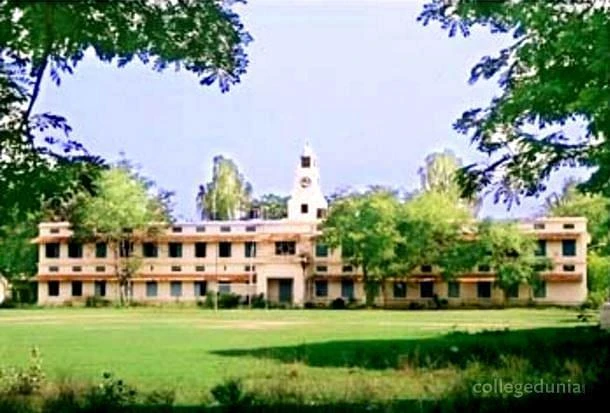
 Auditorium
 Cafeteria
 Campus Shuttle
 Computer Labs
 Gym
Gym Hostel
 Medical
 Science Labs
 Sports Complex
 Study Library