Loading Admission Guardian content
Loading Admission Guardian content
Provisional score based on available data. It may change as more information is verified.
Find a program, read its fee details and explore the admission requirements.
Summary of the programs shown below. Fee amounts are not listed. Contact the college for its current fee schedule.
| Course | Stream | Fees |
|---|---|---|
| Bachelor of Ayurvedic Medicine and Surgery | Medical | |
| Doctorate of Medicine [MD] (Ayurveda) | Medical | |
| Certification | Science |
All accepted exams
Eligibility: 10+2
Specializations
Eligibility: Post Graduation
Specializations
3 exams with cutoff data available
Established in 1916, the Government Autonomous Ayurvedic College and Hospital (GAC), Gwalior, is one of the oldest institutions of its kind in India. It’s a place of stark contrasts: a clinical powerhouse where students see a staggering volume of patients, housed within century-old buildings that show their age. For a student serious about Ayurvedic medicine and willing to trade modern comforts for unparalleled hands-on experience at a government-subsidized cost, GAC Gwalior represents a compelling, if challenging, choice. Its reputation rests not on glossy brochures but on a legacy of producing practitioners who dominate the public health system of Madhya Pradesh.
The academic focus here is traditional and intensive. The flagship is the 5.5-year BAMS program, which includes a mandatory one-year rotatory internship. Postgraduate studies are available via a 3-year MD (Ayurveda) in Kriya Sharir (Physiology), though with only 5 seats, it's highly competitive. The college also runs one-year certificate courses in Panchkarma and Yoga Training, each with an intake of 50.
Academic life is structured around 14 specialized departments, from Kayachikitsa (Internal Medicine) to Shalya Tantra (Surgery). Instruction happens in a mix of Hindi, English, and Sanskrit. The faculty, around 32-35 permanent members, is frequently cited by students as a major strength—knowledgeable, experienced, and dedicated to teaching "old school" Ayurveda. You can find the official academic structure on the college website. The catch? You’re at the mercy of the affiliating university, MPMSU Jabalpur, which students consistently criticize for delayed results and a chaotic exam schedule. That 5.5-year course can easily stretch longer.
Let's be clear: you don't get campus placements here in the corporate sense. This is a professional medical college, and career paths are different. The compulsory internship pays a stipend of about ₹12,000 – ₹14,000 per month, split between the college's Ayurvedic hospital and allopathic postings at District Hospital/GRMC Gwalior. For MD students, the stipend ranges from ₹14,000 to ₹15,000 per month.
After graduation, the primary career route is government service. Most alumni aim for the Madhya Pradesh Public Service Commission (MPPSC) exams to become Medical Officers (AYUSH). A starting Medical Officer in MP draws a salary of approximately ₹56,100 (Level 12) plus allowances. Others pursue UPSC exams for central AYUSH services or set up private practice. The college’s strong clinical reputation and vast alumni network across the state’s health department are significant advantages here. There’s no "average package" to quote—your earning potential is tied to public service pay scales or your success in private practice.
This is where the government tag shines. The total estimated cost for the entire 5.5-year BAMS program is between ₹2.5 to ₹3 lakhs, excluding personal expenses. To break it down, the first-year tuition and government fees are around ₹75,552, dropping to about ₹42,850 for subsequent years. Hostel rent is a mere ₹2,800 annually. Mess charges are extra, running ₹2,500 - ₹3,000 per month for food students describe as "survivable."
Scholarships are available through Madhya Pradesh state portals, including the Post-Metric Scholarship for SC/ST/OBC students and the Mukhya Mantri Medhavi Vidyarthi Yojana (MMMVY). The return on investment, when compared to private Ayurvedic colleges charging ten times more, is arguably unbeatable for a student focused on a career in public service.
Admission is strictly through national entrance exams. For the BAMS program, you must qualify NEET-UG. For the MD program, it's the AIAPGET. The counseling for BAMS is conducted by the Directorate of AYUSH, Madhya Pradesh.
The seat matrix follows a 15% All India Quota (AIQ) and 85% State Quota structure, with 5 additional seats for BIMSTEC/Nepal students. Cutoffs vary yearly, but 2024-25 provides a reference. For the General category under AIQ, ranks ranged from 52,400 to 74,196. For State Quota, students report typically needing a NEET score of 480-520+ for a General seat. SC and ST category cutoffs are significantly lower, extending beyond rank 1.7 lakhs and 2.3 lakhs respectively. It's competitive, but the thresholds are more accessible than for top-tier MBBS programs.
Prepare for a dichotomy. The campus is sprawling at over 36 acres and features a functional 100-bed hospital with a high patient inflow, especially for Panchakarma and Ksharsutra treatments. There's a valuable 3-acre herbal garden with over 350 medicinal species and a library holding 13,000 books and rare manuscripts.
And then there's the infrastructure. It’s old. We’re talking heritage buildings from 1916, and the maintenance hasn't always kept up. Labs for Anatomy, Physiology, and Pathology are described as having "functional but dated" equipment. The hostels, separate for boys and girls, are the most frequent point of student grievance. Rated around 2.5/5, the complaints are consistent: aging facilities, issues with washroom hygiene, and concerns over drinking water quality. "The hostel is the worst part," is a common refrain. Social life is what you make it, centered on campus and the city of Gwalior, which is well-connected by rail (Gwalior Junction is 4-5 km away) and road.
Scouring platforms like CollegeDunia, Shiksha, Reddit, and Quora reveals a clear, almost unanimous consensus. GAC Gwalior is a "Clinical Powerhouse" with "Dilapidated Infrastructure."
The praise is fervent for the academic and clinical experience. Students constantly highlight the "immense" patient load, seeing real, complex cases in dermatology, paralysis, and anorectal disorders that provide irreplaceable hands-on learning. They respect the faculty's deep expertise. And they universally appreciate the affordability, seeing it as a ticket to a stable medical career without crippling debt.
The criticisms are equally stark. The poor hostel conditions top the list. Administrative delays, particularly from the affiliating MPMSU Jabalpur, cause real anxiety about extended course durations. The physical state of the historic buildings can be discouraging. It’s not a cushy experience. But most reviewers conclude that for the clinical exposure at this price, they’d choose it again over a shiny, expensive private alternative.
This college isn't for everyone. If you prioritize a comfortable, modern campus with predictable schedules, look elsewhere. The infrastructure is challenging, and bureaucratic delays are a real headache.
But if your primary goal is to become a skilled Ayurvedic practitioner with deep clinical experience and you plan to build a career through government service or private practice, GAC Gwalior is a standout option. The value proposition is immense: for a total cost lower than a single year's fee at many private colleges, you get training from respected faculty and a volume of patients that is arguably the best in the state. It’s a trade-off—comfort for competence, modern amenities for a century of legacy. For the resilient, pragmatic student focused squarely on their professional future in Ayurveda, the answer is often yes.

In this preview: 1 photo · 0 videos
Yes, Government Ayurvedic College (GAC) Gwalior is often considered better than many private Ayurvedic colleges in MP due to its significantly lower tuition fees and the much higher clinical and patient exposure it provides to its students.
For General category students seeking admission through the State Quota, the BAMS cutoff at Government Ayurvedic College, Gwalior typically requires a NEET score in the range of 480 to 520 or higher.
The college maintains a strict Anti-Ragging Committee. Recent student reviews indicate a generally friendly senior-junior culture, though some minor introductory sessions for new students may still occur.
Yes, the BAMS curriculum at Government Ayurvedic College includes modern medicine subjects. Furthermore, the compulsory internship features a 6-month posting in Allopathic hospitals to provide practical training.
The quality of the hostel food is generally described as average by students. Most consider it "survivable," but many prefer to eat at outside restaurants or use private tiffin services.
Share what future students should know about Government ayurvedic college and Hospital.
Student voices are not rewritten by colleges. We remove spam and abuse.
Wider admission question? Community PulseWhat should future students know?
Tell us which course you're considering. We'll help you work out the next step.
Get instant Partner access after mobile verification. Your public edits are reviewed before they go live.
Claim this college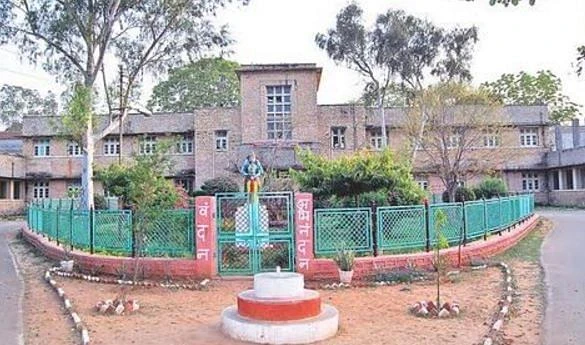
 Auditorium
 Cafeteria
 Campus Security
 Computer Labs
 Hostel
 Medical
 Science Labs
 Sports Complex
 Study Library