Loading Admission Guardian content
Loading Admission Guardian content

Provisional score based on available data. It may change as more information is verified.
Find a program, read its fee details and explore the admission requirements.
Summary of the programs shown below. First-year fee. Check the note beside each amount for inclusions and exclusions.
| Course | Stream | Fees |
|---|---|---|
| Bachelor of Engineering [BE] | Engineering | 25095 |
| Bachelor of Engineering [BE] {Lateral} | Engineering | 25293 |
| Master of Technology [M.Tech] | Engineering | 51048 |
Specializations
All accepted exams
Eligibility: 10+2
Specializations
All accepted exams
Eligibility: 10+3
Specializations
Eligibility: Graduated
3 exams with cutoff data available - showing recent entries
 Fluor Daniel
 Gammon India
 Infosys
 L&T Infotech
 Syntel
Government College of Engineering, Chandrapur (GCOEC) is a study in contrasts. It sits on a sprawling 64-acre campus in a region dominated by coal and power plants, offering a low-cost, government-backed engineering education with surprisingly modern labs. But its placement story is a jagged one, where official branch-wise success rates of 93% or even 100% clash with the broader student sentiment of a 30-50% placement reality. If you're looking for a budget-friendly, academically solid institute where your final outcome depends heavily on your branch and your own hustle, this is a compelling, if complex, option.
GCOEC runs a standard set of six B.Tech programs, each with an intake of 60 seats, except Instrumentation which has 40-60. The academic structure is a bit unique due to its dual affiliation—you start under Gondwana University and finish under Nagpur University. That's an administrative detail students live with, but it doesn't heavily impact daily academics.
The faculty, with about 40 members, gets consistently good marks in student reviews. Many are noted as being alumni of IITs and NITs, and the teaching quality is often cited as a major positive. The academic culture seems focused and traditional, not overly burdened by excessive frills.
Where it gets interesting is the Centre for Invention, Innovation, Incubation & Training (CIIIT). Established through a 2019 MoU with Tata Technologies Ltd, this isn't just a plaque on a wall. It houses nine Centres of Excellence covering areas like Product Lifecycle Management, Digital Manufacturing, Mechatronics & IoT, and Autonomous Connected Electrified systems. For a government college in Chandrapur, this is a significant infrastructure play. Students say the CIIIT lab is genuinely useful for projects and internships. There are also MoUs with TCS and Axiom Softek for skill training. It’s a decent setup that punches above its weight class.
This is where you need to read the fine print. The college's official placement data for 2024-25 shows a wildly divergent picture across branches:
That's the official story. The student story is different. Across reviews, the consensus is that the overall placement rate is more like 30% to 50%. The gap between the 100% for Instrumentation and the 11% for Civil tells you everything—your fate is tied to your branch. Core sectors like power and manufacturing recruit here, thanks to the local industry. Adani Electricity, Reliance, Tata Motors, Bharat Forge, and Gammon India show up. But the bulk of offers, especially for non-core branches, come from IT services mass recruiters: TCS, Infosys, Wipro, Cognizant, Capgemini.
Packages reflect this. The highest package for 2024-25 is reported at INR 8.16 LPA. The average sits firmly in the INR 3-4 LPA range. The 2022 NIRF report listed a median salary of INR 2.5 LPA for UG programs, which feels like an honest baseline. The highest figure floating around—INR 10 LPA—is unverified and should be treated as an outlier.
Internships are a sore point. While the CIIIT lab and proximity to major power plants provide some opportunity, students repeatedly say paid internships are rare. "Only very few students got the internship in a paid form," is a common refrain. The verdict? If you're in Mechanical or Instrumentation, the placement cell might work for you. For everyone else, especially Civil, plan on being self-driven. Off-campus placements are a common path for alumni.
This is GCOEC's undisputed strength. The annual tuition averages around INR 38,300, which is exceptionally low for a professional degree. For students from reserved categories and with good MHT-CET scores, the fee can be capped at a mere INR 18,000 per year, inclusive of scholarships. That's a game-changer for many families.
Hostel fees are almost symbolic at about INR 2,500 per year, though mess charges are separate and extra. Scholarships are administered through the Maharashtra government's MahaDBT Portal, with specific schemes for meritorious students from minority and economically weaker sections. The total four-year cost, even with hostel and mess, is a fraction of what a private college would charge. It’s the core value proposition.
Admission to the B.Tech programs is through the Maharashtra state centralized process. You need a valid score in either MHT-CET (for the Maharashtra state quota) or JEE Main (for the All India quota). The selection is 100% merit-based through the DTE's Centralized Admission Process (CAP) rounds.
Cutoffs aren't specified in the data, but they "raise year by year." As a government college with low fees, it's competitive within the state system. Expect cutoffs for in-demand branches like Computer Science and Mechanical to be significantly higher than for Civil or Electrical. The application fee was INR 800 for general category and INR 600 for reserved categories in the last cycle. Keep an eye on the DTE Maharashtra website for CAP schedules.
For M.Tech, a valid GATE score is required, followed by the PG CAP process. Ph.D. admissions consider GATE, PET, SET, or JRF scores.
The campus is huge—over 60 acres—and students describe it as green and well-maintained. Academically, the infrastructure is solid. Labs across departments are well-equipped, the library has over 28,000 books and a decent journal collection, and the CIIIT centre is a standout facility.
Hostels are a mixed bag. They're separate for boys and girls, with a capacity for about 176 and 156 students respectively. Rooms are basic but furnished (bed, table, chair, cupboard) and have fans and lights. Some reviews call them "very good and clean," while others note they need renovation. Wi-Fi in hostels is mentioned, but there are conflicting claims about its availability for students in academic areas. The college says it's a 100 Mbps, 800-node network; some students say it's for professors only. Believe the middle ground—it's available but maybe not flawless.
There's a canteen, an on-campus ATM, a medical centre, and sports facilities including a playground and gym. The social life isn't depicted as vibrant with huge fests, but the college organizes technical and personality development events, and an NSS program is active. It’s a self-contained, study-focused environment. You're not in a metro, so the campus is your world.
Synthesizing the chatter from review sites gives you a clear, balanced picture.
They love:
They complain about:
The overall sentiment? It’s a trade-off. You get excellent cost-to-education value and good teachers, but you sacrifice placement security and some polish. Students who are self-starters feel it's worth it. Those expecting a college to hand them a job are frustrated.
GCOEC is a very specific bet. It's absolutely worth it if you are fee-sensitive and branch-selective. If you can secure a seat in Mechanical or Instrumentation Engineering, you're getting a near-guaranteed placement from a low-cost government college with excellent labs. That's a fantastic deal.
It's a much harder sell if you're aiming for Computer Science or Electronics here. With placement rates around 50%, you're competing against a flood of private colleges with more aggressive placement cells, albeit at 5-10 times the cost. You’d be banking on your own skills to land a job off-campus.
It's probably not the right choice for Civil Engineering aspirants, given the 11% placement rate, unless you're solely focused on government job exams post-graduation.
Ultimately, GCOEC is a classic government engineering college—strong on fundamentals, weak on hand-holding. The CIIIT centre shows ambition, but the placement outcomes remain stubbornly traditional. Go for the fees and the faculty, stay for your own hard work, and choose your branch like your career depends on it. Because here, it really does.
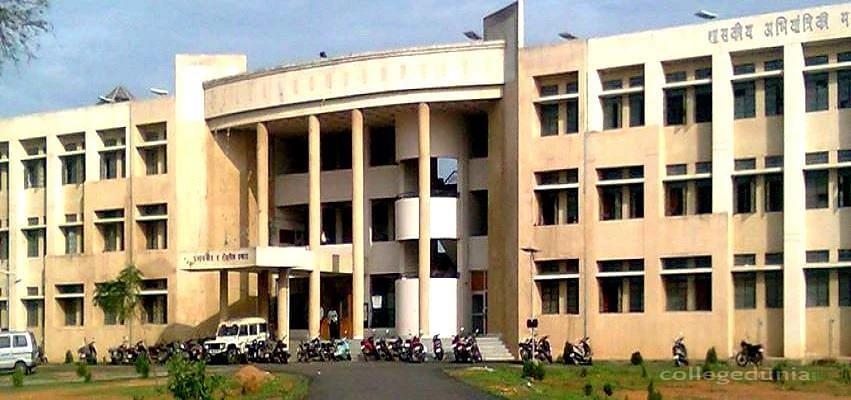
In this preview: 1 photo · 0 videos
Government College of Engineering, Chandrapur (GCOEC) is affiliated with Gondwana University, Gadchiroli for the first two years and Rashtrasant Tukadoji Maharaj Nagpur University for the final two years of its B.Tech program. It is approved by AICTE and holds a NAAC B+ grade accreditation. Specifically, its undergraduate programs in Mechanical, Electrical, and Instrumentation Engineering are accredited by the National Board of Accreditation (NBA).
Placement statistics vary significantly by branch. For the 2024-25 cycle, the highest package was INR 8.16 LPA. The average package for placed students typically ranges between INR 3-4 LPA. Branch-wise placement percentages were: Instrumentation (100%), Mechanical (93.33%), Electronics & Telecommunication (58.06%), Electrical (52.54%), Computer Science (49.23%), and Civil (11.11%). It's important to note that student reviews often cite a lower overall placement rate of 30-50%.
Admission to the B.Tech programs is based on merit in state and national entrance exams. For the Maharashtra state quota, a valid MHT-CET score is required. For the All India quota, a JEE Main score is accepted. Eligible candidates must then participate in the Centralized Admission Process (CAP) conducted by the Directorate of Technical Education (DTE), Maharashtra. The selection is purely merit-based on these entrance exam ranks.
GCOEC provides separate on-campus hostels for boys and girls. The boys' hostel has 88 rooms housing about 176 students, while the girls' hostel accommodates approximately 156 students. Rooms are furnished with a bed, table, chair, cupboard, and fans. Hostels offer Wi-Fi, mess facilities, common rooms, reading rooms, and badminton courts. The annual hostel fee is very economical, around INR 2,500, with mess charges separate.
The most distinctive feature is the Centre for Invention, Innovation, Incubation & Training (CIIIT), established in collaboration with Tata Technologies Ltd. It houses nine advanced Centres of Excellence in areas like Digital Manufacturing, IoT, and Product Design, providing hands-on project and internship opportunities. The college also has a well-stocked central library with over 28,000 books and a campus-wide IT infrastructure with a 100 Mbps internet connection.
Share what future students should know about GCE.
Student voices are not rewritten by colleges. We remove spam and abuse.
Wider admission question? Community PulseWhat should future students know?
Tell us which course you're considering. We'll help you work out the next step.
Get instant Partner access after mobile verification. Your public edits are reviewed before they go live.
Claim this college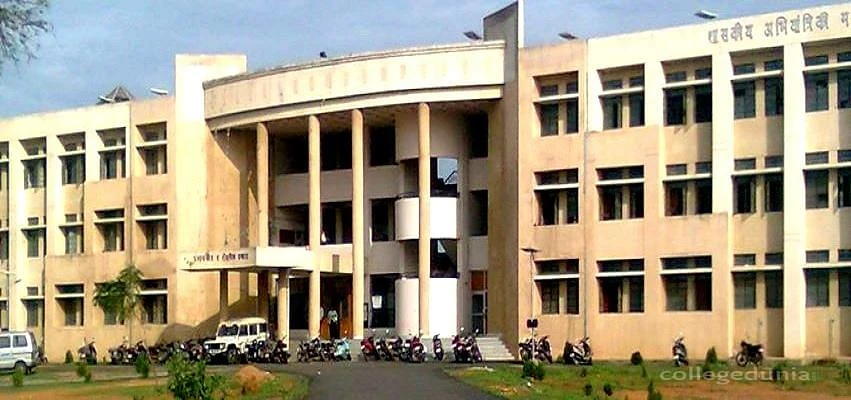
 Auditorium
 Cafeteria
 Computer Labs
 Gym
Gym Hostel
 Medical
 Science Labs
 Sports Complex
 Study Library