Loading Admission Guardian content
Loading Admission Guardian content
Provisional score based on available data. It may change as more information is verified.
Selected ranking categories, with the recorded year beside each result. Open all records for the complete history.
7 published records · Lower numeric ranks are stronger
IIRF
Engineering · public
#932025
IIRF
B.Tech · public
#1022023
Find a program, read its fee details and explore the admission requirements.
Summary of the programs shown below. Programs record different fee periods. Compare the individual amounts and their notes below.
| Course | Stream | Fees |
|---|---|---|
| Bachelor of Technology [B.Tech] | Engineering | 85160 |
| Bachelor of Technology [B.Tech] {Lateral} | Engineering | 85636 |
| Ph.D | Engineering | 180000 |
| Master of Technology [M.Tech] | Engineering |
Specializations
All accepted exams
Eligibility: 10+2
Specializations
All accepted exams
Eligibility: 10+3
Specializations
Eligibility: Pass in Post Graduation + GATE
Specializations
All accepted exams
Eligibility: Pass in Graduation
1 exam with cutoff data available - showing recent entries
 Accenture
 Bharat Petroleum Corporation Limited (BPCL)
 Cognizant
 Gammon India
 Infosys
 Microsoft
 Polaris
 Quick Heal
 Samsung
 TCS
TCS Wipro
WiproIf you're looking for a solid, no-frills government engineering education in Maharashtra without the crushing fees of a private institute, the Government College of Engineering, Amravati (GCOEA) is a name that comes up. Established in 1964, it's an autonomous institution that has carved out a reputation for its core engineering programs, a sprawling 114-acre campus, and a fee structure that makes it accessible. But like any older government college, it comes with a mix of strong fundamentals and some very real, student-reported trade-offs, especially when you look beyond the computer science department.
GCOEA offers a standard but updated slate of engineering programs. At the undergraduate level, the seven B.Tech streams include Civil, Computer Science & Engineering (CSE), Electrical, Electronics & Telecommunication, Information Technology, Instrumentation Technology, and Mechanical. Intakes for CSE, Electrical, and Mechanical are 60 seats each. The postgraduate portfolio is broader, with 13 M.Tech specializations ranging from Advance Electronics and Structural Engineering to Thermal Power Engineering. It's also a recognized research center for Ph.D. programs in core engineering disciplines.
The curriculum got a refresh in 2024, which is a positive sign. They've added relevant modules—think Smart Construction Tech for Civil, EV powertrain systems for Mechanical, and Industrial IoT for Instrumentation. A new internship program in the 8th semester is now part of the plan. That's a practical move. Faculty strength sits around 63 teachers. Reviews on them are a classic split: many students call them experienced and supportive, while a vocal minority finds some to be disengaged, focusing more on exam scoring than deep problem-solving. The exam pattern is standard for the university: two common tests (15 marks each) and a 60-mark end-semester exam.
Where GCOEA tries to bridge the academia-industry gap is through its tie-ups. Core branches like Civil and Mechanical have links with infrastructure firms and PSUs for site-based internships. The IT side connects with tech companies for software projects. They've also started certification programs in electric vehicle tech and smart grid systems. It's a decent effort for a state-run institution.
This is where you need to read between the lines. The official placement report presents a certain picture, but student sentiment adds crucial context.
Let's start with the numbers. For the 2024 batch, the college reports an average package of ₹5.55 LPA and a median of ₹5 LPA for UG students. The highest package cited is ₹26.5 LPA from Nvidia Graphics, but that was for an internship drive for CS/IT students. Other reports mention highs of ₹9 LPA (2024) and ₹20 LPA (2025). The placement percentage is reported variably as 55.01% (2024), 85% of eligible students (2023-24), and 82% (2025). That inconsistency itself is worth noting.
The recruiter list is impressively long and legitimate: TCS, Capgemini, L&T, Infosys, Wipro, Cognizant, Persistent, IBM, Tech Mahindra, Adani Group, Torrent Power, John Deere, Amazon, Samsung R&D, and Zoho, among others.
Now, the student reality check. The consensus across reviews is clear: placements are strong for Computer Science and Information Technology, but just average or even challenging for core branches (Mechanical, Civil, Electrical). The high-profile recruiters and the top packages are overwhelmingly for the CS/IT crowd. For core engineers, companies like L&T, Adani, and Reliance do visit, but the packages are more modest (typically ₹4.5-6.75 LPA) and the number of opportunities is fewer. Many alumni on forums suggest core branch students should actively prepare for GATE or other competitive exams alongside their studies.
Internships are available, with around 30-40% of pre-final year students securing them through college, with firms like TCS and Persistent Systems offering roles. About 40% of these can convert to pre-placement offers.
The verdict? If you're in CS/IT, GCOEA's placement cell can deliver decent opportunities. If you're in a core branch, manage your expectations and be prepared to supplement the college's efforts with your own hustle.
This is arguably GCOEA's strongest selling point. The affordability is a major relief. Annual tuition fees for B.Tech range from ₹39,850 to ₹85,000. When you add in the hostel and mess, the total annual cost can be kept remarkably low. Hostel maintenance is around ₹2,000-₹2,150 per year, with mess fees averaging ₹2,000 per month. All in, a rough total 4-year B.Tech cost is estimated at about ₹3.37 lakhs for many students. That's a fraction of what any private engineering college charges.
To support students, the college administers a wide range of government scholarships. These include the Post Matric Scholarship Scheme (Govt. of India), freeships for Tribal and OBC students, the Rajarshi Chhatrapati Shahu Maharaj Shikshan Shulkh Shishyavrutti Yojna, and the EBC scholarship for economically backward classes. Eligibility hinges on entrance exam scores, maintaining a minimum academic standard (often 50-60%), and family income ceilings (usually under ₹6-8 lakhs). Most require Maharashtra state domicile and admission through the Centralized Admission Process (CAP).
Admissions are merit-based through the state counseling process. For B.Tech, you need a valid score in either MHT-CET or JEE Main. The MHT-CET cutoffs are competitive. For example, in the 2025 cycle, the cutoff for B.Tech CSE under the EWS Home State quota ranged from 96.06 to 95.72 percentile. Generally, aiming for a percentile in the high 90s is necessary for top branches like CSE.
For M.Tech, the entrance exams are GATE or MHTCET MTech. Ph.D. admissions require a GATE score or performance in the university's entrance test.
The process is centralized. You register on the MHT CET CAP Portal, fill in your college and course preferences during the counseling rounds, and await allotment based on your rank and seat availability. It's a transparent, if sometimes slow, government system.
The 114-acre campus is spacious and green, with separate buildings for each of the seven departments. The infrastructure gets mixed reviews, which is common for colleges of this vintage.
Academic Facilities: Labs are described as "well-equipped," with specific mentions of a good IoT lab and a Centre of Excellence for Instrumentation and IT. The library is a highlight—it's air-conditioned, well-stocked with technical books and journals, and has a good e-library with internet access. Wi-Fi coverage is reportedly available across departments and hostels.
Hostels: There are separate hostels for boys and girls (reports vary between 2-3 for boys and 1-2 for girls). Rooms are triple-sharing and considered decently spacious. The mess food gets a "good" rating compared to outside options. However, a persistent complaint from students is water supply issues in the hostels, which can be a significant daily hassle.
Other Amenities: Sports facilities include grounds for cricket, football, and volleyball, plus a gymkhana. There's a hygienic canteen and a health center for first aid. The college is about 3-5 km from Amravati railway station and 4 km from the bus stand, connected by buses and auto-rickshaws.
Social life? It's quiet. Some students outright say, "If you want a good campus life don't expect it." The college organizes events, but don't come looking for a vibrant, metropolitan campus culture. It's a government engineering college in a smaller city—the focus is, and has always been, on academics.
Synthesizing the student sentiment from various forums gives you the real picture:
The Good:
The Not-So-Good:
GCOEA Amravati is a classic case of "you get what you pay for," but in the best sense for a certain type of student. It's a high-value, low-cost option where the return on investment can be excellent, provided you align your expectations with its strengths.
Choose GCOEA if: You are a Maharashtra student with a strong MHT-CET/JEE Main score looking for an affordable, reputable government engineering degree. It's an especially smart choice for Computer Science or IT aspirants who can leverage its decent placement record for those branches without paying private college fees. If you're self-motivated, don't need a glamorous campus life, and want a degree that won't burden your family with debt, this college makes a lot of sense.
Think twice or look elsewhere if: Your heart is set on a core engineering branch (Mechanical, Civil, Electrical) and you have ambitions for high-paying, on-campus core placements. You might find the opportunities here limiting. Also, if a vibrant, residential campus with modern amenities and a buzzing social scene is a priority, you'll likely be disappointed. GCOEA is about academics and economy, not an all-encompassing collegiate experience.
For the right candidate, it's a workmanlike institution that gets the fundamental job of an engineering education done without fanfare or financial strain.

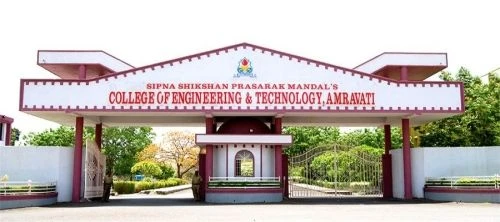
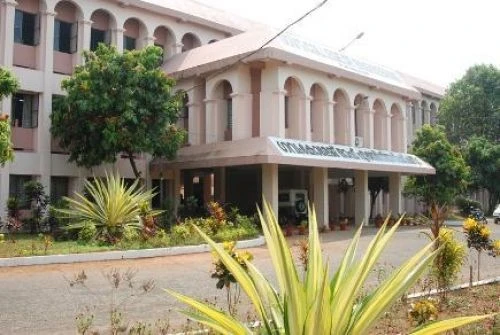
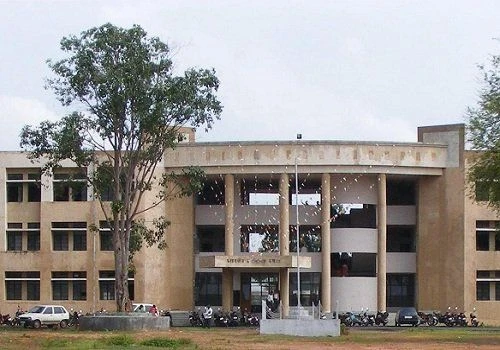

In this preview: 5 photos · 0 videos
Placement opportunities for core engineering branches (Mechanical, Civil, Electrical) are generally considered average. While companies like Larsen & Toubro, Adani Group, and Reliance Industries do recruit, the number of core-specific roles is lower and packages typically range from ₹4.5 LPA to ₹6.75 LPA. Student reviews consistently advise core branch students to actively prepare for competitive exams like GATE alongside their studies, as high-paying, on-campus core placements are less frequent compared to the IT and Computer Science branches.
GCOEA provides separate hostels for boys and girls. Rooms are usually triple-sharing and described as decent with ample space. The mess food is rated positively by students. However, a significant and recurring complaint is about inconsistent water supply in the hostels, which can affect daily routines like bathing. Availability can also be an issue, as hostel seats are often prioritized for first and second-year students.
The annual tuition fee for B.Tech programs ranges from approximately ₹39,850 to ₹85,000. With very low hostel maintenance fees (around ₹2,150/year) and mess charges (₹2,000/month), the total cost is highly affordable. The college offers numerous state and central government scholarships, including freeships for OBC, SBC, and Tribal students, the EBC scholarship, and the Rajarshi Chhatrapati Shahu Maharaj scheme. Eligibility depends on entrance exam scores, academic performance, and family income (often with a ceiling of ₹6-8 lakhs).
For B.Tech admissions, GCOEA accepts scores from MHT-CET and JEE Main. Admission is through the Maharashtra state Centralized Admission Process (CAP) based on the rank obtained. For M.Tech programs, a valid score in GATE or MHTCET MTech is required. Ph.D. admissions are based on GATE scores or the university's own entrance test.
Student opinions on teaching quality are mixed. Many describe the faculty as experienced, supportive, and knowledgeable, particularly praising the updated 2024 curriculum. However, a notable portion of reviews points to inconsistency, with some faculty members being perceived as less engaging or overly focused on exam-oriented teaching rather than fostering deep conceptual understanding. The experience can vary significantly from one department or professor to another.
Share what future students should know about GCOEA.
Student voices are not rewritten by colleges. We remove spam and abuse.
Wider admission question? Community PulseWhat should future students know?
Tell us which course you're considering. We'll help you work out the next step.
Get instant Partner access after mobile verification. Your public edits are reviewed before they go live.
Claim this college
 Auditorium
 Cafeteria
 Computer Labs
 Gym
Gym Hostel
 Medical
 Science Labs
 Sports Complex
 Study Library