Loading Admission Guardian content
Loading Admission Guardian content
Provisional score based on available data. It may change as more information is verified.
Find a program, read its fee details and explore the admission requirements.
Summary of the programs shown below. First-year fee. Check the note beside each amount for inclusions and exclusions.
| Course | Stream | Fees |
|---|---|---|
| M.B.B.S. | Medical | 18073 |
| Doctorate of Medicine [MD] | Medical | 50000 |
| Master of Surgery [MS] | Medical | 50000 |
| Diploma in Nursing Assistant | Medical |
All accepted exams
Eligibility: 10+2 with 50% + NEET
Specializations
Eligibility: Graduation
Specializations
Eligibility: Graduation
Specializations
Eligibility: 10+2
2 exams with cutoff data available - showing recent entries
If you're looking for a government medical college in Tamil Nadu where the clinical training is intense, the fees are negligible, and the social life is an afterthought, Government Dharmapuri Medical College (GDMC) fits the bill. Established in 2008, it's a relatively young institution that has quickly built a reputation for its high patient load and no-nonsense academic focus. You won't find sprawling lawns or annual cultural fests here. What you will find is a 1,200-bed tertiary care hospital attached to the campus, where the daily OPD count can hit 2,500. For students who prioritize hands-on learning over campus glamour, GDMC offers a compelling, budget-friendly path into medicine, governed by the strict rules and subsidized fees of the Tamil Nadu state system.
GDMC runs the standard triad of medical education: undergraduate, postgraduate, and paramedical courses. The MBBS program, with an annual intake of 100 students, follows the NMC's Competency-Based Medical Education (CBME) curriculum. It's a 5.5-year grind, including the compulsory internship. The academic calendar starts in August, and the university exams are annual affairs from the affiliating Tamil Nadu Dr. M.G.R. Medical University. Passing requires a clean 50% minimum in both theory and practicals separately—no averaging out.
The postgraduate side is where specialization begins. The college offers about 41 MD/MS seats across nine departments. General Medicine and General Surgery are the largest, with 8 seats each, followed by Obstetrics & Gynaecology (7) and Anaesthesiology (6). It's a decent spread for a government college of its age. The faculty strength is around 178 doctors, and the consensus from students is that they are supportive, especially during the foundational pre-clinical years. But be ready for a rigorous pace. First-year students often describe a "very stressful" environment with weekly internal exams and strictly enforced attendance rules. The mentorship programs are active, though. It's a system designed to make you study, not to hold your hand.
Let's be clear: medical colleges don't have "placement cells" in the engineering sense. Career progression is a different game. For an MBBS graduate from a Tamil Nadu government college, the primary paths are clear. First, you complete your Compulsory Rotatory Residential Internship (CRRI) right at the attached hospital, earning a standard state stipend of ₹25,000–₹30,000 per month. After that, most either sit for the NEET-PG to specialize or take the Tamil Nadu Medical Services Recruitment Board (MRB) exams to join government service as an Assistant Surgeon (Medical Officer).
Some education portals cite a median salary of ₹9.5 LPA for MBBS grads, but that's a generic figure. The real "placement" rate is effectively 100% for those seeking government jobs via the MRB route—a significant number of GDMC alumni have taken this path. For postgraduates, the reported median of ₹6.5 LPA seems low for specialities like Surgery or Orthopaedics; in reality, MD/MS holders from government colleges typically command much higher starting packages in the private sector or through senior government posts. The key takeaway? You won't get corporate recruiters visiting campus, but the state system and your own qualification ensure a job. The college's high clinical volume is the real career prep, making you procedurally confident by internship's end.
This is GDMC's standout advantage. As a state government institution, the fees are heavily subsidized, making it one of the most affordable ways to get a medical degree in India. The annual tuition fee for MBBS is just ₹4,000. Add in university and other charges, and the first-year total comes to a mere ₹13,610. Hostel rent is an additional ₹6,000 per year, and mess charges run between ₹3,000–4,000 per month. Over the entire 5.5-year MBBS course, the total out-of-pocket cost, including basic hostel and mess, is estimated to be only ₹1.2 to ₹1.5 lakhs.
For postgraduate MD/MS courses, the total fee for the entire program is around ₹1.93 lakhs. Financial aid is robust for eligible students. The Tamil Nadu Government provides scholarships for SC, ST, SCA, and MBC students. There's also a full fee waiver for the 7.5% horizontal reservation category, which is for students who studied in government schools from grades 1-12. The affordability is undeniable, but remember, it comes with a service bond. As per state rules, graduates must serve in government hospitals for 5 years or pay a penalty, currently in the range of ₹5-10 lakhs.
Admission is 100% merit-based through national entrance exams. For the MBBS program, you must qualify in NEET-UG. For MD/MS seats, it's NEET-PG. There is no management or NRI quota here—all seats are government seats.
The selection is split between two counseling authorities: 15% of seats (All India Quota) are filled by the Medical Counseling Committee (MCC), and the remaining 85% (State Quota) are handled by the Tamil Nadu Medical Selection Committee. The cutoffs give you a sense of the competition. For the 2024 cycle, the closing rank for the All India Quota seats in MBBS was 14,146. For the State Quota, you'd need a state rank roughly within 2,500. In terms of NEET-UG score, a mark of 580+ is generally considered safe for the state quota. It's competitive, but less so than the century-old premier colleges in Chennai. The process is transparent and follows the standard government counseling rounds.
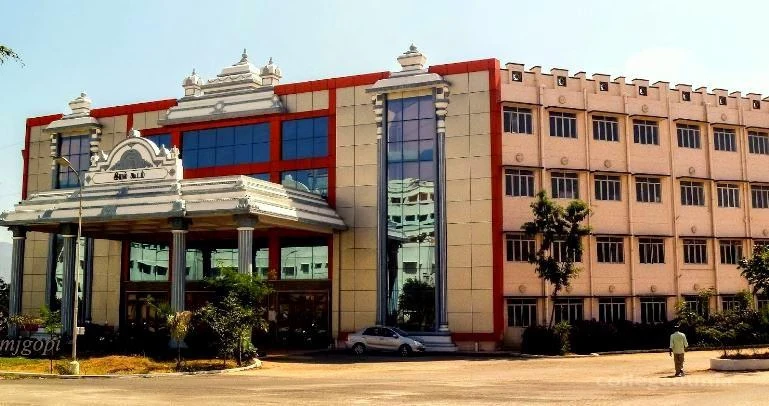
The infrastructure at GDMC is functional, not luxurious. The 29.32-acre unitary campus is often described as small compared to older medical colleges. The attached Government Dharmapuri Medical College Hospital is the heart of the institution, with a reported capacity of 1,230 beds. This is the college's greatest asset, providing that massive clinical exposure everyone talks about. The library spans 580 sq. meters with over 5,000 books and an e-library section. There's a large auditorium and fully equipped labs for the pre-clinical subjects.
Where students consistently report issues is in maintenance, particularly regarding restrooms in the academic blocks. Hostels are separate for genders with typically three students to a room—they're considered decent and clean. The mess is student-run, and feedback on food quality is mixed, often landing on "average" or "needs improvement." Sports facilities are limited to a small playground and some indoor game rooms. And that leads to the biggest point about life here: social life is minimal. Fests are rare. The atmosphere is intensely focused on academics and hospital duties. The location is convenient, though, just about 4 km from Dharmapuri Railway Station and near NH-44.
Scouring reviews from education portals and forums paints a consistent, two-sided picture. On the positive side, the clinical exposure is overwhelmingly praised. Students feel they see a wider variety and severity of cases than they might in many private colleges, making them confident clinicians. The faculty, especially in the first year, get good marks for being approachable and supportive. And of course, the ultra-low fee is a universal plus.
But the negatives are just as consistent. The campus social life is described as almost non-existent. If you're looking for a vibrant college experience with events and fests, you'll be disappointed. The infrastructure, while adequate, shows wear and tear, with poor restroom maintenance being a specific and frequent complaint. The first-year academic pressure is noted as being particularly high. And the hostel food? It's a common grievance. The consensus is clear: GDMC is for the dead-serious student who values clinical learning and affordability above all else. It's a trade-off.
Government Dharmapuri Medical College is a specific kind of bargain. It trades campus beauty and student life for relentless clinical experience and rock-bottom fees. If your primary goal is to become a competent doctor without incurring massive debt, and you're willing to endure a spartan, academically pressurized environment, GDMC is an excellent choice. It's particularly well-suited for students from Tamil Nadu's state quota who secure a good rank but not quite a top-tier one, and for those who see the mandatory government service bond as a career step, not a hurdle. However, if you prioritize a balanced college experience, modern infrastructure, or a more relaxed academic pace, you might find it lacking. For the right student—the one who wants to learn medicine in the trenches—GDMC delivers exceptional value. For others, the trade-offs may be too steep.
Yes, Government Dharmapuri Medical College (GDMC) is considered a good option for an MBBS degree, primarily due to its high clinical exposure and low fee structure.
For the All India Quota (AIQ), aim for a NEET rank under 14,000. For the Tamil Nadu State Quota, a NEET score of 580 or higher is generally considered safe for admission.
The hostel facilities at GDMC are decent, offering 3-sharing rooms with basic amenities. Reviews indicate the food provided is average.
Yes. As per Tamil Nadu Government rules, undergraduate medical students must complete a 5-year service bond in government hospitals after graduation. There is a penalty option, currently estimated between ₹5 to 10 Lakhs, for those who do not wish to serve.
The college is very close to Dharmapuri Railway Station, located at an approximate distance of 4 kilometers.
Share what future students should know about Government Dharmapuri Medical College.
Student voices are not rewritten by colleges. We remove spam and abuse.
Wider admission question? Community PulseWhat should future students know?
Tell us which course you're considering. We'll help you work out the next step.
Get instant Partner access after mobile verification. Your public edits are reviewed before they go live.
Claim this college Auditorium
 Cafeteria
 Computer Labs
 Medical
 Science Labs
 Sports Complex
 Study Library