Loading Admission Guardian content
Loading Admission Guardian content

Provisional score based on available data. It may change as more information is verified.
Find a program, read its fee details and explore the admission requirements.
Summary of the programs shown below. First-year fee. Check the note beside each amount for inclusions and exclusions.
| Course | Stream | Fees |
|---|---|---|
| Bachelor of Engineering [BE] | Engineering | 1500 |
Specializations
All accepted exams
Eligibility: 10+2 with 45% + GUJCET
3 exams with cutoff data available - showing recent entries
Government Engineering College, Patan, is a state-run institution that offers a compelling proposition: a full-fledged B.E. degree for a tuition fee that can be as low as zero. Established in 2004 on a 30-acre campus in Katpur village, its affiliation with Gujarat Technological University (GTU) and AICTE approval provide a solid academic foundation. For students from Gujarat, particularly those with strong GUJCET scores but limited financial means, GEC Patan represents a pragmatic, low-cost entry into the engineering ecosystem. The college isn't trying to compete with the IITs or NITs. Instead, it serves a specific, important demographic—offering a functional education with decent placement outcomes in IT and core sectors, all for a fraction of the cost of a private college. Its location, about 8 km from Patan city, means it's quiet, focused, and removed from urban distractions, which can be a pro or a con depending on what you're looking for.
GEC Patan is strictly an undergraduate engineering college. It doesn't offer postgraduate or doctoral programs, which keeps the focus squarely on the B.E. degree. The total intake across five branches is 330 students, with Computer Science & Engineering being the largest department at 120 seats. Intakes for Mechanical (90), Electrical (60), and Civil (60) are fairly standard. Notably, the Electronics and Communication Engineering intake was reduced to 30 seats back in 2020, making it the smallest and potentially most selective department.
The academic structure follows the GTU curriculum, which means a mix of theory, practicals, and a heavy emphasis on semester exams. The college publishes tentative academic calendars on its official website, outlining dates for internal and university exams. They use a 10-point CGPA system, with the standard conversion to percentage being CGPA multiplied by 9.5.
Where the academics get a bit more interesting is in the supplementary initiatives. The college is part of the World Bank-funded TEQIP project, which typically brings in funding for lab upgrades and faculty development. There's an active Google Developer Group on Campus (GDGoC) that runs workshops and hackathons. An Institution Innovation Council (IIC) is in place, and the college boasts a "high-compute environment" in its Project & Internet Lab for AI/ML work—a claim that, if true, is a significant asset for a college at this fee point. Faculty are described as dedicated and qualified, though specific details on PhD ratios aren't publicly highlighted. The placement cell also organizes finishing school programs to polish student skills, which is a practical touch.
This is where you need to read between the lines of official claims and student anecdotes. The training and placement cell states an aim for 100% placement—a goal every college has. More concrete, student-shared figures point to an average package in the range of INR 4 to 4.5 LPA, with some unverified reports mentioning a 6 LPA average and a highest package of 9 LPA. The placement percentage is unofficially pegged around 70% for some courses.
The recruiter list is what you'd expect for a tier-3 government engineering college: Infosys, TCS, and Wipro lead the pack for IT roles. For core engineering, companies like Adani Group, Hella India, Aspire Systems, and TatvaSoft have shown up. The sectors are split between IT services and core engineering, with the former likely taking the majority.
One student review claimed every student in their department secured an off-campus internship. That's promising, but it's wise to treat it as an outlier rather than the norm. The reality is that placements here are functional. You won't find dream packages, but for a total degree cost that can be under INR 1.5 lakhs, an average package of 4-5 LPA represents a solid return on investment. The onus, as with most colleges in this bracket, will be on the student to leverage the GTU brand, build skills through those GDG workshops, and actively seek opportunities.
The fee structure is this college's single biggest advantage and is a masterclass in accessible public education. For the 2025-26 academic year:
Doing the math, a general male student staying in the hostel can expect a total 4-year cost of around INR 1.52 lakhs. A female student's total cost drops to about INR 1.28 lakhs, and an SC/ST student would pay roughly INR 1.2 lakhs over four years—almost entirely for food.
Scholarship support is robust and layered. Beyond the fee waivers, students can access the Digital Gujarat scholarship (around INR 20,000/year for general category). SC, ST, and OBC students can get scholarships ranging from INR 25,000 to 30,000 per year. Central schemes like AICTE Pragati (for girls), AICTE Saksham (for differently-abled students), and AICTE Swanath are also available. It's worth noting that the state's popular MYSY scholarship is not applicable to government colleges like GEC Patan. All scholarship processing happens through the Digital Gujarat portal.
Admission is centralized and straightforward, handled by the state's Admission Committee for Professional Courses (ACPC). You need a valid score from either GUJCET or JEE Main. Your final merit is calculated by combining this entrance exam score with your Class 12th board marks.
The cutoffs tell the story of demand. For the 2026 expected Round 1 closing ranks:
The process is entirely online through ACPC counseling. If you're a Gujarat domicile student with a moderate GUJCET rank, especially from a reserved category or with financial constraints, GEC Patan's cutoffs are very much within reach for the core branches. CSE requires a stronger rank.
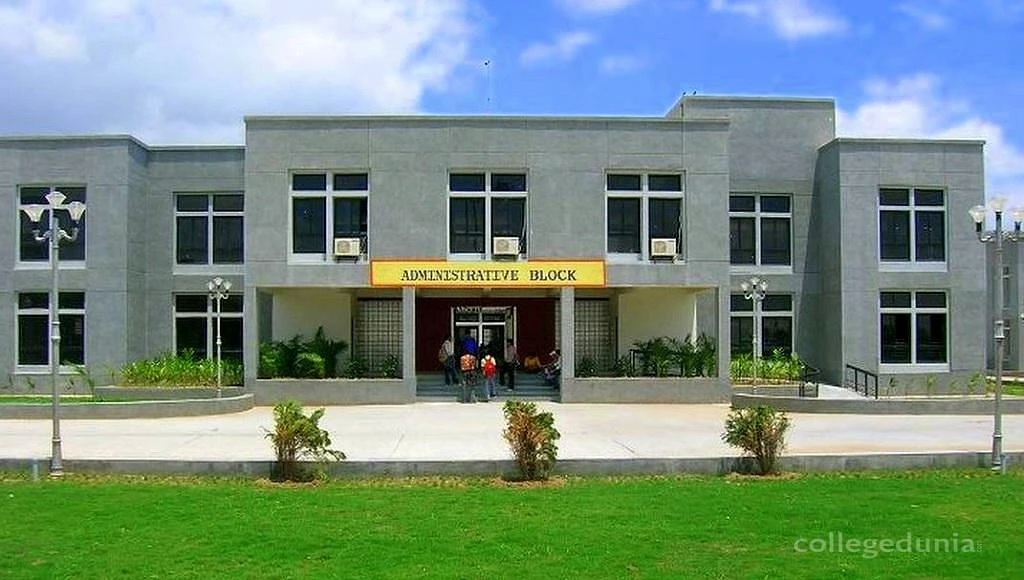
The 30-acre campus in Katpur village is spacious and, by most accounts, well-maintained with the necessary academic infrastructure: a library, labs for physics, language, and computing, and standard workshop facilities for engineering streams. The hostels are basic but functional. The mess food gets mixed reviews—some find it decent, others monotonous, which is the universal hostel mess experience.
Social life is what you make it. The college is not in a city. Patan, 8 km away, is a historical town but not a metropolitan hub. The nearest major city, Ahmedabad, is about 125 km away. This isolation fosters a tight-knit campus community. Students rely on college-organized events, the annual fest, and club activities like the Google Developer Group for engagement. The college runs its own bus service on the Patan-Katpur and Chanasma-Katpur routes, and public GSRTC buses connect to wider networks.
It's a quiet, study-focused environment. If you're looking for a vibrant city life with cafes and events at your doorstep, this isn't it. If you want a low-cost, distraction-minimized place to get your degree, it fits the bill.
Scouring review platforms like CollegeDunia and Shiksha paints a consistent picture. The overwhelming positive is the value for money. Students repeatedly praise the incredibly low fees for a government B.E. degree. The placement outcomes, while not spectacular, are seen as fair for the investment.
Faculty receive generally good remarks for being helpful and qualified, though some note variability in teaching quality across departments. The infrastructure is considered adequate, not luxurious. The major point of contention is always location. Many students find the rural setting too remote, limiting industry interaction, internship opportunities, and general exposure. The flip side is that those who appreciate a quiet atmosphere find it conducive to studying.
Complaints sometimes surface about administrative speed and the rigidity of the GTU system, but these are common grievances across many affiliated colleges. The consensus is that GEC Patan is a no-frills, honest institution. It delivers a decent engineering education at a price point that is almost impossible to beat, but it asks you to compromise on location and brand glamour.
Government Engineering College, Patan, is a very specific and worthwhile option for a specific type of student. It's an unequivocal yes if you are a Gujarat resident from a middle-class or economically constrained background, have a GUJCET rank between 10,000 (for CSE) and 38,000 (for core branches), and your primary goal is to obtain a recognized engineering degree with minimal financial burden. The return on investment, when you factor in scholarships and near-zero tuition, is exceptional. The placement outcomes, while modest, are appropriate for the cost.
You should probably look elsewhere if you are heavily reliant on a dynamic urban environment for your personal growth, if you're aiming for top-tier MNC placements with high packages right out of college, or if you place a premium on a college's national brand name. GEC Patan is a practical choice, not a prestige one. It's for the student who sees engineering as a solid career step and is willing to work hard within the system, leveraging its low cost to graduate with minimal debt and a degree that opens doors to further opportunities, be it jobs or higher studies. For that purpose, it does its job remarkably well.
In this preview: 1 photo · 0 videos
For the 2025-26 academic year, the fee structure is highly subsidized. General category male students pay INR 6,000 per year in tuition. Female candidates, and all SC/ST category students, pay zero tuition fees. Hostel fees are INR 2,000 annually (free for SC/ST), and mess charges are approximately INR 2,500 per month. This makes the total 4-year cost for a general male student around INR 1.52 lakhs, including hostel and mess.
Based on student reviews and unverified reports, the average placement package ranges between INR 4 to 6 LPA, with a highest package reported around 9 LPA. The placement percentage is estimated to be around 70% for some courses. Top recruiters include IT service giants like Infosys, TCS, and Wipro, along with core engineering companies such as the Adani Group and Hella India.
Admission is merit-based through the state's centralized ACPC counseling. Candidates must have a valid score in either GUJCET or JEE Main. The final merit rank is calculated by combining the entrance exam score with Class 12th board marks. Seats are allotted based on this rank during the online counseling rounds.
For the 2026 admission cycle (expected Round 1 closing ranks), Computer Science & Engineering is the most competitive with a cutoff rank near 10512. For other branches: Electronics & Communication Engineering (~24477), Civil Engineering (~38008), Electrical Engineering (~38358), and Mechanical Engineering (~37770).
The campus is located in Katpur village, about 8 km from Patan city, offering a quiet and focused academic environment. The 30-acre campus has necessary academic and hostel facilities. Student life revolves around college events, clubs like the Google Developer Group, and the annual fest. The remote location means limited urban amenities, but the college provides bus services to nearby towns.
Share what future students should know about Government Engineering College.
Student voices are not rewritten by colleges. We remove spam and abuse.
Wider admission question? Community PulseWhat should future students know?
Tell us which course you're considering. We'll help you work out the next step.
Get instant Partner access after mobile verification. Your public edits are reviewed before they go live.
Claim this college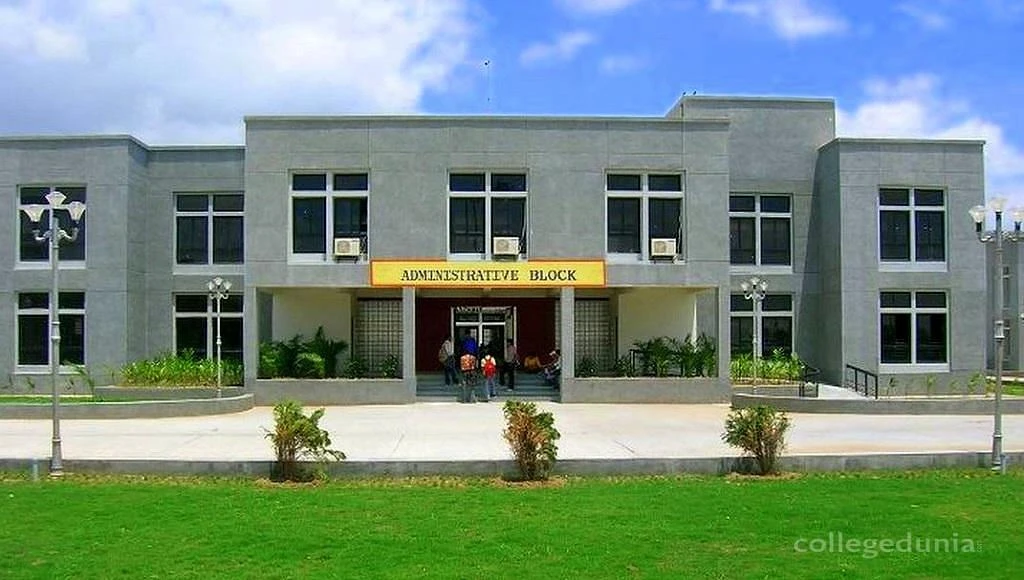
 Auditorium
 Cafeteria
 Computer Labs
 Gym
Gym Hostel
 Medical
 Science Labs
 Sports Complex
 Study Library