Loading Admission Guardian content
Loading Admission Guardian content
Provisional score based on available data. It may change as more information is verified.
Find a program, read its fee details and explore the admission requirements.
Summary of the programs shown below. Total course fee. Check the note beside each amount for inclusions and exclusions.
| Course | Stream | Fees |
|---|---|---|
| Master of Engineering [ME] | Engineering | 9100 |
| Bachelor of Engineering [BE] | Engineering | 18000 |
Specializations
All accepted exams
Eligibility: Pass in Graduation + GATE
Specializations
All accepted exams
Eligibility: 10+2
3 exams with cutoff data available
 Accenture
 Adani Power Limited
 Amazon Web Services
 Argusoft
 BoTree Technologies
 Cognizant
 eClinicalWorks
 Essar E&P Ltd.
 IBM
IBM Jaypee Capital
 L&T Infotech
 L&T Ltd.
 Larsen & Toubro Ltd.
 Maruti
 Qualcomm India Pvt. Ltd.
 Quick Heal
![Reliance Industries Limited [RIL]](https://assets.admissionguardian.com/imgproxy/insecure/w:64/h:64/rt:fit/el:0/f:avif/q:82/sm:1/plain/local%3A%2F%2F%2Fimages%2Frecruiter_logos%2Freliance-industries-limited-ril-logo.webp) Reliance Industries Limited [RIL]
Reliance Industries Limited [RIL] Reliance Industries Ltd.
 Tata Consultancy Services
 TATVASOFT
 Tech Mahindra
 Torrent
Government Engineering College, Gandhinagar, is a story of two realities. On paper, it's a solid, affordable government option with a sprawling 33-acre campus and a decent academic reputation. In practice, it's a place where you get what you pay for—and sometimes less. The college, established in 2004 and affiliated with Gujarat Technological University (GTU), has been autonomous since 2013. That means it runs its own exams, but your degree still comes from GTU. It's a classic state-run engineering college: low fees, a peaceful green campus, and a placement record that's okay but not spectacular. The real draw here is the cost. With total B.E. fees hovering around a mere INR 18,000 for the entire four-year program, it's arguably one of the most affordable engineering degrees in the country. But that affordability comes with trade-offs, particularly in campus life and the consistency of its infrastructure. If you're a student who wants a no-frills, academically-focused education and are prepared to hustle for your own opportunities, GEC Gandhinagar can be a pragmatic choice. If you're looking for a vibrant college experience with top-tier corporate recruitment, you'll likely be disappointed.
The college offers a standard spread of engineering disciplines. Its B.E. programs are the main draw, with Computer Engineering and Electronics & Communication Engineering having the highest intake at 120 seats each. Information Technology and Metallurgical Engineering are smaller, with 60 seats apiece. Other branches include Biomedical, Instrumentation & Control, Electrical, Civil, and the newer Robotics and Automation Engineering.
At the postgraduate level, options are limited to M.E. in Computer Engineering and Biomedical Engineering. There's no mention of a robust doctoral program.
Academically, the college operates under GTU's framework but with the autonomy to conduct its own examinations. The official line is a focus on an "innovative and flexible" curriculum to bridge the industry-education gap. They organize "Industry-Institute Meets," particularly noted for the Metallurgy department. Faculty strength is listed at 114, and student reviews consistently praise the teaching quality, noting that most professors are supportive and explain concepts well if you show initiative. That's a significant plus for a government college.
But there's a catch. Student sentiment hints at a departmental hierarchy. You'll find comments like, "Except Computer and IT department every department is ignored." It's a common story in many colleges, but it's something to be aware of if you're entering a less mainstream branch.
This is where you need to read between the lines. The official numbers are modest. The NIRF 2024 report cites an average package of INR 3.97 LPA for B.Tech students. More recent program-specific data shows a median of INR 4.30 LPA for Metallurgy (2026-27) and INR 3 LPA for Computer Engineering (2027). The highest package touted is 20 LPA, but that's an outlier, not the norm.
The placement percentage for a batch like BE ECE 2025 was around 70-75%. Recruiters are a mix of mass IT recruiters and some core companies. The list includes TCS, Wipro, Infosys, L&T, Bosch, eInfochips, and a slew of mid-sized IT firms like Velox Softech and Tatvasoft.
Now for the reality check, straight from alumni reviews. Many students point out that a significant portion of the "placements" you see in brochures are actually off-campus offers students secured on their own. The sentiment is: "Majority of the placement u see in college brochure are just off campus offers student got them on their own." The college's Training & Placement cell provides a platform, but the onus is heavily on the student. Internship stats reflect this proactive need—about 60% of that same ECE batch got internships, often by applying to companies like BSNL or Reliance Jio themselves.
The verdict? Placements are decent for the fee you pay, but they're "not as strong as the top engineering college in Gujarat." You cannot be passive. If you have a good GPA, build projects, and leetcode, you can land a job. The college gives you a degree and a baseline; you build the career.
This is the undisputed heavyweight champion of GEC's appeal. The fees are almost unbelievably low. The total cost for a four-year B.E. degree is between INR 18,000 and INR 18,800. Let that sink in. That's for the entire course, not per year. The first-year fee is around INR 4,500.
Hostel facilities are available on campus but come with a unique setup. There's no in-hostel mess. Students arrange their own meals, which can mean cooking, tiffin services, or eating out. The hostel fees themselves aren't specified in the data, but given the tuition, they will be nominal. The boys' hostel has 94 rooms (triple-sharing), and the girls' hostel has 60 rooms.
Scholarships are a strong point. The college facilitates multiple government scholarship schemes, primarily through the National Scholarship Portal (NSP). AICTE scholarships are also available. For a college with such low fees, these scholarships significantly enhance accessibility for students from all economic backgrounds.
Admission to the B.E. programs is strictly merit-based through the state's centralized counseling conducted by the Admission Committee for Professional Courses (ACPC). You need a valid score from either JEE Main or GUJCET, along with meeting the Class 12 (GSEB/CBSE) eligibility criteria.
The cutoffs tell a clear story about branch popularity. For the projected JEE Main 2027 Round 1 (General Category), Computer Engineering is the most competitive with a cutoff rank of 333, followed by IT at 348. ECE sits at 991. The cutoff ranks climb steadily for Mechanical, Electrical, and Civil, with Biomedical and Metallurgical Engineering having the most relaxed cutoffs, in the 26,000-31,000 range.
The GUJCET 2027 projected cutoffs follow a similar pattern, just with different numbers (e.g., Computer Engineering at 2621).
The process is straightforward: qualify in the exam, register on the ACPC portal when counseling opens (typically around June), and lock in your choices. For M.E., you need a GATE or Gujarat PGCET score. Diploma holders can aim for lateral entry into the second year B.E. via the DDCET exam.
The 33-acre campus is frequently described as peaceful, spacious, and green. Infrastructure is a mixed bag. Positives include a well-stocked central library that students love, tech-enabled classrooms, a 100-seat auditorium, and a solar-operated campus with RO water. Computer labs are said to be equipped with i7 desktops and servers from IBM and Dell.
But the negatives from student reviews are persistent. Some complain about basic maintenance—drinking water issues in summer, dirty classrooms. There are alarming, though unverified, claims that "Labs don't have equipment" and "No PC's," which directly contradicts the official description. This discrepancy is something to probe during a campus visit.
Social and extracurricular life is the college's weakest point, according to many students. While the official website mentions clubs, a Techfest, and activities organized by the Student Gymkhana, a vocal segment of the student body reports a near-total lack of events. Reviews state: "No fests. No annual function," noting that only Navratri is celebrated for a day. This lack of a vibrant campus culture is a major complaint. Transportation links are decent (a GSRTC bus stop is 5 mins away, a metro station a 16-min walk), but some students call the college transport "very very bad."
Hostel life is basic but functional. Rooms are clean and have good Wi-Fi. The absence of a mess means you manage your own food, which can be a pro for independence or a con for convenience.
Synthesizing the feedback paints a clear, if bifurcated, picture.
The Good:
The Not-So-Good:
There's also mention of "internal disputes between the management and teachers," though this is unverified. The consensus? It's a college for studious, self-motivated learners who prioritize academics and cost over a traditional "college experience."
It depends entirely on what you're optimizing for.
Choose GEC Gandhinagar if: Your primary constraint is budget. For an investment of less than INR 20,000, you get a legitimate B.E. degree from a government, AICTE-approved, NBA-accredited (for some programs) college. The teaching is reliably good, and the campus is a quiet place to study. You're a self-starter who doesn't need hand-holding for placements or a packed social calendar. You're comfortable creating your own opportunities.
Look elsewhere if: You prioritize a vibrant campus life with fests, clubs, and a strong peer-driven culture. You want a college with a powerful brand name and a placement cell that actively secures high-paying offers for a large majority of the batch. You expect pristine, consistently maintained infrastructure and are not willing to navigate potential bureaucratic or resource hurdles.
In essence, GEC Gandhinagar is a utilitarian choice. It delivers core academic value at an unbeatable price. But it asks you to compromise on the ancillary aspects of college life. For the right student—one who is focused, pragmatic, and cost-conscious—it can be a very smart, low-risk investment in an engineering future. Just go in with your eyes wide open.

In this preview: 1 photo · 0 videos
Admission to the B.E. programs requires a score from either JEE Main or the state-level GUJCET. For the M.E. programs, you need a valid GATE score or must appear for the Gujarat PGCET. Diploma holders seeking lateral entry into the second year of B.E. must take the DDCET (Diploma to Degree Common Entrance Test). All admissions are processed through the centralized ACPC counseling.
The fee structure is exceptionally low. The total tuition fee for the entire four-year B.E. program ranges from approximately INR 18,000 to INR 18,800, depending on the specialization. This breaks down to an annual tuition of roughly INR 4,500 to INR 4,700. Hostel fees are separate and nominal, but note there is no in-hostel mess; students arrange and pay for their own meals independently.
Placement prospects are moderate. The average package for B.Tech students was INR 3.97 LPA (NIRF 2024), with recent program-specific median packages around INR 3-4.3 LPA. Top recruiters include mass IT recruiters like TCS, Wipro, and Infosys, along with core companies like L&T and Bosch. It's important to note that student reviews suggest a significant portion of jobs are secured through off-campus efforts, so proactive career hunting is essential for the best outcomes.
GEC provides separate, clean, and well-maintained hostels for boys and girls on its 33-acre campus. The boys' hostel has 94 triple-occupancy rooms (282 capacity), and the girls' hostel has 60 rooms (180 capacity). Facilities include RO water, solar heaters, indoor games, reading rooms, TVs, and good Wi-Fi. A key feature is that there is no college-run mess; students must manage their own food arrangements through cooking, tiffin services, or local eateries.
Student opinions on social life are mixed and represent a common criticism. While the college officially lists clubs, societies, and an annual Techfest, many student reviews contradict this, reporting a notable lack of major fests, cultural events, and a vibrant campus atmosphere. Some mention only one festival (Navratri) being celebrated briefly. Therefore, if a dynamic extracurricular and social scene is a priority, you may find the environment at GEC Gandhinagar to be relatively quiet and academically focused.
Share what future students should know about GEC.
Student voices are not rewritten by colleges. We remove spam and abuse.
Wider admission question? Community PulseWhat should future students know?
Tell us which course you're considering. We'll help you work out the next step.
Get instant Partner access after mobile verification. Your public edits are reviewed before they go live.
Claim this college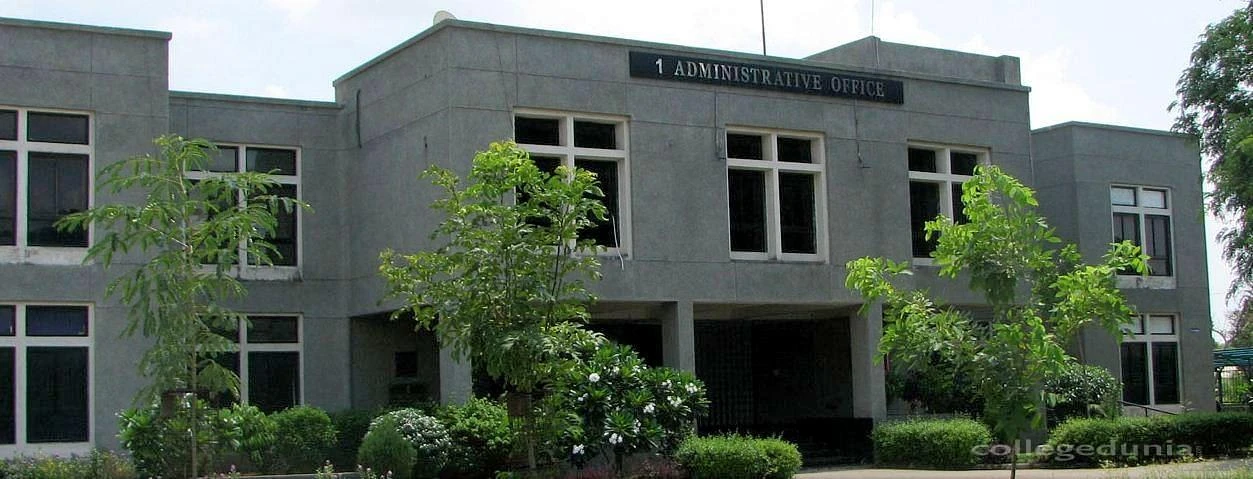
 Auditorium
 Cafeteria
 Computer Labs
 Hostel
 Medical
 Science Labs
 Sports Complex
 Study Library