Loading Admission Guardian content
Loading Admission Guardian content
Provisional score based on available data. It may change as more information is verified.
Find a program, read its fee details and explore the admission requirements.
Summary of the programs shown below. First-year fee. Check the note beside each amount for inclusions and exclusions.
| Course | Stream | Fees |
|---|---|---|
| Bachelor of Technology [B.Tech] | Engineering | 19800 |
| Master of Technology [M.Tech] | Engineering |
Specializations
All accepted exams
Eligibility: 10+2 with 50% + KEAM
Specializations
All accepted exams
Eligibility: Pass in Graduation + GATE
1 exam with cutoff data available
Government Engineering College, Idukki (GECI) is a study in contrasts. It’s a government-run institution set on 25 acres of Kerala’s serene Idukki hills, offering a B.Tech education for a fraction of the cost of private colleges. But that low fee comes with a trade-off: a remote location that directly impacts campus life and, most critically, placement opportunities. The official NIRF 2025 data pegs the median B.Tech package at INR 4.5 LPA, a figure that aligns more with student anecdotes than some of the more optimistic claims you might see floating around. If you’re a student who values a peaceful, focused academic environment and is prepared to be highly proactive about your career, GECI presents a compelling, budget-friendly option. If your priority is a bustling campus with high-frequency corporate visits, you’ll likely find the isolation challenging.
GECI offers a standard suite of engineering programs under the KTU curriculum. There are five B.Tech streams with a total intake of 300 students, and four M.Tech specializations with 72 seats. The academic structure is conventional—sessions run from June to May, with two internal series exams before the final semester exams. Where the college tries to punch above its weight is in academic enrichment. It was under the TEQIP phase 2 initiative, which often brings funding for labs and faculty development. They have an EDUSAT terminal from ISRO for distance learning and run a Visiting Faculty Programme that brings in professors from institutes like the IITs. The library provides digital access to IEEE journals through the Indest Consortium, which is a solid resource for project work. Faculty strength is listed at 69, with most holding M.Tech or PhD degrees. Student reviews consistently call them dedicated and supportive, though some find the lecture style a bit too serious. The academic pressure is real; the KTU syllabus is known to be demanding, and students mention the pace can be relentless.
This is the section where official data and ground reality need to be read together. The most authoritative figures come from the college’s NIRF 2025 report. For the 2024 placement cycle, the median package for B.Tech graduates was INR 4.5 LPA. For M.Tech graduates, it was higher at INR 7 LPA. The highest package officially recorded recently was INR 4.6 LPA (2021-22), though some student reviews mention unverified figures of 20-30 LPA, likely for exceptional off-campus offers.
The more telling number is the placement percentage. Official data shows it at 27.86% for 2023-24. Student reviews estimate it between 30% and 50%. That gap between the brochure and the hostel room is the key takeaway. Recruiters are predominantly IT and software firms—Infosys, TCS, Wipro, UST Global, QBurst feature on the list. Core engineering companies (for Mechanical, EEE, ECE) visit rarely. This is the direct consequence of the college’s remote location in Idukki. The placement cell arranges drives, but the volume isn’t comparable to colleges in Kochi or Trivandrum. The consensus from alumni is clear: if you want a job, you cannot rely solely on campus drives. You must build your skills, leverage online platforms, and be prepared to travel for interviews. Internship opportunities follow a similar pattern—the college provides some leads, but self-initiative is non-negotiable.
This is where GECI’s government status shines. The tuition fee is almost symbolic. For the general category, it was around INR 6,300 annually (2022-23). For SC/ST/OEC category students, tuition is fully deducted. The other fees—admission, special, university, development funds—add up. Estimates for the total 4-year B.Tech cost range from about INR 32,250 to INR 1.37 lakhs, which is astonishingly low for an engineering degree. M.Tech total fees are around INR 26,500 (2025).
Hostel and mess costs are separate. A 2025 estimate puts the total annual cost for a single room hostel with mess at around INR 90,100. That’s a significant portion of the overall expense. The college offers a wide array of scholarships, which is typical for a government institution in Kerala. These include Central and State Merit Scholarships, the Suvarna Jubilee Merit Scholarship, Merit-cum-Means, and many category-specific scholarships like the Muslim Girls Scholarship or the Fisheries Grant. The Meana Scholarship offers USD 150 per year. The message here is clear: if you are eligible, there is likely a financial aid route available.
Admission is strictly through entrance exams. For B.Tech, it’s the Kerala Engineering Architecture Medical (KEAM) exam. The selection gives equal 50:50 weightage to your KEAM score and your marks in Physics, Chemistry, and Mathematics in your 12th-grade board exams. You then participate in the state counseling. Cutoffs fluctuate. For B.Tech Information Technology, a 2026 cutoff rank was around 53,871. Back in 2020, the last rank for B.Tech was around 12,000. This volatility means you need to check the latest counseling results for an accurate picture. The KEAM 2026 exam is scheduled for April 17-23, 2026.
For M.Tech, you need a valid GATE score. Admission is through counseling conducted by the Department of Technical Education (DTE), Kerala. There is no management or NRI quota.
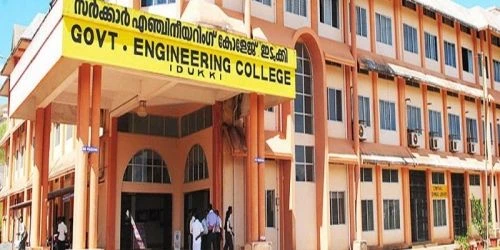
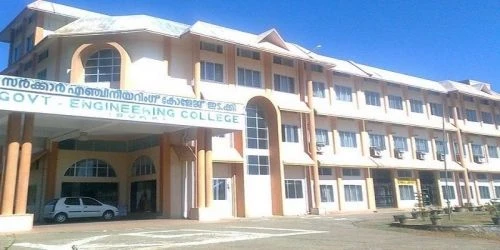
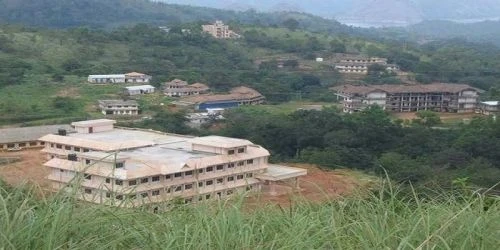
The 25-acre campus is universally praised for its natural beauty and calm, studious atmosphere. Infrastructure is generally good, with separate blocks for different departments, well-equipped labs (especially for CS, IT, and electronics), and a library with over 12,000 books. The canteen is noted for providing tasty, affordable meals.
But the remote location defines daily life. The nearest major town is a 6-8 km journey. The medical facility is reportedly hard to access, with the nearest health center 5 km away. Transportation depends on buses, and availability can be low. Wi-Fi exists on campus, but students report it’s limited—maybe 2 Mbps and for personal use, with some claiming it’s not consistently available.
Hostel opinions are mixed. Rooms in both boys' and girls' hostels are described as well-furnished and spacious. However, the mess food and basic facilities, particularly in the girls' hostel, are frequently criticized as poor or "much worse." Some reviews starkly note "no certainty of food" in the boys' hostel. Social life is quiet. While clubs (NSS, English Club, Technical Association) are active and students organize small events, there have been no major fests since COVID, which is a point of contention for many.
Synthesizing the sentiment from review platforms and forums paints a balanced, practical picture.
The Good: Students love the peaceful, green environment—it’s a genuine escape ideal for focusing on studies. The faculty gets high marks for being knowledgeable, approachable, and supportive. The low fee is the biggest practical advantage. The internal exam system is seen as good preparation for the tough KTU finals. For a student from a modest background, it’s a no-debt path to an engineering degree.
The Not-So-Good: The remoteness is the root of most complaints. It hurts placements, limits access to amenities, and can feel isolating. Placement anxiety is real, with many feeling the college’s location puts them at a disadvantage. Hostel mess quality is a persistent grievance. Some find the administration section to be harsh or unhelpful. The post-COVID lack of cultural fests has dampened the campus vibe.
Their advice to prospective students is consistent: come here if you are self-motivated, don’t mind a quiet life, and are ready to build your career profile independently. Don’t come expecting a typical, vibrant college town experience or guaranteed high-paying on-campus placements.
GECI is a very specific kind of value proposition. It’s absolutely worth it for a certain student: one who is highly budget-conscious, finds peace and quiet conducive to learning, and possesses the self-drive to compensate for the college’s geographical limitations. For them, the ultra-low fees and decent academic foundation are a fantastic deal. You get a recognized B.Tech degree without financial burden, provided you are willing to hustle for your own internships and job opportunities, often off-campus.
However, it’s probably not the best fit for students who thrive on constant campus activity, expect robust corporate connectivity, or want the safety net of strong on-campus placement drives. The remote location is a significant lifestyle choice. If you’re looking at core engineering branches (Mechanical, EEE), be especially cautious, as placement support in those sectors is minimal. Ultimately, GECI is a classic government engineering college—it gives you the tools and the ticket, but the journey to a career is largely up to you.


In this preview: 5 photos · 0 videos
Admission to the B.Tech programs is solely through the KEAM (Kerala Engineering Architecture Medical Entrance Exam). For the M.Tech programs, a valid GATE score is mandatory. Selection is based on merit in these exams followed by state-level counseling.
As per the official NIRF 2025 report, the median placement package for B.Tech graduates in 2024 was INR 4.5 LPA. For M.Tech graduates, it was INR 7 LPA. Top recruiting companies are primarily from the IT/software sector and include Infosys, TCS, HCL, Wipro, UST Global, and ZF Friedrichshafen.
The annual tuition fee for B.Tech (General Category) is approximately INR 6,300 (2022-23 data), with full tuition exemption for SC/ST/OEC students. The total cost for a 4-year B.Tech degree can range from ~INR 32,250 to INR 1.37 lakhs. Hostel and mess fees are separate and were estimated around INR 90,100 annually for a single room in 2025.
Students consistently praise the beautiful, serene campus and good academic infrastructure like labs and the library. Common criticisms focus on the remote location, which limits access to shops and healthcare, negatively impacts placement opportunities, and results in reported issues with hostel mess food and basic facilities. The absence of major fests post-COVID is also noted.
GEC Idukki offers numerous state and central government scholarships, including the Central Sector Scholarship, State Merit Scholarship, Suvarna Jubilee Merit Scholarship, and Merit-cum-Means Scholarship. Category-specific aids like the Muslim Girls Scholarship, Fisheries Grant, and the Meana Scholarship (USD 150/year) are also available. SC/ST/OEC category students have their tuition fees fully waived.
Share what future students should know about GECI.
Student voices are not rewritten by colleges. We remove spam and abuse.
Wider admission question? Community PulseWhat should future students know?
Tell us which course you're considering. We'll help you work out the next step.
Get instant Partner access after mobile verification. Your public edits are reviewed before they go live.
Claim this college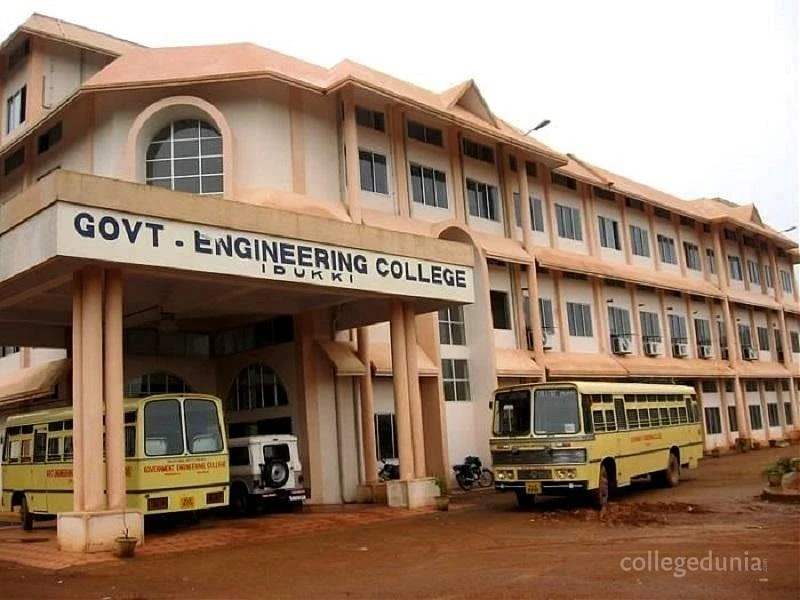

 Auditorium
 Cafeteria
 Computer Labs
 Gym
Gym Hostel
 Medical
 Science Labs
 Sports Complex
 Study Library