Loading Admission Guardian content
Loading Admission Guardian content
Provisional score based on available data. It may change as more information is verified.
Selected ranking categories, with the recorded year beside each result. Open all records for the complete history.
2 published records · Lower numeric ranks are stronger
IIRF
Medical
#782022
Find a program, read its fee details and explore the admission requirements.
Summary of the programs shown below. First-year fee. Check the note beside each amount for inclusions and exclusions.
| Course | Stream | Fees |
|---|---|---|
| M.B.B.S. | Medical | 25000 |
| Doctorate of Medicine [MD] | Medical | 201000 |
| Master of Surgery [MS] | Medical | 201000 |
| Master of Surgery [MS] (Ophthalmology) | Medical | 201000 |
| Diploma in Gynaecology and Obstetrics [DGO] | Paramedical |
All accepted exams
Eligibility: 10+2 with 50% + NEET
Specializations
All accepted exams
Eligibility: Post Graduation
Specializations
All accepted exams
Eligibility: Graduation
Specializations
All accepted exams
Eligibility: Graduation
Specializations
3 exams with cutoff data available
If you want to be a clinician, come to GMC Surat. If you want a luxury resort, go to a private college. That blunt student quote captures the essence of Government Medical College, Surat. Established in 1964, this public institution is a powerhouse of clinical training, anchored by the massive New Civil Hospital. It’s a place where the academic grind is real, the infrastructure is a mix of the crumbling and the cutting-edge, and the patient load is, as students say, insane. For a rank holder in the NEET-UG 14,000-15,000 range (Gujarat state quota), it represents one of the best value-for-money medical educations in the country, with annual tuition locked at a mere ₹25,000. But that value comes with its own set of trade-offs.
The academic engine here is the MBBS program, which saw its intake jump from 150 to 250 seats. That's a lot of students, but the faculty-to-student ratio holds at about 1:20 for undergraduates. The teaching is traditional—annual exams under VNSGU where you need 50% in theory and practicals to pass. There's no CGPA cushion. You'll face three internal exams a year, and they have a reputation for being tough. It’s a system that demands self-study.
Beyond MBBS, the college offers B.Sc. Nursing and paramedical diplomas. For postgraduates, there are around 180 MD/MS seats across a wide spectrum, from clinical heavyweights like General Surgery and Medicine to pre-clinical subjects. The faculty roster includes experienced names like Dr. J.K. Kosambiya in Community Medicine. The 1:6 ratio in some clinical departments suggests more focused guidance at the PG level, though workload narratives vary wildly by specialty.
Let's be clear: medical colleges don't have placements in the engineering sense. Your career path is internships, residencies, and government service. The numbers from the NIRF 2024 report tell part of the story: a median package of ₹7.92 LPA for postgraduates. For UGs, NIRF reports ₹75,000, which likely reflects the mandatory internship phase.
The real financial picture is in the stipends. As a 2024-25 intern, you'll earn ₹18,200 to ₹20,500 per month from the Gujarat government. Crack NEET-PG and become a Junior Resident here, and that jumps to over ₹84,000. Senior Residents pull in ₹90,000+. That's solid government pay.
But there's a catch—the bond. Every MBBS graduate must complete a one-year rural service stint, which pays about ₹80,000/month. Opting out means a break fee rumored to be around ₹40 lakhs. So, placement is 100% guaranteed in the form of that internship and bond service. After that, alumni typically enter government service (the top recruiter), join private hospital chains like Apollo or Zydus, or build their own practices. The clinical exposure here is the real currency for those next steps.
This is where government colleges shine. Your annual tuition for the MBBS program is just ₹25,000. Add the hostel fee of ₹1,200 per year, and the base cost is almost laughably low. The variable is the mess fee, which runs ₹3,000 to ₹4,500 per month. Over 5.5 years, the total cost, excluding mess, is roughly ₹1.5 to ₹2 lakhs. That's transformative accessibility.
Financial aid is available for eligible students. The Mukhyamantri Yuva Swavalamban Yojana (MYSY) can cover up to 50% of fees for Gujarat domicile students. There are also Digital Gujarat scholarships for SC/ST/OBC categories. Since there's no management or NRI quota, every seat is purely merit-based, which keeps the ecosystem focused.
Your ticket in is NEET. For MBBS, it's NEET-UG; for postgrad, NEET-PG. The selection is via centralized counseling: the Medical Counseling Committee (MCC) handles the 15% All India Quota seats, and the ACPUGMEC handles the 85% Gujarat state quota seats.
The cutoffs are competitive but reflect the college's strong regional reputation. For the 2024-25 cycle, the closing rank for the General category in the All India Quota hovered between 7,200 and 9,900. For the Gujarat state quota, the rank was more accessible, around 14,000 to 15,000. If you have a rank in that state quota band, GMC Surat becomes a very compelling option compared to costlier private alternatives.
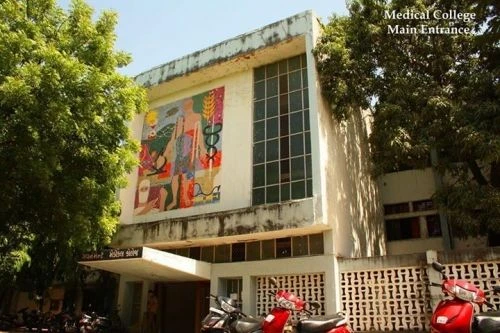
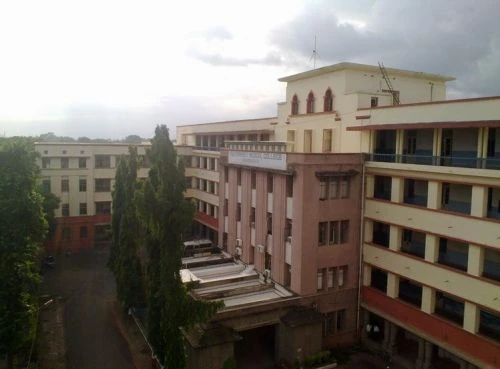
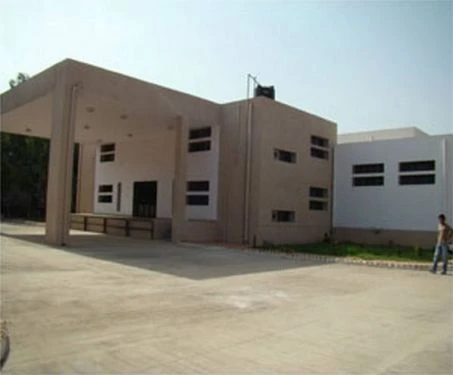
The 130-acre campus is often called a "mini jungle" in the monsoons—lush and green. The infrastructure, however, is a tale of two cities. On one hand, you have the new Charak and Sushruta lecture halls, which are modern and air-conditioned. On the other, students consistently gripe about the "Old College Building" with its leaky ceilings and fans that gave up years ago.
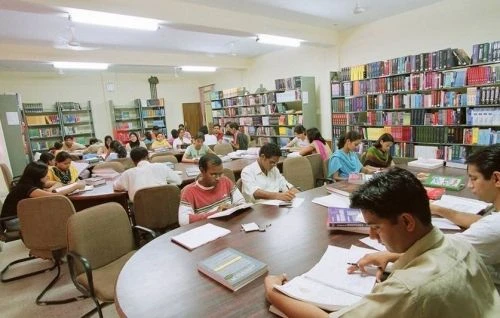
The hostel situation is similar. The old blocks for first-years get poor marks for maintenance. But there's a big change coming: new high-rise hostel buildings are nearing completion and should be ready by late 2024 or 2026. The library is a major plus, air-conditioned and open 24/7. Wi-Fi is decent in academic blocks but spotty in hostels.
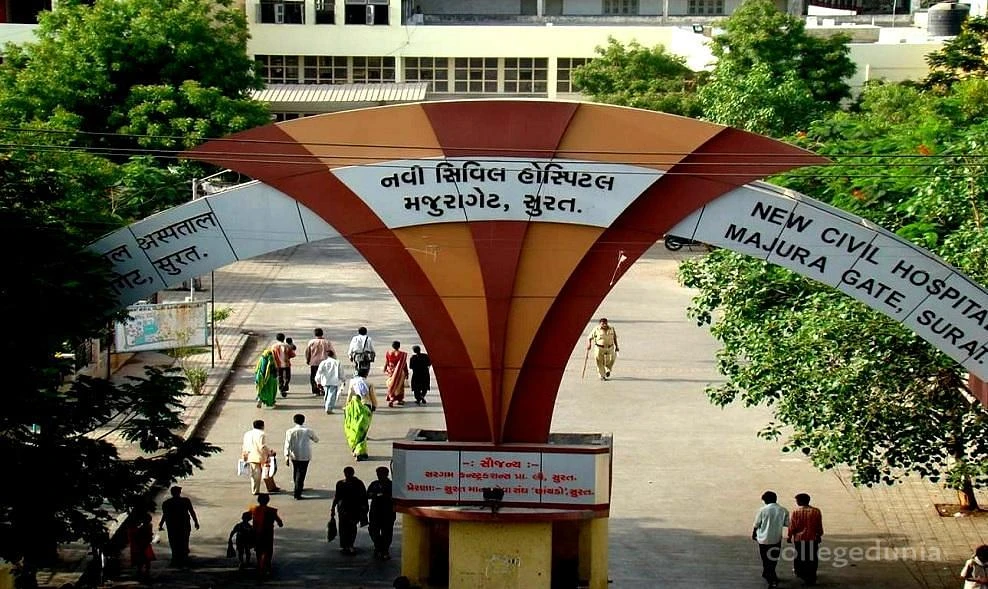
Location is a huge advantage. Being in Majura Gate puts you in the heart of Surat, with easy access to food, markets, and transport. The student-run fest, Eurasia, and sports on the Central Ground provide the social outlet. Just don't expect gourmet dining—the mess food is rated as average at best, driving students to the famous Surat street food "laaris."
Synthesizing the chatter from Reddit, Quora, and review sites, a clear consensus emerges. The overwhelming positive is the clinical exposure. The attached New Civil Hospital is a behemoth. "You see cases here that you only read about in textbooks," is a common refrain. For building clinical acumen, it's considered top-notch.
The negatives are equally consistent. Infrastructure decay in older sections is a frequent complaint. Administrative red tape is described as typical of a government setup—slow and frustrating. Some postgraduate departments, notably General Surgery and OBGYN, are flagged on platforms like Careers360 for a toxic culture of extreme hours. It's not universal, but it's a noted risk.
The senior-junior culture is generally reported as helpful, not predatory, with strict anti-ragging rules. But the vibe is definitely not coddling. As one review put it: "The first-year hostels will test your patience."
For the right student, absolutely. GMC Surat is a classic workhorse government medical college. Its value proposition is unbeatable: world-class clinical training at a virtually subsidized cost. If your NEET rank lands you in the state quota range (around 15,000) and your goal is to become a skilled, resilient clinician without a mountain of debt, this is one of the best choices in Western India. You'll graduate with experience money can't buy at most private colleges.
But you have to want that trade-off. You must be prepared to navigate bureaucratic inertia, accept uneven infrastructure, and withstand an intense academic and workload pressure cooker, especially at the PG level in certain specialties. If a pristine, comfortable, and digitally seamless campus experience is a priority, you might leave disappointed. GMC Surat is for the pragmatist, the grind-setter, the future doctor who believes the best training often happens far from the comfort zone.
In this preview: 5 photos · 0 videos
BJ Medical College, Ahmedabad is generally ranked as the top medical college in Gujarat. However, Government Medical College, Surat is considered a very close second, particularly noted for its strong clinical exposure in the South Gujarat region.
MBBS graduates from Government Medical College, Surat are required to complete a mandatory one-year rural service bond. As per the current policy, breaking this bond requires a substantial payment of ₹40 Lakhs.
The older hostel buildings at Government Medical College, Surat are considered average to poor. However, the new multi-story hostels, which became available in the 2024-25 period, are significantly better and offer modern amenities for students.
The current stipend for interns at Government Medical College, Surat is ₹18,200 per month. It is important to note that there are ongoing student protests advocating for an increase to ₹25,000 per month.
Government Medical College, Surat enforces strict anti-ragging policies. Students report that the senior-junior culture is generally helpful rather than predatory, though mild "introductions" are still a common practice.
Share what future students should know about Government Medical College.
Student voices are not rewritten by colleges. We remove spam and abuse.
Wider admission question? Community PulseWhat should future students know?
Tell us which course you're considering. We'll help you work out the next step.
Get instant Partner access after mobile verification. Your public edits are reviewed before they go live.
Claim this college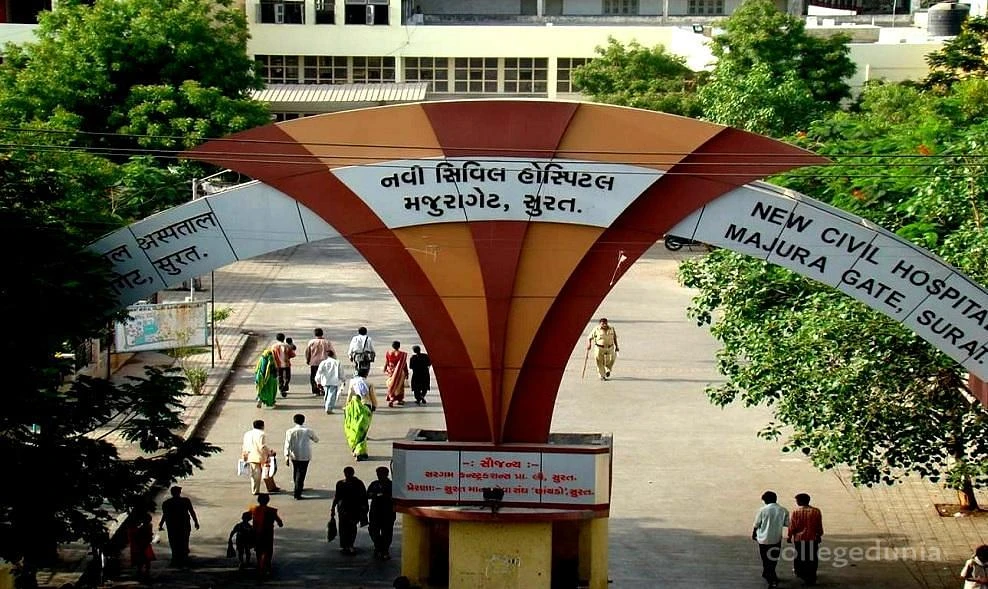

 Auditorium
 Cafeteria
 Computer Labs
 Gym
Gym Hostel
 Medical
 Science Labs
 Sports Complex
 Study Library