Loading Admission Guardian content
Loading Admission Guardian content
Provisional score based on available data. It may change as more information is verified.
Find a program, read its fee details and explore the admission requirements.
Summary of the programs shown below. Programs record different fee periods. Compare the individual amounts and their notes below.
| Course | Stream | Fees |
|---|---|---|
| Bachelor in Medical Laboratory Technology [BMLT] | Medical | 38800 |
| Bachelor of Science [B.Sc] | Medical | 38800 |
| Master of Science [M.Sc] | Medical | 125000 |
| M.B.B.S. | Medical | 174000 |
| Doctorate of Medicine [MD] | Medical | 330000 |
Eligibility: 10+2
Specializations
Eligibility: 10+2
Specializations
Eligibility: Graduation
All accepted exams
Eligibility: 10+2 with 50% + NEET
Specializations
All accepted exams
Eligibility: Post Graduation
3 exams with cutoff data available - showing recent entries
Government Medical College Amritsar is a study in contrasts. It's one of the oldest medical institutions in North India, founded in 1864, and its alumni list reads like a who's who of Indian medicine. Yet, its current reality is defined by a massive, often chaotic public hospital, surprisingly high fees for a state-run college, and a brand-new 20-storey hostel that feels like a luxury apartment block. If you want to see medicine practiced at a scale few private colleges can match, this is the place. But you'll pay for the privilege, and you'll work in conditions that can test your resolve. The clinical exposure here is, by all accounts, unparalleled in Punjab. You don't just read about rare cases in textbooks; you'll likely see them in the crowded corridors of the attached Guru Nanak Dev Hospital. That's the core trade-off at GMC Amritsar: immense hands-on learning within a system that feels both historic and, at times, overwhelmed.
The academic engine here is the MBBS program, with an annual intake of 250 students. That's a large batch, and it feeds directly into the sprawling ecosystem of the teaching hospital. The curriculum follows the BFUHS schedule, with professional exams held annually. It's a traditional, exam-focused system. Postgraduate studies are a major strength. The college offers MD/MS programs across 115-125 seats in specializations from General Medicine and Surgery to Radiodiagnosis and Psychiatry. The success rate of alumni in cracking NEET-PG for seats at top institutes like AIIMS and PGI Chandigarh is a point of pride and a key metric for the college's academic standing.
Beyond the core medical degrees, GMC Amritsar runs B.Sc programs in Nursing and Paramedical sciences (like MLT and Radiography), typically admitting 50-60 students. There's also a research component, anchored by a Multidisciplinary Research Unit (MRU) funded by the central government's Department of Health Research. Faculty strength is around 200, including notable names like the Director Principal, Dr. Rajiv Devgan. The academic culture is what you'd expect from a large, old government institution: self-directed learning is crucial, and the real education often happens outside the lecture hall, in the wards.
Medical colleges don't have "placements" in the engineering sense. Your career path is built on the foundation of your internship and post-graduate entrance exams. At GMC Amritsar, the 1-year compulsory internship comes with a stipend of ₹15,000 per month, a rate set by the Punjab government. It's a major point of contention. Students across forums call it "insulting" for the 24-hour duty shifts, and there are ongoing protests demanding an increase to ₹25,000-30,000. That's the reality check on the official number.
The college's placement success is measured differently. It's in the high NEET-PG selection rates for its alumni, who regularly secure seats in premier national institutes. It's also in the direct pathway to government service. Graduates are eligible for the Punjab Civil Medical Services (PCMS). Top recruiters for those entering the workforce after internship or PG include the Punjab Health Department, the Army Medical Corps, and major private hospital chains like Fortis and Max Healthcare. The college's century-old reputation opens doors, but the onus is on the student to walk through them by performing in national-level exams.
Here's the headline: GMC Amritsar is one of the more expensive government medical colleges in India, a result of Punjab's state fee policy. For the 2024-2024 session, annual tuition for the MBBS program under the government quota ranges from ₹1,75,000 to ₹2,20,000. Over 5.5 years, the total fee outlay alone can reach ₹12 lakhs. Add in hostel and living costs, and the total cost for a general category student is estimated at ₹15-18 lakhs. You can view the official fee structure on the college website.
Hostel fees for the new block are ₹30,000-35,000 per annum, with mess charges adding another ₹3,000-4,500 monthly. There's a significant NRI quota (15% of seats) where the full MBBS course fee is around $1,10,000. Financial aid primarily comes in the form of standard government scholarships for eligible students (SC/ST/OBC). There's no extensive college-specific scholarship program to offset the high tuition, which is a consistent gripe among students and parents comparing costs to government colleges in neighboring states.
Admission is strictly through national and state entrance exams. For MBBS, it's NEET-UG. For MD/MS, it's NEET-PG. Paramedical B.Sc courses require the Punjab Para Medical Entrance Test (PPMET). The selection is via centralized counseling: 15% of MBBS seats go through the Medical Counseling Committee (MCC) for the All India Quota, and the remaining 85% are filled by BFUHS for the Punjab State Quota.
Cutoffs are competitive but reflect the fee reality. In 2024, for Round 1, the All India Quota (General) cutoff rank was between 11,000 and 13,000. The State Quota (General) cutoff was wider, between 32,000 and 45,000. These ranks are notably higher (meaning less competitive) than some other top government colleges with lower fees, which tells its own story about student preference when cost is factored in. The process is bureaucratic but transparent, following the standard MCC and BFUHS calendars.
The infrastructure is a tale of two cities. The old hostels, often described in past reviews as dilapidated, are being phased out. Replacing them is the game-changer: a newly inaugurated 20-storey hostel complex. Students on social media compare it to RML Hospital in Delhi or a luxury apartment, with attached bathrooms, centralized AC/heating, and modern furniture. It has dedicated, secure wings for girls and represents a massive upgrade in living standards.
The academic campus is centered around the Guru Nanak Dev Hospital (GNDH), a 1000+ bed behemoth. It includes specialized units like the Bebe Nanki Mother & Child Care Centre and a trauma centre. The library holds over 40,000 books with e-journal access. For recreation, the CISCO Sports Complex offers a swimming pool, indoor badminton, a gym, and large outdoor fields. Wi-Fi is available in the library and new hostels. Life in Amritsar is a huge plus—the city is vibrant, rich with culture and famous food, offering a social life far beyond the college gates. The annual fest "Resonance" is a major event.
Sifting through forums like Quora and Reddit, a clear consensus emerges. The overwhelming positive is clinical exposure. Students repeatedly state they see a volume and variety of cases that private colleges can't match, making them confident clinicians by internship. The new hostel is universally praised. The college's legacy and brand value in North India are also significant assets.
But the negatives are consistent and vocal. The high fee is the top complaint, with many calling it unjust for a government institution. Hospital hygiene and overcrowding in GNDH is a frequent issue, with students noting the challenging working conditions. Administrative red tape is frustrating, with slow grievance redressal. And the internship stipend of ₹15,000 is a flashpoint, considered far too low for the work demanded. Ragging, however, is reported to be effectively non-existent, with only friendly interactions between batches.
GMC Amritsar is best for the student who prioritizes raw, extensive clinical experience above all else and is willing to navigate a large, sometimes chaotic system. If your primary goal is to become a clinically adept doctor and you learn best by doing, the patient load here is a tremendous asset. The new hostel facilities have solved a major historical drawback. However, you must be comfortable with the high cost for a government college and the relatively lower internship stipend. The administrative hurdles and hospital conditions require patience.
Who should look elsewhere? If getting the lowest possible cost for a government MBBS seat is your top priority, states like Rajasthan or Delhi offer better value. If you prefer a more disciplined, orderly academic environment with newer infrastructure, other top government colleges might be a better fit. But if you want a medical education steeped in hands-on practice within a historic institution in a fantastic city, and the fee isn't a deal-breaker, GMC Amritsar remains a formidable choice in North India. It's a college that teaches you medicine in the real world, for better and for worse.
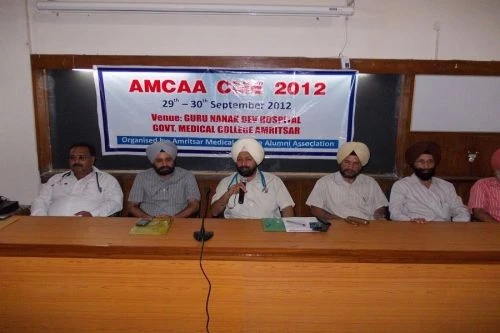
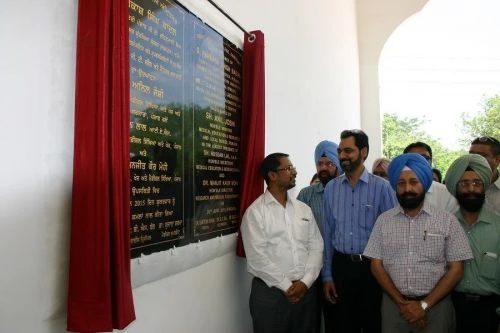
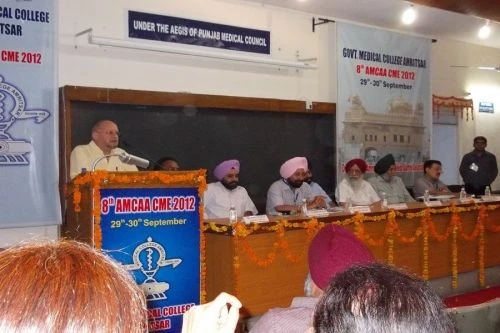
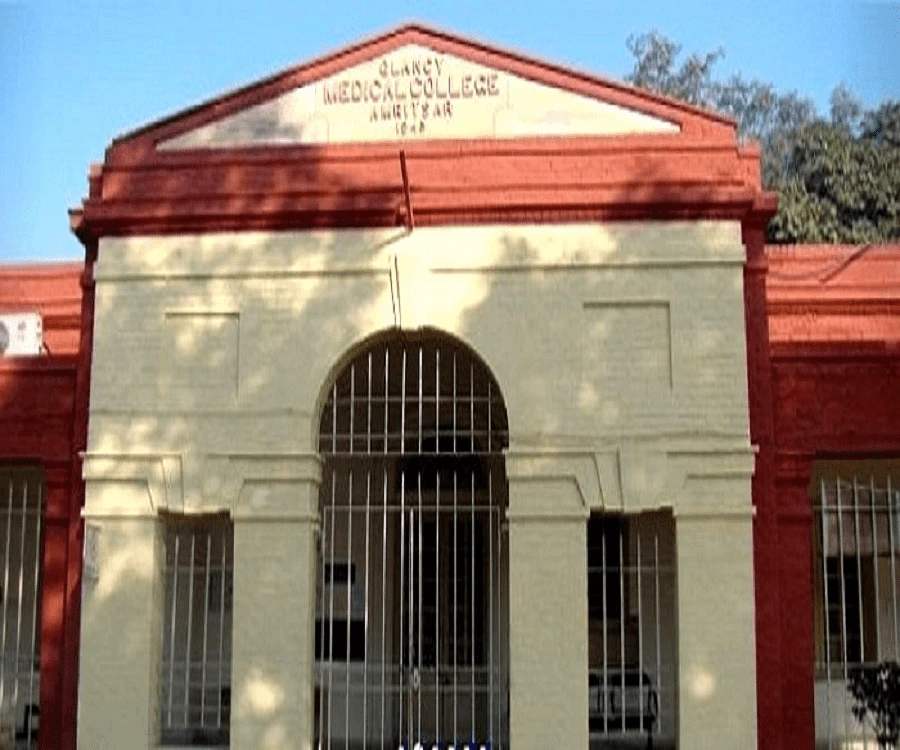
In this preview: 4 photos · 0 videos
The choice depends on priorities. GMC Patiala is often noted for its slightly better academic discipline, while GMC Amritsar is generally preferred for its superior clinical exposure and the advantages of city life.
There is a compulsory rural service bond for MBBS graduates in Punjab, typically requiring 2 years of service. If this service is not completed, a financial penalty of approximately ₹15–20 Lakhs is levied.
The college provides a new 20-storey hostel with dedicated wings for female students. These facilities are noted for high security and modern amenities.
For a General category student, the estimated total cost, including tuition fees, hostel, and mess charges over the 5.5-year course, is approximately ₹15–18 Lakhs.
According to recent student reports, ragging is strictly prohibited and has effectively ceased. The interaction between seniors and juniors is described as limited to "healthy interaction."
Share what future students should know about GMC.
Student voices are not rewritten by colleges. We remove spam and abuse.
Wider admission question? Community PulseWhat should future students know?
Tell us which course you're considering. We'll help you work out the next step.
Get instant Partner access after mobile verification. Your public edits are reviewed before they go live.
Claim this college
 Auditorium
 Cafeteria
 Gym
Gym Hostel
 Medical
 Sports Complex
 Study Library