Loading Admission Guardian content
Loading Admission Guardian content

Provisional score based on available data. It may change as more information is verified.
Find a program, read its fee details and explore the admission requirements.
Summary of the programs shown below. First-year fee. Check the note beside each amount for inclusions and exclusions.
| Course | Stream | Fees |
|---|---|---|
| Bachelor of Engineering [BE] | Engineering | 10610 |
| Master of Technology [M.Tech] | Engineering | 60000 |
| Ph.D | Engineering |
Specializations
All accepted exams
Eligibility: 10+2 with 45% + KCET
Specializations
All accepted exams
Eligibility: Pass in Graduation + GATE
Specializations
Eligibility: Post Graduation
2 exams with cutoff data available
If you're looking for a no-frills, government-run engineering education in the heart of Bangalore for a price that feels like a relic from another era, the Government Sri Krishnarajendra Silver Jubilee Technological Institute (GSKSJTI) is a name you'll hear. Established in 1938, it's one of the city's oldest technical institutes, and its primary draw is brutally simple: you can get a B.E. degree for a total tuition cost that often stays under ₹1.5 lakhs. That's the promise. The reality, as you'll hear from students, is a mix of solid fundamentals, a central location, and a placement scene that requires you to manage your own expectations. It's not a glamorous campus, but for many, it's a pragmatic launchpad.
GSKSJTI offers a standard suite of VTU-affiliated B.E. programs—Civil, Computer Science, Electronics & Communication, and Mechanical—each with an intake of 60 seats. Where it stands apart is in its niche B.Tech offerings: Textile Technology and the even more specialized Silk Technology, with just 20 seats. This isn't an accident. The institute was the first in South India to train personnel for the organized textile industry, and it maintains that legacy. It's a recognized Ph.D. centre for Textile Technology and offers a dedicated M.Tech in the field, which is a rarity.
The academic culture is what you'd expect from a government college with an 80% pass percentage. Class timings run from 9 AM to 4:30 PM, including labs. Faculty quality gets mixed reviews. Many students praise teachers for being knowledgeable and clearing doubts effectively. But there's a recurring note about reliance on guest faculty, which can lead to inconsistency. The institute was selected under the MHRD's TEQIP-II program, which brought in a ₹2 crore grant for quality improvement. They've also signed a notable MoU with the Indian Institute of Handloom Technology (IIHT), Varanasi to boost research and skill development in textiles, a solid move for that niche.
This is where the brochure and the student chatter diverge, and it's crucial to listen to both. The official placement report for 2023-24 cites a highest package of ₹10.5 LPA, an average of ₹7.2 LPA, and a median of ₹6.8 LPA. Top recruiters for mainstream IT/CS roles include names like Infosys, Wipro, Microsoft, and Accenture. For Textile Technology, recruiters like Gokaldas Exports, Shahi Exports, and Raymonds come in, with the highest package for that branch reported at ₹8 LPA.
Now, the student reality check. On platforms like CollegeDunia and Shiksha, you'll consistently see more tempered numbers. Alumni often mention an average package closer to ₹3-4 LPA, with the highest they've seen being around ₹8 LPA. The placement percentage isn't a guaranteed 90%; it fluctuates between 50% to 80%, heavily dependent on branch and individual academic performance. Reviews with phrases like "placement is not so good" or even "no placements" aren't uncommon. The truth likely sits in the middle. The college does bring companies, but the process is competitive, and many students end up securing jobs through off-campus drives or pool campus placements with other VTU colleges. The internship scene seems stronger, with a claimed 90% of students landing them at companies like TCS and Wipro.
This is the institute's undisputed strongest suit. For a B.E./B.Tech under the government quota, annual tuition is between ₹17,000 and ₹25,000. Over four years, that's just ₹1 to ₹1.35 lakhs in total tuition fees. Hostel and mess fees add another ₹20,000-₹25,000 per year. Throw in examination, library, and development fees, and a rough total cost estimate for a four-year degree, including hostel, lands between ₹2.1 and ₹2.7 lakhs. In today's engineering education market, that's almost unbelievable.
The financial aid system is robust, as you'd hope from a government institution. It facilitates all major state and central scholarships: Post-Matric for SC/ST/OBC, Merit-Cum-Means, Minority scholarships via the Karnataka State Scholarship Portal (SSP), and Vidyasiri/MHRD scholarships that can cover tuition and hostel fees. For M.Tech students with a GATE score, the AICTE PG Scholarship of ₹12,400 per month is available. There are even program-specific scholarships like the Janafoundation Merit Scholarship for Textile/Silk Tech students. If fees are your primary constraint, GSKSJTI is a compelling option.
Admissions are centralized through state counseling. For B.E./B.Tech, the primary gateway is the Karnataka Common Entrance Test (KCET). Management quota seats exist at a higher fee (₹50,000-₹70,000 per year), and COMEDK scores might be accepted for those.
Cutoffs are where you see the college's positioning. For the 2024 KCET round, the rank range for the 1G (General Merit) category spanned from 14,283 to 210,893 across branches. More specific student reviews suggest ranks around 20,000-24,500 can get you into branches like Civil or Mechanical. The more sought-after CSE branch naturally requires a better rank. For M.Tech, admission is via the Karnataka PGCET or a valid GATE score. The 2024 PGCET cutoff for the General Merit category was around rank 4703. The selection is purely rank-based through the Karnataka Examination Authority (KEA) counseling.
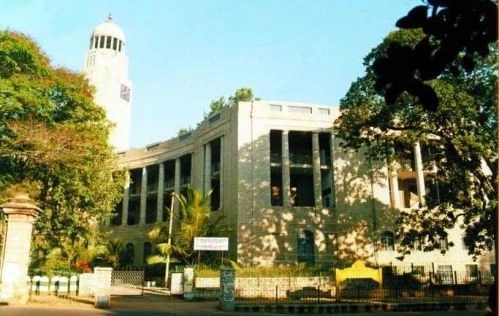
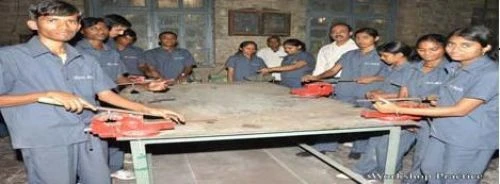
Don't picture a sprawling, residential university campus. GSKSJTI sits on a compact, multi-acre plot in the absolute centre of Bangalore. The infrastructure is functional. Labs and workshops are described as well-equipped for core practical work. The library has over 12,000 books and a digital section. There's a sports complex and field. Wi-Fi is reportedly available, though some students note spotty connectivity.
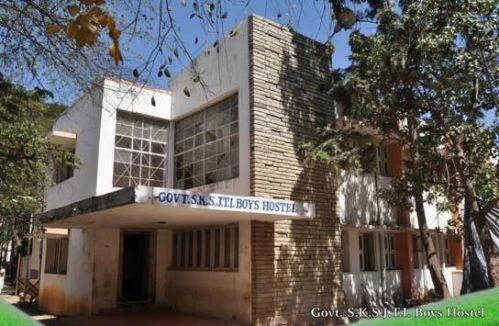
Hostel life is basic but affordable. The boys' hostel has 33 rooms, typically accommodating three students per room with basic furniture. Female students are housed in the adjacent Government Women's Polytechnic hostel. The consensus is that the hostel is "good"—not luxurious, but clean and adequate. The mess food gets positive reviews, with a special feast every Sunday. The social life, however, is quiet. Annual fests like "Impulse" happen, but the overall extracurricular calendar isn't packed. The vibe is more academic and utilitarian. The location, though, is a huge plus for internships and city access.
Synthesizing the student sentiment reveals a clear cost-benefit analysis.
The Good: The affordability is the star. "Finished engineering within 1 lakh" is a common, proud refrain. Teaching quality for core subjects is generally praised. The hostel is considered good value. The scholarship support is effective for those who qualify. And everyone appreciates the central Bangalore location.
The Not-So-Good: Placement uncertainty is the biggest gripe. There's a palpable gap between official stats and the on-ground experience for many. Infrastructure, while adequate, shows its age in places—think occasional power cuts. The reliance on guest faculty is a noted drawback. Campus life is described as minimal, with a limited events calendar. It's a place for studying, not for a vibrant "college experience."
GSKSJTI is a specific solution for a specific problem. It's worth serious consideration if your top priority is obtaining a recognized VTU B.E. degree at the absolute lowest possible cost, and you're willing to be proactive about your career. It's ideal for students from economically constrained backgrounds who have secured a decent KCET rank and are disciplined enough to leverage the decent teaching and Bangalore's location for internships and off-campus opportunities.
Look elsewhere if you're seeking a high-placement, brand-name college with a vibrant campus life and modern amenities. The placement cell provides a baseline, but you cannot rely on it alone. Your success here will depend heavily on your own drive. For the right student—one who sees college as a functional step rather than a holistic experience—GSKSJTI delivers exceptional value for money. It's a working-class hero in Bangalore's engineering scene, offering a legitimate degree without the lifelong debt.


In this preview: 5 photos · 0 videos
The total estimated cost for a 4-year B.E./B.Tech at GSKSJTI on the government quota is approximately ₹2.1 to ₹2.7 lakhs. This includes tuition (₹1-1.35 lakhs for 4 years), hostel and mess (₹80,000-₹1 lakh for 4 years), and other mandatory fees like examination and library charges. It is one of the most affordable engineering degree options in Bangalore.
For B.E./B.Tech programs, admission is primarily through the Karnataka Common Entrance Test (KCET). For M.Tech programs, you need a valid rank in the Karnataka Post Graduate Common Entrance Test (PGCET) or a qualifying GATE score. COMEDK scores may also be considered for management quota seats in the B.E. programs.
The official placement report for 2023-24 shows a highest package of ₹10.5 LPA and an average of ₹7.2 LPA, with recruiters like Infosys and Wipro. However, student reviews frequently cite more modest outcomes, with average packages around ₹3-4 LPA and placement rates varying between 50-80% by branch. Students are advised to be proactive in seeking off-campus opportunities.
Yes, GSKSJTI provides hostel facilities. The boys' hostel has 33 rooms on campus, while female students are accommodated in the adjacent Government Women's Polytechnic hostel. Reviews describe the accommodation as basic but good and affordable, with positive feedback about the mess food, including a special Sunday feast.
As a government institute, GSKSJTI facilitates a wide range of scholarships. These include state government schemes like the Post-Matric Scholarship for SC/ST/OBC students and Vidyasiri, central MHRD scholarships, and the AICTE PG Scholarship for GATE-qualified M.Tech students. There are also program-specific merit scholarships for Textile and Silk Technology students.
Share what future students should know about Government Sri Krishnarajendra Silver Jubilee Technological Institute.
Student voices are not rewritten by colleges. We remove spam and abuse.
Wider admission question? Community PulseWhat should future students know?
Tell us which course you're considering. We'll help you work out the next step.
Get instant Partner access after mobile verification. Your public edits are reviewed before they go live.
Claim this college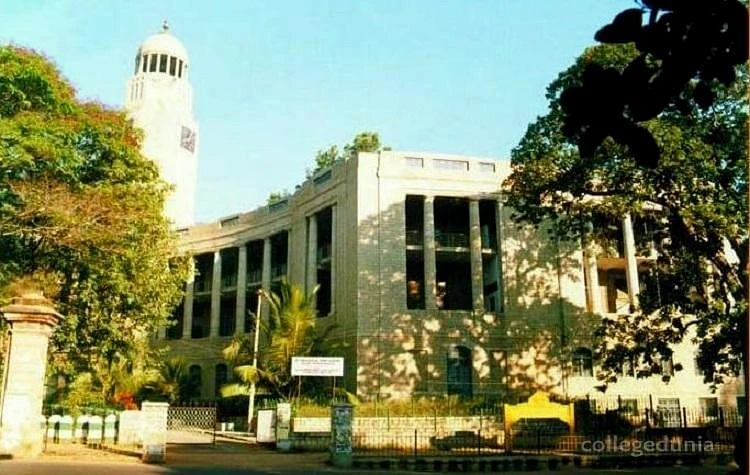

 Auditorium
 Cafeteria
 Computer Labs
 Gym
Gym Hostel
 Medical
 Science Labs
 Sports Complex
 Study Library