Loading Admission Guardian content
Loading Admission Guardian content
Provisional score based on available data. It may change as more information is verified.
Find a program, read its fee details and explore the admission requirements.
Summary of the programs shown below. First-year fee. Check the note beside each amount for inclusions and exclusions.
| Course | Stream | Fees |
|---|---|---|
| Bachelor of Engineering [BE] (Precision Manufacturing) | Engineering | 18090 |
| Bachelor of Technology [B.Tech] (Tool Engineering) | Engineering | 18090 |
| Master of Technology [M.Tech] (Tool Engineering) | Engineering | 24390 |
| Diploma in Engineering (Polytechnic) | Engineering | 47500 |
| Post Diploma in Tool Design | Engineering |
Specializations
All accepted exams
Eligibility: 10+2 with 45% + KCET
Specializations
All accepted exams
Eligibility: 10+2 with 45% + KCET
Specializations
All accepted exams
Eligibility: Pass in Graduation + GATE
Specializations
Specializations
1 exam with cutoff data available
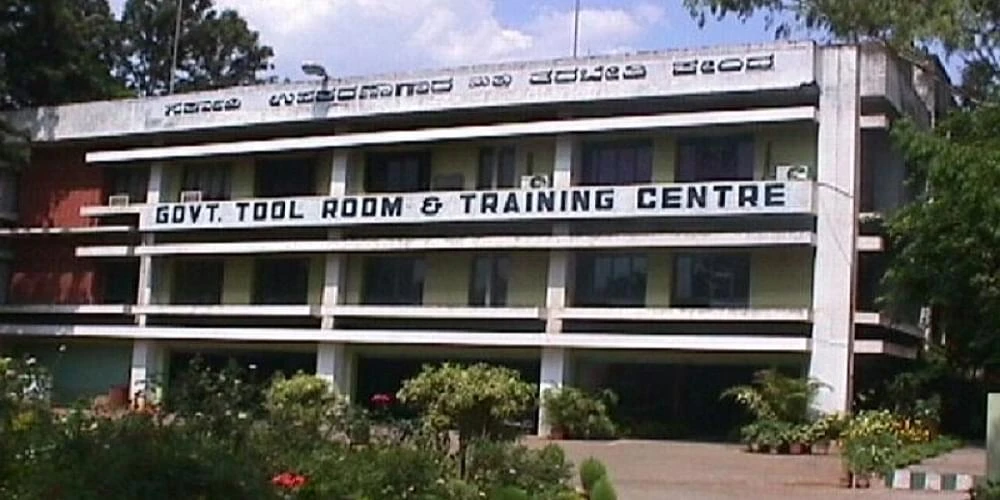
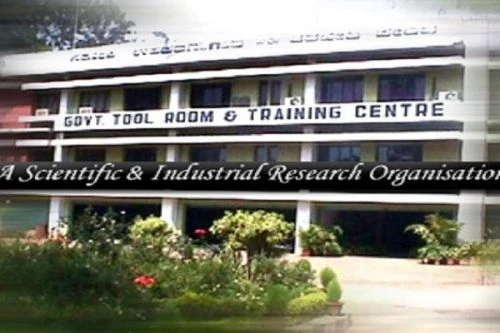
If you're looking for a traditional college experience with sprawling lawns and annual fests, you're in the wrong place. The Government Tool Room & Training Centre (GTTC) in Bangalore is something else entirely—a no-nonsense, government-run skill factory where the hum of CNC machines is the background music and job security is the primary graduation gift. Established in 1972 with Danish collaboration, this autonomous society under the Karnataka government has one clear mission: to produce industry-ready technicians and engineers for the precision manufacturing sector. Its unique "Dual System of Training," blending rigorous academics with mandatory in-plant experience, has forged a reputation so solid that recruiters from Toyota to ISRO regularly visit its modest 5-acre campus in Rajajinagar. Forget rankings; here, the metric that matters is employability, and on that front, GTTC delivers with almost ruthless efficiency.
GTTC’s academic structure is built for one purpose: direct industry alignment. The programs are specialized, not broad. At the undergraduate level, the two B.E. degrees—Tool Engineering and Precision Manufacturing—are affiliated with VTU. But the real heart of GTTC is its suite of four-year diploma programs, particularly the legendary Diploma in Tool & Die Making (DTDM). These aren't your typical three-year courses; they include three years of on-campus study followed by a mandatory, full-year in-plant training in a partner company. That's a full year of paid, hands-on experience before you even get your certificate. Other diplomas include Mechatronics, Precision Manufacturing, and a standard three-year program in Electronics & Communication.
For postgraduates, there's an M.Tech in Tool Engineering and a one-year Post Diploma in Tool Design. The faculty, around 45-50 strong, is a key differentiator. Many professors are former engineers from HMT, BEL, or HAL, bringing real-world shop-floor problems into the classroom. The academic culture is famously rigid—think 8:30 AM to 5:00 PM schedules and an 85%+ attendance mandate. It feels less like a college and more like a professional training center. Which, of course, is precisely the point. Centers of Excellence established with partners like Siemens and Dassault Systèmes provide access to industry-standard CAD/CAM and automation software, ensuring the curriculum isn't just theoretical.
This is where GTTC’s value proposition becomes crystal clear. The institution functions as a direct feeder to the manufacturing and automation industry. The placement claims aren't marketing fluff; they're a near-guarantee for certain programs. For the Tool & Die Making and Mechatronics diplomas, placement rates reliably hit 95% to 100%. The average package for 2023-24 hovered between ₹3.2 to ₹3.8 LPA, with the highest reported offer around ₹6 LPA from firms like Volvo or Emerson.
The recruiter list reads like a who's who of manufacturing: Toyota Kirloskar, Bosch, Volvo, L&T, and Fanuc. Even IT giants like Wipro, TCS, and Infosys recruit here, but typically for roles in industrial automation, CAD support, or CNC programming, not standard software jobs. A significant number of graduates also find pathways into PSUs like BEL and HAL, or secure apprenticeships with ISRO. The in-plant training year is the secret sauce. Companies often absorb the trainees they've groomed, turning that final year into a year-long interview. Stipends during this training range from ₹9,000 to ₹12,000 per month—money in the bank while you learn. The reality check? The packages are solid for a diploma holder entering the core sector, but they're not the ₹15-20 LPA IT salaries you hear about from top engineering colleges. You're trading potentially higher ceilings for a much higher floor of job security in a specialized field.
Affordability is GTTC’s superpower. For a government seat secured through the KCET (for B.E.) or 10th merit (for Diploma), the fees are almost shockingly low. A year of B.E. tuition is approximately ₹42,116. A diploma year costs about ₹19,250. Hostel fees are nominal at government rates, with mess charges adding roughly ₹2,500 to ₹3,500 per month. All told, the total cost for a four-year B.E. can be as low as ₹1.8 to ₹2.2 lakhs, excluding personal expenses. That's a fraction of the cost of any private engineering college.
Financial aid is readily available through state government channels. Scholarships for SC/ST/OBC and minority students are accessible via the State Scholarship Portal (SSP). Merit-cum-means scholarships are also offered. The financial model makes GTTC exceptionally accessible to students from middle-class and rural backgrounds, removing debt as a barrier to a technical education.
The path in depends on the program. For the flagship Diploma courses, admission is purely based on your 10th standard (SSLC) marks—no entrance exam. It's a straightforward merit-based system. For the B.E. programs, you must appear for the Karnataka Common Entrance Test (KCET). The closing ranks aren't astronomically high; for B.E. Tool Engineering, the KCET rank typically settles between 30,000 and 60,000 for the general merit category. For the M.Tech in Tool Engineering, you need a valid GATE score or a rank in the Karnataka PGCET. The 2024 PGCET round 1 closing rank for this program was around 4249.
Application windows generally open in May-July, aligned with the KEA/DTE calendars. There is a limited management quota for B.E. seats, but the fees jump significantly to around ₹1.5 to ₹2 lakhs per year. For most students, the goal is squarely on securing a government seat through the official entrance or merit pathways.
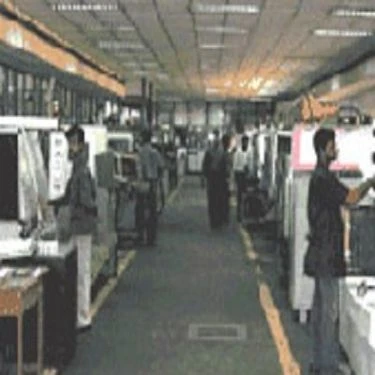
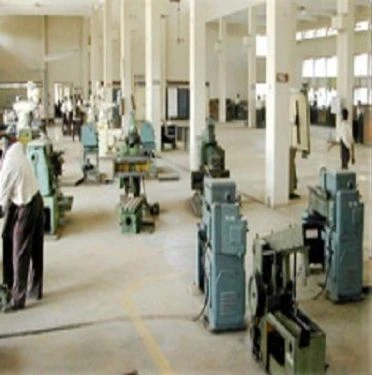
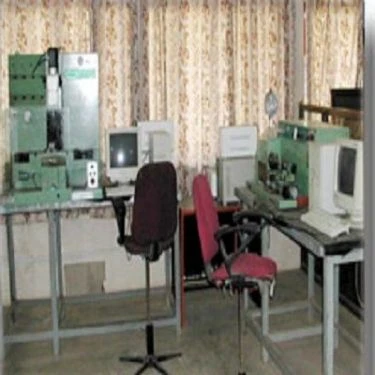
Let's be blunt: campus life at GTTC is not a selling point. The infrastructure is functional and industry-focused. The labs, however, are exceptional. They house advanced machinery like 5-axis CNC machining centers, Wire EDM, and Coordinate Measuring Machines (CMM)—equipment you'd typically see on a factory floor, not in a college. The library has a specialized collection of over 4,000 books and technical journals. Wi-Fi is available, but mainly in labs and the library.
The hostels (separate for boys and girls) are basic. Reviews rate them a 3.5 out of 5—clean and functional, but no frills. Sports facilities are limited to a small ground and some indoor game options like table tennis. There are no large-scale cultural festivals or a vibrant club scene. The atmosphere is disciplined and work-oriented. The campus is well-connected, though, with the Rajajinagar Metro Station about 3 km away and the city's major railway junction roughly 5 km away.
The consensus from forums like Quora, CollegeDunia, and Shiksha is remarkably consistent. The praise is focused and powerful. Alumni repeatedly call it a "job factory" and emphasize the unparalleled practical skills. "If you finish Tool & Die Making at GTTC, you will never be unemployed," is a common refrain. The low cost is a huge plus, making it a lifeline for many families.
But the criticisms are just as consistent. Students describe a "school-like rigidity" with strict timings and high attendance demands. The lack of a conventional "college life"—with fests, parties, and a relaxed social scene—is a frequent complaint. Some also mention slow administrative processes, a classic trait of government institutions. One telling Quora review sums it up: "Don't come here for the campus life or the fests. Come here if you want to work with your hands and get a job in a core company by age 20." That's the trade-off, laid bare.
GTTC is not for everyone. It's a highly specific, purpose-built institution. If you are a student passionate about manufacturing, mechanical systems, and working with cutting-edge machinery, and your primary goal is to secure a stable, skilled job as quickly and affordably as possible, then GTTC is arguably one of the best choices in India. Its diploma holders, in particular, enter the workforce with a year of experience and a skill set that industry desperately needs. The return on investment, given the minuscule fees and near-100% placement in core fields, is exceptional.
However, if you prioritize a holistic campus experience, extensive research opportunities, brand-name prestige, or a path into high-paying software roles, you will likely find GTTC stifling and limited. It’s a vocational powerhouse disguised as a college. Your decision hinges entirely on your career goals: choose GTTC for unmatched skill development and job security in core manufacturing, but look elsewhere if you want a traditional engineering college journey. For the right student, it's not just worth it—it's a career-launching shortcut.
In this preview: 5 photos · 0 videos
GTTC is a government-run institute known for being more affordable, while NTTF is a private institute often noted for slightly better soft skills training. Both institutions are equally respected within the industry for their Tool & Die Making programs, so the choice often depends on individual priorities like cost versus specific training style.
Yes, you can. Diploma holders from GTTC are eligible for Lateral Entry into engineering degree programs, typically joining directly in the second year or third semester. This is commonly done by qualifying through the DCET (Diploma Common Entrance Test) exam.
Yes. During the mandatory in-plant training in the 4th year of the diploma program, students receive a stipend. The stipend amount typically ranges from approximately ₹8,000 to ₹12,000 per month.
GTTC is a co-educational institution and is open to all genders. It has a dedicated girls' hostel, and there is increasing enrollment of women in branches like Mechatronics and Electronics.
Tool Engineering is a specialized subset of Mechanical Engineering. It focuses specifically on the design, development, and manufacture of precision tools like dies, molds, jigs, and fixtures, whereas Mechanical Engineering is a broader field covering a wide range of principles and machinery.
Share what future students should know about GTTC.
Student voices are not rewritten by colleges. We remove spam and abuse.
Wider admission question? Community PulseWhat should future students know?
Tell us which course you're considering. We'll help you work out the next step.
Get instant Partner access after mobile verification. Your public edits are reviewed before they go live.
Claim this college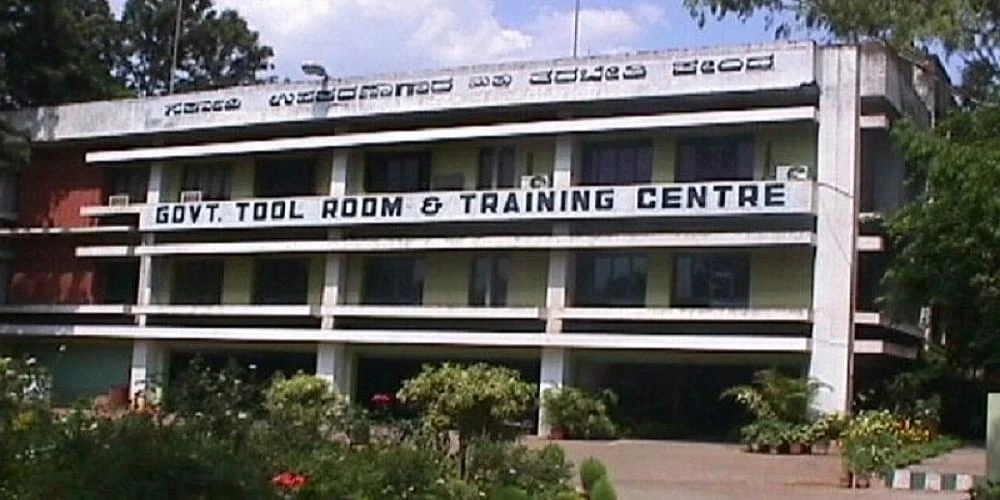
 Auditorium
 Cafeteria
 Computer Labs
 Medical
 Sports Complex
 Study Library