Loading Admission Guardian content
Loading Admission Guardian content
Provisional score based on available data. It may change as more information is verified.
Find a program, read its fee details and explore the admission requirements.
Summary of the programs shown below. First-year fee. Check the note beside each amount for inclusions and exclusions.
| Course | Stream | Fees |
|---|---|---|
| Bachelor of Science [B.Sc] | Paramedical | 100000 |
| Master of Business Administration [MBA] (Hospital Administration) | Management | |
| Bachelor of Physiotherapy [BPT] | Medical | |
| Master of Science [M.Sc] | Science |
Specializations
Eligibility: 10+2
Specializations
Eligibility: Graduation
Eligibility: 10+2
Specializations
Eligibility: Graduation
Grace College of Health and Management sits on a quiet, seven-acre campus in Padanthalumoodu, Kanyakumari, where the highway to Kerala cuts through green hills. Established in 1995, it’s a private institution that has built its reputation on one core strength: direct, hands-on clinical training at its own 300-bed Grace Hospital. For students aiming for a practical career in nursing or paramedical sciences, that’s a compelling draw. But it’s a specific kind of college, with a disciplined, almost regimented campus culture and placement outcomes that reflect the realities of the regional healthcare job market. It’s not a nationally ranked powerhouse, but in South Tamil Nadu, it’s a known name for those who want to get their hands dirty in a hospital setting from day one.
The academic portfolio is squarely focused on applied health sciences, with a single MBA program in Hospital Administration for management aspirants. The undergraduate B.Sc. Nursing and the suite of B.Sc. Allied Health Sciences specializations—like Optometry, Radiology, Medical Lab Technology, and Critical Care—are the main attractions. These are all 3-4 year programs that include a mandatory, year-long internship. The Bachelor of Physiotherapy (BPT) is a 4.5-year commitment. At the postgraduate level, you’ll find M.Sc. programs that follow logically from the UG specializations, plus Master of Physiotherapy (MPT) and a Master of Social Work (MSW).
The academic rhythm is set by the affiliating Tamil Nadu Dr. M.G.R. Medical University, which means standard university exams and grading. But the real differentiator here is the clinical training. Students don’t just visit a hospital; they train at the parent Grace Hospital & Nursing Home and through tie-ups with larger centers like Meenakshi Mission Hospital in Madurai. That’s a significant advantage. Faculty strength across the Grace Institutions group is over 190, and reviews often highlight supportive, experienced teachers in the core health departments. It’s a vocational, hands-on academic culture, not a theoretical research hub.
This is where you need to separate the brochure from the ground report. The college’s official placement claim sits between 90-100%. Talking to students and scanning alumni reviews on portals like Shiksha and CollegeDunia paints a more nuanced picture. For B.Sc. Nursing, placement seems robust, with maybe 85% or more landing roles, often through the college’s network. For Allied Health Sciences, the working number alumni cite is closer to 60-70% for on-campus offers.
The packages are modest and reflect entry-level healthcare salaries in the region. The highest package reported for 2024 was ₹3.6 LPA for nursing/paramedical roles. The average typically falls between ₹2.0 to ₹2.5 LPA. You might see a stray review mentioning a ₹12 LPA offer, but that’s almost certainly an outlier, possibly for a software role through a recruiter like TCS that hires for medical coding—it’s not the norm.
Recruiters are predominantly hospital chains. Apollo Hospitals, Meenakshi Mission, and of course, Grace Hospital itself are the top names. About 90% of jobs are in direct patient-care or diagnostic roles. TCS recruits a small percentage for back-office medical coding, and some graduates move into education. The 100% mandatory internship helps build a resume, but final placement isn’t guaranteed. If you’re aiming for a corporate healthcare management track, you’ll likely be hustling on your own.
For the 2024-25 academic year, tuition for core programs like B.Sc. Allied Health Sciences or Nursing runs about ₹1,00,000 to ₹1,20,000 annually. Over a 3-4 year degree, that’s a total tuition cost of ₹3-5 lakhs. Then you have to factor in living costs. Hostel and mess fees add a significant chunk. A basic non-AC four-seater room with food costs around ₹55,000 per year. If you want more privacy or air-conditioning, that climbs to between ₹70,000 and ₹1,25,000 annually. There’s also a refundable caution deposit of ₹5,000 and additional university exam fees.
So, the all-in annual cost for an out-of-town student can easily touch ₹1.5-2 lakhs. Financial aid primarily comes through Tamil Nadu state government scholarships for SC/ST/OBC students. The college also mentions merit-based institutional discounts, but details on those are best confirmed directly with the admission cell.
The process is relatively straightforward, especially for undergraduates. There’s no specific entrance exam for B.Sc. Nursing or Allied Health Sciences. Admission is based on your 10+2 (or equivalent) merit, with a focus on Physics, Chemistry, and Biology (or Mathematics for some streams). The cutoff isn’t fiercely competitive; a minimum of 45-50% in PCB is the typical requirement. The selection follows a merit list, counseling, and a personal interview.
For the MBA in Hospital Administration, you’ll need to take the TANCET (Tamil Nadu Common Entrance Test). Admission to the Master of Physiotherapy (MPT) program involves an institutional entrance exam and interview. The application window usually opens in May and runs through August. And like many private colleges, there is a management quota for all programs, which operates outside the merit list and requires direct contact with the college administration.
The campus is often praised for its scenic location—green, hilly, and peaceful. Infrastructure is functional. The labs for radiology, optometry, and pathology are well-equipped for practical training, which is the college’s selling point. The library has a digital setup and a collection of over 5,000 medical texts. Sports facilities cover basics: football, volleyball, and indoor games.
Hostels are separate for genders and can house 500+ students. Reviews rate them a 3.5 out of 5—clean but basic. The big complaint, almost universal, is about the mess food. It’s South Indian vegetarian fare, and students say the lack of variety and average quality is a persistent gripe. High-speed Wi-Fi is reported on campus, but connectivity in hostels can be spotty. The on-site access to Grace Hospital for medical emergencies is a clear plus. College buses ply routes across Kanyakumari and into Trivandrum, which is helpful as the nearest railway station (Kuzhithurai) is 5-7 km away and the international airport is 35-40 km.
Life here is disciplined. Rules on uniforms, attendance, and hostel outings are strict. If you’re looking for a vibrant, liberal campus social scene, this isn’t it. It feels more like a professional training ground with school-like regulations.
Synthesizing feedback from education portals and forums, a clear consensus emerges. The overwhelming positive is the clinical exposure. “We get real patient interaction early on,” is a common refrain. The location’s natural beauty and the supportive nature of the core health sciences faculty are also frequently highlighted.
The negatives are just as consistent. The strict disciplinary environment tops the list, with many feeling it’s overly restrictive. The mediocre hostel food is a daily annoyance. On placements, while grateful for the hospital opportunities, some students express a desire for more diverse recruiters, especially for corporate or international roles. The management is seen as efficient but rigid, with slow grievance redressal.
A notable trend among alumni is migration to the Middle East. Graduates, especially in nursing and radiology, have found opportunities in Kuwait, the UAE, and Qatar, which speaks to the portability of the practical skills learned here.
Grace College is a solid, no-frills choice for a very specific student. If you are from Tamil Nadu or Kerala, want a career in hands-on nursing or paramedical technology, and value direct hospital training over campus luxuries, it makes sense. The affiliation with a reputable university and the in-house hospital are genuine strengths. The cost, while not cheap, is in line with similar private institutions in the region.
But you have to be okay with the rules. The strict, regimented environment isn’t for everyone. And you must manage your salary expectations—placements are steady but modest, rooted in the regional healthcare ecosystem. It’s not the college for someone aiming for top-tier corporate healthcare management or national-level research. Look elsewhere if that’s your goal. For the student who wants to put on a lab coat or scrubs and learn by doing, with a clear path to a job in a hospital, Grace College delivers on that practical promise. Just pack some snacks for the mess.

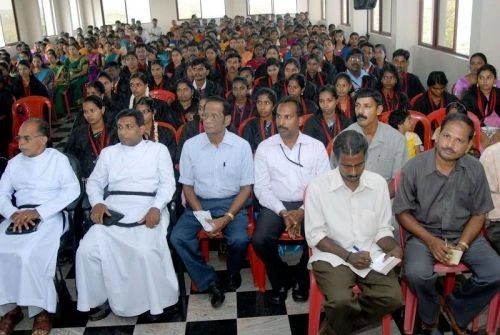

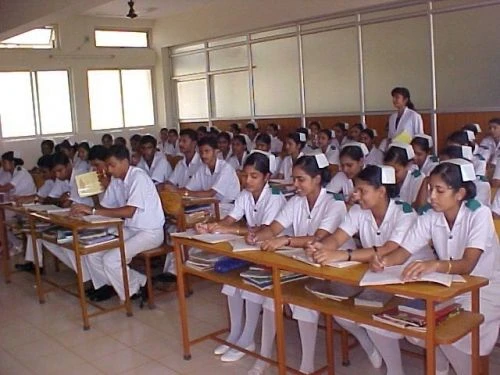
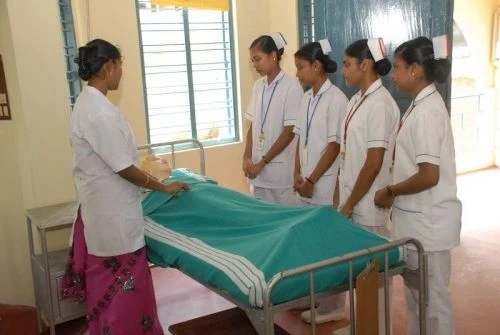
In this preview: 5 photos · 0 videos
Yes, Grace College of Health and Management is affiliated with The Tamil Nadu Dr. M.G.R. Medical University, which is a recognized institution.
The total approximate fee for the 4-year B.Sc. Nursing program is around ₹4.5 to ₹5 Lakhs. This cost includes hostel accommodation for the full duration.
Yes, the college provides clinical training. This training is primarily conducted at the associated Grace Hospital & Nursing Home located in Kaliakkavilai.
Admission to the B.Sc. Allied Health program at Grace College is not based on an entrance exam. Instead, selections are made based on the applicant's 12th-grade academic marks.
The college provides separate hostel facilities for boys and girls. Accommodation options include both AC and Non-AC rooms. The food served in the hostels is primarily South Indian cuisine.
Share what future students should know about Grace College of Health and Management.
Student voices are not rewritten by colleges. We remove spam and abuse.
Wider admission question? Community PulseWhat should future students know?
Tell us which course you're considering. We'll help you work out the next step.
Get instant Partner access after mobile verification. Your public edits are reviewed before they go live.
Claim this college
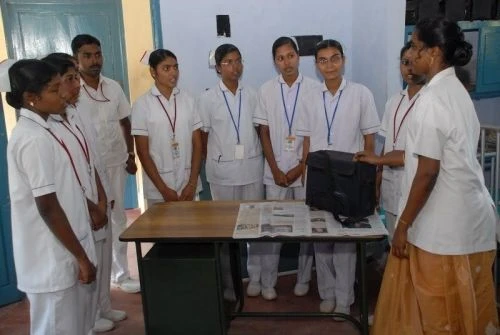
 Auditorium
 Computer Labs
 Medical
 Science Labs
 Study Library