Loading Admission Guardian content
Loading Admission Guardian content

Provisional score based on available data. It may change as more information is verified.
Find a program, read its fee details and explore the admission requirements.
Summary of the programs shown below. First-year fee. Check the note beside each amount for inclusions and exclusions.
| Course | Stream | Fees |
|---|---|---|
| Bachelor of Engineering [BE] | Engineering | 73000 |
| Master of Engineering [ME] | Engineering | 85000 |
Specializations
All accepted exams
Eligibility: 10+2 with 75% + JEE Main
Specializations
All accepted exams
Eligibility: Graduation
3 exams with cutoff data available
Grow More Faculty of Engineering is a private institute on the Ahmedabad-Udaipur Highway, offering a straightforward proposition: affordable, practical engineering education in a quiet setting. Established in 2003 and affiliated with Gujarat Technological University (GTU), it’s an AICTE-approved college that doesn’t chase national rankings. Instead, it focuses on delivering core B.E. programs with a project-based learning approach. The placement numbers—an average package of ₹4.8 LPA and a high of ₹12.5 LPA—are decent for a college in its fee bracket, though student reviews suggest outcomes can vary. If you’re a Gujarat student looking for a budget-friendly, no-frills engineering degree with decent local industry connections, this place warrants a look. Just don’t expect IIT-level resources or brand recognition.
The academic offering here is classic and focused. You won’t find niche specializations or dual-degree programs. What you get are standard four-year Bachelor of Engineering (B.E.) degrees in six core branches: Civil, Computer, Electrical, Electrical & Electronics, Information Technology, and Mechanical Engineering. There’s also a two-year Master of Engineering (M.E.) program. The pedagogy emphasizes applied learning. Think labs, projects, and internships over purely theoretical lectures. The college promotes it as a blend of technical education with “spiritual awareness and progressive thinking,” which in practice seems to translate to a disciplined, focused campus environment.
Faculty strength is listed as 200+ for the broader Grow More Group of Institutions. The department-wise list includes assistant professors like Nimesh Vaidya (Computer), Anurag Garg (Civil), and Kajal Ladha (Mechanical), led by Principal Dr. Samir B. Patel. Student reviews consistently call the faculty helpful and approachable, which is a significant plus. The library, established in 2007, is a solid resource with over 38,500 volumes and digital access. It’s a curriculum firmly under GTU’s umbrella, so the syllabus and exams are standard across affiliated colleges. That’s neither good nor bad—it’s just the reality of the system.
This is where the official brochure and ground-level experiences need to be read together. The college’s placement cell reports a highest package of ₹12.5 LPA and an average of ₹4.8 LPA for 2026, with an 85% placement rate. The recruiter list is impressively long, featuring giants like TCS, Infosys, Wipro, Amazon, Google, Microsoft, and a slew of banks and consulting firms like Deloitte and KPMG. For core engineering, companies like Bajaj Auto, Adani Group, and Apollo Healthcare are mentioned.
But here’s the necessary reality check. While these companies may visit, the distribution of offers is key. Student sentiment hints that not every offer from every company hits that average. Some reviews mention packages as low as ₹3 LPA or monthly stipends in the ₹16,000-20,000 range for certain roles. That gap between the official average and the lower-end outcomes students talk about is notable. It suggests placement success is uneven across branches and student profiles.
The 85% placement rate seems optimistic compared to many private colleges, but it’s plausible given the strong push for internships and project work with local industries. The placement preparation includes summer internships with “leading brand names.” For a student who engages actively with the training and has reasonable expectations, landing a job in the ₹3.5-5.5 LPA range in IT services or a local manufacturing/construction firm seems achievable. Aiming for the top-tier companies on that list will require significant independent effort.
The affordability is arguably this college’s biggest draw. The total tuition fee for the four-year B.E. program is just ₹2.92 lakhs, which breaks down to roughly ₹70,000 per year. The two-year M.E. program costs ₹1.7 lakhs in total tuition. These are 2025-2027 figures and are exceptionally low for a private engineering college. You can view the official fee structure on the college website.
Now, the missing piece: hostel and mess fees aren’t detailed in the available data. Given the rural location on the highway (13-14 km from Himmatnagar stations), most outstation students will need hostel accommodation. The total cost of attendance will be tuition plus these living expenses. The college does offer scholarships based on academic merit and for reserved categories, which can further reduce the financial burden. For a student on a tight budget, this fee structure makes engineering education accessible.
Admission is centralized through the Gujarat state system. For the B.E. program, Gujarat state students must appear for GUJCET, while students from other states can apply with their JEE Main scores. The final admission is handled entirely by the Admission Committee for Professional Courses (ACPC) Gujarat via its online counseling.
The cutoffs are what you’d expect for a mid-tier private college. For GUJCET 2023 Round 1, the closing ranks for BE in Information Technology and Computer Engineering were around 29,429 and 30,335 respectively. More recent GUJCET 2025 Round 2 data shows BTech cutoff ranks for the General Category ranging from 30,777 to 50,792. These ranks give you a clear idea: it’s not intensely competitive. If your GUJCET rank is within the 30,000-50,000 band, you have a realistic shot. The application window typically runs from March to July.
The process is standard: meet eligibility (10+2 with PCM), get your entrance score, register for ACPC counseling, get allotted a seat based on your merit rank, and then complete enrollment at the college. There’s no mention of a separate management or NRI quota, which keeps the process transparent.
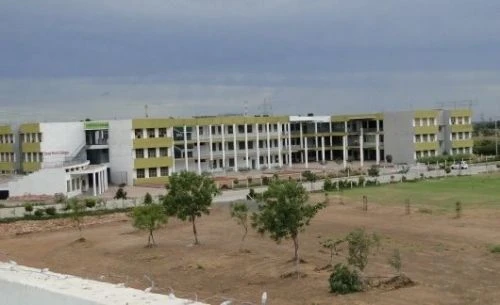
The campus is described as modern, eco-friendly, and fully networked, with a lush green lawn. It’s not a sprawling urban campus, but it has the essentials. Academically, the labs for each engineering branch are reported to be well-equipped and regularly updated. The IT infrastructure is a highlight—a 1 Gbps fibre backbone with Wi-Fi across campus and over 500 connected nodes.
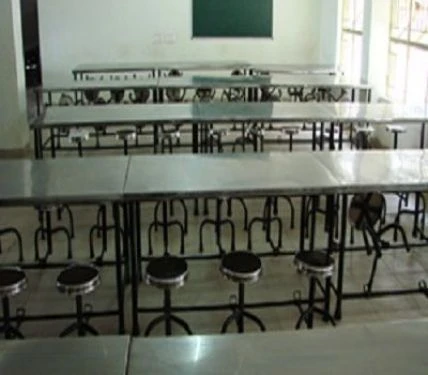
Hostels are separate for boys and girls, and reviews consistently use the word “neat.” Rooms are said to be spacious and furnished. The mess provides “good food,” which is high praise in the world of college hostels. For a peaceful study environment, it seems to fit the bill. Social life is modest. There’s an annual technical and cultural fest called GrowFest. The sports complex is spacious, offering basketball, volleyball, cricket, football, badminton, and table tennis. There’s a canteen and a medical room for first aid. The college also provides transportation facilities, which is necessary given the location.
It’s a self-contained, quiet campus. You’re not in the middle of a city with easy access to malls and cafes. The vibe is focused and rural. For some, that’s perfect. For others, it might feel isolated.
Synthesizing the sentiment, the consensus is positive within a specific context. Students repeatedly praise the “good education and care,” the helpful faculty, and the “peaceful and friendly environment.” The infrastructure—labs, classrooms, library, sports facilities—gets good marks. The affordability of fees is a major recurring theme.
But the reviews are also candid about limitations. The most telling note is the direct advice: students should not expect “IIT vibes.” This is a pragmatic assessment. You’re getting a functional, affordable education, not a world-class research experience. The other critical point revolves around placements. While the official numbers are quoted, students hint that actual offers can be lower, confirming that the average package is just that—an average, with a range beneath it.
Management is described as polite. Grievance redressal isn’t detailed, but the overall administrative experience isn’t flagged as a major pain point, which is often a complaint at similar institutes. Hostel life is rated positively for cleanliness and food.
Grow More Faculty of Engineering serves a specific student profile very well. If you are a cost-conscious learner from Gujarat, with a GUJCET rank in the 30k-50k range, and your primary goal is to obtain a decent B.E. degree from a GTU-affiliated college without taking on significant debt, this is a solid choice. The low fees, supportive faculty, and adequate infrastructure represent good value for money. You’ll likely graduate with a job offer in the ₹4-5 LPA range if you put in the work.
However, if you’re aiming for top-tier MNC placements with high packages, national-level research exposure, or a vibrant metropolitan campus life, you should probably look elsewhere. The college’s strengths are its affordability and a no-nonsense approach to core engineering education. It’s a practical launchpad for a stable career, not a destination for academic prestige. For the right student, that’s exactly what’s needed.



In this preview: 5 photos · 0 videos
To be eligible for the B.E. programs, you must have passed your 10+2 (or equivalent) with Physics, Mathematics, and Chemistry/Biology/Technical subjects. Admission is based on your entrance exam score: Gujarat state students need a valid GUJCET score, while students from other states can apply with a JEE Main score. The final selection and seat allotment are done through the centralized ACPC Gujarat online counseling process based on these scores and your 12th board marks.
The total tuition fee for the four-year Bachelor of Engineering (B.E.) program is ₹2.92 lakhs. For the two-year Master of Engineering (M.E.) program, the total tuition fee is ₹1.7 lakhs. These figures are for tuition only. Hostel and mess charges are additional and are not explicitly detailed in the available public information, so prospective students should contact the college directly for a complete cost of attendance estimate.
The college's placement cell reports a highest package of ₹12.5 LPA and an average package of ₹4.8 LPA for the 2026 placement cycle, with an 85% placement rate. The list of recruiting companies is extensive and includes major names like TCS, Infosys, Wipro, Amazon, Accenture, Capgemini, and core engineering firms like Bajaj Auto and Adani Group. It's important to note that student reviews suggest a range of outcomes, with some offers being lower than the published average.
The campus is modern and Wi-Fi enabled with a 1 Gbps internet backbone. Facilities include well-equipped laboratories for all engineering departments, a computerized library with over 38,500 books and journals, and a spacious sports complex for indoor and outdoor games. Separate hostel facilities for boys and girls are described as neat with good food. The campus also has a canteen, medical room, and provides transportation services.
Overall student sentiment is positive. Faculty members are frequently described as approachable, supportive, and helpful with academics and projects. Campus life is considered peaceful and conducive to focused study, with essential facilities like hostels, sports, and an annual fest (GrowFest) available. The environment is friendly, though the location is relatively quiet, so students should not expect a bustling urban campus experience.
Share what future students should know about Grow More Faculty of Engineering.
Student voices are not rewritten by colleges. We remove spam and abuse.
Wider admission question? Community PulseWhat should future students know?
Tell us which course you're considering. We'll help you work out the next step.
Get instant Partner access after mobile verification. Your public edits are reviewed before they go live.
Claim this college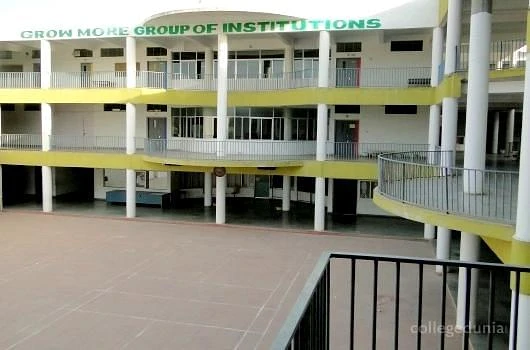

 Auditorium
 Cafeteria
 Computer Labs
 Medical
 Science Labs
 Study Library