Loading Admission Guardian content
Loading Admission Guardian content
Provisional score based on available data. It may change as more information is verified.
Find a program, read its fee details and explore the admission requirements.
Summary of the programs shown below. First-year fee. Check the note beside each amount for inclusions and exclusions.
| Course | Stream | Fees |
|---|---|---|
| Bachelor of Technology [B.Tech] | Engineering | 88750 |
Specializations
Eligibility: 10+2
If you're looking at engineering colleges in Punjab and your budget is tight, Guru Ram Dass Institute of Engineering & Technology (GRDIET) in Bathinda is a name you'll hit. It's a straightforward, no-frills private college that's been around since 2009, offering B.Tech degrees at a fraction of the cost of the big-name private universities. The campus is out on the Bathinda-Barnala highway, about 20 km from the city, which means peace and quiet but also a bit of isolation. For students from the Malwa region who want an AICTE-approved degree from an MRSPTU-affiliated college without a massive loan, GRDIET is a practical, if unspectacular, option. Just don't expect the placement frenzy or glamorous campus life of a Tier-1 institute.
GRDIET runs a standard set of undergraduate engineering programs under the MRSPTU syllabus. The B.Tech in Computer Science & Engineering is the most popular, with an intake of about 120 students. Other branches—Electrical, Mechanical, Civil, and Electronics & Communication—have smaller batches, typically 30 to 60 seats each. They also offer diploma programs after 10th grade in the same core fields.
Academically, it's a traditional setup. The teaching is lecture-based and closely follows the university curriculum, with a clear focus on helping students clear the semester exams. The faculty, around 93 members strong, gets consistently described in student reviews as "approachable" and "helpful" for clearing doubts. That's a definite plus. But the pedagogy isn't known for innovation or heavy project work. It's a system built for reliability, not necessarily for pushing boundaries. You'll get your degree, and the 10-point CGPA system is standard. Just know you're signing up for a conventional academic experience.
This is where you need to separate the official line from the ground reality. The college's placement cell does bring companies, but the scope is regional. For the 2024 batch, the highest package touted was 12 LPA from the Trident Group. Important context: that was a pooled drive for multiple MRSPTU colleges, not a GRDIET-exclusive offer. The institute-specific highest package is more commonly around 4.2 LPA, typically from the HMEL refinery in Bathinda.
The average package, according to a consensus from student reviews on platforms like CollegeDunia and Shiksha, sits between 3.0 to 3.5 LPA. That's a decent starting point for the region and the fee investment.
Where the gap appears is in placement percentage. Official claims hover around 70-75%, but students and alumni often report the actual on-campus placement rate for core roles is closer to 40-50%. The disparity is largely branch-dependent. CSE and sometimes ECE students have a better shot with IT service recruiters like TCS, Wipro, Infosys, and Cognizant. For core branches like Mechanical and Civil, opportunities are mostly with local industries—HMEL, Wonder Cement, Nectar Lifesciences, or various starch and chemical plants in Punjab. Many mechanical and civil grads end up securing jobs off-campus or in smaller local firms.
Internships are mandatory—a 6-month industrial training in the final year. The college facilitates this, and most students find positions in industrial hubs like Ludhiana or Mohali.
The affordability is GRDIET's strongest card. The annual tuition fee for B.Tech is around ₹95,000, which breaks down to about ₹47,500 per semester. Over four years, you're looking at a total academic cost of roughly ₹3.7 lakhs. Compare that to the ₹15-20 lakhs for a full B.Tech at some other private universities, and the value proposition is clear.
Hostel and mess fees are extra, estimated at ₹75,000 to ₹85,000 per year. Add in semester exam fees (₹4,000) and other annual charges, and the total yearly cost for an out-of-town student can approach ₹1.8 to ₹2 lakhs.
Financial aid comes mainly through government schemes. The Post-Matric Scholarship for SC/ST/OBC students from the Punjab government is available. The institute also offers merit-based scholarships for students with high scores in JEE Main or 90%+ in their 10+2 exams.
Getting into GRDIET is relatively straightforward. Admissions are primarily based on JEE Main scores, managed through the centralized counseling for MRSPTU-affiliated colleges. However, they also accept direct admissions based on 10+2 merit for students who meet the basic eligibility (45% aggregate in PCM for General category, 40% for Reserved categories).
The college doesn't publish high, competitive cutoffs. For the 2024 session, admission was generally open to any eligible candidate. If you have a valid JEE Main score or decent board marks, you're likely in the running. The application window usually runs from May through August.
Like most private colleges, GRDIET has a Management Quota (also called NRI quota), which accounts for a significant portion of seats—estimates range from 15% to 33%. This route is more expensive but has less stringent entry requirements.
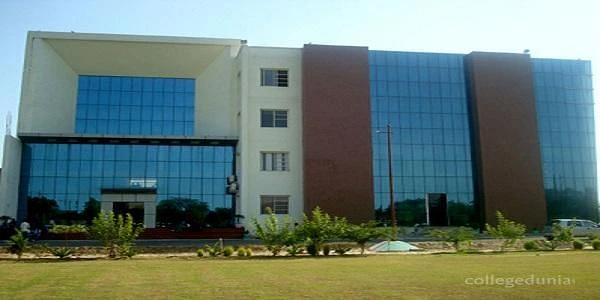
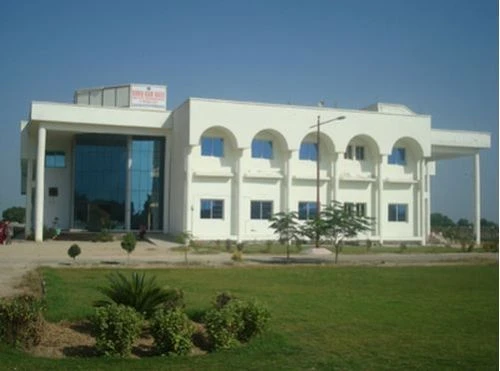
The 10-acre campus is functional. It's not sprawling or lush, but it has the essentials. The hostels—separate for boys and girls—are a highlight for many. Reviews consistently mention a "peaceful environment" and rooms that are semi-furnished with attached bathrooms. They're rated around 3.5 out of 5. The mess food is considered average but hygienic.
Infrastructure is a mixed bag. The library is air-conditioned with a decent collection of books and journal access. Labs for each department exist and are functional, but student feedback often notes that the equipment, especially in mechanical and civil workshops, is aging and could use an upgrade. Wi-Fi covers the campus, but speeds are just okay—enough for study purposes, not for heavy streaming or gaming.
Social life is quiet. Don't expect huge cultural fests that draw crowds from other cities. There are events and sports facilities (cricket, football, basketball, indoor games), but the overall vibe is more studious and calm. The college has a strict anti-ragging policy, which is enforced. A fleet of buses connects the campus to Bathinda city, Barnala, and nearby towns, which is essential given the location.
Sifting through student feedback online paints a consistent, pragmatic picture. The positives are clear: "Affordable fees" is the biggest one. Students feel they get a legitimate engineering degree without financial ruin. The "supportive faculty" and "peaceful campus away from city noise" are repeatedly mentioned as major benefits. The administration, while sometimes slow, is generally seen as fair.
The criticisms are equally consistent. Placement limitations, especially for core branches, top the list. Students actively caution that if you're in Mechanical or Civil, you should be prepared to hustle for off-campus opportunities. The "lack of high-tier MNCs" and "limited social life/fests" compared to colleges in Chandigarh or Jalandhar are noted downsides. There's also a recurring wish for modernized lab infrastructure.
The overall sentiment isn't one of raving enthusiasm or deep disappointment. It's acceptance. GRDIET is seen as a solid, budget-conscious choice that delivers on its core promise—a degree—but doesn't provide significant extra polish or exceptional opportunities.
GRDIET is a specific solution for a specific need. It's worth serious consideration if: you are from Punjab or nearby, have a constrained budget (under ₹4 lakhs for tuition), and want a recognized B.Tech degree to enter the workforce or prepare for government exams. For a CSE student okay with a 3-4 LPA IT services job from a regional recruiter, the return on investment can make sense.
You should probably look elsewhere if: your primary goal is high-paying campus placements at product-based companies, you thrive in a vibrant, event-heavy campus culture, or you are in a core engineering branch like Mechanical and have ambitions for large automotive or manufacturing MNCs. The opportunities here are local and industrial.
In essence, GRDIET is a tier-3, value-for-money engineering college. It manages expectations by not over-promising and, for a certain segment of students, delivers adequately on its core educational mandate. Just go in with your eyes open to its regional focus and practical scope.
In this preview: 2 photos · 0 videos
GRDIET is considered an average, budget-friendly option for CSE. It offers decent local placement opportunities, but its programs and outcomes are not comparable to those of top-tier engineering institutes in the region.
The annual fee for the B.Tech program at Guru Ram Dass Institute of Engineering & Technology is approximately ₹95,000. The total estimated cost for the complete four-year degree is around ₹3.7 Lakhs.
Yes, the college provides separate on-campus hostel facilities for both boys and girls. These hostels are equipped with Wi-Fi and mess facilities for resident students.
Guru Ram Dass Institute of Engineering & Technology is affiliated with Maharaja Ranjit Singh Punjab Technical University (MRSPTU), located in Bathinda.
Placement opportunities for Mechanical Engineering students are primarily with local manufacturing units and refineries, such as HMEL. The offered packages typically range from ₹2 Lakhs to ₹4 Lakhs per annum (LPA).
Share what future students should know about GRDIET.
Student voices are not rewritten by colleges. We remove spam and abuse.
Wider admission question? Community PulseWhat should future students know?
Tell us which course you're considering. We'll help you work out the next step.
Get instant Partner access after mobile verification. Your public edits are reviewed before they go live.
Claim this college
 Auditorium
 Cafeteria
 Computer Labs
 Gym
Gym Hostel
 Medical
 Science Labs
 Sports Complex
 Study Library