Loading Admission Guardian content
Loading Admission Guardian content

Provisional score based on available data. It may change as more information is verified.
Selected ranking categories, with the recorded year beside each result. Open all records for the complete history.
1 published record · Lower numeric ranks are stronger
Find a program, read its fee details and explore the admission requirements.
Summary of the programs shown below. First-year fee. Check the note beside each amount for inclusions and exclusions.
| Course | Stream | Fees |
|---|---|---|
| M.B.B.S. | Medical | 406000 |
All accepted exams
Eligibility: 10+2 with 50% + NEET
1 exam with cutoff data available
Gian Sagar Medical College & Hospital (GSMCH) in Patiala is a story of revival. After a high-profile closure in 2017, it reopened in 2020 under new management and has been steadily rebuilding its reputation. For NEET aspirants with a rank in the 40,000-65,000 range, it presents a viable, if still stabilizing, option for an MBBS seat in Punjab. The campus is sprawling, the hostels offer a rare single-room luxury, and its affiliation with Baba Farid University of Health Sciences (BFUHS) provides a solid academic framework. But everyone knows its past, and the conversation around it is always tinged with a cautious "but." The clinical exposure is improving, not yet top-tier, and the stark difference in internship stipends between government and management quota students is a persistent point of student grievance. It's a college that's clearly on the upswing, yet one where you need to go in with eyes wide open.
GSMCH runs a full spectrum of health science programs, though its core identity is medical. The MBBS program, with 150 seats, is the main draw. It also offers BDS (100 seats), B.Sc Nursing, and BPT. Postgraduate (MD/MS) seats are limited as the college scales up; they're currently available in pre-clinical and para-clinical subjects like Anatomy and Pharmacology, with a few seats in clinical branches like General Medicine and Surgery subject to annual NMC renewal.
The academic rhythm follows the BFUHS calendar, starting around September/October. Internal assessments count for 20-30% of your final professional exam marks. Faculty strength is listed at over 180, and students often mention the teaching staff, especially in first-year subjects, as being supportive and motivated. The primary academic resource is the attached 750-bed Gian Sagar Hospital, which serves as the live lab for clinical training. You won't find extensive corporate industry tie-ups here—medical education is about the hospital, and that's the focus.
Let's be precise: in the MBBS context, "placements" means the mandatory internship and the career paths that follow. 100% of students complete their one-year rotating internship at the Gian Sagar Hospital itself. The stipend, however, is a major point of contention and varies dramatically. For the 50% of students in the government quota, the stipend for 2024-25 is a decent ₹18,000 – ₹22,000 per month. For the 35% in the management quota, reports consistently cite a much lower ₹9,000 – ₹10,000. That disparity is a genuine financial pinch and a common complaint in student reviews.
After MBBS, graduates typically follow one of two roads. Most dive into preparing for the NEET-PG exam to specialize. Others take up roles as Medical Officers or Junior Residents in private nursing homes or government hospitals across Punjab, Haryana, and Delhi. Starting salaries in these roles, as reported by the college, range from ₹70,000 to ₹1,20,000 per month. The college's official website may have more details on recent graduate outcomes, but the path is largely self-directed post-degree.
Fees at Punjab's private medical colleges are state-regulated, and GSMCH is no exception. The total cost is entirely dependent on which quota secures your seat. The government quota (50% of seats) is the affordable track. The management quota (35%) costs more than double.
For the 2024-25 academic year, government quota students pay an annual tuition fee between ₹4.26 and ₹4.92 lakhs. Add hostel fees (₹1.5-2 lakhs) and fixed mess charges (₹95,000), and the annual outlay is around ₹7-8 lakhs. Over 5.5 years, you're looking at an estimated total cost of ₹24-28 lakhs.
Management quota tuition jumps to ₹10-11 lakhs per year. With similar hostel and mess costs, the total course cost balloons to an estimated ₹55-60 lakhs. There's also an NRI quota (15% of seats) with a total course fee of approximately $110,000 USD. Beyond tuition, budget for a one-time admission fee (₹7,000), university registration, and refundable security deposits. The college does not prominently advertise institutional scholarships; financial aid is primarily through state or national schemes for which students must apply independently.
The gateway is 100% NEET-UG. Your rank there is everything. The selection process is centralized and merit-based, handled by the affiliating university, Baba Farid University of Health Sciences (BFUHS).
After NEET results are out (usually June), you must register for the Punjab state counseling conducted by BFUHS. Seats are allotted over multiple rounds based on your rank and category. The 2024 first-round cutoffs give a clear picture of where you need to stand:
These cutoffs tend to drift downward in later counseling rounds as seats get filled. If you have a rank under 65,000 in the general category, you have a realistic shot at a government quota seat here. The application window is tight, usually from June to August. You must stay glued to the BFUHS counseling portal for updates.
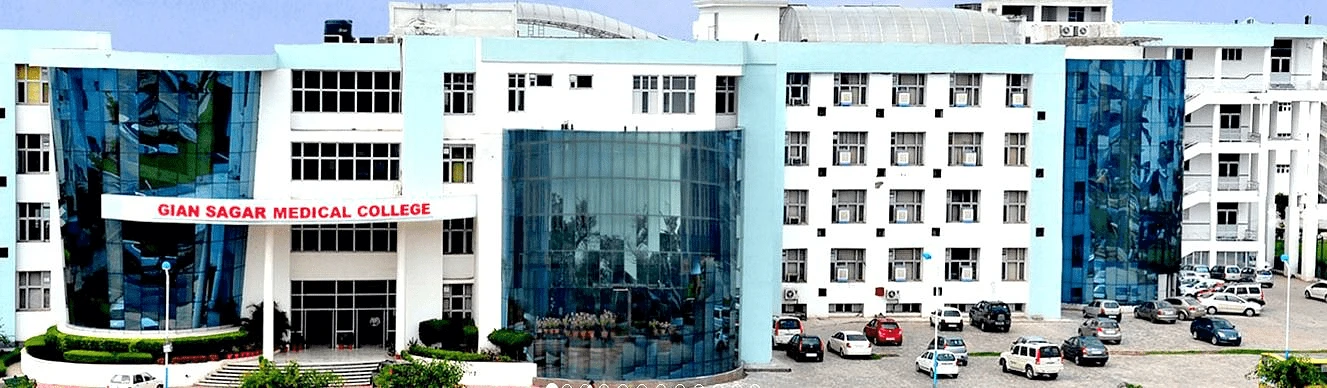
The 100-acre campus is frequently praised in reviews. It's spacious, green, and the infrastructure has seen noticeable refurbishment since the 2020 revival. The central library is AC-equipped and digitized, with a solid collection of texts and e-journals.
The hostels, however, are the standout feature. In a system where triple-decker rooms are the norm, GSMCH offers single occupancy rooms to most students, even freshers. That's a massive quality-of-life advantage. Rooms come with basic furniture and a shared balcony. The hostel has separate wings for genders with strict security. And that strictness extends to rules, especially for female students, who report rigid outing timings.
The attached 750-bed Gian Sagar Hospital is the academic heart. It has a 24/7 emergency, ICUs, and most specialties, providing the clinical material for training. For recreation, there's a cricket ground, basketball and badminton courts, and a gym (which may have extra charges). Wi-Fi is available, though reportedly more reliable in the library than throughout the hostels. The location on the Chandigarh highway is a plus—Zirakpur and Chandigarh are a short drive away for weekend breaks.
Scouring Reddit threads on r/Indian_Academia and reviews on platforms like CollegeDunia reveals a nuanced, evolving consensus. The shadow of the 2017 closure is still mentioned, but the focus has shifted to its current state.
The good stuff gets repeated: The campus is "massive and well-maintained." The single rooms are a "huge luxury." Many find the faculty, particularly in the first year, to be "genuinely motivated and helpful." Proximity to Chandigarh is a big social plus.
But the criticisms are consistent too. Clinical exposure is described as "decent but not as high as GMC Patiala." Patient inflow is improving but not yet bustling. The administration is often called "slow" and grievance resolution "hit-or-miss." The most vocal complaint is the stipend disparity between government and management quota interns, which students see as unfair. It paints a picture of a college with excellent infrastructure and a decent academic environment, but one where operational and management quirks can be a daily friction.
It depends on your rank, quota, and tolerance for an institution in a rebuild phase. If you have a NEET rank between 40,000 and 65,000 and secure a government quota seat, GSMCH becomes a very sensible choice. You get a recognized MBBS degree from a BFUHS-affiliated college, decent infrastructure, unique hostel privacy, and a manageable total cost of around ₹25-28 lakhs. The clinical exposure is adequate for an MBBS, and the location is convenient.
However, if you're looking at the management quota, the calculus changes. Paying over ₹55 lakhs for the same degree, coupled with a significantly lower internship stipend, is hard to justify when compared to other private options in the region. Also, if your primary goal is ultra-high clinical exposure from day one, older government colleges might serve you better.
For the right student—one who values personal space, is self-motivated, and gets in at the government quota rate—Gian Sagar Medical College is a legitimate and increasingly stable platform to launch a medical career. Just go in knowing its history and its current, very real, growing pains.
In this preview: 1 photo · 0 videos
Yes, Gian Sagar Medical College & Hospital is safe to join. It reopened in 2020 under new management and has successfully graduated or progressed multiple batches since its reopening. The college is fully recognized by the National Medical Commission (NMC).
The MBBS fee for the Management Quota in 2024 is approximately ₹10.5 Lakhs per year. The total fee for the full course typically ranges from ₹55 to ₹58 Lakhs.
Yes, one of the college's most cited advantages is its hostel accommodation. Most students are provided with single occupancy rooms.
The patient inflow at Gian Sagar Hospital is moderate, with approximately 1000-1200 outpatients daily in the OPD. While this is lower than top government hospitals, it is considered sufficient for undergraduate clinical training.
For the General category under the Punjab State Quota, a NEET rank under 65,000 is typically required to secure a seat in the final admission rounds.
Share what future students should know about Gian Sagar Medical College & Hospital.
Student voices are not rewritten by colleges. We remove spam and abuse.
Wider admission question? Community PulseWhat should future students know?
Tell us which course you're considering. We'll help you work out the next step.
Get instant Partner access after mobile verification. Your public edits are reviewed before they go live.
Claim this college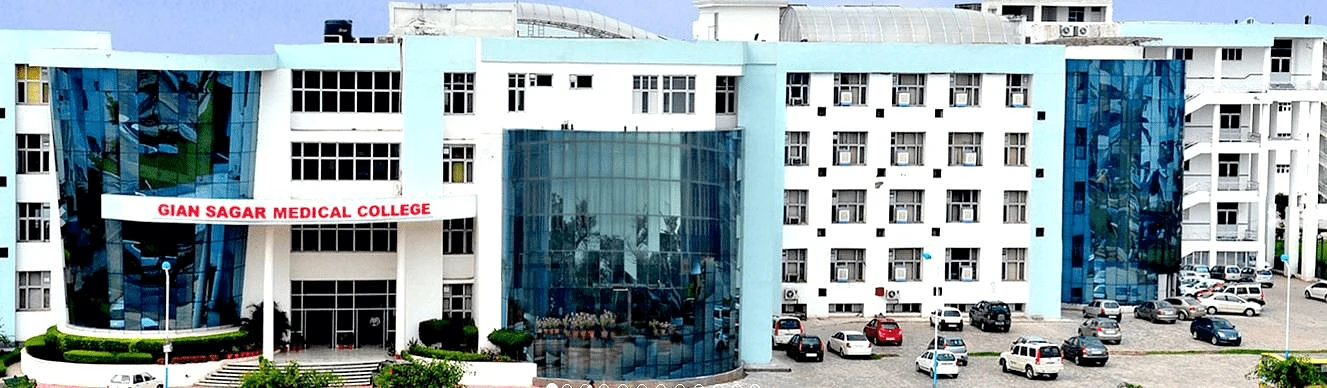
 Auditorium
 Cafeteria
 Computer Labs
 Hostel
 Medical
 Science Labs
 Sports Complex
 Study Library