Loading Admission Guardian content
Loading Admission Guardian content
Provisional score based on available data. It may change as more information is verified.
Find a program, read its fee details and explore the admission requirements.
Summary of the programs shown below. First-year fee. Check the note beside each amount for inclusions and exclusions.
| Course | Stream | Fees |
|---|---|---|
| Diploma in Engineering (Polytechnic) | Engineering | 25000 |
| Bachelor of Technology [B.Tech] | Engineering | 40000 |
| Master of Technology [M.Tech] | Engineering | 40000 |
Specializations
Specializations
All accepted exams
Eligibility: 10+2 with 45% + RPET
Specializations
All accepted exams
Eligibility: Pass in Graduation + GATE
 Gammon India
If you're looking at engineering colleges in Rajasthan and your JEE Main rank isn't in the top tier, Gurukul Institute of Engineering and Technology (GIET) in Kota is a name that will come up. Established in 2007, it's a private college that pitches itself as a practical, affordable option. The campus is spread over a significant area, and on paper, the facilities look decent. But the real story, as told by the students who've been there, is more nuanced. There's a clear gap between the official placement brochures and what graduates actually experience. For a certain student—one who is self-motivated, budget-conscious, and not solely reliant on the college for a job offer—GIET can be a functional launchpad. For others, the reported issues with lab equipment and placement support might be a deal-breaker. It's a classic case of needing to read between the lines.
GIET offers the standard suite of engineering programs you'd expect from a mid-sized private institute in Rajasthan. The B.Tech programs are the main draw, with Civil Engineering having the largest intake at 120 seats, followed by Computer Science, Mechanical, and Electrical at 60 seats each. Electronics and Communication is a smaller program with 30 seats. For postgraduates, there are M.Tech programs in Computer Science, ECE, and Mechanical Engineering, though the seat counts are modest (9 and 18 seats for CSE and ECE, respectively). They also run three-year Diploma (Polytechnic) programs in core branches.
Academically, the college emphasizes practical learning and is promoted as the only college in Kota "owned and managed by technocrats." They list tie-ups with Microsoft and Siemens, which likely translate into some workshop certifications or software access rather than deep academic collaboration. The faculty count stands at 57, with a stated teacher-student ratio of 1:30. That's a manageable number on paper, but the lack of data on PhD holders makes it hard to gauge the depth of academic research or mentorship. The academic calendar and grading follow the affiliating university's norms—nothing out of the ordinary there.
This is where you need to pay the closest attention. The official line, which you'll find on the college website and in brochures, states that "almost 90%" of students are placed every year, with an average package of ₹4.5 LPA and a highest package of ₹8.0 LPA (figures from the previous year). Top recruiters listed are TCS, Infosys, Wipro, Zensor, and Gammon India.
Now, here's the reality check from student reviews. There's a strong, consistent sentiment that placements are "not good." Many students say there are "very less placement opportunities provided by the college" and that preparing for off-campus drives is essential. The 90% figure feels optimistic; a more grounded estimate from some reviews pegs it at 60-70%. And that average package of ₹4.5 LPA? Another source mentions a starting range as low as ₹2.5 lakhs, which aligns more with baseline IT service company offers for tier-3 college graduates.
The takeaway is clear: don't bank on GIET to hand you a job. The placement cell likely facilitates visits from a handful of mass recruiters. Landing a role, especially a well-paying one in core engineering, will require significant independent effort. The college provides a platform, but the drive has to come from you.
The fee structure at GIET is its most compelling feature for many families. There's no single fee—it's a wide spectrum. For B.Tech, annual tuition can be as low as ₹40,000 or as high as ₹2,60,000, likely depending on the branch and possibly the admission channel (merit vs. management). This variability suggests there's room for negotiation or different fee slabs. Hostel and mess fees are around ₹55,000 per year. So, a rough total annual cost for a hostelite could range from about ₹95,000 to over ₹3 lakhs. That lower end is genuinely affordable for a private engineering education.
Scholarships are a strong point. The college offers a slew of them: merit-based (up to 100% tuition waiver for top rankers), need-based, for Rajasthan domicile students, single girl child, sports achievers, wards of defense personnel, and for EWS/SC/ST/OBC categories. If you have a strong academic record or fall into a specific category, it's worth applying aggressively.
For B.Tech, the gateway is the Rajasthan Engineering Admission Process (REAP) counseling, which considers your JEE Main score. You'll need to have passed 10+2 with at least 45% marks. Specific cutoff ranks aren't published, but given the seat matrix and the college's positioning, the cutoffs are not exceedingly high. It's a realistic option for students with moderate JEE Main ranks.
The REAP 2026 registration window, for reference, typically runs from late May to early July. For M.Tech, a valid GATE score is required, and admissions are coordinated through the GATE COAP process. Diploma admissions are more straightforward, based on your Class 10 marks (CBSE or RBSE) followed by an interview.
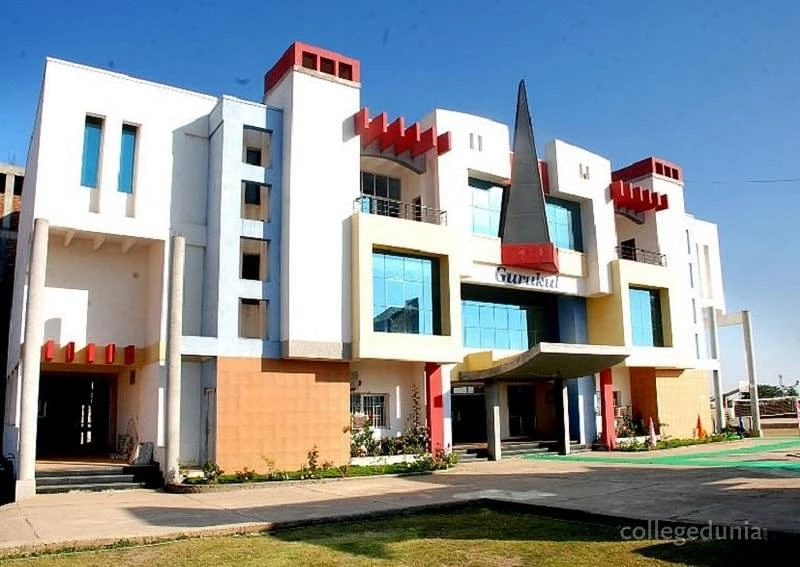
The campus is spacious, spread over 11 acres with a lot of built-up area. Students frequently praise the overall infrastructure: big classrooms, a large library, and extensive sports grounds. The library is a highlight, with over 12,500 volumes (some sources say 25,000), an AC reading room, and digital access.
But the positives come with caveats. The 110 labs and 20 computer labs sound impressive, but students repeatedly note that labs are "not loaded with every instrument needed," with equipment missing, old, or broken. One review bluntly said "half computers in lab are not working." That's a major red flag for practical, hands-on learning. Wi-Fi is another point of contention—officially it's campus-wide, but students say it's either unavailable for personal use or restricted to classrooms and the library.
Hostel life is a mixed bag. The boys' hostel currently houses 360, with more facilities planned. Rooms are typically twin-sharing. Mess food gets the full spectrum of reviews, from "good" to "below average." The canteen is described as small and just okay. On the social side, the college does organize technical fests, cultural events, and sports competitions, which helps break the monotony. Sports facilities are comprehensive, covering everything from cricket and football to indoor games like chess and table tennis. There's a medical room and college bus transport is available, though the campus is a bit isolated from the main city.
Synthesizing the student sentiment is crucial for an honest picture. The consensus isn't overwhelmingly negative, but it's cautiously critical.
What they like: The infrastructure and campus get a thumbs up. Many find the library excellent and appreciate the sports facilities. Some enjoy the hostel camaraderie and the events that are organized. The fee affordability, especially if you secure a scholarship, is a major plus.
What they consistently complain about: The state of the labs is the biggest academic grievance. If you're an engineering student, functional labs are non-negotiable, and here they seem to be a weak link. The placement support is viewed as inadequate, leading to a sense of having to fend for oneself. The canteen and inconsistent Wi-Fi are frequent quality-of-life irritants.
There's not much chatter about teaching quality being exceptional or terrible—it seems average, doing the job. The management's responsiveness isn't a highlighted topic, which might itself say something.
GIET Kota is a specific-value proposition. It's not for the student dreaming of a vibrant, placement-guaranteed campus life with top-notch research facilities. It's probably not the best choice if your primary goal is to get placed into a high-paying core engineering role through campus drives.
So, who is it for? It's a viable, budget-friendly option for a student with a modest JEE Main rank who is primarily seeking a recognized B.Tech degree without a massive financial burden. If you are disciplined, self-driven, and plan to build your skills through online courses and external certifications while using the college's basic infrastructure and library, you can make it work. The scholarships can make it almost free for high achievers. It's also an option for those targeting government job exams after engineering, where the degree is a checkbox and low fees are a priority.
Your decision should hinge on a clear-eyed assessment. If possible, visit the campus. Ask to see the labs for your chosen branch. Talk to current students outside of an official tour. Weigh the low cost against the reported shortcomings. For the right student, with the right expectations, GIET can be a stepping stone. For others, it might feel like a compromise.
In this preview: 1 photo · 0 videos
Gurukul Institute of Engineering and Technology is affiliated with the University of Rajasthan and Rajasthan Technical University, Kota. It is approved by the All India Council for Technical Education (AICTE), New Delhi. The institute does not hold a NAAC accreditation grade.
Annual tuition fees for B.Tech programs vary widely, ranging from approximately ₹40,000 to ₹2,60,000 depending on the specialization. The institute offers extensive scholarship options including merit-based waivers (up to 100% tuition fee), need-based aid, and scholarships for Rajasthan domicile students, single girl child, sports excellence, and EWS/SC/ST/OBC categories.
For B.Tech, admission is through the Rajasthan Engineering Admission Process (REAP) counseling based on JEE Main scores, with a minimum requirement of 45% in 10+2. M.Tech admissions require a valid GATE score. Diploma admissions are based on Class 10 marks (CBSE/RBSE) followed by an interview.
The campus features good overall infrastructure including a large library with digital resources and sports facilities. However, student reviews consistently report issues with academic labs, noting missing, old, or non-functional equipment and computers. While official sources claim campus-wide Wi-Fi, student experiences regarding its availability and reliability for personal use are mixed.
Official placement claims cite 60-90% placement rates with an average package of ₹4.5 LPA. However, student reviews frequently contradict this, describing placement opportunities as limited and suggesting that successful job searches often require independent, off-campus efforts. Top visiting companies include TCS, Infosys, and Wipro.
Share what future students should know about Gurukul Institute of Engineering and Technology.
Student voices are not rewritten by colleges. We remove spam and abuse.
Wider admission question? Community PulseWhat should future students know?
Tell us which course you're considering. We'll help you work out the next step.
Get instant Partner access after mobile verification. Your public edits are reviewed before they go live.
Claim this college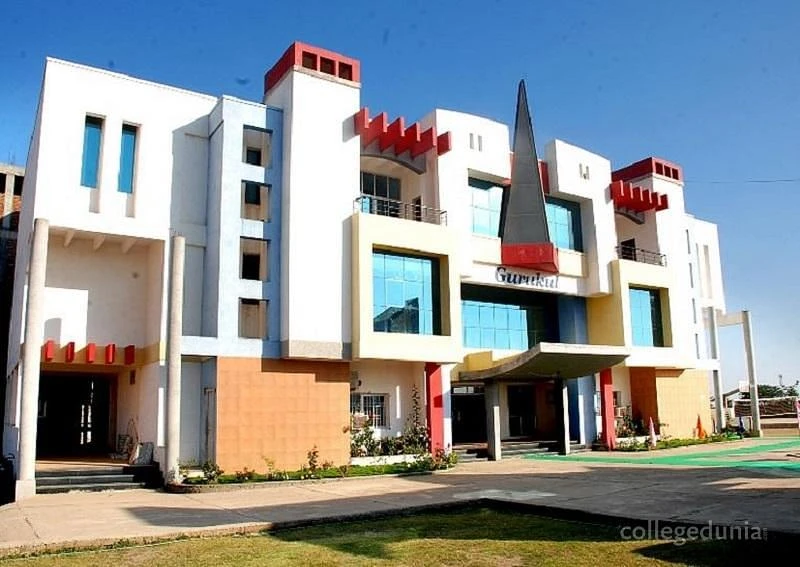
 Auditorium
 Cafeteria
 Computer Labs
 Gym
Gym Hostel
 Medical
 Science Labs
 Sports Complex
 Study Library