Loading Admission Guardian content
Loading Admission Guardian content

Based on incomplete college records.
Find a program, read its fee details and explore the admission requirements.
Summary of the programs shown below. Fee amounts are not listed.
| Course | Stream | Fees |
|---|---|---|
| Bachelor of Engineering [BE] | Engineering | |
| Master of Technology [M.Tech] | Engineering | |
| Master of Business Administration [MBA] | Management | |
| Master of Business Administration [MBA] (Finance) | Management |
Specializations
Eligibility: 10+2
Specializations
All accepted exams
Eligibility: Pass in Graduation + GATE
Specializations
All accepted exams
Eligibility: Graduation with 50% + CMAT
Specializations
All accepted exams
Eligibility: Graduation with 50% + CMAT
Gyan Ganga Institute of Technology and Management (GGITM) in Bhopal is a private engineering college that knows its lane. Established in 2007 and affiliated with Rajiv Gandhi Proudyogiki Vishwavidyalaya (RGPV), it’s a standard pick for students with mid-range JEE Main ranks who want to stay in Madhya Pradesh. You won’t find cutting-edge research or top-tier NIRF rankings here. What you will find is a structured, disciplined campus that functions a lot like a school, complete with uniforms and strict attendance rules. Its placement story is typical for a college of its tier: mass IT recruiters like TCS and Infosys show up, offering average packages around 3.5-4 LPA, while the highest on-campus offers rarely crack 9 LPA. For a certain student—one who values a clean, green campus over a vibrant social scene and is pragmatic about their career launchpad—GGITM can make sense. For others, it might feel too restrictive.
GGITM runs a standard set of programs under the RGPV curriculum. The total B.Tech intake is around 660 seats, with Computer Science and Engineering being the largest draw at 180 seats. They’ve also added a B.Tech in CSE with a specialization in Artificial Intelligence & Machine Learning, which sees an intake of 60-120 students depending on the year. Other branches—Information Technology, Electronics & Communication, Mechanical, Civil, and Electrical—each have 60 seats. For postgraduates, there’s an MBA program and a few M.Tech specializations in Computer Science and Digital Communication.
The academic culture is defined by its affiliation. You’ll follow RGPV’s Choice Based Credit System (CBCS) and your degree will be awarded by the university. Faculty-wise, there are about 80-100 teachers, with some PhD holders like Dr. Ravindranath C. Cherukuri and Dr. Praveen Kumar leading departments. The teaching is described as decent, with junior faculty often being more approachable for doubts. The college has some industry tie-ups, notably with the Microsoft IT Academy and Oracle Academy, which offer additional certification courses. It’s a curriculum-focused setup; don’t expect a heavy research orientation.
This is where you need to separate the brochure from the ground report. The college officially claims an 80%+ placement rate. Talking to students and scanning reviews on portals like Shiksha and CollegeDunia paints a more nuanced picture. The realistic placement rate is probably closer to 50-60% for core branches like Mechanical or Civil, and maybe higher for CSE and IT.
The packages follow a clear hierarchy. The highest package touted for 2023-24 was 15 LPA, but that’s almost certainly an off-campus or niche role. The real on-campus ceiling is between 7.5 and 9 LPA. The average package clusters around 3.5 to 4.2 LPA, with a median likely near 3.2 LPA. The recruiters are the usual suspects for IT services: TCS, Infosys, Wipro, Cognizant, Capgemini, HCL, and Zensar. They account for about 80% of the offers. Core engineering placements are weak; most students from Mechanical or Civil end up sitting for these IT drives or preparing for government exams like GATE.
So, the placement cell functions, but it’s a gateway to service-based IT jobs, not product-based tech or dream core roles. As one Reddit user bluntly put it: "Don't expect 10 LPA packages here unless you are an off-campus hero. Most of us get 3.5 LPA in TCS/Infosys."
The fee structure is straightforward and on the lower side for a private college, but there are mandatory add-ons. For the 2024-25 session, B.Tech tuition runs between ₹65,000 and ₹72,000 per year. MBA tuition is slightly lower, at ₹55,000 to ₹60,000. The big additional costs come from accommodation and transport.
Hostel and mess fees for a non-AC room range from ₹55,000 to ₹75,000 annually. AC rooms can cost up to ₹1.1 lakhs. Then there’s the bus fee—a notable point of contention. It’s typically between ₹12,000 and ₹18,000 per year, and it’s often mandatory for all students, regardless of whether they use the service. Add in exam fees and other incidentals, and the total four-year cost for a B.Tech student lands somewhere between ₹4.5 and ₹5.5 lakhs.
Financial aid is limited mostly to state government schemes. Students from SC, ST, and OBC categories can apply for the Post Metric Scholarship. The college itself doesn’t offer significant merit-based or institutional scholarships.
Admission to the B.Tech programs is through the JEE Main score. For MBA, it’s through CMAT. The process is centralized, handled by the Madhya Pradesh Directorate of Technical Education (MP DTE) during their counseling rounds, usually held between June and August.
The cutoffs are accessible. For the 2024 cycle, the Computer Science and Engineering branch had a closing JEE Main rank in the range of 4,00,000 to 6,00,000. For core branches like Mechanical, Civil, or Electrical, seats are often available up to ranks of 10,00,000 or even through College Level Counseling (CLC) for direct admission. This accessibility is GGITM’s primary market position: a viable option for average JEE ranks.
The campus, spread over an estimated 10-15 acres, is frequently cited as a positive. It’s aesthetically pleasing with green surroundings and well-maintained gardens—a fact the management promotes heavily. Infrastructure includes a central library with over 30,000 books and digital journal access, and labs that are well-equipped for CSE and Mechanical, though some students note older equipment in electronics labs needs upkeep.
Hostels are separate for boys and girls, with quality generally rated as average (around 3 out of 5). The mess food is described as repetitive and just okay. A common complaint is spotty Wi-Fi, which is available in the library and labs but unreliable in the hostels. The college runs a large fleet of buses covering Bhopal and nearby areas, which is necessary given the location on Raisen Road, about 12 km from Bhopal Junction railway station.
Life here is structured. There’s a strict 75% attendance rule that’s enforced. Students wear a prescribed uniform. The social scene is quiet. It’s not a "campus life" college in the traditional, vibrant sense. It’s for students who prefer a disciplined, no-frills environment.
The student sentiment online is a mix of resigned acceptance and specific grievances. The consensus is that GGITM is a "standard tier-3 private college." The positives people mention are consistent: the infrastructure and greenery, the discipline (which some appreciate), and the accessibility of junior faculty.
The negatives are just as consistent and often more passionately voiced. The strictness—the uniform, the mandatory bus fee, the rigid attendance—is a major pain point. Many describe the administrative staff and hostel wardens as uncooperative or rude when dealing with problems. One recurring theme in reviews is that the college invests in outward appearance to attract new students. A Shiksha review summed it up: "Infrastructure is the only thing they maintain well to attract new admissions."
There’s also a clear understanding of the college’s place in the pecking order. Students know they’re not at a top-tier institute and adjust their expectations accordingly, especially regarding placements.
GGITM is a specific solution for a specific problem. It’s worth considering if you have a JEE Main rank in the 4-10 lakh range, want to study in Bhopal, and are looking for a structured, disciplined environment to earn an RGPV degree without a huge financial outlay. Your goal should be to land a stable IT services job in the 3.5-4.5 LPA range, and you’re okay with putting in extra off-campus effort for anything better.
You should probably look elsewhere if you crave a vibrant campus life, expect high-paying campus placements in core engineering or product companies, or chafe under strict rules and uniforms. It’s also important to remember it’s not the same as its more established sibling, GGITS Jabalpur. In the end, GGITM Bhopal is a pragmatic choice, not an aspirational one. It gets the job done for a certain segment of students, but it doesn’t pretend to be something it’s not.
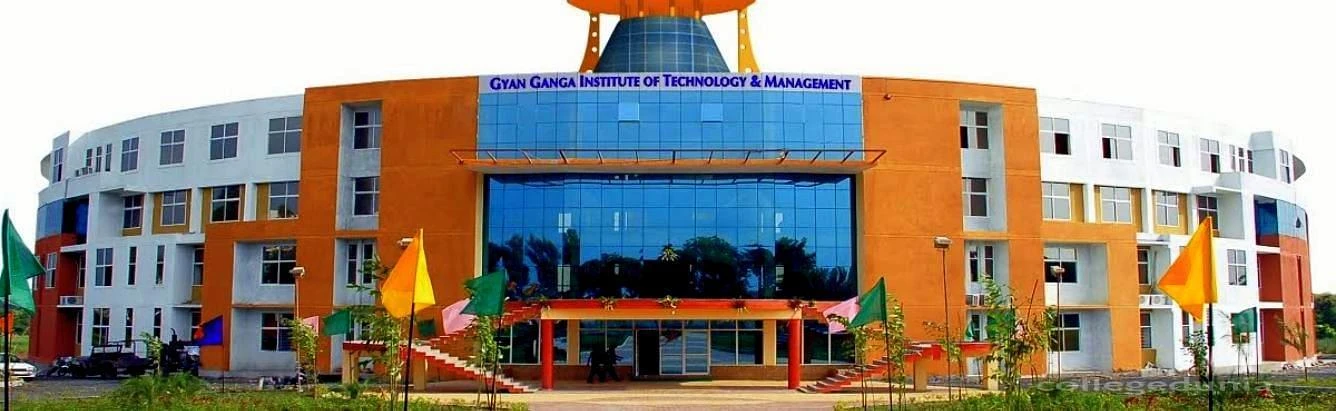
In this preview: 1 photo · 0 videos
Placements in core branches like Mechanical and Civil Engineering are weak at GGITM. Most students from these branches eventually sit for recruitment drives from IT companies or focus on preparing for competitive exams like GATE and ESE.
Yes, for most students, the bus fee is bundled into the annual charges and is mandatory, even for those who live nearby the campus.
Yes, Gyan Ganga Institute of Technology and Management has a prescribed uniform for students in programs like B.Tech and MBA.
LNCT is generally considered superior in terms of placement volume and brand name within Madhya Pradesh. However, GGITM is often preferred by some students seeking a slightly less crowded campus environment.
No, they are not the same. Both belong to the same "Gyan Ganga Group," but they are separate entities with different faculty, placement cells, and infrastructure. GGITS Jabalpur is the older and more established campus, though some placement drives are pooled between the institutes.
Share what future students should know about GGITM.
Student voices are not rewritten by colleges. We remove spam and abuse.
Wider admission question? Community PulseWhat should future students know?
Tell us which course you're considering. We'll help you work out the next step.
Get instant Partner access after mobile verification. Your public edits are reviewed before they go live.
Claim this college
 Auditorium
 Cafeteria
 Computer Labs
 Medical
 Science Labs
 Study Library